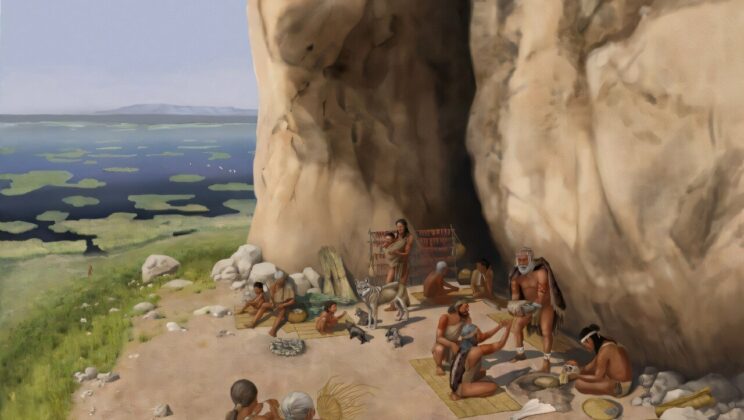
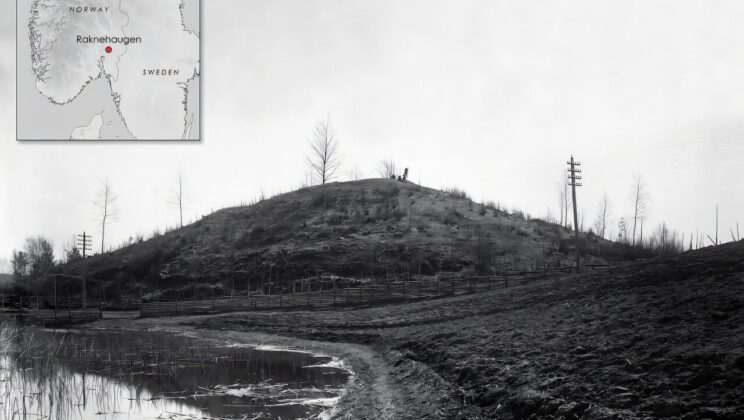
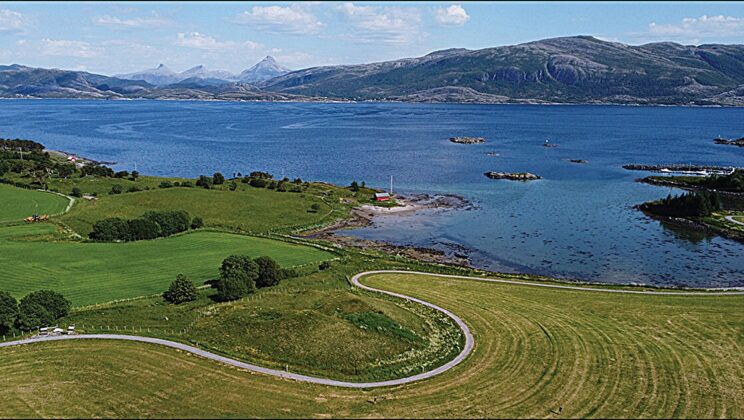
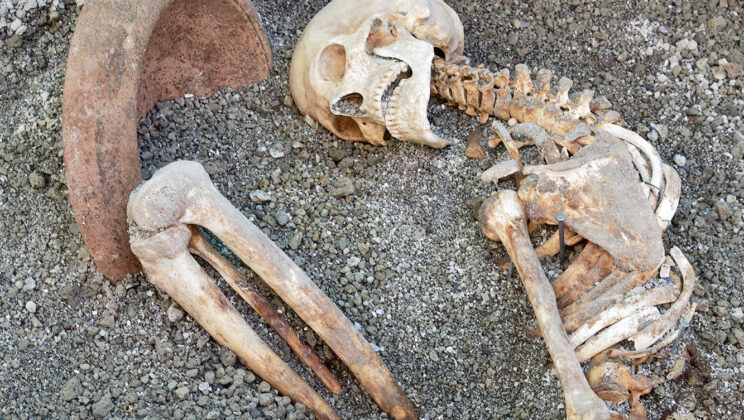
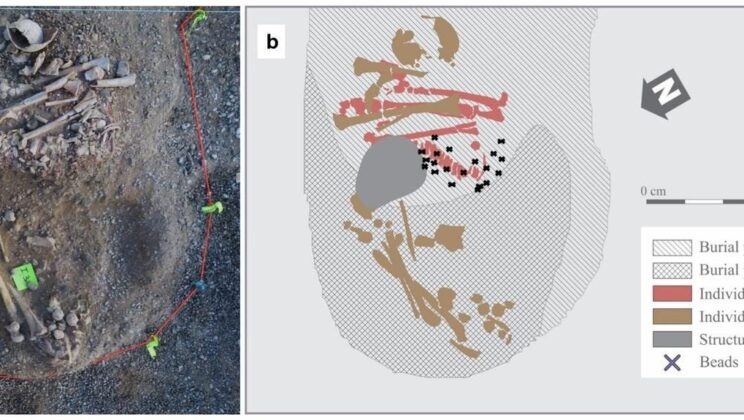
For thousands of years, a Stone Age cemetery on Sweden’s Baltic island of Gotland quietly preserved an extraordinary pattern of children, parents, siblings, and even more distant relatives sharing the same graves, yet the hidden logic behind these carefully repeated burials remained invisible until ancient DNA reconstructed the family connections that archaeology alone could never see
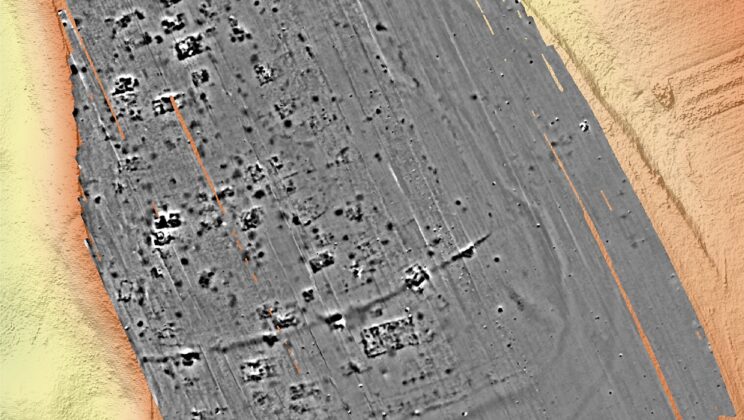
Two brothers shared the same ancient family lineage, yet one was given a lavish central tomb while the other was buried more than 200 meters away at the cemetery’s edge, revealing how wealth and status could divide even the closest relatives in Xiongnu society
For nearly two centuries on the Mongolian steppe, members of the same ancient families returned to the same cemetery, yet some were buried at its center in elaborate tombs while others were pushed to the margins, leaving researchers to uncover what really determined a person’s place among the dead
Two brothers shared the same ancient bloodline, yet one was buried beside his wife in a lavish central tomb while the other was sent more than 200 meters away to the cemetery’s edge
Along the Angara River, families buried their children and relatives one after another roughly 5,500 years ago, and ancient DNA from their teeth now reveals how a mysterious plague swept through these mobile hunter-gatherer communities in a matter of decades
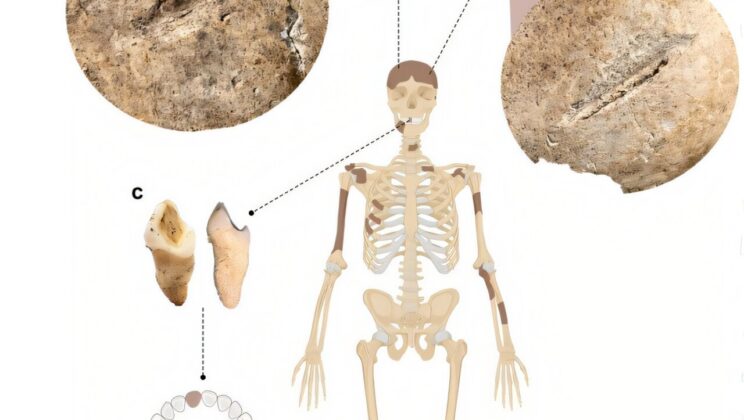
A narrow slash across the jaw of a 90,000-year-old human skeleton seemed easy to overlook, but modern scans revealed that the wound cut through both bone and tooth—and that the person survived long enough for the injury to begin healing
Stonehenge’s six-ton Altar Stone may have spent thousands of years stranded on a vanished landscape beneath the North Sea before prehistoric people carried it the rest of the way, according to a new investigation into one of archaeology’s oldest transportation mysteries
The empty cavity left behind after a stroke began filling with living blood vessels and repair cells, raising an unexpected question about whether damaged brain tissue is as permanently lost as it once seemed
Long before anyone measured moonlight, ancient Egyptians chose a silver-gray baboon to embody their moon god, and now its shimmering fur appears to carry the same light that inspired a civilization
For more than 1,500 years, a quiet cave high above the Himalayan valleys preserved the remains of people whose DNA carried an almost perfectly balanced blend of ancient Tibetan and North Indian ancestry, inviting a new look at when two worlds first came together across one of Earth’s most formidable mountain landscapes
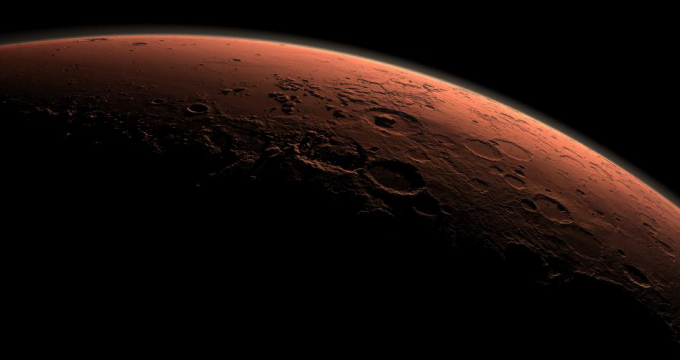
Barely visible rings suddenly emerged across Venus only after its ordinary sunlight was viewed through an extraordinarily sensitive polarimeter, hinting that enormous atmospheric waves may have been hiding above the planet’s clouds all along
The quiet background noise surrounding a quantum computer may spend an entire calculation behaving like an invisible observer, repeatedly freezing the very transition the machine must complete just as the answer is finally beginning to emerge
Heat suddenly began traveling from a colder environment into a hotter quantum system after scientists put two otherwise ordinary thermal interactions into a state where neither happened first nor second, raising an unexpected question about how the familiar rules of thermodynamics behave when the order of events itself becomes uncertain
For just one ten-trillionth of a second, an ordinary semiconductor behaved like a topological material that physics says it should never become—then the impossible electronic state vanished as quickly as the laser pulse that created it
Thousands of years after Neanderthals disappeared, some of the genetic fragments they left behind became concentrated in one unexpected corner of the human genome, where they are still closely linked to the way fats are processed today
Inside a cave near present-day Beijing, the bones of a person who lived about 40,000 years ago preserved just enough DNA to reveal that the ancestors of present-day Europeans and Asians had already begun following different evolutionary paths
Ancient DNA suggests that the Neanderthals living in western Europe after about 48,000 years ago were not simply the descendants of those who had lived there before, hinting at an earlier upheaval within their own species