Nearly 1,400 years ago, a Langobard woman survived two severe blows to the head, including a cut from a blade and a crushing fracture. The injuries had begun to heal, making her the first direct archaeological evidence of interpersonal violence against a Langobard woman.
The Langobards were an ancient Germanic people who established a kingdom in parts of Italy and Hungary between roughly the sixth and eighth centuries CE. Their archaeological remains have often been associated with weapons and signs of violent injury.
But until now, the skeletal evidence of interpersonal violence among Langobards had been entirely male.
That did not fit neatly with the group’s legal records. The Edictum Rothari, for example, contains six provisions concerning violence against women. The laws include cases involving husbands killing wives as well as women taking part in fights between men.
One provision, Liutprand 141, even describes men sending women to fight for them and says women could carry out such acts “more cruelly than men might do,” according to study co-author Valentina Martinoia of the University of Udine.
T46 adds physical evidence to that record.
Two different injuries to the head
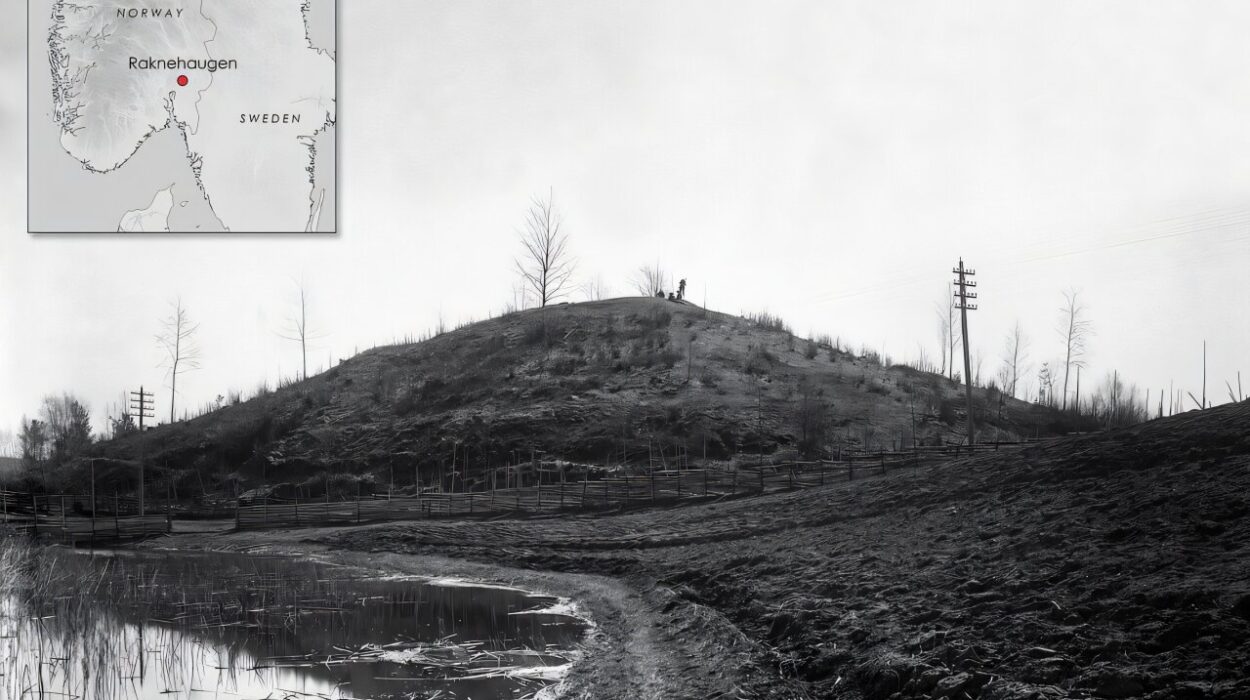
Researchers identified T46 among remains excavated in 2012 at the Ferrovia cemetery in Cividale del Friuli, the first Langobard duchy in Italy. The excavation was carried out as an emergency rescue operation during urban redevelopment.
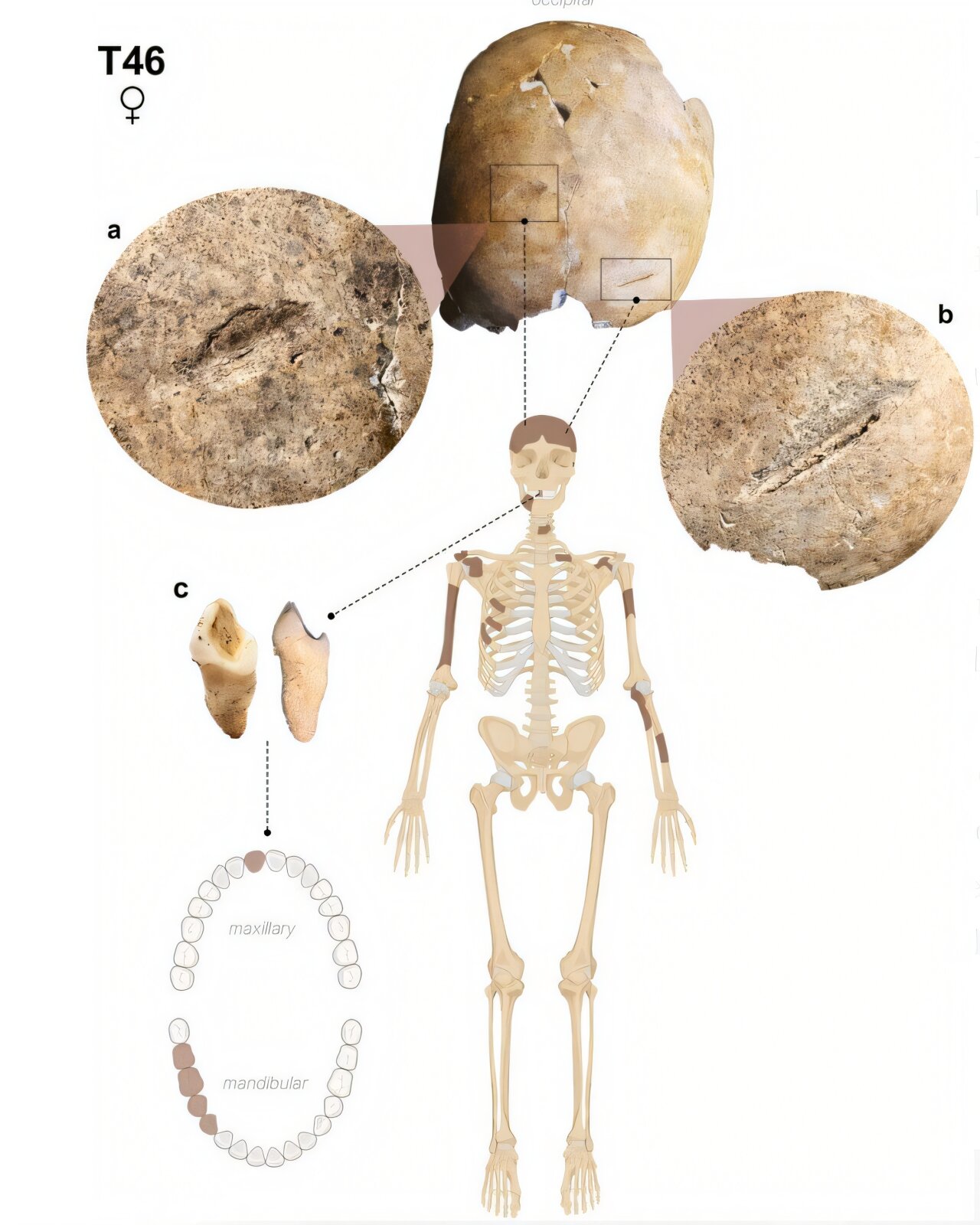
The skeleton was badly damaged. Later graves had cut through it, leaving the bones broken and incomplete. Because of that condition, researchers used protein analysis to determine that T46 was female.
Her skull preserved two injuries.
One was a narrow cut on the left side of her forehead. Its shape, angle and apparent force indicate that a person standing in front of her struck downward toward her head. The injury is consistent with a blade such as a scramasax, a long knife associated with Germanic warriors.
The other injury was a crushing fracture. Researchers say it was likely caused by a blunt, flat object, such as a stone. The wound also showed signs of infection, suggesting that her recovery was difficult.
Neither injury was simply an indication of what happened at the moment of violence. Both had evidence of healing.
That means T46 survived the encounter for years.
Her injuries resemble those found in men
Researchers compared T46’s injuries with other Langobard cases involving head trauma. Across Italy and what is now Hungary, they identified 33 people with comparable injuries. All were men.
The absence of women from that record may have several explanations. Women may have been less involved in raids and armed warfare, forms of violence that are more likely to produce injuries visible on bone.
Violence against women may also have happened in ways that left little archaeological evidence. Household abuse, for example, can injure soft tissue without leaving marks on a skeleton.
The researchers therefore cannot determine exactly how T46 was injured.
But the healed wounds provide evidence that she lived long enough afterward to recover, and the researchers say the healing indicates that she received care and social support.
The researchers want to look again
T46’s case challenges the idea that interpersonal violence in Langobard society can be understood as an exclusively male experience. The researchers propose systematically revisiting evidence for violence against Langobard women.
Future work could include isotope studies to investigate whether people who suffered such injuries were local or came from elsewhere. Ancient DNA, protein analysis and conventional examination of pathological changes could also be combined to identify additional cases.
The study was published in the International Journal of Paleopathology.