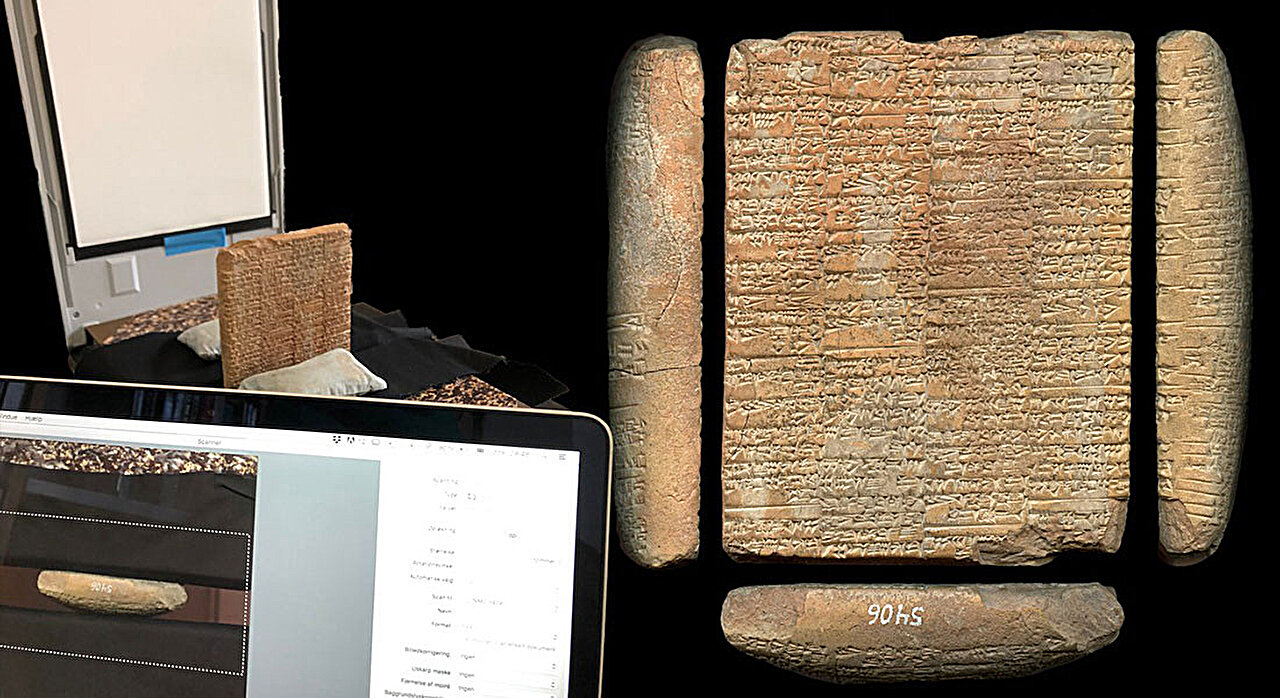
More than 4,000-year-old clay tablets held at Denmark’s National Museum contain texts about ancient medicine, magical rituals, royal traditions and the everyday paperwork used to manage goods and people.
The tablets were written in cuneiform, an early writing system that emerged about 5,200 years ago among ancient cultures in what is now Iraq and Syria. Over time, writing on clay became part of the administrative systems of increasingly complex urban societies.
The National Museum has accumulated its collection over roughly 100 years. Many of the tablets are more than 4,000 years old, and they were written in languages that are no longer spoken.
Researchers from the museum and the University of Copenhagen have now analyzed, identified and digitized all the ancient texts as part of the Hidden Treasures project.
The collection covers a broad range of subjects. Alongside accounts and letters are medical treatments and magical incantations.
Some of the most unusual material came from Hama, an ancient city in what is now Syria.
Hama tablet preserves an anti-witchcraft ritual
The Hama tablets date to nearly 3,000 years ago. They came from a site investigated by a Danish expedition in the 1930s.
In 720 BC, Assyrian warriors destroyed and looted Hama and carried their spoils back to Assur, the Assyrian capital in what is now Iraq. Some clay tablets were left behind and eventually became part of the National Museum’s collection.
The tablets appear to have come from what researchers believe was a large temple library. They contain medical treatments and magical incantations, subjects for which almost no other cuneiform texts from the same region and period have been found.
One tablet describes an anti-witchcraft ritual.
The ritual was considered important to royal authority in Assyria because it was intended to protect a king from misfortunes, including political instability. It lasted through the night and involved burning small figures made from wax and clay while an exorcist recited prescribed incantations.
Researchers were surprised to find such a text at Hama. The city was located far from Assyria’s capital and the major literary cultures of Babylonia, making the tablet’s location particularly unexpected.
School text records ancient kings
Another tablet in the collection preserves a copy of a well-known regnal list, a record of kings that includes both mythical and historical figures.
The list reaches back to kings who were said to have ruled before Noah and the Flood. The National Museum’s tablet is a school text and includes kings who ruled toward the end of the third millennium BC.
Other versions of the same list include Gilgamesh, the legendary king associated with the Epic of Gilgamesh.
The researchers say the list is among the few pieces of evidence that suggest Gilgamesh may have been a historical person. They had not previously known that a copy of the list was held in Denmark.
Administrative records include a beer receipt
The collection also contains tablets from Tell Shemshara in northern Iraq, where Danish archaeologists carried out excavations in 1957.
Those texts include correspondence between a local chieftain and an Assyrian king from around 1800 BC. They also contain administrative records.
Many cuneiform tablets document practical matters such as accounts and lists of goods and personnel, reflecting the need to keep track of increasingly complex societies.
Among the National Museum’s tablets is a particularly ordinary document: an ancient receipt for beer.
The collection preserves both unusual texts, including a ritual intended to protect a king, and routine records created to keep track of goods and people.