Ancient DNA from dogs buried alongside people in central Anatolia and at Gough’s Cave in Britain points to a surprisingly rapid spread of early dogs across Europe. The oldest dogs directly identified by nuclear DNA date to about 15,800 years ago, while genetically similar dogs were already present at widely separated sites by 14,000 years ago.
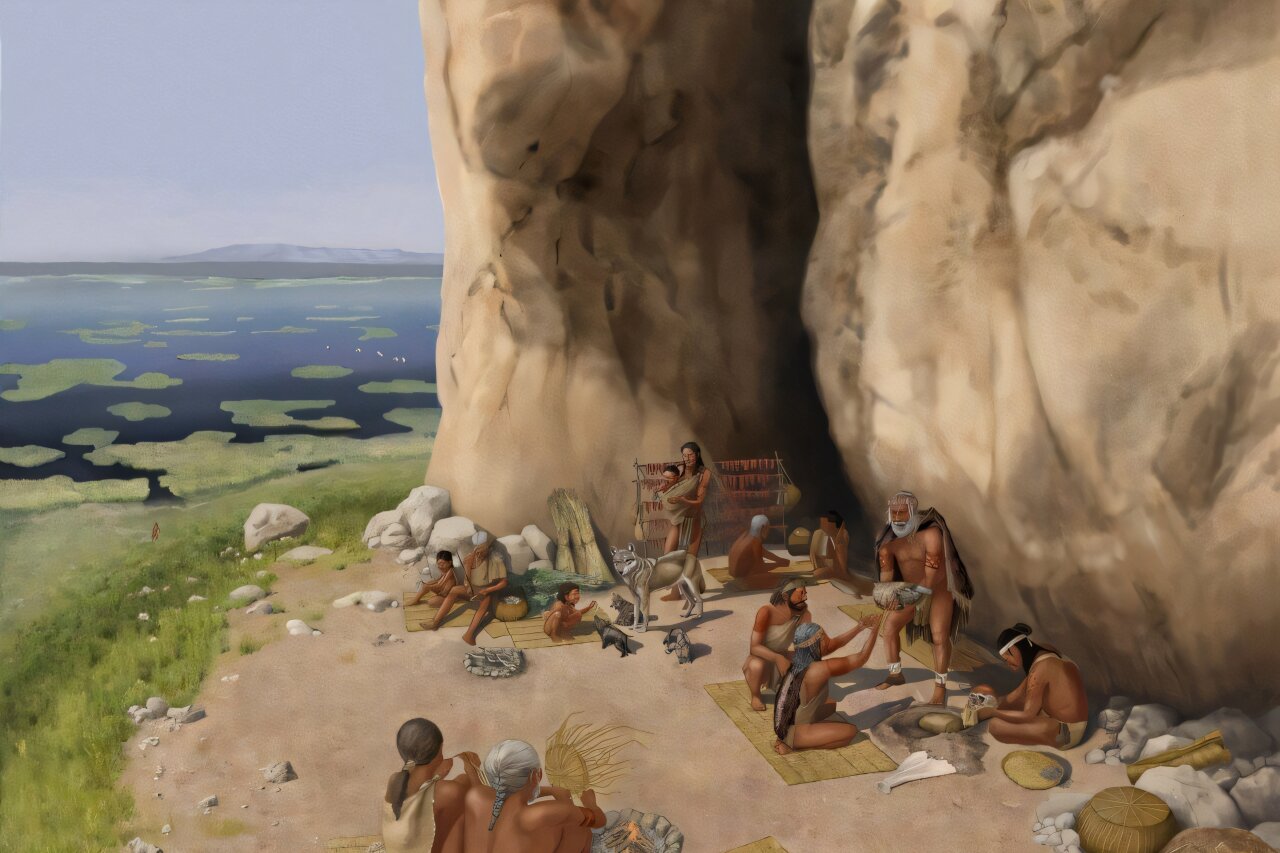
At Pınarbaşı, an Epipaleolithic rockshelter in central Anatolia, people returned regularly to camp, hunted animals and buried their dead. They also buried puppies.
Ancient DNA identified those puppies as dogs, making them the earliest dogs directly identified through nuclear DNA. The remains date to about 15,800 years ago.
Other evidence points to a close relationship between the animals and the people living there. Isotope analysis indicates that the dogs ate fish, which was also a major part of the human diet. The dogs were buried near human burials and received similar ritual treatment.
The people at Pınarbaşı hunted wild sheep and dangerous wild cattle. Because wolves and leopards were also present in central Anatolia at the time, the dogs may have helped with hunting or guarding, although their exact roles cannot be established from the evidence.
Ancient DNA links dogs in Anatolia and Britain
The genetic evidence becomes especially striking when Pınarbaşı is compared with Gough’s Cave in Britain.
Researchers analyzed ancient DNA from late Upper Paleolithic canids at both sites and found a high degree of genetic similarity between dogs from Pınarbaşı and Gough’s Cave. The two sites are at opposite ends of Europe.
The genetic evidence suggests that this lineage of dogs moved across Europe very quickly, within a few centuries at most. Other dogs found in Germany, Italy and Switzerland fit the same broader pattern. Together, the remains indicate that dogs were already widely distributed across Europe and Turkey by at least 14,000 years ago.
The spread occurred among groups that differed culturally and genetically. Professor Douglas Baird suggested that dogs’ value to human groups probably helped drive these exchanges, while also pointing to the possibility that the animals themselves had some role in how they moved between groups.
The genetic evidence also indicates that these early dogs were ancestral to modern European breeds.
Dogs remained closely connected to people as farming began
A second set of findings comes from Boncuklu, about 30 kilometers from Pınarbaşı. The site dates to around 9000 BC, near the beginning of the Holocene, the warmer period that followed the end of the Ice Age.
New genetic techniques were used in what is described as the largest study of canid remains to date. They allowed researchers to classify about two-thirds of the analyzed remains as either dogs or wolves.
By this time, the people living at Boncuklu had adopted permanent settlement in wetlands. They later began cultivating domesticated plants and managing wild sheep in the nearby hills.
Dogs were buried at Boncuklu as well, but here they were placed directly in human burials. Their presence in this setting is consistent with possible roles in hunting and guarding and may also indicate involvement in early sheep herding.
Dogs moved west with early farmers
About 2,500 years after Boncuklu was first occupied, the first farmers in Europe spread westward from western Anatolia. They were genetically related to the Boncuklu population and brought Anatolian dogs with them.
Those dogs also moved west. Genetic evidence indicates that the Anatolian-derived Neolithic dogs interbred with dogs from local Mesolithic populations to a greater degree than the incoming Anatolian-derived farming populations interbred with those local groups.
The findings therefore provide evidence that dogs crossed cultural and genetic boundaries as they spread alongside people, with their movements and interactions differing from those of the human populations they lived among.