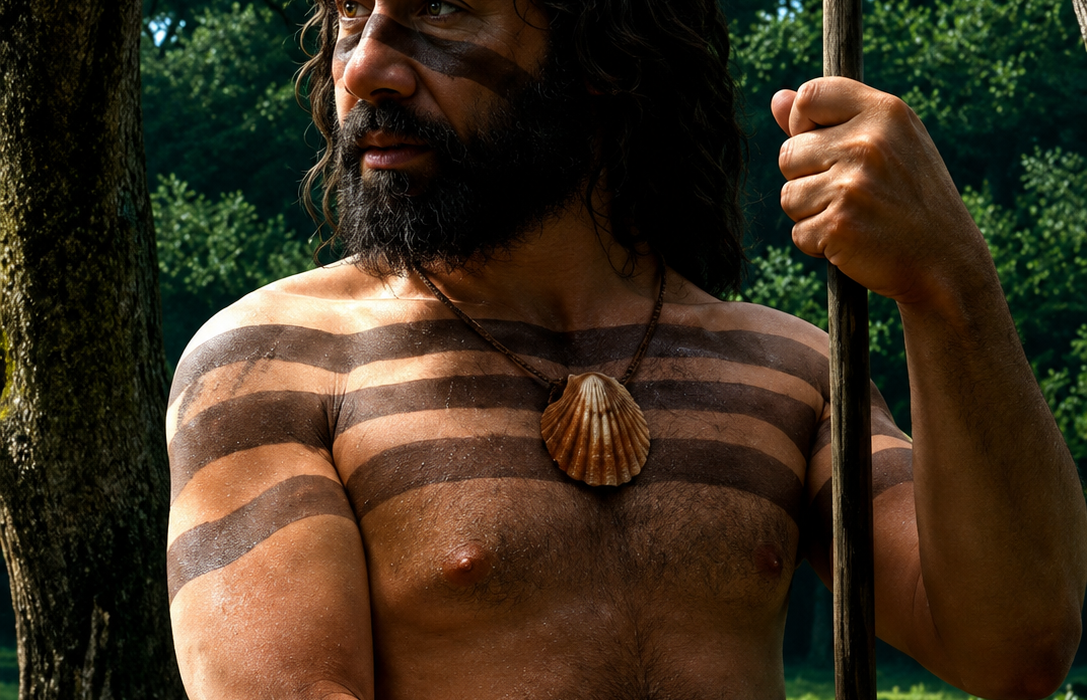
More than 200,000 years before modern humans permanently spread across Europe, brief and repeated journeys into Neanderthal territory may already have been unfolding. Fossils, ancient genomes, and stone tools now combine to paint a far more intricate picture than a single migration or sudden replacement, revealing a continent where different human populations repeatedly crossed paths, interbred, vanished, and sometimes left descendants while other lineages disappeared entirely.
For many years, one of the central stories of human evolution seemed relatively straightforward. Homo sapiens evolved in Africa, expanded out of the continent roughly 60,000 years ago, reached Europe around 41,000 years ago with the spread of Aurignacian stone-tool traditions, and eventually replaced the resident Neanderthals.
The research reviewed in this paper argues that the evidence has become much more complicated.
Drawing together discoveries from fossils, archaeology, and ancient DNA, the authors describe a growing body of evidence that Europe experienced not one arrival of modern humans, but multiple dispersals separated by tens of thousands of years. Some of these populations may have disappeared without leaving lasting descendants. Others contributed to later Eurasian populations. Throughout these encounters, Neanderthals and Homo sapiens repeatedly exchanged genes.
Rather than viewing Europe’s prehistory as a simple replacement of one human species by another, the paper presents a picture of repeated meetings between populations whose histories overlapped far more often than previously recognized.
Two human lineages that evolved apart for hundreds of thousands of years
The paper begins by examining the long evolutionary separation between Neanderthals and modern humans.
According to genetic evidence summarized by the authors, the two lineages began diverging roughly 600,000 years ago, after which Neanderthals largely evolved in Eurasia while the lineage leading to Homo sapiens developed primarily in Africa.
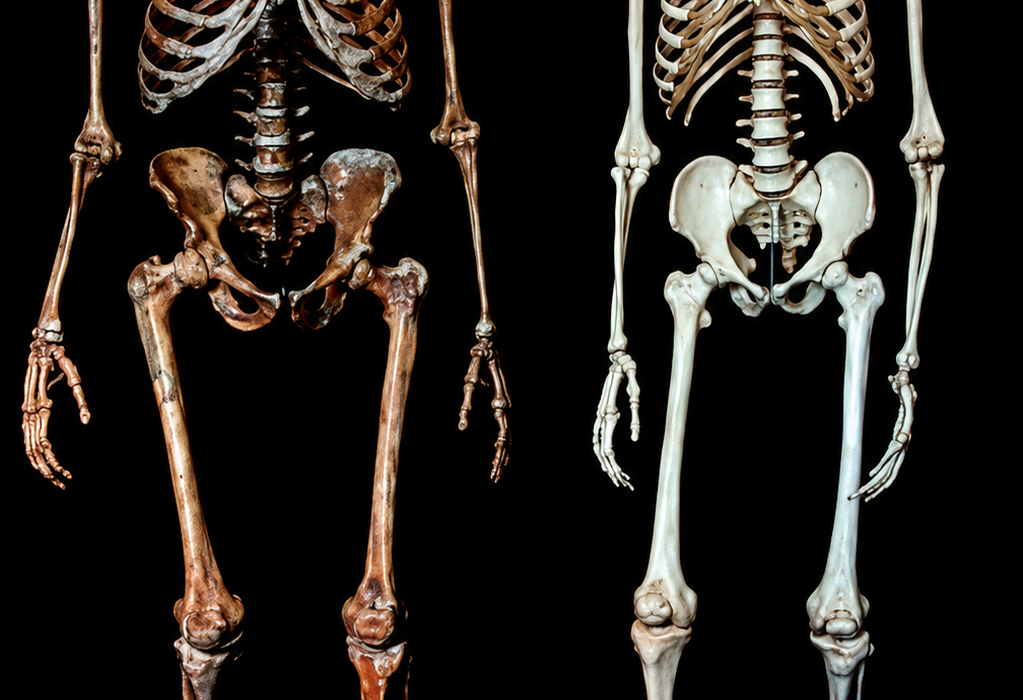
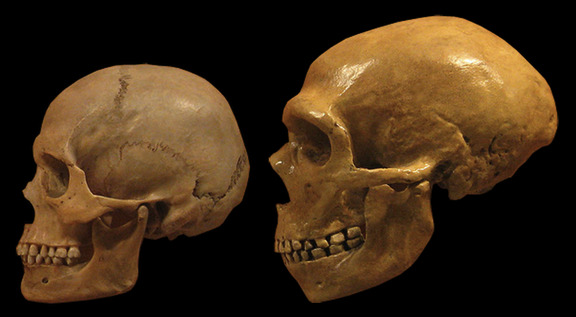
Despite their evolutionary separation, the differences between the two groups extended well beyond the familiar heavy brow ridges often associated with Neanderthals. The paper describes distinctions in skull shape, pelvis structure, middle ear bones, and other anatomical features that many paleoanthropologists consider sufficient to classify them as separate species.
At the same time, genetics has demonstrated that this separation was incomplete. The lineages retained the ability to interbreed, producing fertile offspring even after evolving independently for hundreds of thousands of years.
The authors also argue that traditional labels such as “archaic” and “modern” can create confusion because they mix anatomical, behavioral, and chronological meanings. Instead, they discuss using terms such as “basal” and “derived” to distinguish earlier and later forms within each lineage according to evolutionary characteristics rather than implying that one group was simply primitive and another modern.
The search for the shared ancestor remains unresolved
The review revisits one of paleoanthropology’s longest-standing questions: which ancient human population gave rise to both Neanderthals and modern humans?
Earlier interpretations often identified fossils assigned to Homo heidelbergensis or Homo rhodesiensis as representing this common ancestor. However, the authors explain that more recent dating and anatomical analyses have complicated that picture.
For example, new dating places the Kabwe skull from Zambia at roughly 300,000 years old, considerably younger than expected for the common ancestor if the two lineages had already begun separating around 600,000 years ago. Other anatomical analyses also question whether these fossils fit comfortably as direct ancestors of modern humans.
As a result, the paper concludes that current evidence is insufficient to determine exactly which population represented the last common ancestor or where that ancestor lived.
Modern humans appear to have evolved through a complex African history
The review also argues that the evolution of Homo sapiens was not confined to a single location within Africa.
For many years, fossils such as Omo Kibish 1 and Herto in Ethiopia were considered among the earliest representatives of the species, dating to roughly 150,000 to 200,000 years ago.
More recent discoveries at Jebel Irhoud in Morocco, however, pushed evidence for early members of the Homo sapiens lineage back to approximately 300,000 years ago.
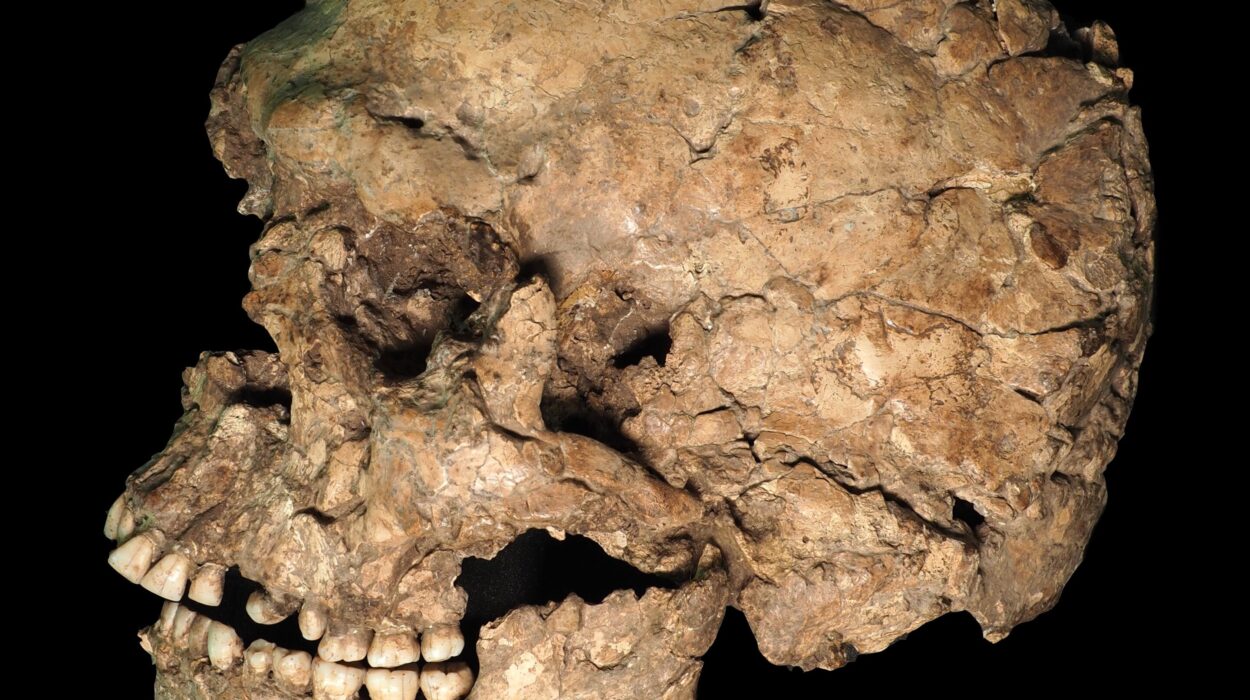
Those fossils combine ancestral characteristics—including a longer, lower braincase and stronger brow ridges—with features more typical of later Homo sapiens, such as delicate cheekbones and a more retracted face.
The authors argue that these discoveries support a broader “pan-African” model in which multiple populations spread across Africa evolved, mixed, separated, and sometimes disappeared over hundreds of thousands of years before eventually contributing to modern humans.
Greece may preserve evidence of Europe’s earliest known modern human
One of the most striking pieces of evidence discussed in the paper comes from Apidima Cave in Greece.
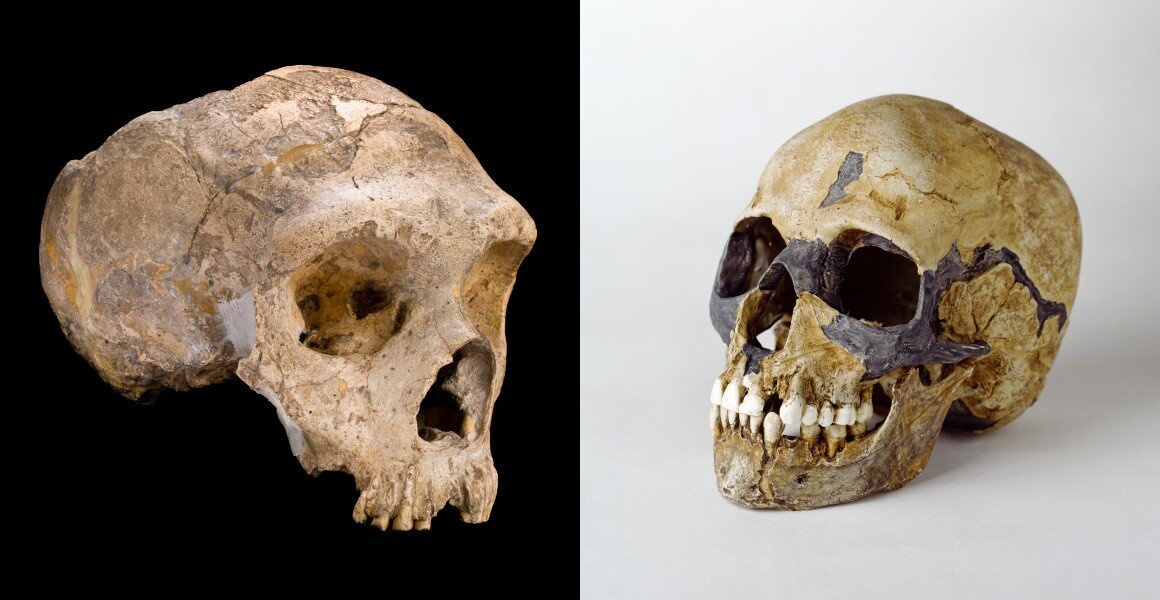
Two fossil skulls were recovered there decades ago. Initially, they were thought to belong to the same time period.
New dating and detailed anatomical analyses changed that interpretation.
According to the review, Apidima 1 has a minimum age of approximately 210,000 years and displays the rounded rear portion of the skull that characterizes Homo sapiens. Apidima 2, meanwhile, dates to at least 170,000 years ago and shows Neanderthal characteristics.
If these interpretations are correct, modern humans reached Europe more than 150,000 years earlier than previously believed.
The paper proposes that an early population of Homo sapiens may have entered Greece through the Levant and Anatolia before later being replaced by Neanderthals. The authors also note that not everyone agrees with this interpretation, highlighting an alternative published view questioning the Apidima conclusions.
Ancient DNA reveals repeated encounters instead of a single meeting
Genetic evidence has transformed understanding of these ancient populations.
Earlier genomic work established that people living outside Africa today generally carry around 2% Neanderthal DNA, indicating interbreeding before Neanderthals disappeared.
The review describes additional discoveries that extend this picture much further.
Ancient DNA indicates that gene exchange between early Neanderthal and Homo sapiens lineages may have occurred around 250,000 years ago, potentially during earlier movements of modern humans into Eurasia.
Later genomes reveal even more recent interactions.
The approximately 45,000-year-old individual from Zlatý kůň in present-day Czechia carried relatively long stretches of Neanderthal DNA, indicating fairly recent interbreeding in her ancestry. Genetic analyses also suggest that she belonged to an early population that existed before the divergence of today’s European and Asian populations.
Another picture emerges from Bacho Kiro Cave in Bulgaria.
Human remains dating between roughly 46,000 and 42,500 years ago, associated with the Initial Upper Paleolithic Bachokirian stone-tool industry, produced genomes indicating that these individuals had Neanderthal ancestors only a few generations earlier.
Unlike the later Oase 1 individual from Romania, whose lineage apparently left no descendants among later Eurasians, the Bacho Kiro individuals show genetic links to later East Asian populations, including the approximately 40,000-year-old Tianyuan individual from China.
Together, these genomes indicate that different waves of Homo sapiens entered Eurasia, and not all of them followed the same evolutionary path.
Stone tools trace multiple journeys into Europe
The archaeological evidence complements the fossil and genetic discoveries.
For decades, archaeologists debated who produced transitional stone-tool industries such as the Uluzzian of Italy.
The identification of two deciduous teeth from Grotta del Cavallo as belonging to Homo sapiens shifted that debate toward modern humans, although the paper notes that ancient DNA has not yet been recovered from these sites.
Another recently described discovery comes from Grotte Mandrin in France.
There, a deciduous molar identified as Homo sapiens was recovered from sediments dating between roughly 57,000 and 51,500 years ago. The tooth was associated with the distinctive Neronian stone-tool industry, characterized by standardized points interpreted either as very small spear tips or possible arrowheads.
The archaeological sequence at the site is especially intriguing because the Neronian layer lies between occupations associated with Neanderthals, raising questions about repeated movements of different human populations into the same region.
Rather than depicting Europe as being colonized through successive large invasions, the authors argue that the evidence increasingly resembles “small rivulets” of people moving into and out of Neanderthal territories over long periods.
Some populations persisted.
Others disappeared without leaving descendants.
Even late Neanderthal populations may have carried mixed ancestry
The review also discusses evidence from La Cotte de St Brelade on Jersey.
Human teeth originally identified as Neanderthal because of their size were reexamined using modern methods.
The study found that at least two individuals were represented. While the teeth possessed several Neanderthal characteristics, they also lacked some traits normally expected in Neanderthals and displayed other features more typical of Homo sapiens.
Because the remains probably date to less than 48,000 years ago, the authors suggest one possible explanation: these individuals may have had relatively recent mixed Neanderthal and modern human ancestry.
The paper emphasizes that ancient DNA would be needed to test this hypothesis.
Why did Neanderthals disappear?
The review does not argue that it has solved one of human evolution’s greatest mysteries.
Instead, it evaluates possible explanations consistent with the accumulating evidence.
Ancient DNA demonstrates that interbreeding occurred repeatedly.
The authors ask whether the direction of gene flow itself may hold clues.
So far, several genomes of early Homo sapiens preserve evidence of recent Neanderthal ancestors. Comparable evidence for recent Homo sapiens ancestry within sampled Neanderthal genomes has been much more limited.
The paper proposes a hypothesis that could help explain this pattern.
If Neanderthal individuals were repeatedly absorbed into Homo sapiens populations, they would simultaneously be removed from relatively small Neanderthal groups. Over time, such a continual loss of reproductively active individuals could have weakened already limited populations.
The authors describe this as one possible mechanism by which expanding Homo sapiens groups may have gradually absorbed Neanderthal populations rather than eliminating them solely through direct replacement.
They stress that this remains an interpretation rather than a demonstrated explanation.
New DNA recovered directly from cave sediments may transform the picture again
The review concludes by looking toward a technology that may dramatically reshape future research.
Instead of relying only on rare human fossils, scientists are increasingly recovering environmental DNA preserved within cave sediments.
According to the paper, this approach has already demonstrated the ability to identify humans at both species and individual levels.
As methods continue to improve, sediment DNA could help reconstruct where Neanderthals and Homo sapiens overlapped, identify the sex of individuals present at archaeological sites, explore family relationships, and measure the extent of genetic mixing between populations.
For a period of European prehistory where human fossils remain exceptionally scarce, these traces of ancient DNA preserved in cave deposits may provide an entirely new window into encounters that unfolded tens of thousands of years ago.
The emerging picture described throughout the review is one of repeated crossings rather than a single migration, of populations that met, separated, merged, disappeared, and sometimes endured through their descendants. Instead of a clean handover from one human species to another, Europe’s ancient past increasingly appears to have been shaped by a long sequence of overlapping histories whose genetic echoes remain embedded in people today.
More information
Chris Stringer et al, Mapping Interactions of H. neanderthalensis and Homo sapiens from the Fossil and Genetic Records, PaleoAnthropology (2022). DOI: 10.48738/2022.iss2.130