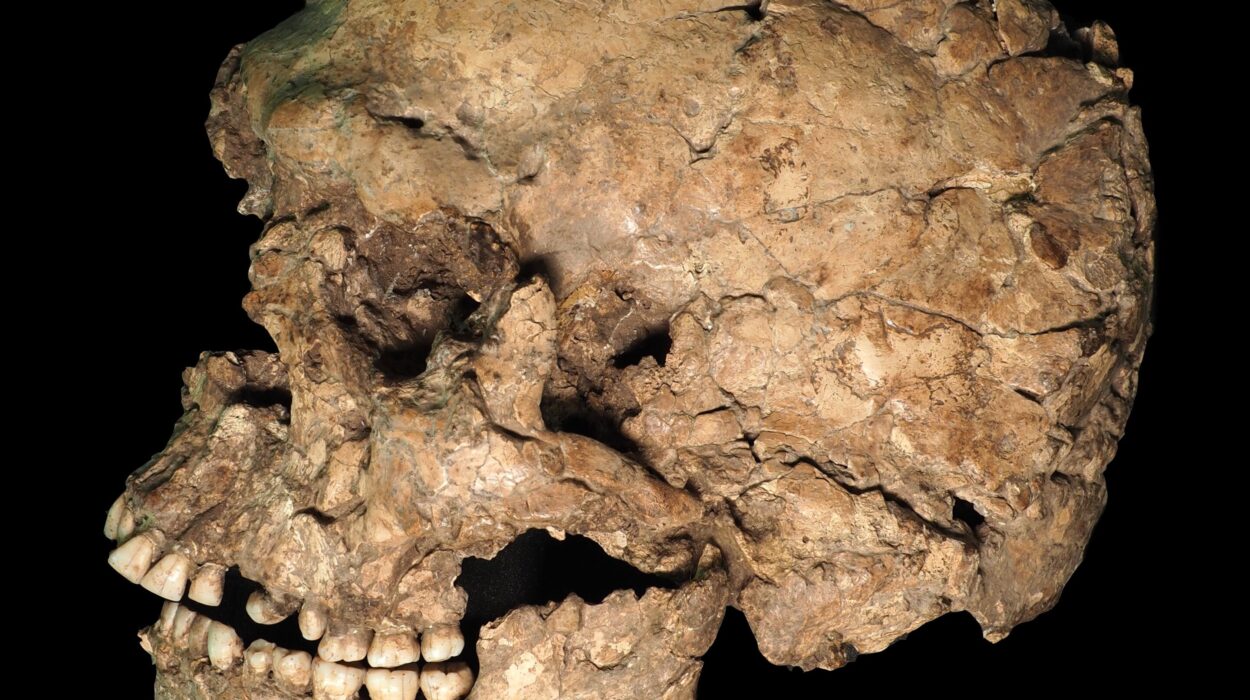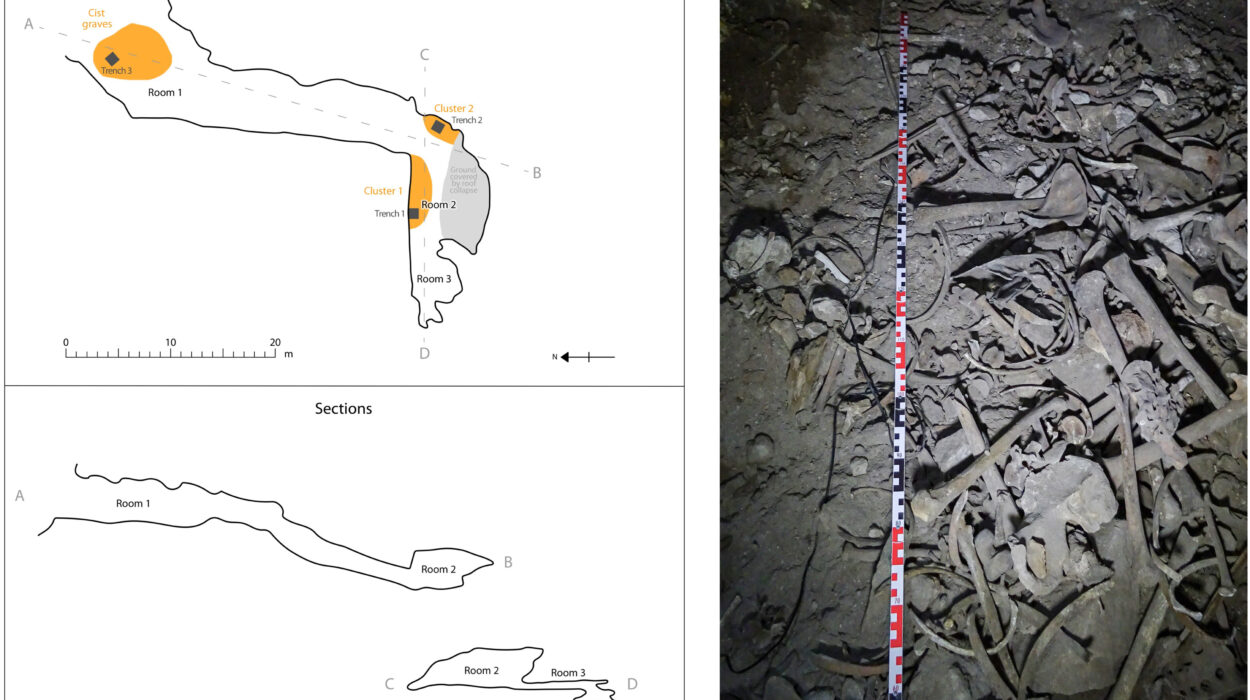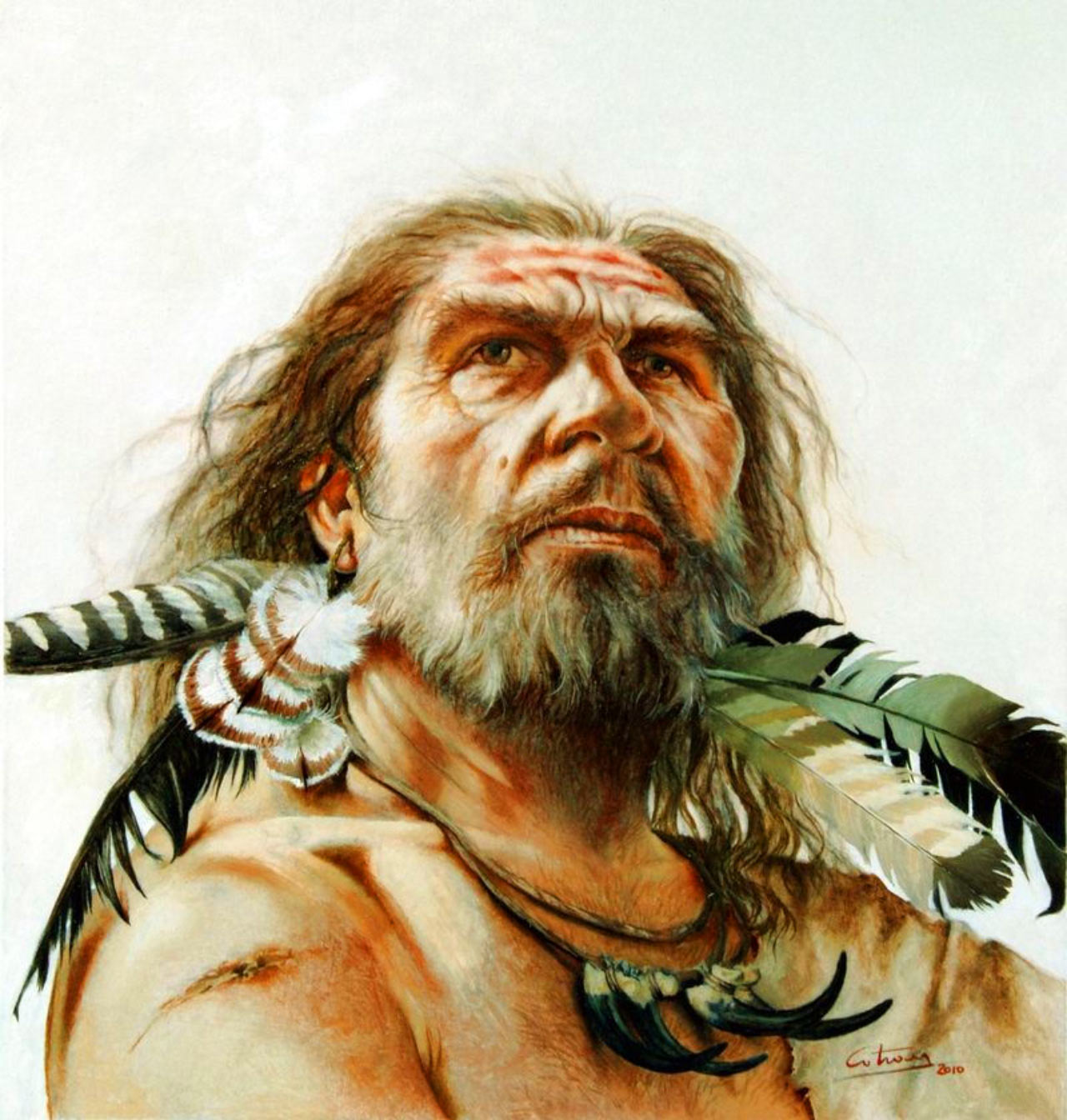
Nearly a quarter of a million years before the well-known encounters that gave modern humans Neanderthal ancestry, an earlier meeting may already have unfolded in Eurasia. By tracing genetic fragments across diverse African populations, researchers reconstructed a far older episode in which anatomically modern humans appear to have contributed DNA to Neanderthals, leaving a legacy that survived inside Neanderthal genomes for roughly 250,000 years while also reshaping how scientists understand the earliest movements of our own species.
For years, the best-known chapter of human-Neanderthal history has centered on what happened after modern humans expanded out of Africa roughly 75,000 years ago. During that migration, people entering Eurasia interbred with Neanderthals, leaving most present-day non-African populations with about 2% to 3% Neanderthal ancestry.
The new study instead focused on a much older and far less understood possibility: whether modern humans also contributed DNA to Neanderthals long before that famous exchange took place.
Rather than searching for answers in ancient fossils alone, the researchers examined genomes from living people across sub-Saharan Africa, looking for genetic patterns that preserved evidence of events that occurred hundreds of thousands of years ago.
Looking for ancient genetic footprints across Africa
The researchers analyzed high-coverage whole-genome sequences from 180 individuals representing 12 genetically diverse populations across Cameroon, Botswana, Tanzania, and Ethiopia. Together these populations span all four major language families spoken in sub-Saharan Africa and include agriculturalists, pastoralists, rainforest hunter-gatherers, and foraging communities.
One motivation for studying such diverse African genomes came from an unresolved puzzle. Earlier work had identified regions of African genomes that resemble Neanderthal DNA, even though Neanderthals are not thought to have lived in sub-Saharan Africa.
Those similarities could have two very different origins.
One possibility is relatively recent. After modern humans carrying Neanderthal ancestry migrated back into Africa over the past several thousand years, they introduced Neanderthal DNA into some African populations.
The second possibility reaches much deeper into the past. If an early group of anatomically modern humans left Africa long before the major out-of-Africa expansion, interbred with Neanderthals, and later disappeared, Neanderthals could have inherited modern human DNA that would still leave detectable genetic signatures today.
Distinguishing between these alternatives required separating two kinds of shared genetic regions that outwardly appear very similar but represent opposite directions of gene flow.
Untangling two different histories hidden inside similar DNA
The researchers identified what they called Neanderthal homologous regions—stretches of DNA shared between modern humans and Neanderthals.
Some of these regions represent Neanderthal introgressed regions, in which Neanderthal DNA entered modern humans after interbreeding in Eurasia.
Others represent modern human introgressed regions, where DNA originally belonging to anatomically modern humans had entered Neanderthals during a much earlier encounter.
Because both types produce similar-looking stretches of shared DNA, the team developed a statistical model capable of distinguishing between them.
The method relied on measuring genetic distances between Neanderthal genomes and modern human genomes. DNA inherited from Neanderthals follows a different pattern of genetic similarity than DNA that first entered Neanderthals from ancient modern humans, allowing the researchers to estimate the likely origin of each shared region.
Recent Neanderthal ancestry turned out to be unevenly distributed across Africa
The analysis showed that Neanderthal-derived DNA is not spread uniformly across sub-Saharan Africa.
Instead, it closely tracks recent ancestry from populations outside sub-Saharan Africa.
Individuals with little or no recent non-sub-Saharan African ancestry carried virtually no Neanderthal-derived DNA. In contrast, populations with substantial ancestry from regions outside sub-Saharan Africa contained measurable amounts.
The estimated proportion of Neanderthal ancestry ranged from essentially zero up to about 1.5% of the genome, with the highest levels occurring in the Amhara and Fulani populations.
After correcting for undetected short DNA segments, individuals in populations with substantial non-sub-Saharan African ancestry carried approximately 15.85 to 44.37 million DNA bases inherited from Neanderthals across their autosomal genomes.
The source of those Neanderthal fragments also differed between populations.
Genetic analyses indicated that Neanderthal-derived DNA in East African populations was associated primarily with ancestry related to people from the Levant. In contrast, Neanderthal-derived DNA in the Fulani population was most closely associated with ancestry shared with North African Berber populations.
These patterns fit a history involving multiple recent migrations back into Africa from different regions outside the continent.
A much older story emerged from the DNA shared by every African population
While recent Neanderthal ancestry varied dramatically between populations, another category of shared DNA remained remarkably consistent.
Genetic regions interpreted as modern human DNA that had entered Neanderthals appeared across nearly all of the African populations, regardless of how much recent ancestry they had from outside sub-Saharan Africa.
These segments were generally shorter than Neanderthal-derived segments found in modern humans, a pattern consistent with much greater age because recombination gradually breaks inherited DNA into smaller pieces over many generations.
After correcting for technical limitations in detecting short DNA fragments, the researchers estimated that approximately 5.56% to 6.83% of the Altai Neanderthal genome was inherited from anatomically modern humans.
Their estimate refines previous studies and falls within earlier proposed ranges while exceeding some earlier lower estimates.
The timing points to an unexpectedly early encounter
DNA fragments become progressively shorter over time as recombination shuffles chromosomes from one generation to the next.
Using the estimated lengths of the ancient modern human DNA segments preserved in Neanderthals, the researchers calculated when the original interbreeding most likely occurred.
Their preferred estimate places the event at roughly 261,000 years ago, with a confidence interval spanning approximately 239,000 to 284,000 years ago. Estimates from several other populations with little recent non-sub-Saharan African ancestry fell within a similar range.
The authors note that limitations in identifying very short DNA segments may make these estimates slightly too recent, potentially by as much as 10%.
Even so, the estimated timing precedes the major out-of-Africa expansion by well over 100,000 years.
According to the authors, this implies that a group of anatomically modern humans had already left Africa, reached regions inhabited by Neanderthals, interbred with them, and ultimately contributed little or nothing directly to living human populations.
The ancient migrants may no longer have living descendants
The study’s interpretation depends on an important evolutionary implication.
The population that contributed DNA to Neanderthals appears to have diverged before the diversification of all living human lineages. In other words, these early migrants were closely related to modern humans but were probably not direct ancestors of present-day populations.
The authors argue that this scenario fits archaeological evidence for the presence of anatomically modern humans in present-day Israel and Greece roughly 170,000 to 210,000 years ago, as well as earlier genetic evidence suggesting ancient African ancestry in Neanderthal mitochondrial DNA and previous analyses of Neanderthal nuclear genomes.
Rather than contributing substantially to today’s human populations, this early branch may survive primarily through the DNA it left behind inside Neanderthals.
Natural selection acted in both directions
The researchers also examined how natural selection influenced the exchange of DNA between the two human groups.
Previous work has shown that certain parts of modern human genomes contain very little Neanderthal ancestry. These “Neanderthal deserts” have been interpreted in different ways.
One explanation proposes that Neanderthals accumulated many harmful mutations because of their relatively small population size, causing natural selection to eliminate those variants after they entered modern humans.
Another possibility is that combinations of Neanderthal genes and modern human genes simply worked poorly together, making hybrid genomes less successful regardless of which direction the DNA moved.
The new analysis favors the second explanation.
When the researchers compared regions where modern human genomes lack Neanderthal DNA with corresponding regions in the Neanderthal genome, they found that modern human DNA was also unusually scarce there.
Using a high-resolution map of 261 introgression deserts, only 155 modern human introgressed regions occurred where roughly twice that number would be expected by chance. A lower-resolution comparison likewise found significantly fewer modern human DNA segments than expected.
The same pattern extended beyond those deserts.
Across all annotated autosomal genes, approximately 65% fewer genes than expected overlapped regions carrying ancient modern human DNA inside Neanderthals.
According to the authors, this widespread depletion is consistent with natural selection removing combinations of genes from different populations that interacted poorly together. They describe this pattern as a hallmark of incipient speciation, in which diverging populations begin accumulating genetic incompatibilities while still remaining capable of interbreeding.
Some ancient DNA survived despite selection
Not every piece of ancient modern human DNA disappeared from the Neanderthal genome.
Gene ontology analyses showed that the surviving regions contained a statistically significant enrichment of genes involved in cell-cell adhesion through plasma membrane adhesion molecules and closely related biological categories.
The study does not conclude why these genes persisted.
The authors note that they could represent cases of adaptive introgression, where transferred DNA proved beneficial, but they also caution that the pattern is consistent with differences in how strongly natural selection acted across different parts of the genome.
A three-stage history of gene flow
Taken together, the findings support a model involving three major episodes of genetic exchange.
The first occurred roughly 250,000 years ago, when an early group of anatomically modern humans left Africa and contributed DNA to Neanderthals.
The second happened about 40,000 to 54,000 years ago after the principal out-of-Africa expansion, when Neanderthals contributed DNA to modern humans living in Eurasia.
The third consisted of much more recent migrations back into sub-Saharan Africa, bringing Neanderthal-derived DNA into some African populations through admixture with people arriving from regions such as the Levant and North Africa.
Importantly, the study did not find evidence that Neanderthal ancestry is broadly distributed across sub-Saharan Africa. Instead, recent Neanderthal ancestry closely follows documented histories of more recent migrations from outside Africa.
A more complicated beginning for our species
The genetic picture emerging from this work is more intricate than a single journey out of Africa followed by one episode of interbreeding with Neanderthals.
Instead, the authors argue that modern human history likely included earlier migrations that largely vanished from today’s populations while leaving detectable traces inside Neanderthal genomes.
Those traces suggest that small groups of anatomically modern humans ventured into Eurasia hundreds of thousands of years before the expansion that eventually populated the rest of the world. Although those pioneers appear to have left little direct genetic legacy among living people, fragments of their DNA endured inside Neanderthals, preserving evidence of an unexpectedly early encounter between two closely related branches of humanity.
Publication details
Daniel N. Harris et al, Diverse African genomes reveal selection on ancient modern human introgressions in Neanderthals, Current Biology (2023). DOI: 10.1016/j.cub.2023.09.066