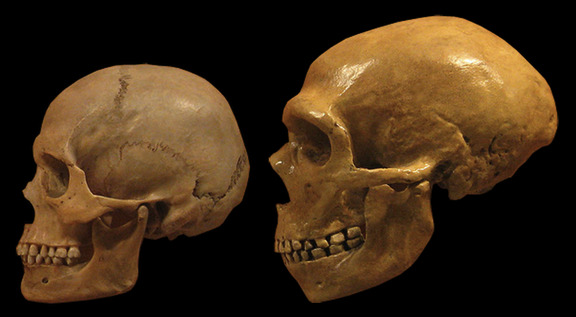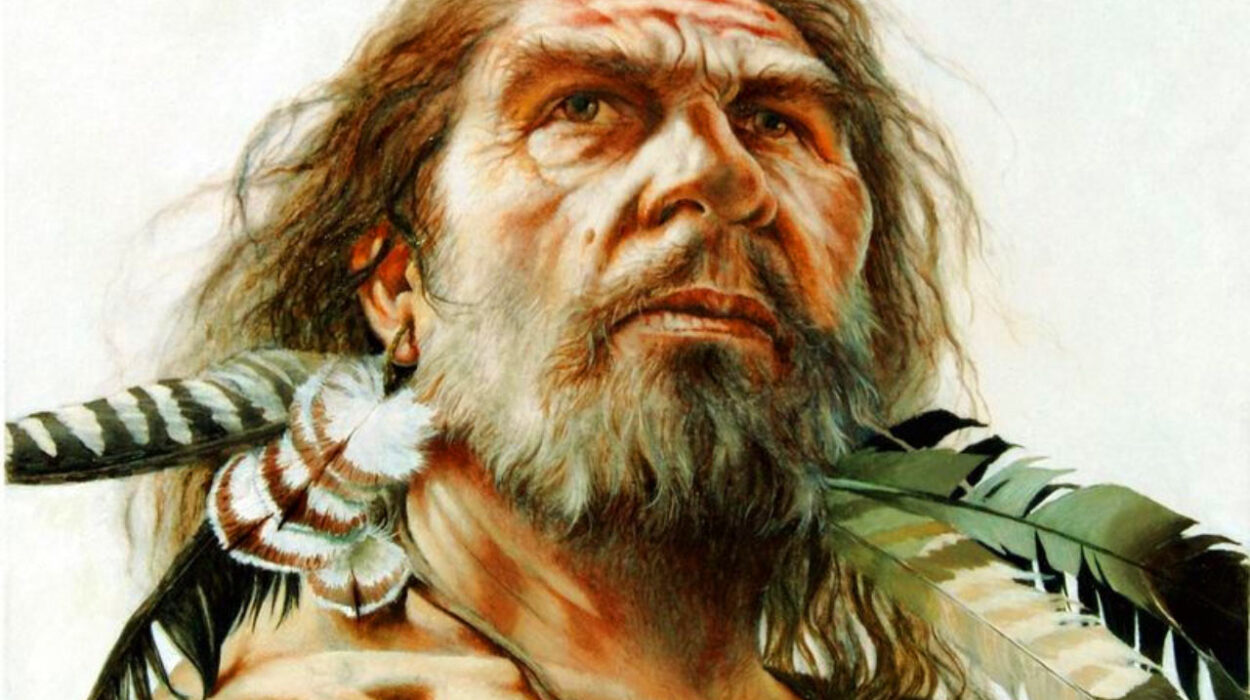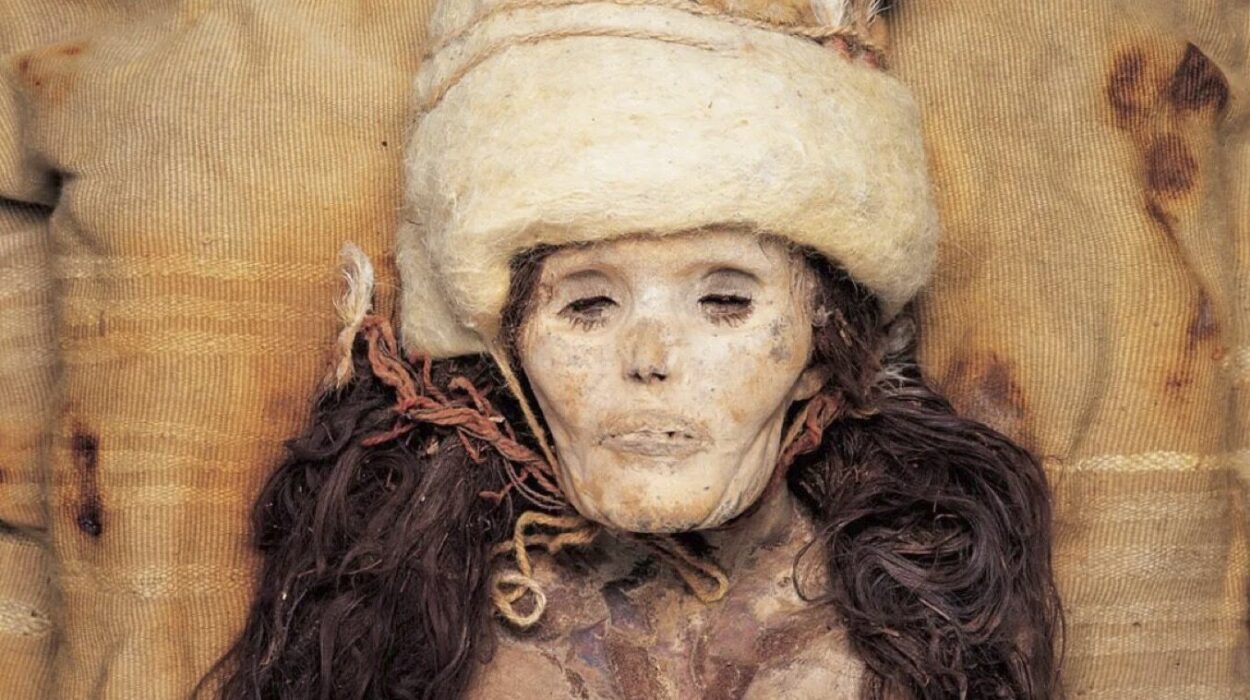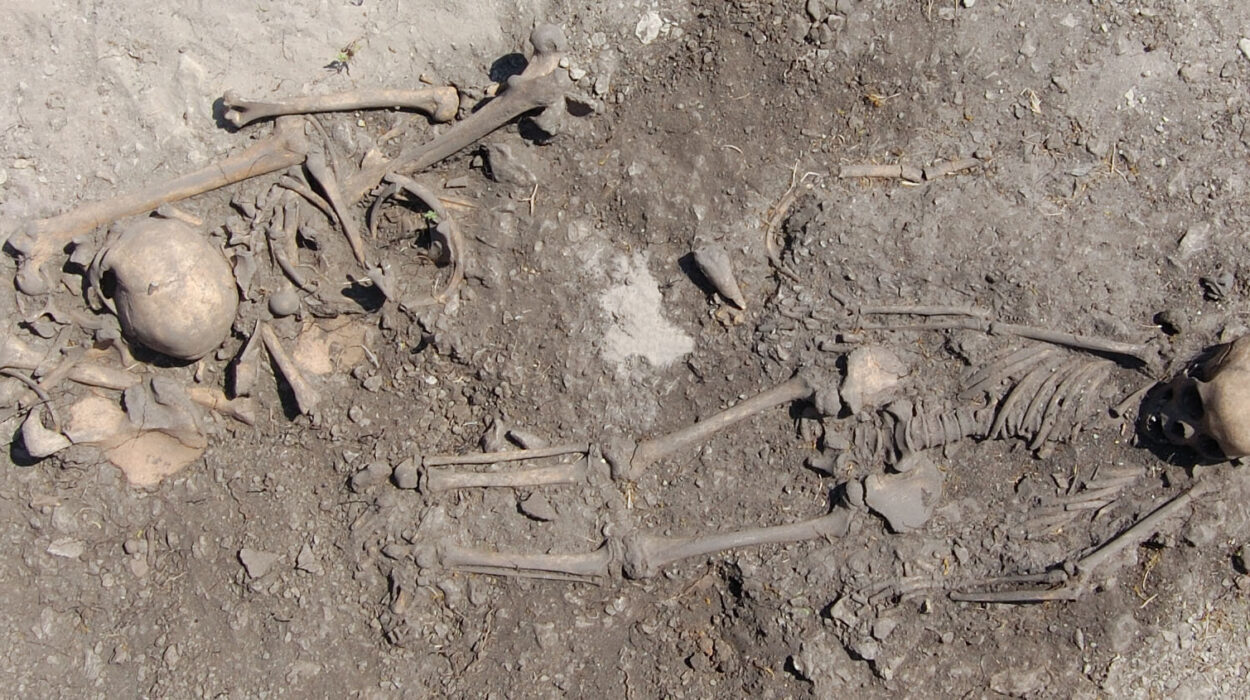
Long before Neanderthals disappeared forever, something dramatic appears to have unfolded within their own populations. Ancient DNA from across Europe points to a striking genetic shift in western Neanderthals around 48,000 years ago, while their eastern relatives seem to have maintained genetic continuity. The pattern raises the possibility that western Europe experienced a major population turnover well before anatomically modern humans entered the region.
For decades, much of the scientific discussion surrounding Neanderthals has focused on their final disappearance and their relationship with anatomically modern humans. Far less has been known about what happened inside Neanderthal populations themselves during the tens of thousands of years leading up to their extinction.
To investigate that question, researchers examined mitochondrial DNA from 13 Neanderthal individuals spanning different regions and time periods, including a newly generated genetic sequence from a roughly 48,500-year-old specimen discovered in Valdegoba Cave in northern Spain. Rather than producing a picture of a single stable population spread across Europe, the genetic evidence revealed a surprisingly uneven history.
A sharp genetic divide emerged around 48,000 years ago
When the researchers reconstructed the evolutionary relationships among the mitochondrial DNA sequences, one pattern immediately stood out.
All western European Neanderthals younger than approximately 48,000 radiocarbon years formed a tightly clustered genetic group. This branch of the family tree was strongly supported statistically, with a Bayesian posterior probability of 0.99, indicating that these individuals shared remarkably similar mitochondrial DNA.
Older western European Neanderthals, however, looked very different genetically. Instead of belonging to this younger cluster, they grouped with Neanderthals from eastern parts of the species’ geographic range. These older western individuals and eastern Neanderthals formed a broader, more diverse collection of lineages rather than a single unified branch.
The dividing line was therefore not simply geography. It also reflected time.
Western Europe before roughly 48,000 years ago contained genetically diverse Neanderthals. After that point, the surviving western population appeared much more genetically uniform.
The loss of genetic diversity was dramatic
To determine whether this visual pattern reflected a real demographic change, the researchers measured mitochondrial nucleotide diversity while correcting for differences in sample ages.
The contrast proved substantial.
The older western European individuals together with eastern Neanderthals possessed more than six times the mitochondrial genetic diversity found among the later western European group.
The study also compared these values with modern human populations.
According to the analyses, the genetic diversity among older western and eastern Neanderthals was comparable to that observed across anatomically modern humans worldwide. In contrast, the younger western Neanderthal population exhibited markedly lower diversity than modern Eurasian humans.
The researchers interpreted this combination of extremely low diversity and the tight genetic clustering as evidence that western Europe’s Neanderthal population experienced a major genetic turnover sometime around 48,000 years ago.
Testing competing explanations
The team did not stop with the observed genetic differences. They also asked whether different demographic histories could produce the pattern preserved in the mitochondrial DNA.
Using an Approximate Bayesian Computation approach together with Bayesian Serial SimCoal simulations, they evaluated two alternative scenarios.
The first represented a null model in which Neanderthals formed one continuously mixing population that maintained a constant size over time.
The second proposed that eastern and western Neanderthal populations had separated and subsequently followed independent demographic paths.
The genetic data consistently favored the second explanation.
Depending on the mitochondrial sequence length analyzed, the alternative model received between 2.5 and 4.1 times greater posterior support than the single stable-population model.
The simulations also produced estimates of effective female population size. Posterior distributions were consistent with an intermediate effective female population of roughly 300 individuals in western Europe and about 2,000 in the eastern population.
Together, these modeling results aligned with the genetic evidence indicating that eastern and western Neanderthal populations did not share identical demographic histories.
A possible scenario of extinction and recolonization
The authors proposed one evolutionary scenario capable of explaining the observed genetic pattern.
Under this interpretation, eastern and western Neanderthal populations may first have diverged roughly 55,000 to 70,000 years ago. Later, much of the western population may have disappeared across most of its range.
Western Europe would then have been recolonized either by Neanderthals expanding westward from eastern populations or by descendants of a small surviving refugium somewhere within western Europe itself.
This interpretation remains a hypothesis rather than a demonstrated historical sequence, but the available mitochondrial DNA fits such a scenario.
Meanwhile, eastern Neanderthals appear to have maintained genetic continuity until the species ultimately disappeared around 28,000 years ago.
The precise timing of the western turnover remains uncertain.
The youngest specimen belonging to the older genetic group—the Valdegoba individual—dates to approximately 48,000 years ago, implying that the population replacement occurred sometime after that individual lived. However, the estimated common maternal ancestor of the younger western group dates to about 58,000 years ago, with a 95% confidence interval spanning roughly 54,000 to 77,000 years.
The authors note that these dates are not necessarily contradictory. The Valdegoba specimen lies near the practical limits of radiocarbon dating and may therefore be younger than estimated. Alternatively, some mitochondrial diversity may have survived during the turnover, meaning the common ancestor of the younger group could predate the demographic event itself.
Climate may have played an important role
If western Europe’s Neanderthals truly underwent a demographic collapse and replacement, what might have caused it?
The authors emphasize that the genetic evidence alone cannot answer this question. However, they point to one possibility discussed within the paper.
The inferred turnover appears to have occurred before anatomically modern humans reached western Europe. Because of this timing, the event cannot easily be attributed to interactions with modern humans.
Instead, the researchers suggest that climatic deterioration during the early part of Marine Isotope Stage 3 could have contributed.
During this period, several exceptionally cold intervals known as Heinrich events 5 and 6 occurred. Because these episodes are thought to have been linked to disruptions of North Atlantic ocean circulation, western Europe may have experienced particularly severe environmental impacts.
The authors speculate that such environmental changes could have caused a severe population bottleneck or even local extinction across western Europe while eastern populations remained comparatively stable.
They note that this idea is consistent with previous morphological studies and a paleovegetation study cited in the paper that concluded European environments during Heinrich Event 5 were unsuitable for Neanderthals.
Even so, the genetic analyses cannot directly establish climate as the cause. The climatic explanation remains an interpretation consistent with the observed timing rather than a demonstrated mechanism.
Ancient DNA from a Spanish cave added an important piece
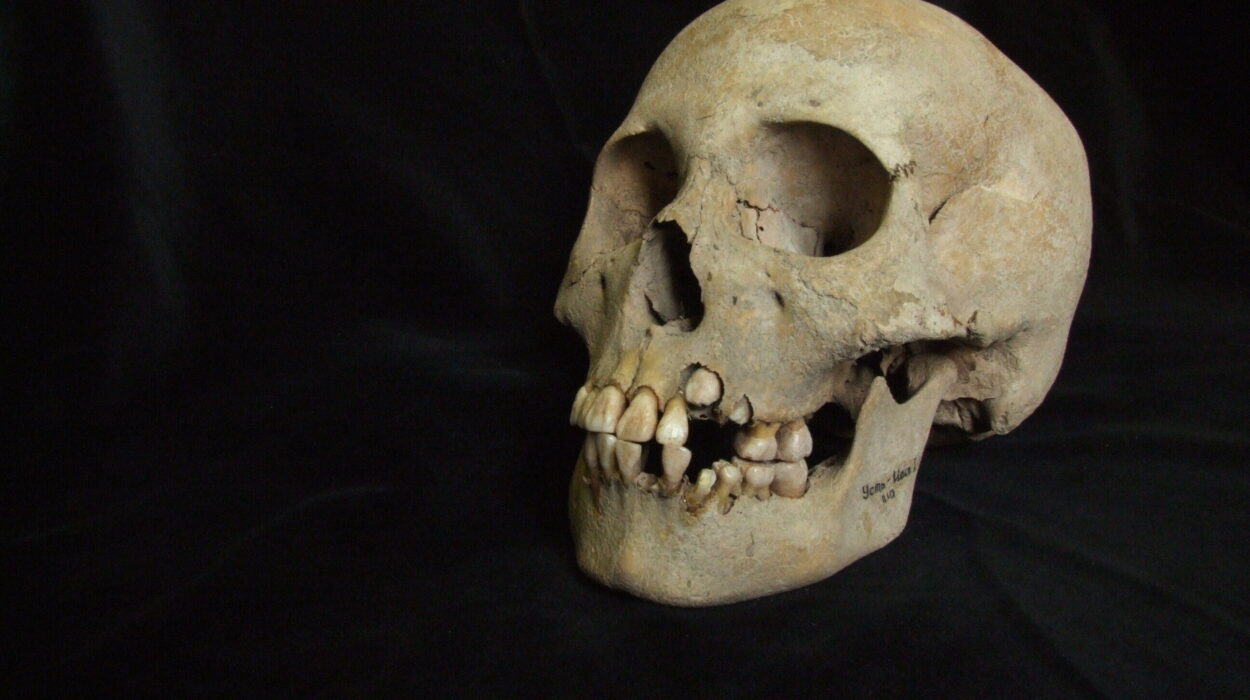
An essential part of the study was the recovery of a new mitochondrial DNA sequence from the Valdegoba Cave specimen in Spain.
Researchers generated a 303-base-pair mitochondrial control-region sequence using multiplex polymerase chain reaction, followed by deep sequencing. Eleven independent PCR amplifications were each performed in triplicate to help distinguish authentic ancient DNA from contamination and sequencing errors.
The resulting sequence was analyzed alongside mitochondrial DNA from 12 previously published Neanderthal individuals.
This expanded dataset provided the basis for the phylogenetic analyses, diversity estimates, and demographic simulations that ultimately revealed the contrasting histories of eastern and western Neanderthal populations.
A more complicated ending for Neanderthals
Rather than depicting Neanderthals as a single population gradually approaching extinction, the genetic evidence points toward a more dynamic history.
Western Europe appears to have undergone a substantial loss of mitochondrial diversity and the emergence of a genetically distinct Neanderthal population sometime around 48,000 years ago. Eastern populations, in contrast, appear to have retained genetic continuity over the same period.
The study does not claim to have reconstructed every step of this demographic transformation. The authors acknowledge that additional genomic data from more Neanderthal individuals will be needed to refine both the timing and the nature of the proposed population turnover.
Even so, the mitochondrial evidence indicates that one of the most significant changes in Neanderthal history may have occurred not at the moment of their extinction, but thousands of years earlier, when western Europe’s Neanderthals were largely replaced by another genetically distinct branch of their own species.
More information
Partial genetic turnover in neandertals: continuity in the east and population replacement in the west, February 23, 2012. Mol Biol Evol doi: 10.1093/molbev/mss074