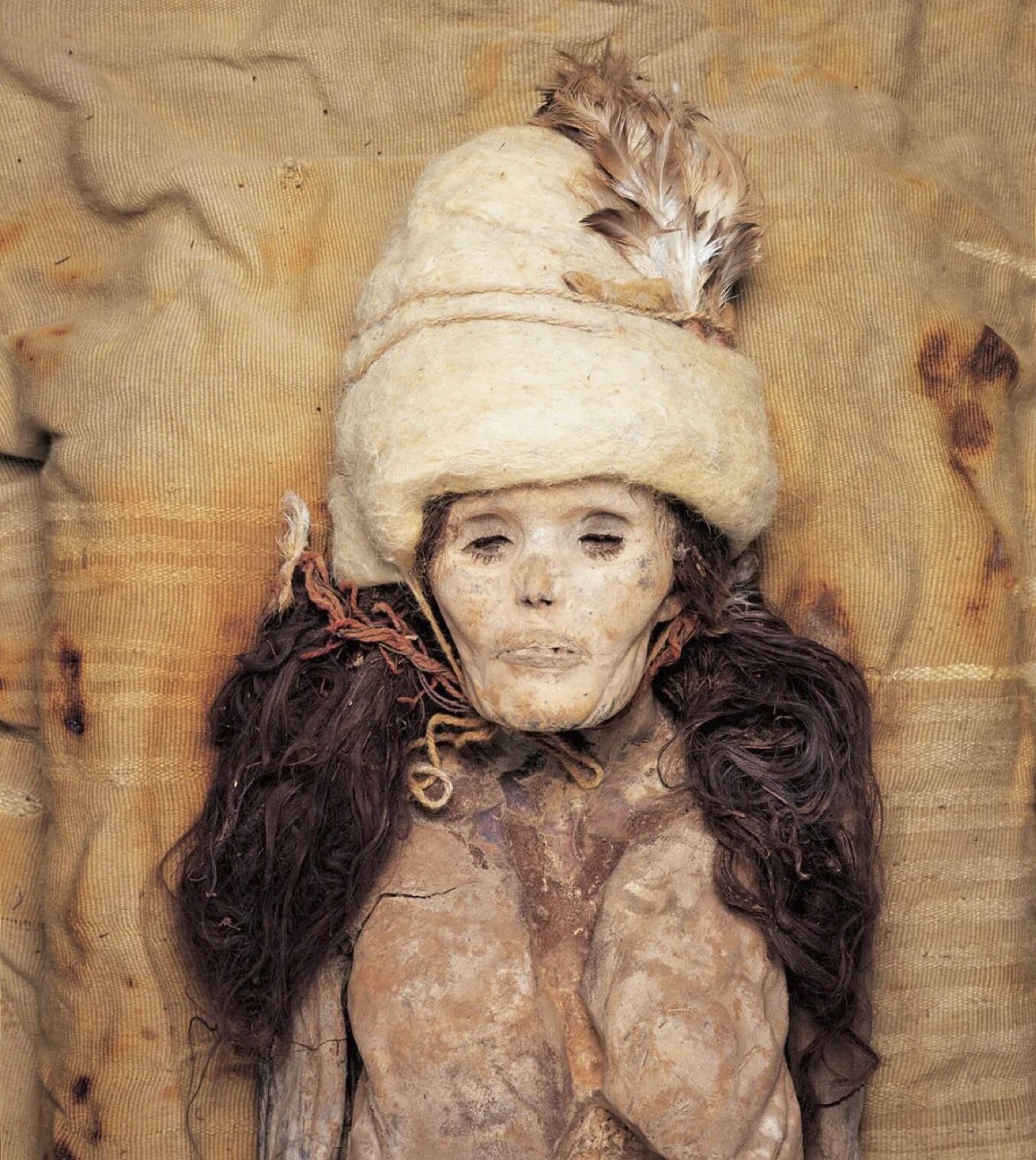
Wooden boat-shaped coffins, cattle-hide coverings, wool clothing, dairy foods, wheat, millet, and even kefir-like cheese painted a picture of a Bronze Age society deeply connected to ideas from across Eurasia. Yet beneath those cultural links lay an unexpected genetic story: the earliest known people of China’s Tarim Basin were not recent arrivals from neighboring pastoralists or farming civilizations, but members of an isolated local population whose ancestry stretched back to one of Asia’s oldest genetic lineages.
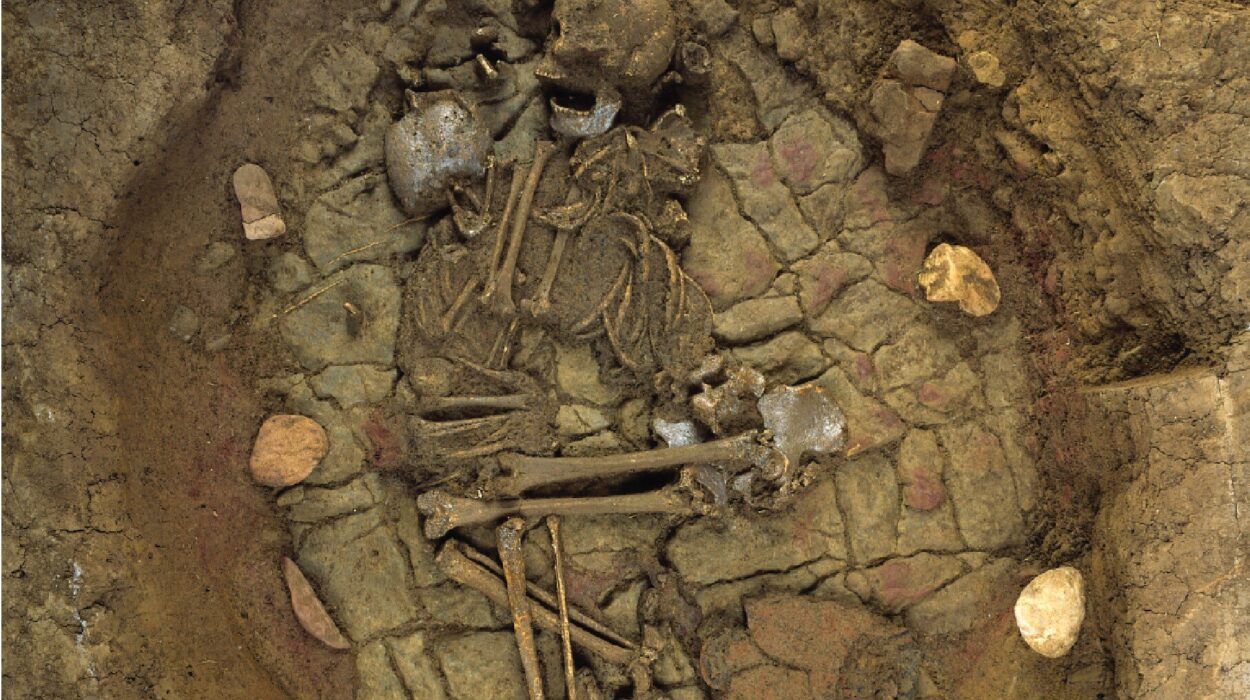
The naturally preserved Bronze Age mummies of China’s Tarim Basin have long occupied a unique place in archaeology. Buried in the shifting oases of what is now the Taklamakan Desert, these individuals were wrapped in elaborate textiles, laid inside distinctive wooden coffins, and accompanied by a remarkable collection of organic materials rarely preserved elsewhere.
Their appearance, clothing, farming practices, and livestock economy inspired decades of debate over who they were and where they came from.
Several competing explanations emerged. One proposed that they descended from Bronze Age steppe pastoralists related to the Afanasievo culture. Another suggested that oasis farmers associated with the Bactria–Margiana Archaeological Complex (BMAC) established these settlements. A third linked them to communities living along the Inner Asian Mountain Corridor (IAMC), where agriculture and pastoralism spread across mountainous Central Asia.
Each hypothesis viewed the Tarim mummies as migrants.
The new genomic analysis instead reconstructs a far more surprising history.
Reading genomes from the earliest people yet discovered in the region
The study focused on what the authors describe as the earliest human remains yet excavated from Xinjiang.
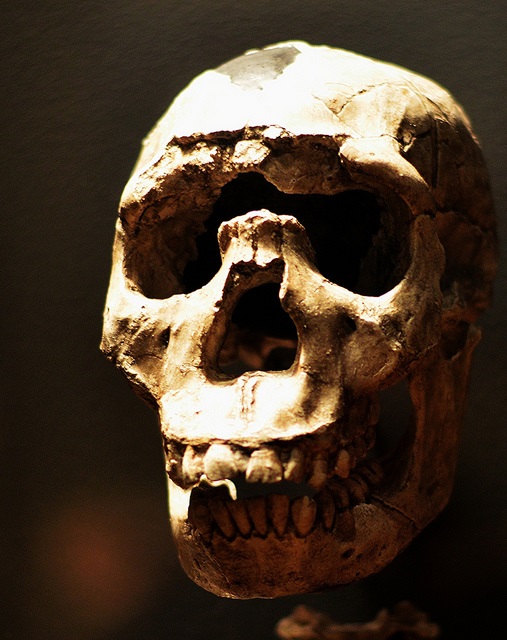
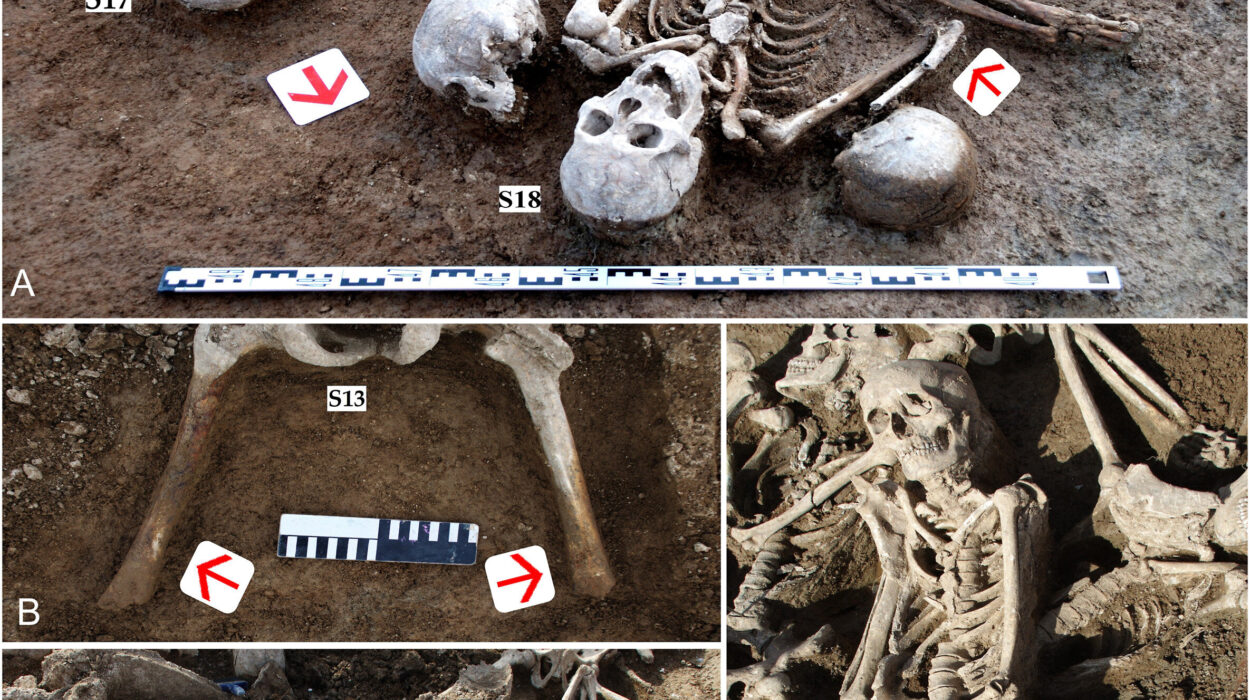
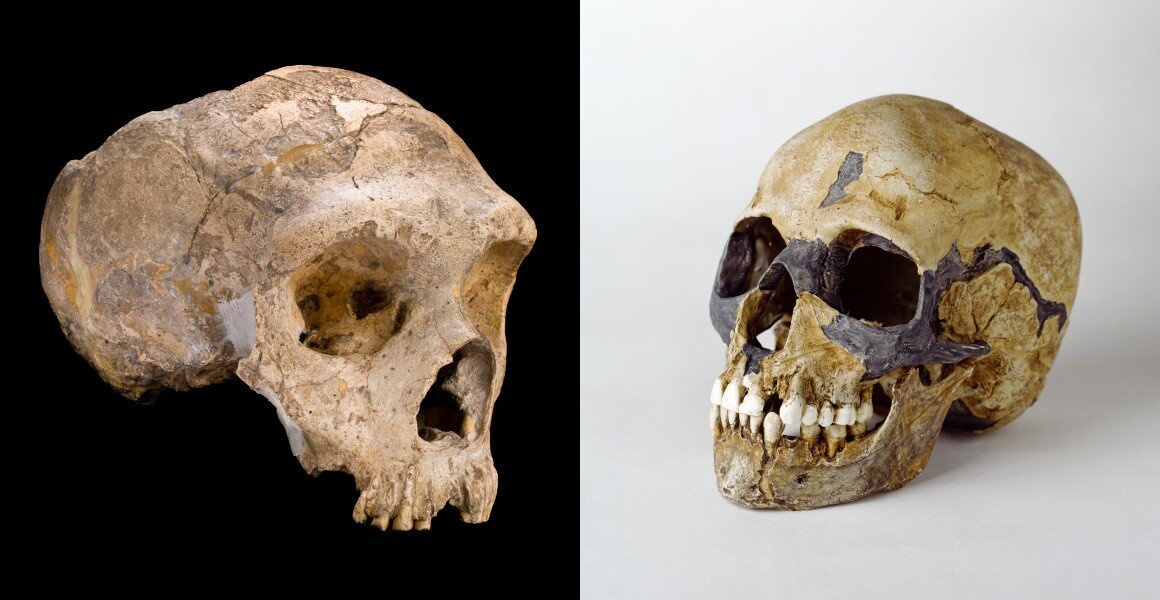
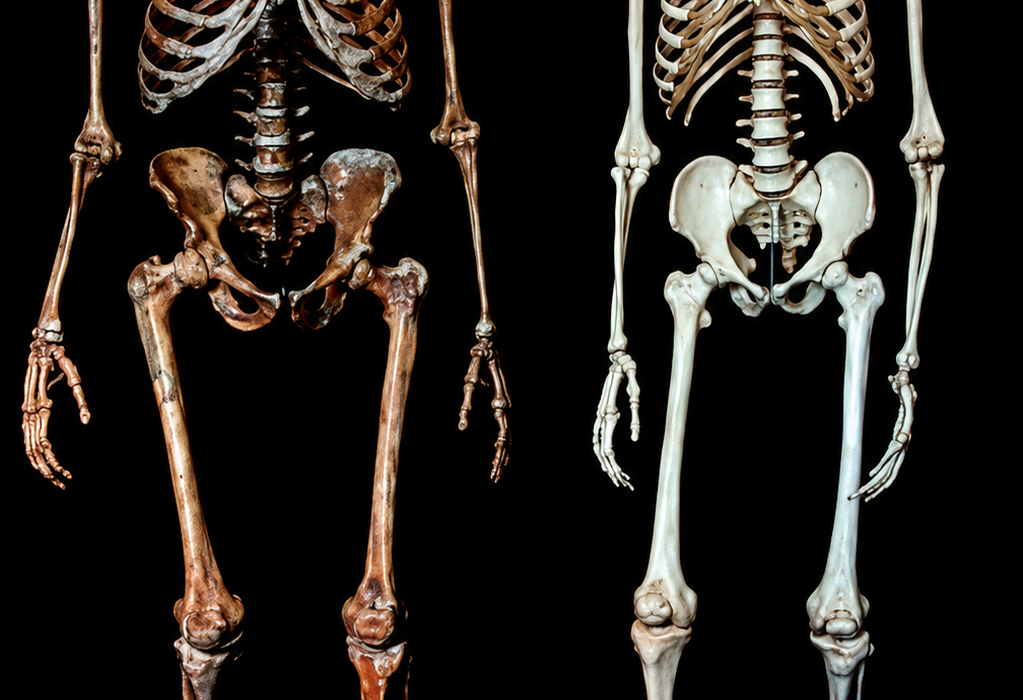
Researchers analyzed ancient DNA from 18 individuals whose genomes were successfully recovered from an original collection of 33 skeletons.
Five individuals came from the Dzungarian Basin in northern Xinjiang and dated to approximately 3000–2800 BC.
Thirteen came from the Tarim Basin and dated to roughly 2100–1700 BC, representing the earliest known people associated with the Xiaohe archaeological horizon.
The team also examined proteins preserved in the hardened dental plaque of seven individuals buried in the oldest layers of the Xiaohe cemetery. Those proteins could reveal what kinds of foods these people actually consumed.
To reconstruct ancestry, the researchers compared the ancient genomes with large collections of previously published ancient and present-day genomes using multiple population genetic approaches, including principal component analysis, admixture modeling, shared ancestry statistics, relatedness testing, and estimates of the timing of ancient population mixing.
The northern basin tells one story, but the southern basin tells another
The earliest inhabitants of northern Xinjiang fit much more closely with previous expectations.
Individuals from the Dzungarian Basin carried ancestry largely derived from the Afanasievo culture, Bronze Age pastoralists whose own ancestry is closely related to the Yamnaya populations of the western Eurasian steppe.
The researchers estimate that roughly 70% of the ancestry of one Dzungarian group and about 50% of another came from Afanasievo-related populations.
The remaining ancestry came from local populations already living in Inner Asia.
Rather than representing a simple migration, these early settlers appear to have mixed substantially with local people after arriving in the region.
The Tarim Basin, however, looked completely different.
The Tarim mummies belonged to an isolated local population
Instead of resembling neighboring pastoralists or oasis farmers, the Tarim individuals formed an unusually tight genetic cluster unlike any of the proposed migration sources.
Despite being buried across sites separated by more than 600 kilometers of desert, they shared remarkably similar genomes.
The researchers found no evidence that this genetic profile required ancestry from Afanasievo populations, BMAC groups, or communities associated with the Inner Asian Mountain Corridor.
Every admixture model that attempted to explain the Tarim genomes using those neighboring western Eurasian populations failed.
Instead, the genomes could be explained using ancestry from two much older Asian populations.
Approximately 72% of their ancestry was modeled using an Ancient North Eurasian lineage represented by the Upper Paleolithic Siberian individual known as AG3, while roughly 28% came from ancient Northeast Asian ancestry represented by Bronze Age populations from the Lake Baikal region.
The researchers estimate that the ancestral genetic profile seen in the Tarim population formed roughly 183 generations before the sampled individuals, corresponding to approximately 9,157 ± 986 years before they lived, assuming an average generation time of 29 years.
That estimate is consistent with a population that had remained isolated long before Bronze Age migrations reshaped much of Eurasia.
Ancient ancestry survived while much of Eurasia changed
The study argues that the Tarim genomes preserve one of the clearest surviving examples of a population descended from the once widespread Ancient North Eurasian ancestry that had characterized parts of Ice Age Eurasia.
Rather than representing newcomers who recently entered the desert, these people appear to have maintained an ancient local genetic heritage while neighboring populations experienced repeated waves of migration and mixing.
The authors describe the Tarim population as an autochthonous group—one whose genetic profile had existed in the region for thousands of years rather than being introduced by recently arriving populations.
Genetic analyses also suggest that this community had passed through a substantial population bottleneck.
Although the individuals were not close relatives, they shared unusually high genetic similarity and displayed limited diversity in their maternal and paternal genetic lineages.
Together, these patterns point to a small, isolated population rather than a recently assembled community of migrants.
Their culture was anything but isolated
The genetic evidence tells one story.
The archaeological evidence tells another.
Despite remaining genetically distinct, the Tarim communities embraced technologies and practices that had developed across widely separated regions.
Excavations have recovered wool textiles, livestock remains, wheat, barley, millet, dairy products, and bundles of Ephedra twigs from the Xiaohe and Gumugou cemeteries.
Their burial customs included striking boat-shaped wooden coffins covered with cattle hides and marked with upright timber poles or oars.
They also favored woven baskets instead of pottery, creating a material culture unlike other known Bronze Age societies in Xinjiang.
The study argues that these communities incorporated economic and cultural innovations arriving from outside the basin while maintaining their own distinctive identity.
Milk proteins reveal an established dairy economy
The protein analysis offered direct evidence that dairy pastoralism was already firmly established during the earliest occupation of Xiaohe.
Every one of the seven dental calculus samples analyzed contained proteins specific to ruminant milk.
The researchers identified proteins including β-lactoglobulin, α-S1-casein, and α-lactalbumin, with peptide sequences allowing milk from cattle, sheep, and goats to be distinguished.
Because the analyzed individuals belonged to the genetically isolated Tarim population, the findings demonstrate that dairy consumption was practiced by these local people from the earliest known phase of the cemetery.
The results also revealed an intriguing biological contrast.
None of the individuals carried the genetic variant associated with lactase persistence.
In other words, these people regularly consumed dairy products despite lacking the genetic adaptation that allows many modern adults to digest lactose efficiently.
The authors note that this adds to growing evidence that prehistoric dairy pastoralism spread across Inner and East Asia independently of lactase persistence.
Culture traveled where genes often did not
Taken together, the findings separate cultural exchange from population movement in an unusually clear way.
Ideas, technologies, crops, livestock practices, and perhaps fermentation techniques appear to have crossed large distances into the Tarim Basin.
Genes largely did not.
The researchers suggest that the surrounding mountains and the harsh environment of the Taklamakan Desert may have acted as strong barriers limiting human migration while still allowing knowledge and cultural practices to spread between neighboring societies.
This distinction also affects long-standing discussions about language.
Because Afanasievo-related populations reached the Dzungarian Basin around 3000 BC, the authors consider it plausible that Indo-European languages could have entered northern Xinjiang through those migrations.
However, the genetic isolation and distinctive material culture of the Bronze Age Tarim communities do not support simple assumptions linking ancestry, archaeological culture, and language.
Whether these populations spoke an early form of Tocharian therefore remains unresolved.
The oldest Tarim communities may have created something entirely their own
The authors conclude that the earliest known inhabitants of the Tarim Basin cannot be explained by large-scale migration from neighboring steppe herders, oasis farmers, or mountain agropastoralists.
Instead, they describe a community that combined extraordinary cultural openness with extraordinary genetic continuity.
Their ancestors appear to have preserved an ancient Asian genetic lineage that had largely disappeared elsewhere, while simultaneously adopting livestock, agriculture, dairy production, and other innovations circulating across Bronze Age Eurasia.
Future archaeological and genomic studies of later Tarim populations—particularly from the periods that produced the earliest surviving Tocharian texts—will be needed to determine how the region’s population history developed after these earliest communities and whether later migrations eventually reshaped the genetic and linguistic landscape of the Tarim Basin.
Publication details
Choongwon Jeong, The genomic origins of the Bronze Age Tarim Basin mummies, Nature (2021). DOI: 10.1038/s41586-021-04052-7. www.nature.com/articles/s41586-021-04052-7