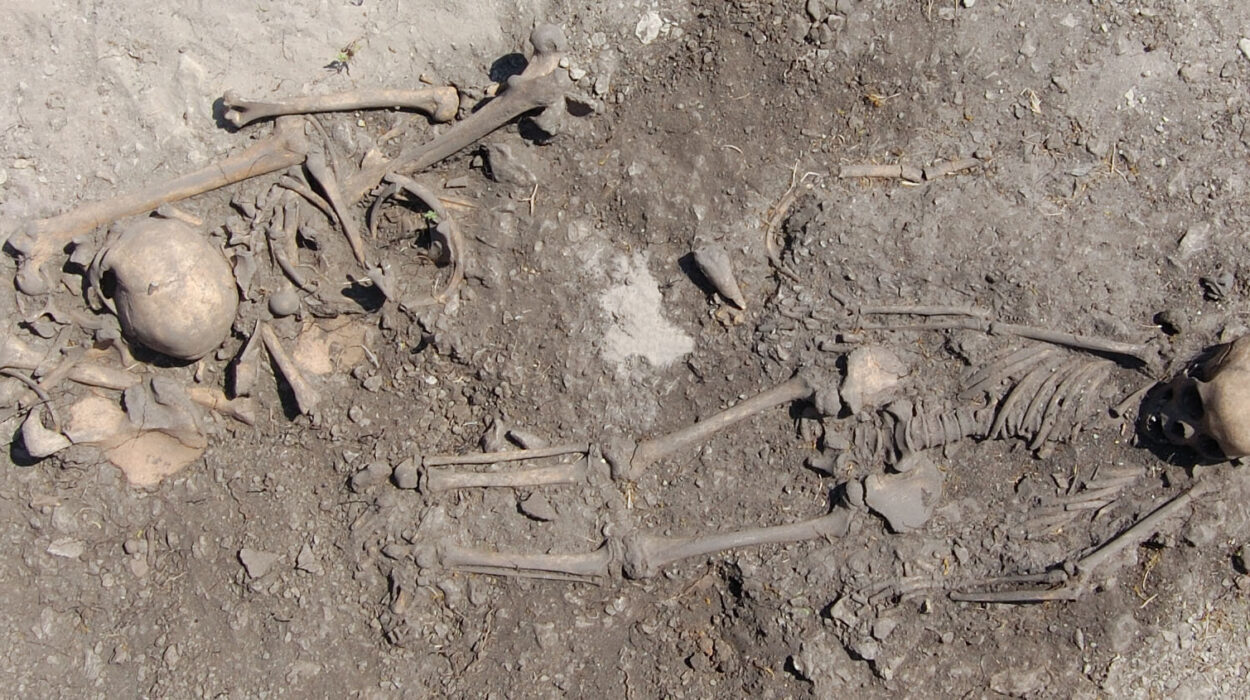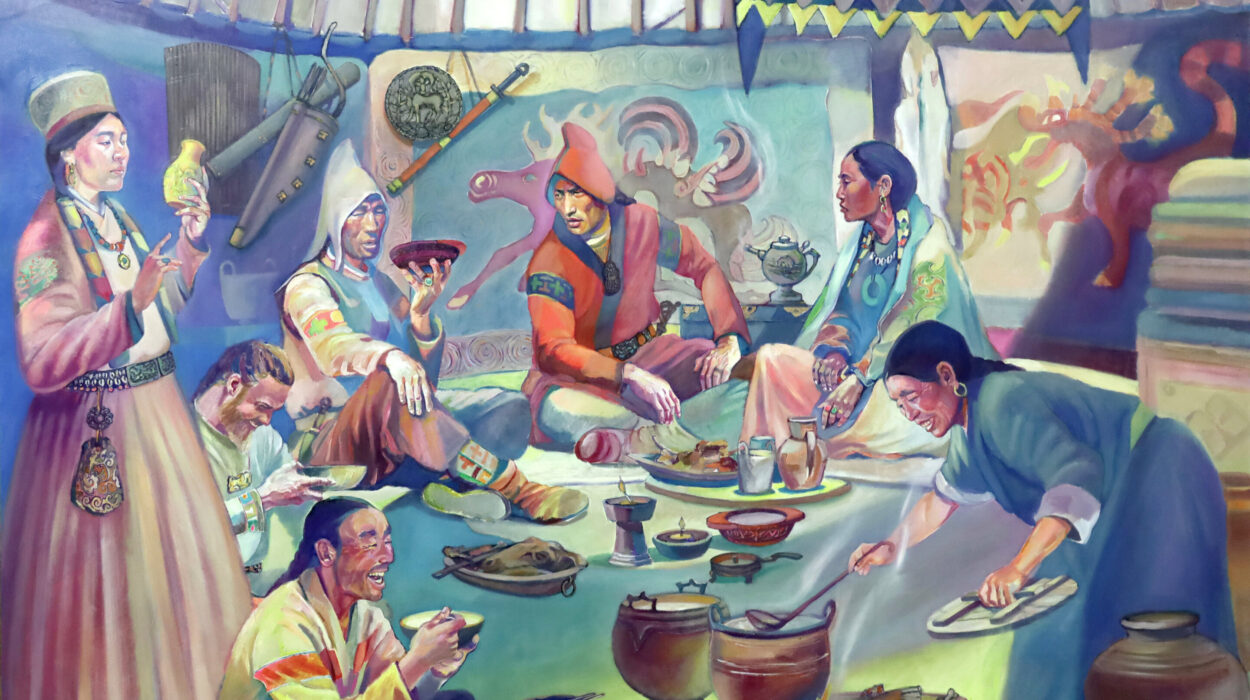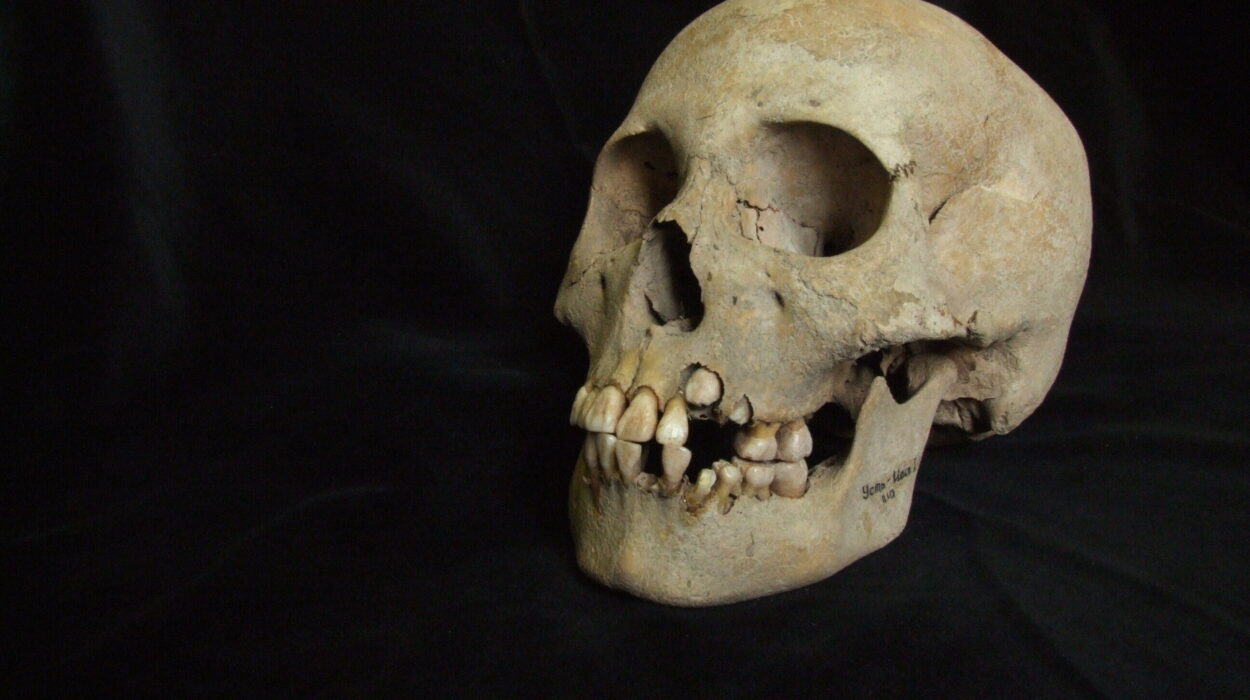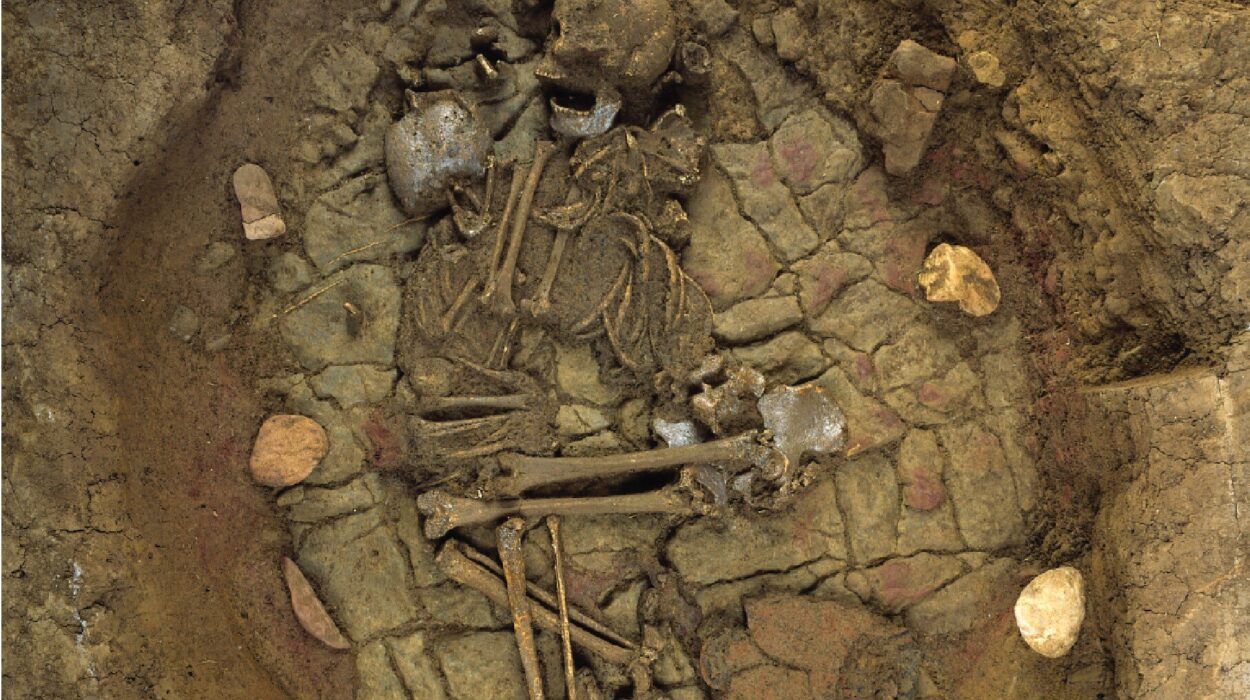
For generations, members of the same extended families came back to the Tamir cemetery to bury their dead, but blood ties alone did not determine who received the most privileged place. Some relatives were placed in the cemetery’s central area and given elaborate, wealthy burials, while others—including a brother who shared the same lineage rights—ended up more than 200 meters away at the edge. By combining ancient DNA, grave goods, burial architecture, spatial organization, statistical modeling, machine learning and cultural phylogenetics, researchers reconstructed a funerary society in which family mattered, but social status, economic position, marriage and symbolic affiliation could matter more.
The eastern sector of Tamir was used for roughly two centuries, from about 100 BC to AD 100, during the Xiongnu period. Earlier genetic work had already revealed two extended biological lineages, designated A and B, containing 20 people across as many as six generations and descending from a common ancestor. Another 28 individuals were not closely related to either lineage.
At first glance, that seems like the outline of a family cemetery.
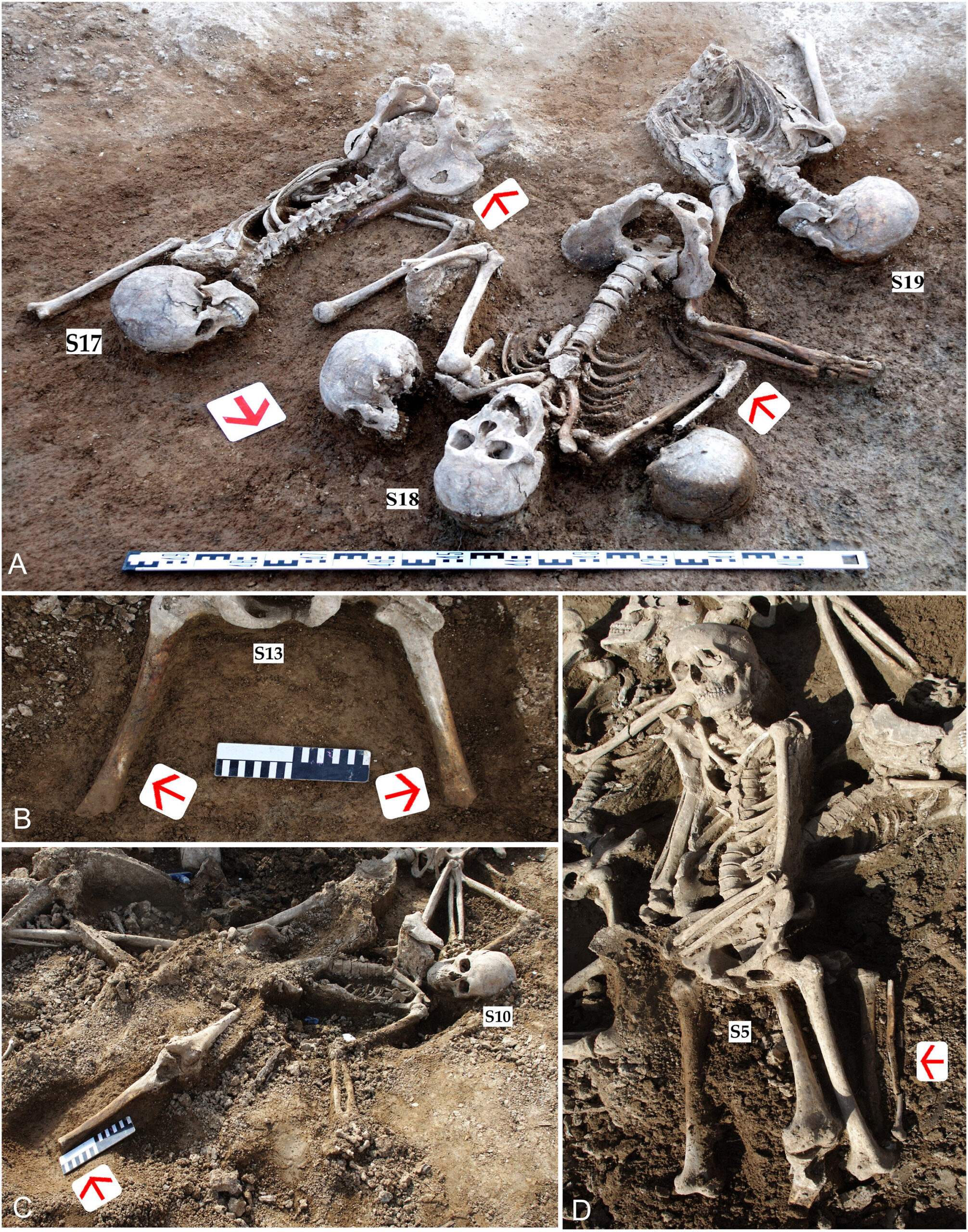
The spatial arrangement, however, was more complicated. Members of lineage A were concentrated in the center, while lineage B was spread between northern and southern parts of the burial ground, with some relatives separated by more than 250 meters. Spouses were buried together, and young children could be placed near their grandparents.
Those patterns raised a fundamental question: were people being buried together because they were biologically related, or because they occupied particular positions within the community?
The researchers designed their study around that distinction. They wanted to determine whether biological relatedness was the main force organizing the cemetery or whether socioeconomic factors associated with kinship were more important. To do that, they combined statistical classification, machine-learning methods, cultural phylogenetics and archaeological evidence.
The result was a cemetery whose organization could not be reduced to a family tree.
Wealth was written into the graves
The archaeological record provided another way to compare the people buried at Tamir.
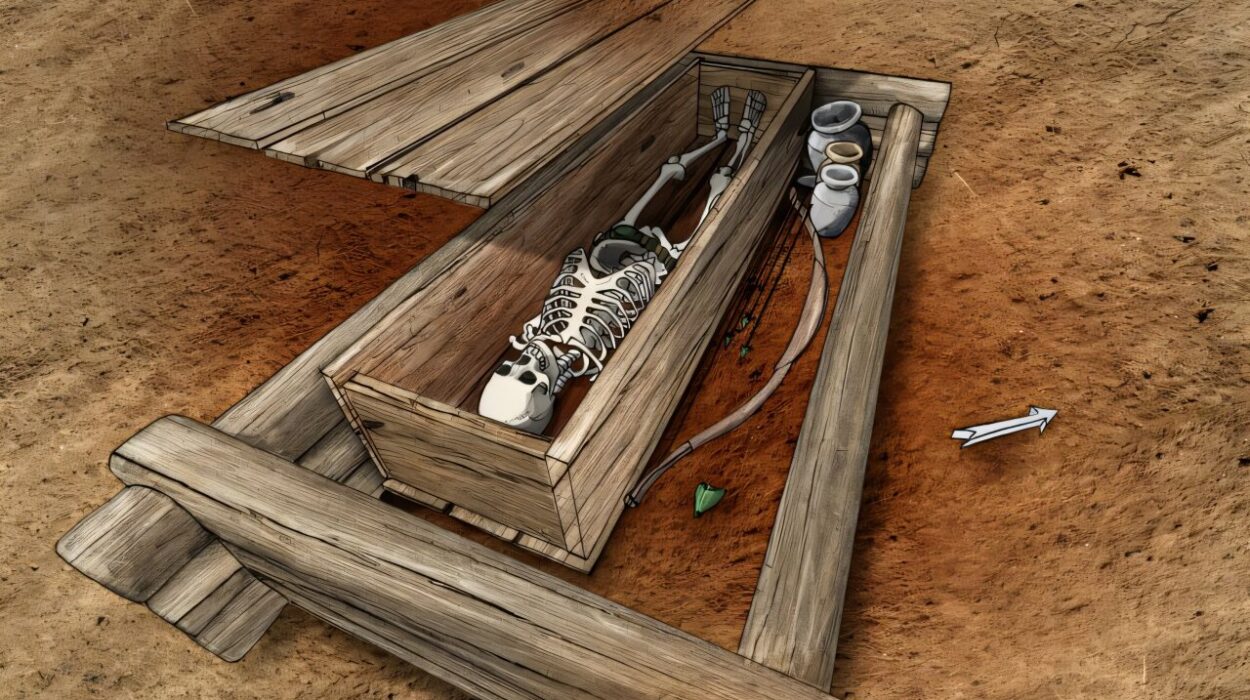
The researchers classified individuals according to the wealth represented by their graves. Wealthier burials were generally about 4 meters deep, often contained two coffins and included at least two prestige objects. Their contents could include traditional Xiongnu prestige goods, Chinese lacquerware, jade or jasper, and gold, silver or bronze.
Poorer graves were generally about 2.5 meters deep, often lacked coffins and contained few or lower-quality objects. Intermediate burials were around 3.5 meters deep and generally included one prestige item. Horse bones occurred exclusively in wealthy graves, while goat offerings were found only among group C, the people without close genetic ties to lineages A and B.
The differences were substantial enough for the researchers to ask whether wealth could predict the patterns that appeared to be associated with family.
That test produced one of the study’s clearest results.
The statistical models could recognize wealth with remarkable precision
The researchers first used linear discriminant analysis, or LDA, to classify individuals according to characteristics recorded from their burials.
When the model was used to distinguish the two major lineages from group C, it reached 95 percent accuracy. Only two individuals were misclassified: Tomb 22, a member of group C, resembled lineage B, while Tomb 32, genetically belonging to lineage B, resembled group C.
The features most associated with lineage members included lamps, animal remains—particularly horse bones—richer grave goods and single-grave arrangements. A separate XGBoost machine-learning model reached 70 percent accuracy and highlighted large, deep tombs, double coffins and prestige objects as important contributors to the distinction between the lineages and unrelated individuals.
But when LDA was asked to predict wealth status, it achieved 100 percent accuracy.
That sharper separation mattered because it indicated that the archaeological expression of wealth was more clearly defined than the archaeological expression of biological kinship. The authors therefore tentatively argue that social stratification may have played a larger role in organizing the necropolis than familial affiliation.
The researchers then looked more closely at the families themselves.
Even brothers could occupy dramatically different places
Only one person from each generation of lineages A and B generally appears to have been buried at Tamir, usually accompanied by a spouse and young children who died before reaching marriageable age. That restricted pattern suggests that many close relatives, including siblings, were buried elsewhere.
One pair of brothers provides an unusually revealing comparison.
One brother, buried in Tomb 25, was placed with his wife in one of the richest assemblages at the site, close to members of lineage A. His brother, in Tomb 48, was buried more than 200 meters to the north at the edge of the necropolis. Although the second brother possessed lineage rights, his peripheral position indicates that hierarchy could operate even within a biological family.
The brothers shared ancestry.
They did not share the same funerary status.
That difference became central to the researchers’ interpretation of Tamir.
Some people without close family ties were still admitted to the cemetery
The 28 individuals classified as group C did not share close genetic relationships with the two principal lineages. Yet some were still buried near distant relatives who themselves appear to have held leadership positions.
The scarcity of parent-child and spousal relationships within group C suggests that access to the cemetery was not granted solely on the basis of close biological family ties. The researchers argue that social or symbolic capital may have helped determine who was admitted.
Tomb 22 provides an especially striking example.
The woman buried there had no close genetic relationship to the people around her, yet her son carried the same Y-chromosome lineage as the men of lineage A. The authors suggest that this may represent symbolic or social adoption, although the evidence does not establish that explanation as certain.
In other words, biological family and social family were not necessarily identical.
The cemetery could incorporate people through relationships that ancient DNA cannot directly capture.
One woman may have inherited a place normally tied to the male line
Another unusual burial appears in Tomb 19.
The grave contained a woman belonging to lineage A who may have continued the lineage because her father had no male heir. She was buried beside her husband in Tomb 23, a man carrying the same Y-chromosome haplogroup found in lineage B. The researchers interpret the arrangement as potentially reflecting a redefinition of descent that gave the woman a distinctive status.
The case complicates any straightforward picture of patrilineal inheritance.
Elsewhere, the cemetery appears to favor direct male-line continuity. Yet when the expected male successor was absent, the social rules may have been adjusted rather than simply ending the lineage’s presence.
That possibility is important because it shows that social systems could accommodate exceptional circumstances.
The cemetery was structured by rules, but those rules were not necessarily inflexible.
Women were not always treated according to the same spatial logic
Several women were buried beside their husbands even though they would not normally form part of a strictly patrilineal funerary complex. At the same time, other women—including adults in Tombs 36, 34, 40 and 32 and young daughters in Tombs 21, 11 and 03—were buried around the cemetery’s periphery.
The researchers cautiously suggest that this peripheral treatment could reflect marginality associated with gender, age or symbolic role.
There was no single rule governing every woman.
Marriage could place a woman alongside her husband. Descent could provide another form of legitimacy. Age or social position could instead be associated with a peripheral burial.
Those overlapping possibilities are precisely why the researchers argue that Tamir cannot be understood as a cemetery organized strictly around biological kinship.
Machine learning exposed patterns that the family tree missed
To see whether people with similar burial practices actually clustered according to biological family, the researchers used K-means clustering, an unsupervised method that groups individuals according to similarities without first telling the computer which people are related.
The optimal solution contained five clusters.
More than half of the members of lineages A and B fell into two wealthy clusters, one predominantly male and one predominantly female. That indicates that kinship did contribute to some of the observed similarities. But several people were not grouped with their genealogical relatives.
The remaining clusters corresponded to different patterns, including people who had undergone cranial removal, economically disadvantaged individuals, and older males who also showed cranial-removal practices.
Several members of the principal lineages—including those buried in Tombs 03, 11, 19, 21, 32, 34, 36 and 40—fell outside the clusters that would have been expected from their family relationships.
Once again, wealth and other cultural characteristics cut across the genetic family structure.
The overall clustering result supported the idea that socioeconomic status, more than genetic relatedness, structured the layout of the necropolis.
Some traditions stayed within families while others spread beyond them
The researchers then asked a subtler question.
Even if wealth and status influenced where people were buried, did funerary traditions themselves pass from parent to child?
To investigate this, they constructed a cultural phylogeny from 47 individuals and 14 traits. The analysis was designed to distinguish traits that were predominantly transmitted vertically, across generations within families, from those that appeared to spread horizontally through broader social interactions.
The answer was not simply one or the other.
Characteristics of tomb architecture—including volume, depth and number of coffins—and the inclusion of Xiongnu artifacts, prestige goods and other indicators of wealth were predominantly transmitted vertically, along family lines.
Other traits behaved differently.
Tomb orientation, the amount of pottery, lamps and swords, and practices such as cranial removal appeared to reflect horizontal transmission, meaning that their distribution was better explained by broader social mechanisms than by simple descent.
Some traits occupied an intermediate position. Inferred social roles and Chinese imports showed vertical transmission but also strong social mediation.
The cultural inheritance of Tamir was therefore selective.
Families could preserve certain ways of displaying wealth and constructing tombs while other practices moved through the wider community.
The cultural tree did not reproduce the genetic tree
The resulting cultural phylogeny further emphasized the complexity.
One clade contained nine of 11 related individuals and was closest to the earliest reference burial, Tomb 24. A second clade consisted mainly of unrelated people with divergent cultural traits. A third, intermediate group contained both related and unrelated individuals. The researchers interpret this structure as evidence for three cultural pools: elite familial, general familial and unrelated.
The crucial test came when the researchers compared competing explanations for these patterns.
They modeled scenarios based on familial organization, economic organization, the structure produced by the cultural phylogeny and random organization.
The familial model—essentially the expectation that biological relatives should consistently share similar funerary and cultural characteristics—was repeatedly outperformed by economic, cladistic and even random models.
Across the evolutionary model comparisons, economic variables provided the strongest explanatory power.
The combined evidence therefore points away from a cemetery whose cultural organization was primarily inherited through bloodlines.
Instead, economic position appears to have been the stronger organizing principle.
The final graves record an economic decline
The chronology of the cemetery provides another piece of the story.
The eastern sector was used for approximately two centuries, beginning in the aftermath of Xiongnu military defeats by the Han between 129 and 119 BC. The site appears to have been abandoned around AD 100, shortly after the Han defeat of the Northern Xiongnu in AD 89.
The final graves—Tombs 18, 32 and 11—were notably poorer than earlier burials.
The researchers combined genealogical information, radiocarbon dates and Bayesian chronological modeling to examine that change more closely.
Their model places the end of the Xiongnu Empire around AD 85, immediately before the final two generations represented at Tamir. That timing closely matches the historically reported date and supports the hypothesis that the final generations experienced a progressive economic decline.
One of the five identified couples illustrates the changing circumstances particularly well.
Two couples were classified as wealthy, one as intermediate, one as poor and one was mismatched: a wealthy male in Tomb 40 was buried with a poor female in Tomb 32. The authors consider the mismatch potentially related to the late economic collapse.
The cemetery thus preserves not just family succession but changing economic conditions across generations.
The researchers also see signs of shifting political power
The authors cautiously explore whether the two principal lineages might correspond to the two major political branches of the Xiongnu confederation.
They stress that detailed historical records for the specific organization at Tamir are lacking, so the interpretation cannot be treated as definitive. But the Xiongnu political system was divided into Right and Left branches, and the researchers propose that lineage A might correspond to the Left branch while lineage B might correspond to the Right.
If that interpretation is correct, the burial patterns could reflect a change in political influence.
The authors propose that lineage A maintained a strict patrilineal model until its fourth generation. When no male heir was available, a socially modest son-in-law may have been incorporated. Lineage B, meanwhile, appears to have reinforced its patrilineal identity through a wealthy alliance involving an individual connected to Chinese elites in Tomb 13B.
The authors suggest that this may represent a shift in power from one branch to the other and could help explain why lineage B continued to bury male descendants at Tamir for two additional generations while lineage A eventually lost its central role.
But this remains an interpretation rather than a demonstrated historical identification.
The strongest evidence comes from the archaeological, genetic and statistical patterns themselves.
The evidence has limits, especially when graves were disturbed
The researchers’ conclusions are based on 44 graves containing 47 individuals. Ten graves were excluded: six came from earlier excavations, two had incomplete information because of later disturbance, and two belonged to the later Turkic period rather than the Xiongnu period.
The analyzed individuals included 24 males and 23 females, with only seven people younger than 20 and only two younger than five at death. Nineteen individuals belonged to the two identified genetic lineages, while 28 formed group C.
The sample is therefore substantial enough to reveal patterns but remains limited to the individuals and graves available for analysis.
The researchers also acknowledge that genetic relatedness cannot by itself define social kinship. Adoption, marriage alliances and other social relationships can create meaningful connections that do not appear as close biological relationships. That is one reason they emphasize combining genetic evidence with the physical organization of the cemetery and its cultural material.
Their political reconstruction is likewise explicitly cautious because historical information about the lower levels of Xiongnu organization is incomplete.
These limitations do not erase the central pattern.
They define how confidently it can be interpreted.
Tamir was a social landscape, not simply a family cemetery
The deepest change produced by the study is therefore conceptual.
Ancient DNA revealed real biological lineages at Tamir. But once those lineages were placed back into their archaeological setting, they stopped looking like the complete explanation for the cemetery.
The two extended families were real.
Their descendants were real.
Their inherited burial traditions were real.
Yet the organization of the cemetery was shaped by something broader.
Wealth influenced burial treatment. Status influenced access to central space. Marriage connected people from different lineages. Some people without close biological ties were incorporated into the cemetery. Certain cultural traditions stayed within families, while others crossed those boundaries. And even brothers with the same lineage could occupy sharply different positions.
The study’s statistical and phylogenetic analyses reinforce that picture from a different direction: when researchers tested whether biological family or economic organization better explained the cultural patterns, the economic explanation consistently performed better.
The result is a portrait of Xiongnu society that cannot be reconstructed from DNA alone.
A family connection could help establish who belonged.
But it did not necessarily determine where a person belonged.
The graves preserve a society deciding who deserved the center
For nearly two centuries, the people of Tamir repeatedly placed their dead into the same landscape. Their choices created a record in which biology, wealth, marriage, inheritance, cultural tradition and social hierarchy became physically fixed in stone and soil.
The central graves belonged disproportionately to people whose lineage and status gave them privileged positions. Peripheral burials could contain people who were biologically connected to the community but lacked the same social standing. Meanwhile, individuals without close genetic ties could sometimes be incorporated when other relationships gave them a place within the social order.
The study’s statistical and phylogenetic analyses reinforce that picture: when researchers tested whether biological family or economic organization better explained the cultural patterns, the economic explanation consistently performed better.
The final interpretation is therefore not that kinship was irrelevant.
Instead, the researchers conclude that Tamir represents a funerary landscape organized along socioeconomic lines, with kinship playing a secondary or legitimizing role.
That distinction is what makes the cemetery so revealing.
A family connection could help establish who belonged.
But it did not necessarily determine where a person belonged.
And in this ancient cemetery, the distance between those two ideas could be more than 200 meters.
Publication details
Pengcheng Ma et al, Bioarchaeological perspectives on the ancient Han-Xiongnu war: Insights from the Iron Age site of Bayanbulag, Journal of Archaeological Science (2025). DOI: 10.1016/j.jas.2025.106184