Roughly 40,000 years ago, an anatomically modern human died in a cave near present-day Beijing, leaving behind bones that would preserve only tiny traces of human DNA. After recovering and analyzing those fragments, scientists found that this individual belonged to a population already closely related to the ancestors of many present-day Asians and Native Americans, while the ancestors of present-day Europeans had already diverged. The ancient genome also carried no more Neandertal- or Denisovan-related DNA than people living in mainland Asia today.
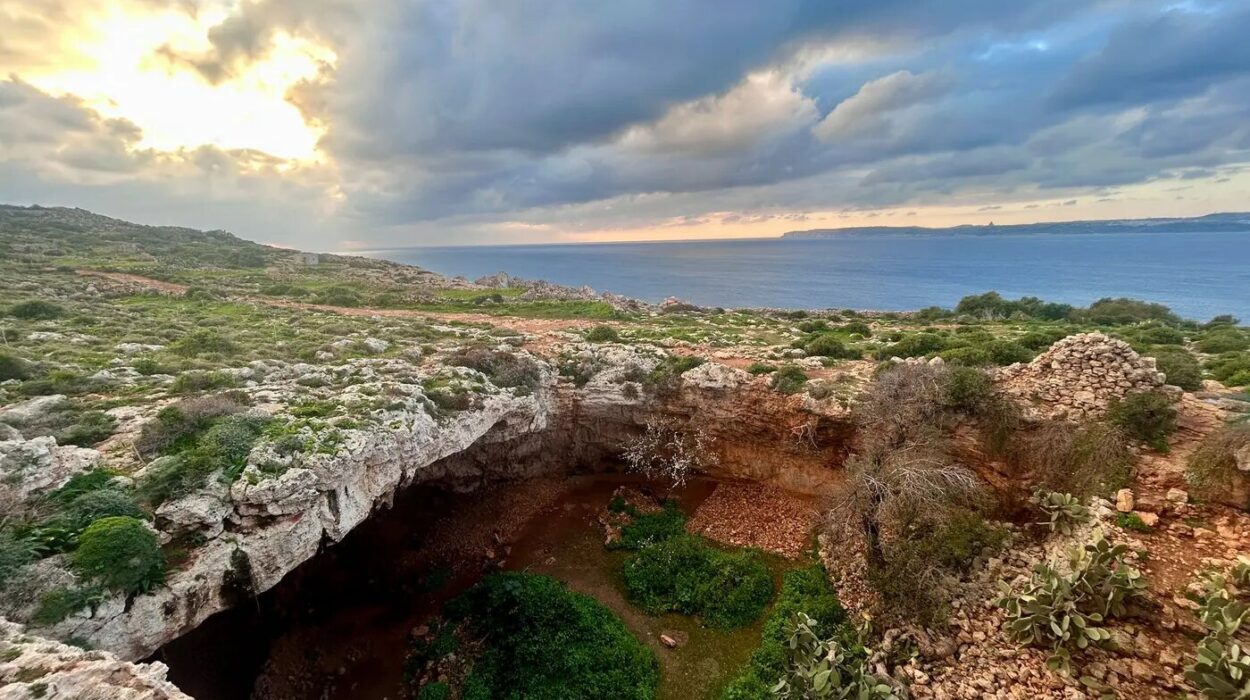
The fossil record contains only a small number of anatomically modern humans from Eurasia that are more than 30,000 years old, and even fewer from East Asia. One of those exceptionally rare individuals was uncovered in 2003 in Tianyuan Cave near the Zhoukoudian site, about 50 kilometers southwest of Beijing.
Radiocarbon dating placed the skeleton at 34,430 ± 510 years before present (uncalibrated), corresponding to roughly 40,000 calendar years ago. Previous anatomical studies identified the individual as a modern human while noting several archaic features that could reflect gene flow from earlier hominin populations.
Those characteristics raised important questions. How closely was this person related to living humans? Did this individual belong to a population that contributed to present-day people? And how much genetic material from archaic humans remained in the genome?
Until this study, those questions had no direct genetic answers.
Recovering human DNA from almost overwhelming contamination
Extracting ancient DNA from the Tianyuan bones proved exceptionally difficult.
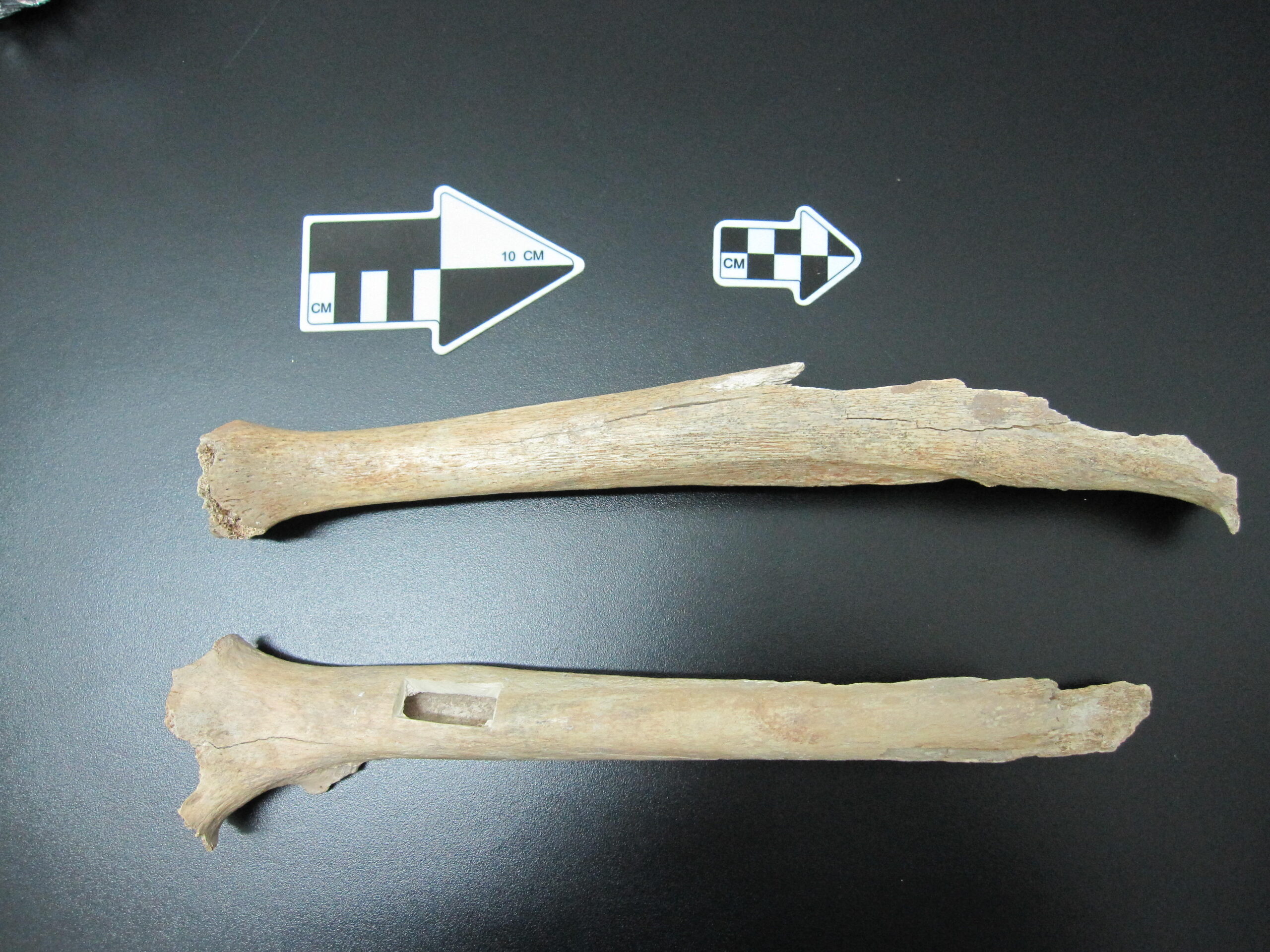
Scientists prepared DNA extracts from the left femur and right tibia, using less than 100 milligrams of bone material for each extraction. When they sequenced random DNA fragments, they found that only 0.01% to 0.03% of the DNA was human. Nearly everything else came from microbes and other environmental sources.
That tiny fraction made sequencing an entire genome impractical.
Instead, the researchers turned to targeted DNA capture methods designed to retrieve only the human sequences they wanted to study. They isolated the complete mitochondrial genome, the nonrepetitive portion of chromosome 21—covering approximately 29.8 million base pairs—and thousands of additional genetic markers spread across the nuclear genome.
Because contamination from modern humans is always a concern in ancient DNA research, the team carefully tested whether the recovered DNA genuinely came from the ancient individual.
The mitochondrial DNA consistently produced the same consensus sequence from all four DNA libraries, matching the archaeological conclusion that the bones belonged to one person. Analysis of distinctive genetic positions indicated that the overwhelming majority of the mitochondrial DNA fragments originated from a single source. The DNA fragments also displayed patterns of chemical damage expected from ancient DNA, particularly characteristic substitutions near the fragment ends caused by cytosine deamination. Together, these observations supported the authenticity of the ancient genetic material.
An ancient maternal lineage that still echoes across Asia and the Americas
The complete mitochondrial genome revealed another striking result.
Rather than falling outside modern human diversity, the Tianyuan individual’s mitochondrial DNA fit comfortably within the range found among living people.
More specifically, it belonged within haplogroup R and appeared closely related to the lineage ancestral to present-day haplogroup B.
Today, haplogroup B occurs among Native Americans as well as populations in the Russian Far East, Central Asia, Korea, Taiwan, Melanesia, and Polynesia.
Because the Tianyuan individual carried what appears to be an ancestral form of this lineage roughly 40,000 years ago in northern China, the authors interpret this as evidence for at least some population continuity linking some of the earliest modern humans in East Asia with populations living across these regions today.
At the same time, the researchers caution that mitochondrial DNA represents only one inherited genetic lineage. To better understand ancient population relationships, they turned to nuclear DNA, which contains far more information about ancestry.
Looking beyond one chromosome to reconstruct ancient relationships
To place the Tianyuan individual among living populations, the researchers compared chromosome 21 with corresponding sequences from 11 present-day humans representing Africa, Europe, Asia, and South America, together with the genome of a Denisovan individual.
Across 86,525 high-quality variable positions, the Tianyuan genome differed far less from living Eurasians than from Africans and was much more similar to modern humans than to the Denisovan genome.
The number of nucleotide differences ranged from 21,944 to 23,756 when compared with present-day Eurasians, 30,297 to 35,938 when compared with Africans, and 43,893 when compared with the Denisovan individual.
The researchers then used a population analysis designed to estimate evolutionary relationships while allowing for past gene flow between populations.
That analysis consistently placed the Tianyuan individual with Asian rather than European populations, with 100% bootstrap support for that grouping.
After accounting for a separate signal indicating Denisovan-related ancestry in the Papuan genome, the analysis suggested that the Tianyuan individual came from a population ancestral to all of the Asian populations included in the study. However, the precise relationship between the Tianyuan individual and the Papuan lineage remained unresolved, receiving only 31% bootstrap support, leaving that aspect uncertain.
Ancient DNA from Neandertals—but not extra Denisovan ancestry
The researchers also examined whether the Tianyuan individual carried unusually large amounts of DNA inherited from archaic humans.
Previous work had shown that Denisovan-related ancestry contributed to present-day Melanesian populations, while the extent of such ancestry elsewhere in Asia remained an open question.
To investigate this, the team analyzed chromosome 21 and thousands of additional genetic markers chosen because Neandertal and Denisovan genomes differ from those of African populations.
The pattern that emerged closely resembled that seen among present-day mainland Asians.
Like other non-African populations, the Tianyuan individual shared more genetic variants with Neandertals and Denisovans than African populations did, reflecting the broader pattern of archaic ancestry outside Africa. However, unlike Melanesians, the Tianyuan genome did not display an additional Denisovan-related component beyond what was observed in present-day mainland Asian populations.
The authors therefore conclude that this ancient individual carried no larger proportion of Neandertal- or Denisovan-derived DNA than people living in mainland Asia today.
A new way to study poorly preserved ancient humans
The scientific advance extended beyond the biological findings.
Because the Tianyuan bones contained so little human DNA, conventional genome sequencing would have been impractical. The researchers developed an expanded hybridization capture strategy capable of enriching large sections of nuclear DNA even when ancient human DNA represents only a minute fraction of the sample.
For chromosome 21, they constructed a library containing 8.7 million capture probes tiled across nearly 30 million base pairs of nonrepetitive sequence. The approach recovered more than 70% of the available target DNA molecules present in the sequencing libraries, demonstrating that it could efficiently isolate short ancient DNA fragments from extremely complex mixtures.
According to the authors, this strategy opens opportunities to recover nuclear DNA from ancient mammalian remains that contain very little endogenous DNA, including many specimens outside permanently frozen environments.
What the Tianyuan individual reveals—and what remains uncertain
Taken together, the genetic evidence indicates that modern humans living near present-day Beijing about 40,000 years ago belonged to a population connected to the ancestors of many present-day Asians and Native Americans.
At the same time, the analyses indicate that this population had already diverged from the ancestors of present-day Europeans by that time.
The study also indicates that the Tianyuan individual did not possess unusually high levels of Neandertal- or Denisovan-related ancestry compared with present-day people from mainland Asia.
The authors emphasize that important questions remain unresolved. In particular, the exact relationship between the Tianyuan individual and Papuan populations could not be determined with confidence, and additional genomes from other early modern humans across Eurasia will be needed to refine the timing and pathways by which modern human populations spread across the continent.
Publication details
Qiaomei Fu, Matthias Meyer, Xing Gao, Udo Stenzel, Hernán A. Burbano, Janet Kelso, Svante Pääbo, DNA analysis of an early modern human from Tianyuan Cave, China, PNAS, Online Early Edition, January 21, 2013. DOI: 10.1073/pnas.1221359110