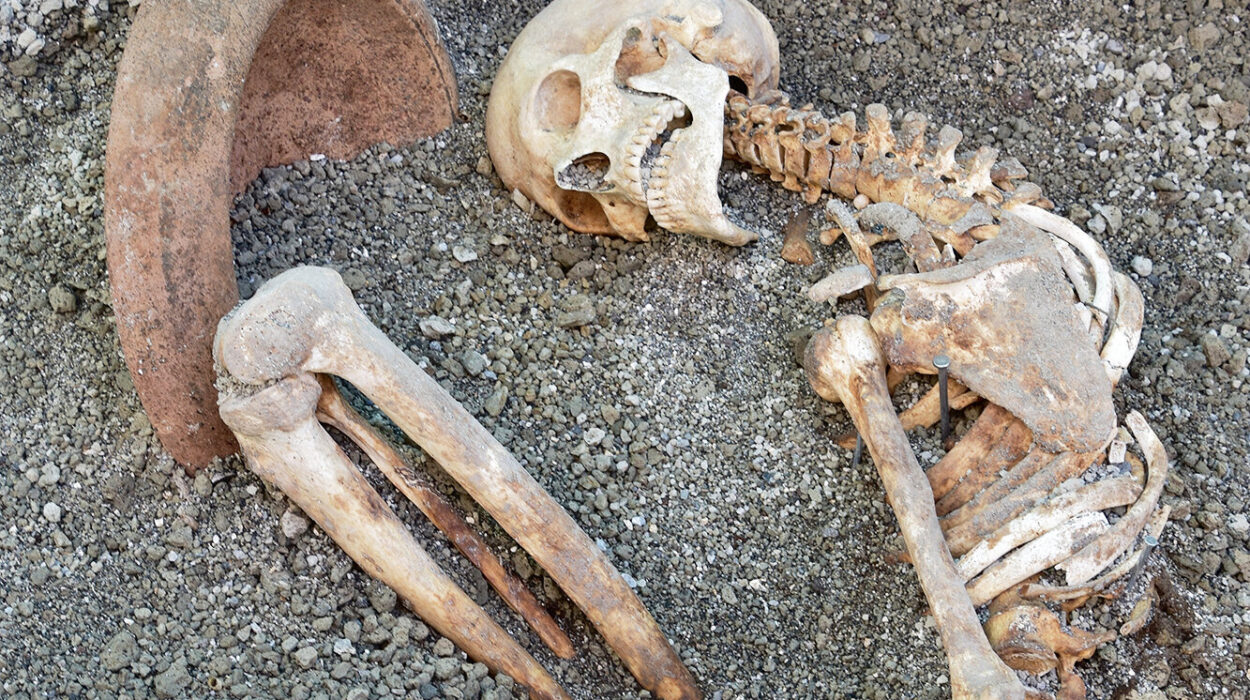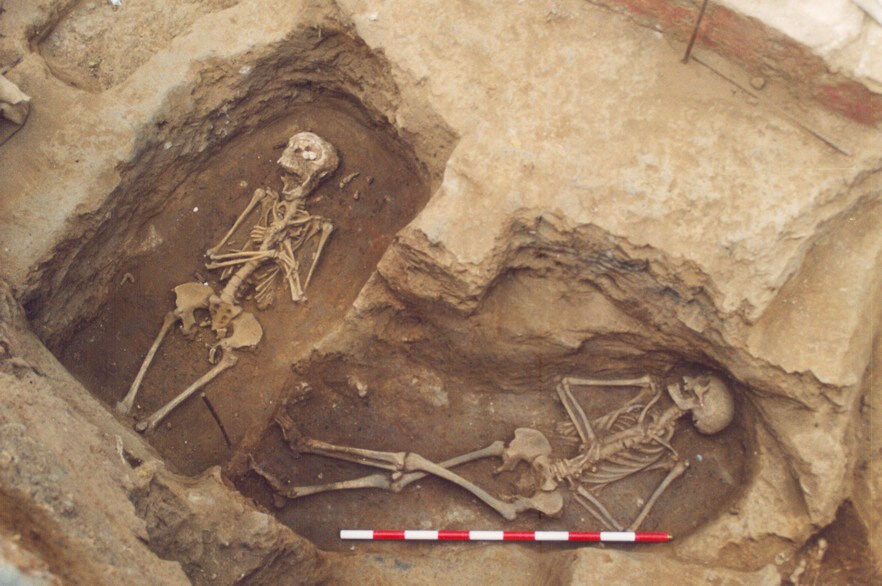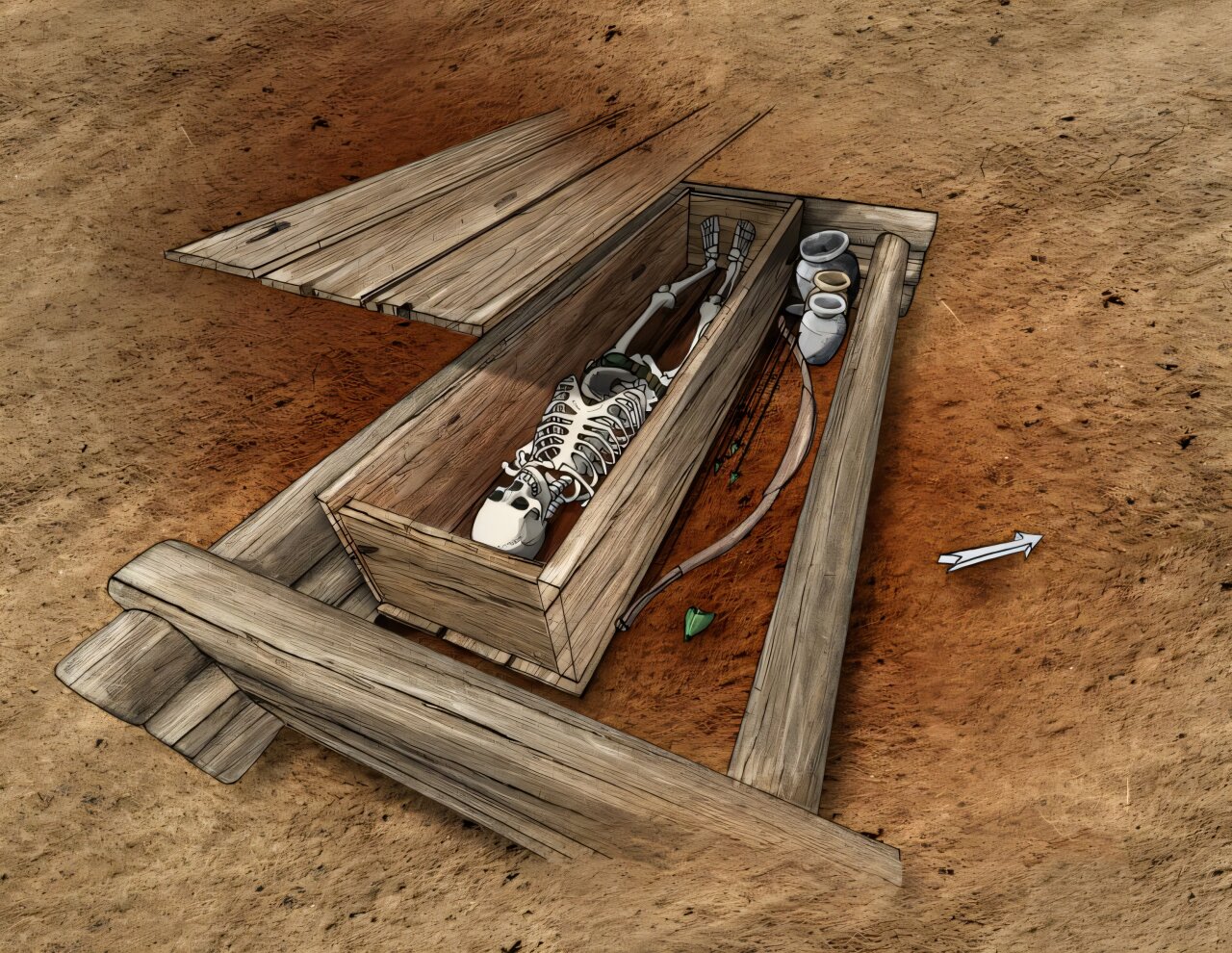
At a cemetery used by the Xiongnu nearly 2,000 years ago, people who shared blood were not necessarily buried together or given similar graves. A new analysis of ancient DNA, burial practices and grave wealth suggests that social rank, alliances and political affiliation helped shape who was buried where.
The Tamir cemetery lies on the Mongolian steppe near the meeting point of two rivers, close to the Gobi Desert. It was established around 100 BC and abandoned around AD 100, during the rise and collapse of the Xiongnu, the first great nomadic empire of the Central Asian steppes and a rival of China’s Han dynasty.
The cemetery’s eastern section is one of the rare fully excavated cemeteries in Mongolia. Its detailed excavation provided researchers with unusually extensive information about the people buried there, their graves and the objects placed with them.
The Xiongnu divided their political hierarchy into “Left” and “Right” branches, generally led by sons or other close relatives. The Left branch was associated with the ruler’s designated heir, often a son of the supreme leader, known as the Shanyu. But how that political structure was reflected in ordinary life, including burial, has been difficult to establish.
Tamir offered a way to investigate that question.
Three ways to examine the burials
Earlier ancient-DNA work at Tamir identified two family lineages, called A and B, as well as a third unrelated group, C.
The researchers then combined statistical modeling, machine learning and an analysis of cultural relationships based on burial practices.
The statistical models tested whether objects found in graves could help predict relationships between people, their wealth and where they were buried. The machine-learning analysis looked for similar patterns without being given information about who was biologically related.
The third approach adapted the mathematics used to construct evolutionary family trees. Instead of genes, however, researchers applied it to cultural features such as grave goods and body positions.
The resulting relationships were not biological family trees. They were maps of similarities in burial customs.
“We are not suggesting that tombs or funerary customs are inherited in the same way as genes,” said Ameline Alcouffe of the University of Toulouse. The approach instead allowed the researchers to examine relationships among cultural traditions.
Two brothers, two very different graves
The clearest evidence came from people who shared the same family lineage but did not receive the same treatment after death.
Most people from lineage A had only one family member from each generation buried at Tamir. That pattern suggests that siblings were often buried somewhere else.
There was an especially striking exception. Two brothers were buried in very different parts of the cemetery and in very different kinds of graves.
One brother was placed in one of the cemetery’s richest graves, alongside his wife and other members of lineage A. His brother was buried about 200 meters, or 656 feet, away, on the cemetery’s outskirts.
The brothers shared their biological family connection, but their burials differed sharply.
Another burial paired a wealthy man with a poor woman. Couples at Tamir generally received similar treatment in death, but this couple did not.
Together, these cases led the researchers to conclude that wealth, rather than biological kinship alone, helped determine where people were buried and what accompanied them.
Burial patterns may reflect political divisions
The researchers suggest that the two main family lineages at Tamir may have reflected the Left and Right branches of the Xiongnu political hierarchy.
That interpretation remains a suggestion rather than a direct demonstration of how the political system operated. But the burial patterns are consistent with a cemetery organized not simply around biological families, but also around differences in wealth, status, allegiance and political relationships.
The cemetery’s final burials provide another piece of evidence. Among the last graves, grave goods became increasingly scarce. Their timing coincided almost exactly with the collapse of the Xiongnu around AD 85, after which the cemetery was eventually abandoned.
Alcouffe describes the overall method as a “proof of concept” for using this combination of analytical tools to study ancient cemeteries.
The researchers’ next step is to apply the approach to other archaeological sites with detailed burial records and see whether comparable patterns appear in different cultural and historical settings.
The study was published in Antiquity.