For more than a century, the burial of the so-called Princess of Bagicz carried two very different dates. A new analysis of the oak coffin has now placed the burial much closer to the later date, with tree-ring evidence indicating that the tree used to make the coffin was felled around 120 AD, give or take seven to eight years.
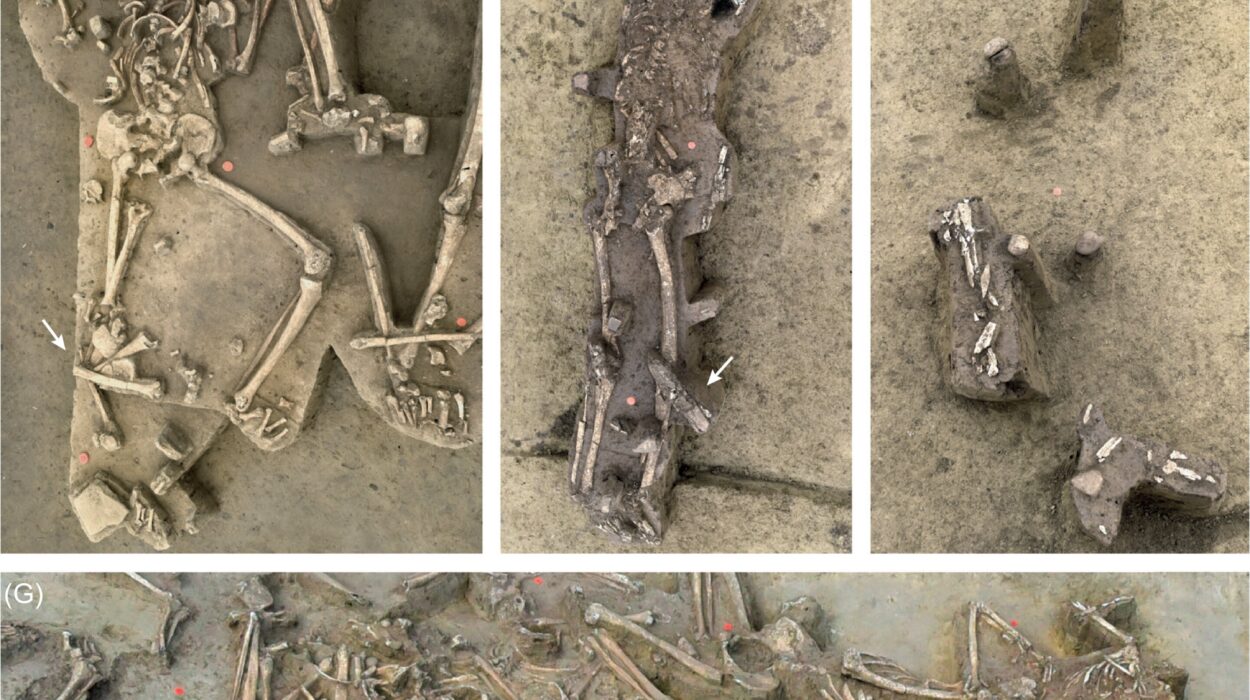
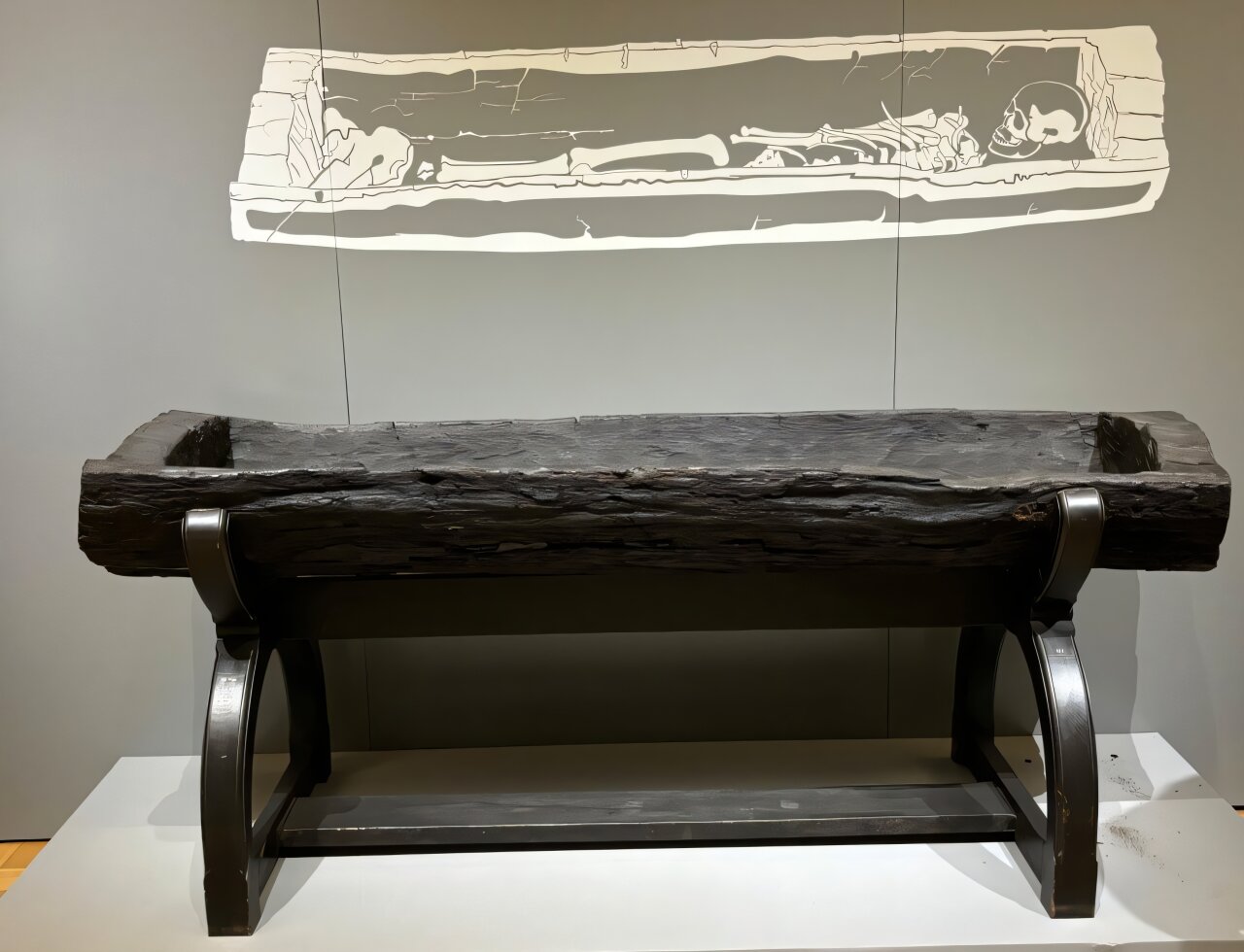
The coffin was discovered in 1898 after coastal erosion exposed it. It was unusually well preserved, along with a small wooden stool and a cattle hide, although those materials did not survive until the National Museum in Szczecin was established.
The coffin contained the remains of a woman buried with several objects, including a pin, two bronze bracelets, a bead necklace containing glass and amber beads, and a bronze fibula. Because the burial appeared isolated and included these grave goods, it was initially interpreted as the burial of a woman with high social status. She became known as the Princess of Bagicz.
Later research and the discovery of a nearby cemetery changed that picture. The evidence indicated that the woman was probably part of a larger cemetery and may not have held the unusually high social position previously attributed to her.
The coffin itself is especially significant because it is the only known well-preserved wooden coffin of its kind from the Roman Iron Age. The Wielbark culture, which existed from the 1st to 4th centuries AD, is known to have used hollowed-out log coffins for some burials. Other graves were sometimes lined with twigs at the bottom. In many cases, however, the wood has left little or no surviving trace.
Three dating approaches produced a problem
The burial’s age became difficult to pin down because different methods produced substantially different results.
A typological analysis carried out in the 1980s placed the burial in the middle of the 2nd century AD, roughly between 110/120 and 160 AD.
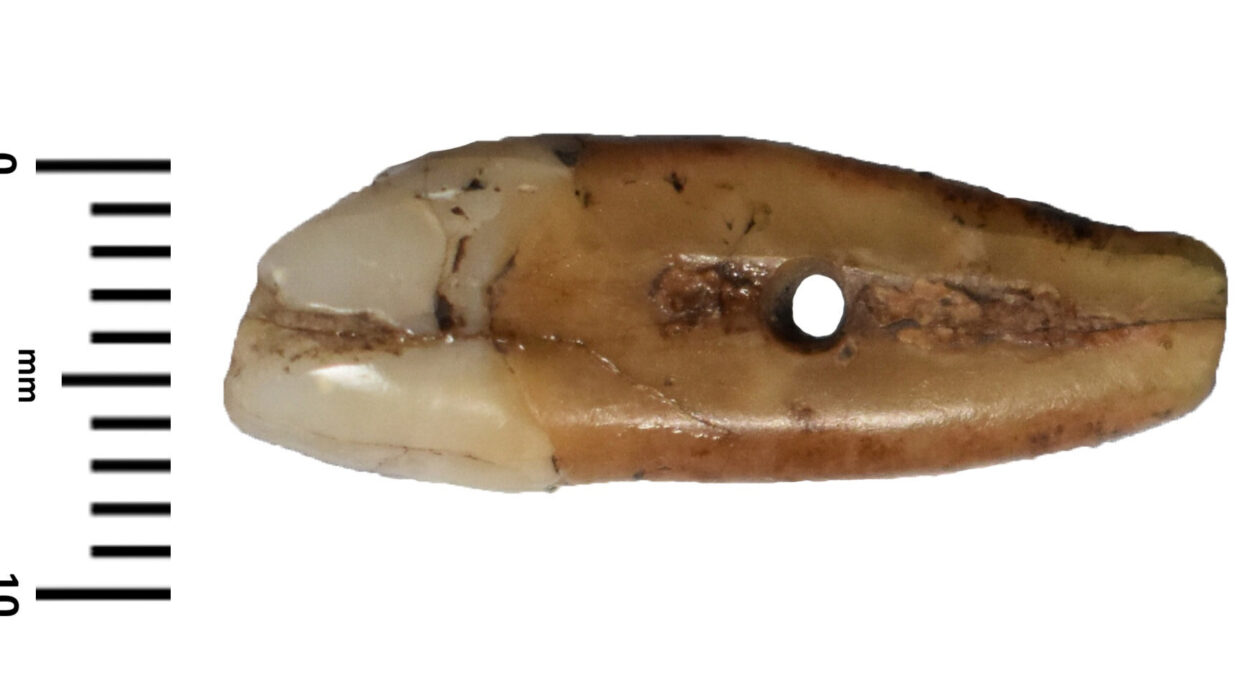
A radiocarbon analysis published in 2018 produced a much older result. Based on a tooth, it placed the burial between 113 cal BC and 65 cal AD, with a 93.8% probability.
That meant the two approaches differed by close to a century.
In 2024, Dr. Marta Chmiel-Chrzanowska and colleagues turned to dendrochronology, which dates wood by examining patterns in its annual growth rings. Their analysis found that the oak used for the coffin had been cut down around 120 AD, with an uncertainty of about seven to eight years.
Because the coffin was made from that tree, the result provides a date that is much closer to the earlier typological estimate than to the radiocarbon result.
Why the radiocarbon date may have been too old
The researchers propose that something in the woman’s diet or environment may have affected the radiocarbon measurement.
Stable isotope analysis indicates that she ate a substantial amount of animal protein and possibly freshwater fish. If freshwater fish contributed significantly to her diet, they could have introduced what is known as a reservoir effect. In simple terms, carbon from some environments can have a different radiocarbon age from the atmosphere, making human remains appear older than they actually are when dated by radiocarbon methods.
But establishing where the woman came from has proved difficult.
Strontium isotope analysis suggests that she may have originated on Öland, Sweden. Yet dietary studies from that area do not demonstrate a reservoir effect.
The regional geology also complicates the interpretation. Glacial processes have produced strontium values in the area that are similar to those found in Scandinavia. As a result, the isotope evidence does not by itself provide clear evidence of migration.
The researchers are still looking for evidence of where the woman came from. The regional baseline is relatively broad, and values from places such as nearby Miechęcino and Grzybnica fall within it.
Hard water is another possibility
The researchers also consider a second explanation for the unusually old radiocarbon result: the hard-water effect.
The area is known to have had moderately hard water. Fish and other organisms living in such water can acquire carbon that affects their radiocarbon ages. If people eat those organisms, that effect can be carried into human remains and potentially make them appear artificially old when radiocarbon dated.
The available evidence does not establish which explanation is responsible for the discrepancy. Diet, environmental conditions, the reservoir effect, the hard-water effect, or a combination of these factors remain possibilities considered by the researchers.
The dendrochronological result nevertheless provides a much narrower indication of when the coffin’s oak was felled: around 120 AD, plus or minus seven to eight years.
The study was published in Archaeometry.