At a 7,000-year-old settlement in what is now Slovakia, archaeologists have uncovered the remains of at least 78 people, 77 of them without skulls. But early evidence points away from a mass killing and toward deliberate treatment of the dead whose meaning remains uncertain.
Researchers have been excavating the Neolithic settlement near present-day Vráble since 2012. The site belonged to the Linear Pottery culture, or LBK, and was occupied for several centuries between about 5250 and 4950 BCE.
The settlement contains more than 300 house outlines arranged in three neighborhoods. Up to 80 buildings may have been occupied at the same time. One neighborhood was enclosed by a ditch that probably marked a boundary.
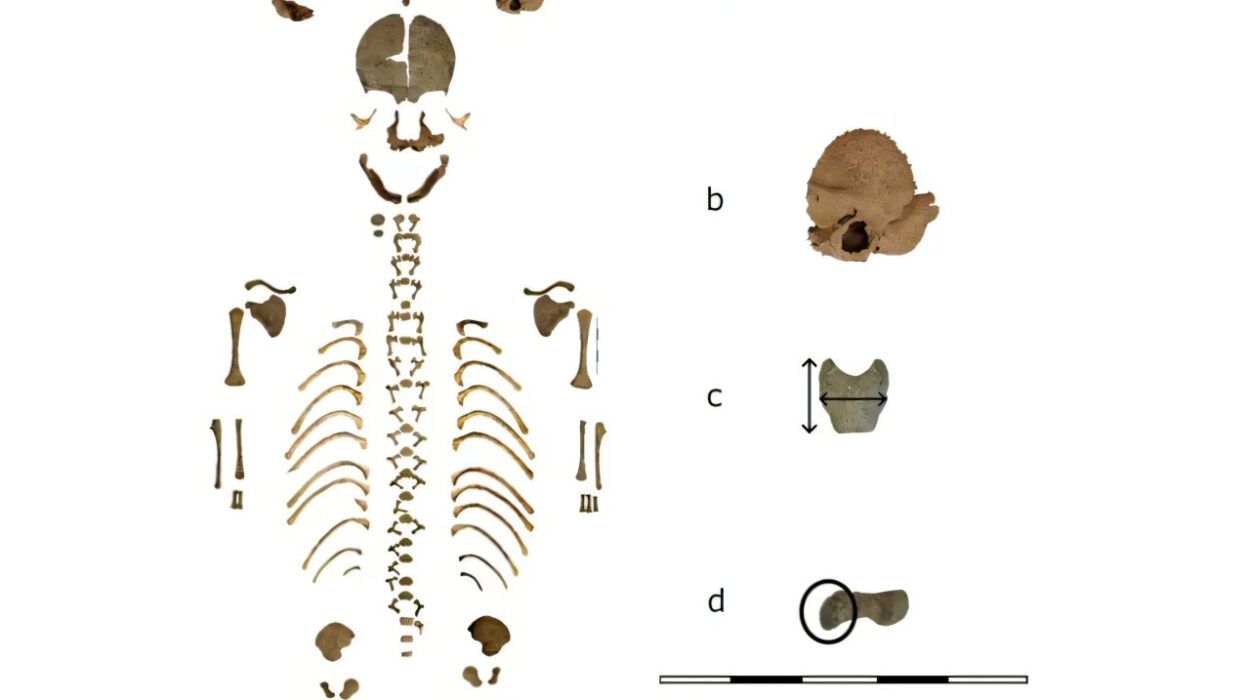
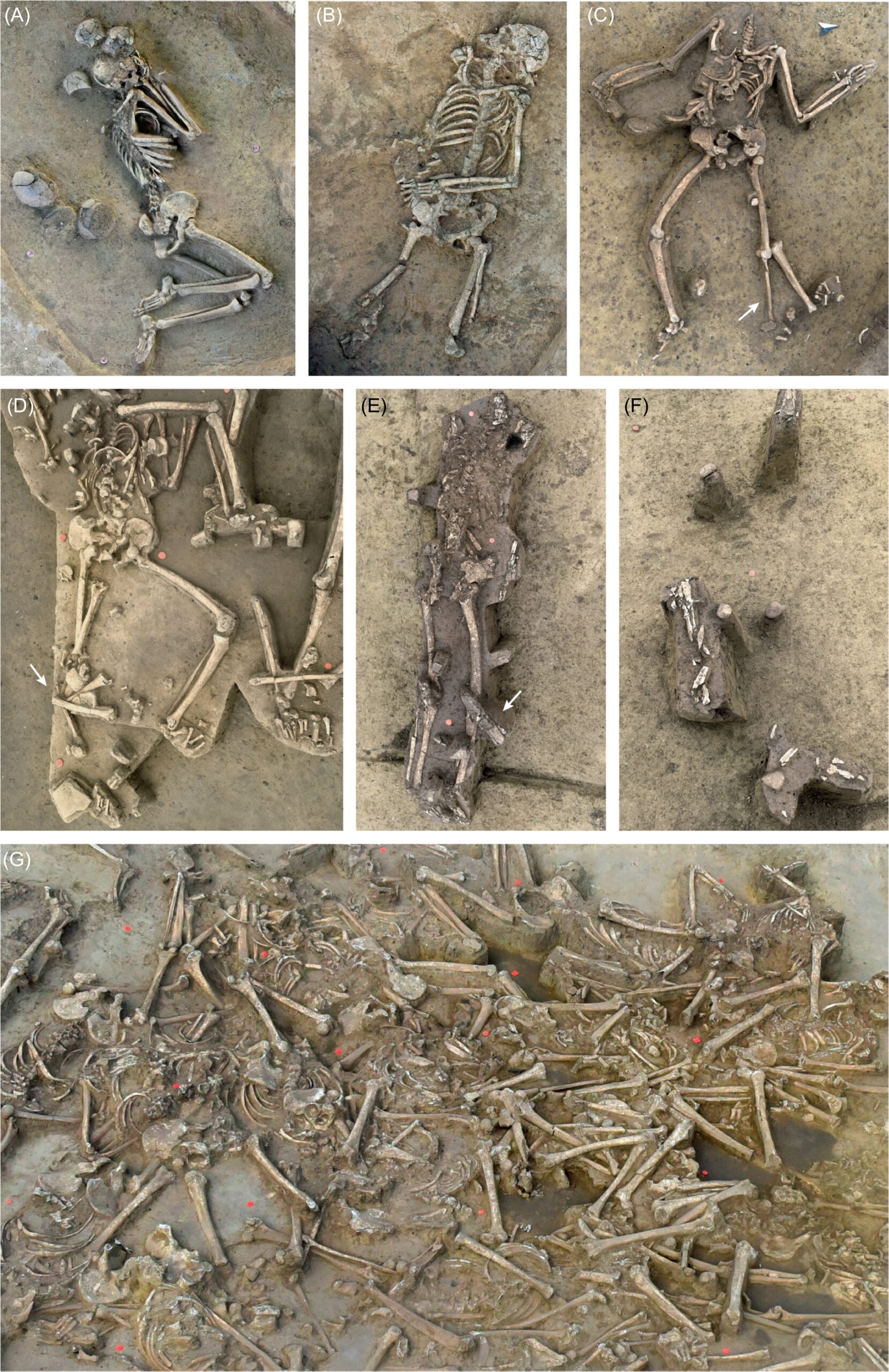
Since fieldwork began in 2022, human remains found near the entrance to that neighborhood have accumulated into an unusual concentration. At least 78 individuals have been identified there, lying in different positions without an obvious arrangement.
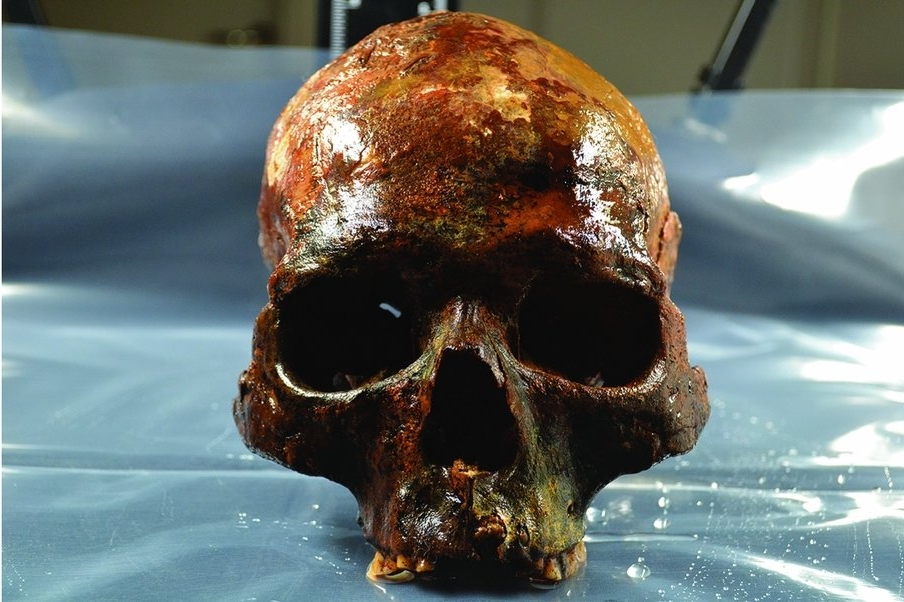
Only one skeleton, belonging to a child, still had its skull.
At first glance, the scene could suggest a massacre. But the early analysis does not provide strong evidence for that explanation.
The skulls appear to have been deliberately removed
Initial examination indicates that the people were probably buried relatively soon after they died. The bones also show that the bodies were intentionally manipulated.
Yet the evidence so far does not suggest that the skulls were violently chopped off.
Instead, the researchers report signs consistent with skilled removal of the skulls. Exactly how and why this was done remains unknown.
One possibility is that the heads were kept somewhere separately. There is no direct evidence for such storage at Vráble, although the practice is known from other archaeological contexts.
The researchers emphasize that treating human remains in unusual ways was not unique to this settlement. Comparable practices have been documented among prehistoric societies, including other communities of the Linear Pottery culture. The specific forms of body manipulation varied considerably.
Similar practices occurred elsewhere at the end of the LBK
Human bodies and body parts were sometimes placed in settlement ditches, and such deposits are not unique to Vráble. Archaeologists have also found mass graves, ditch burials and manipulated bodies at numerous sites dating to the end of the Linear Pottery culture.
Those discoveries have often been interpreted as signs of a period of crisis, including violence or conflict.
The researchers working at Vráble argue that the evidence deserves a more careful interpretation. They propose that depositing bodies or body parts could have been part of recurring social practices with meanings that are difficult to reconstruct today.
The apparent end of these practices may also indicate broad changes, according to the researchers. But what those changes were, and what the practices themselves meant, are still unresolved.
“We must assume that these practices were embedded in completely different contexts of meaning than those of modern societies,” said Martin Furholt of Kiel University, the study’s lead author.
More evidence is being examined
The excavation is part of the ongoing research project “Neolithic Bodies.” Researchers are continuing to sort the bones to establish the individuals’ ages at death and biological sex. They are also examining cut marks on the cervical vertebrae in greater detail.
Other work is investigating possible evidence of violence and the processes involved in the decomposition of the bodies. Isotope and DNA analyses are planned to provide information about the individuals’ origins, diets and kinship ties.
The ditch system itself is also being studied for clues about how the area was constructed and used.
For now, the headless skeletons remain an unusual archaeological record whose precise meaning has not been established. The researchers say the evidence raises questions about how Neolithic communities understood death and the human body, and how practices surrounding the dead fit into the social relationships of early farming societies.
The study was published in Proceedings of the Prehistoric Society.