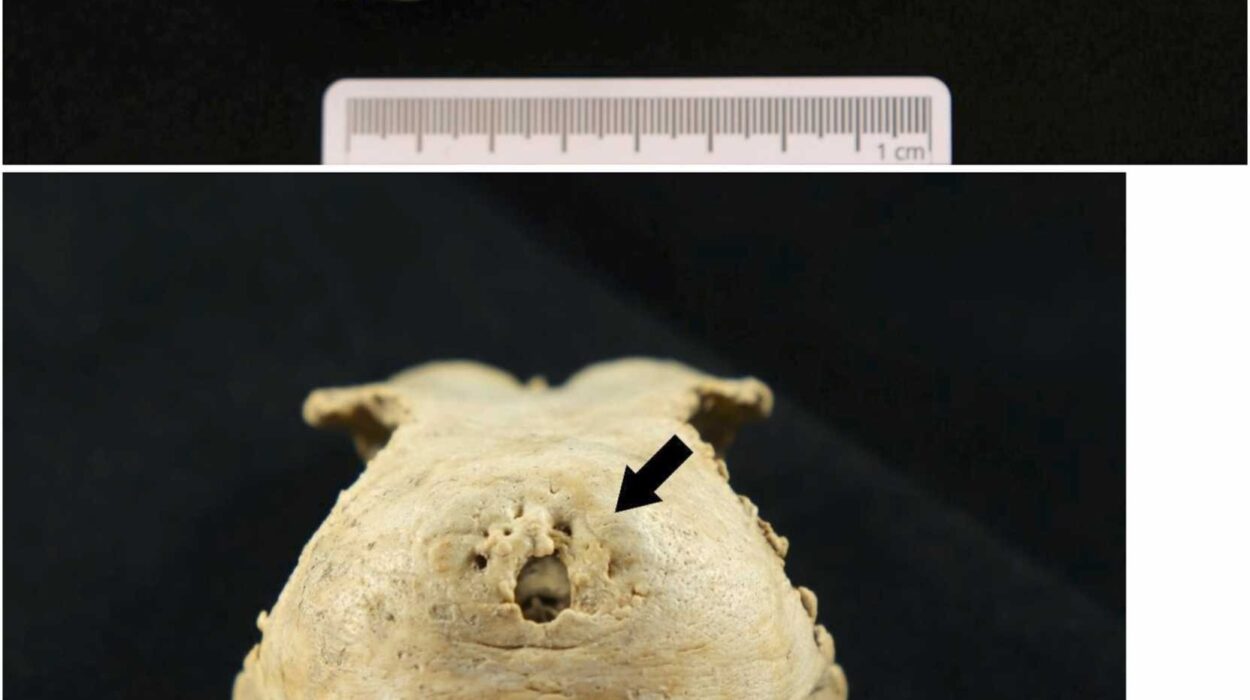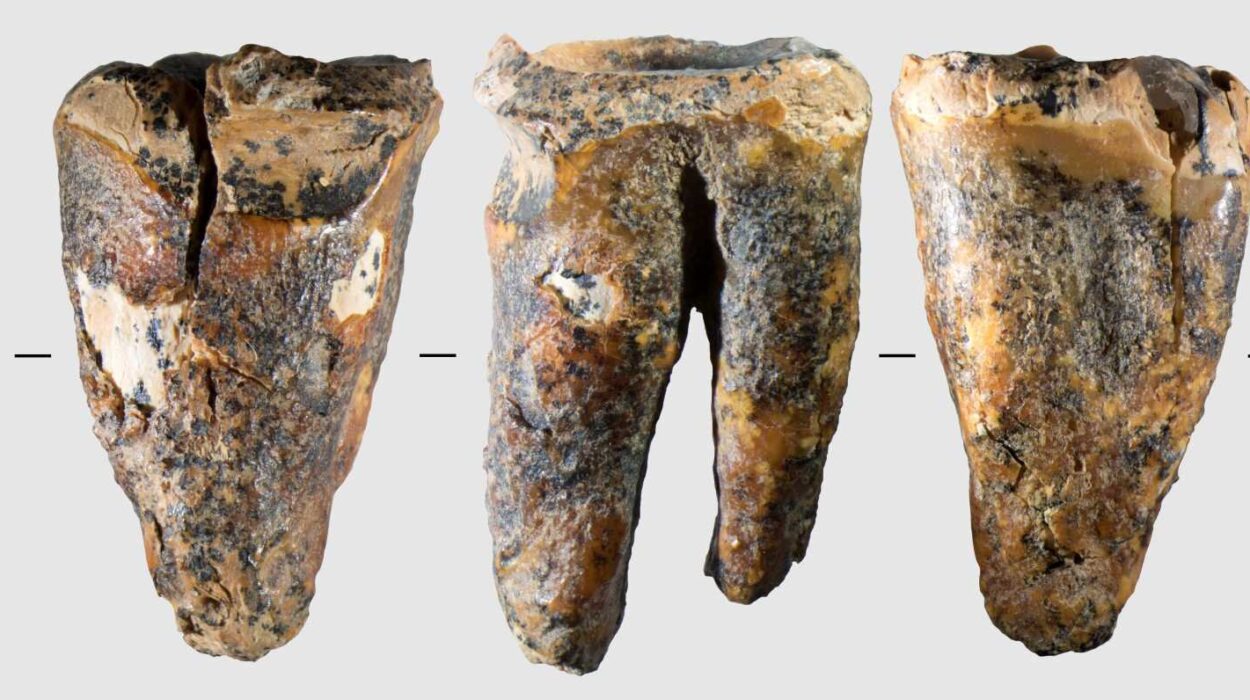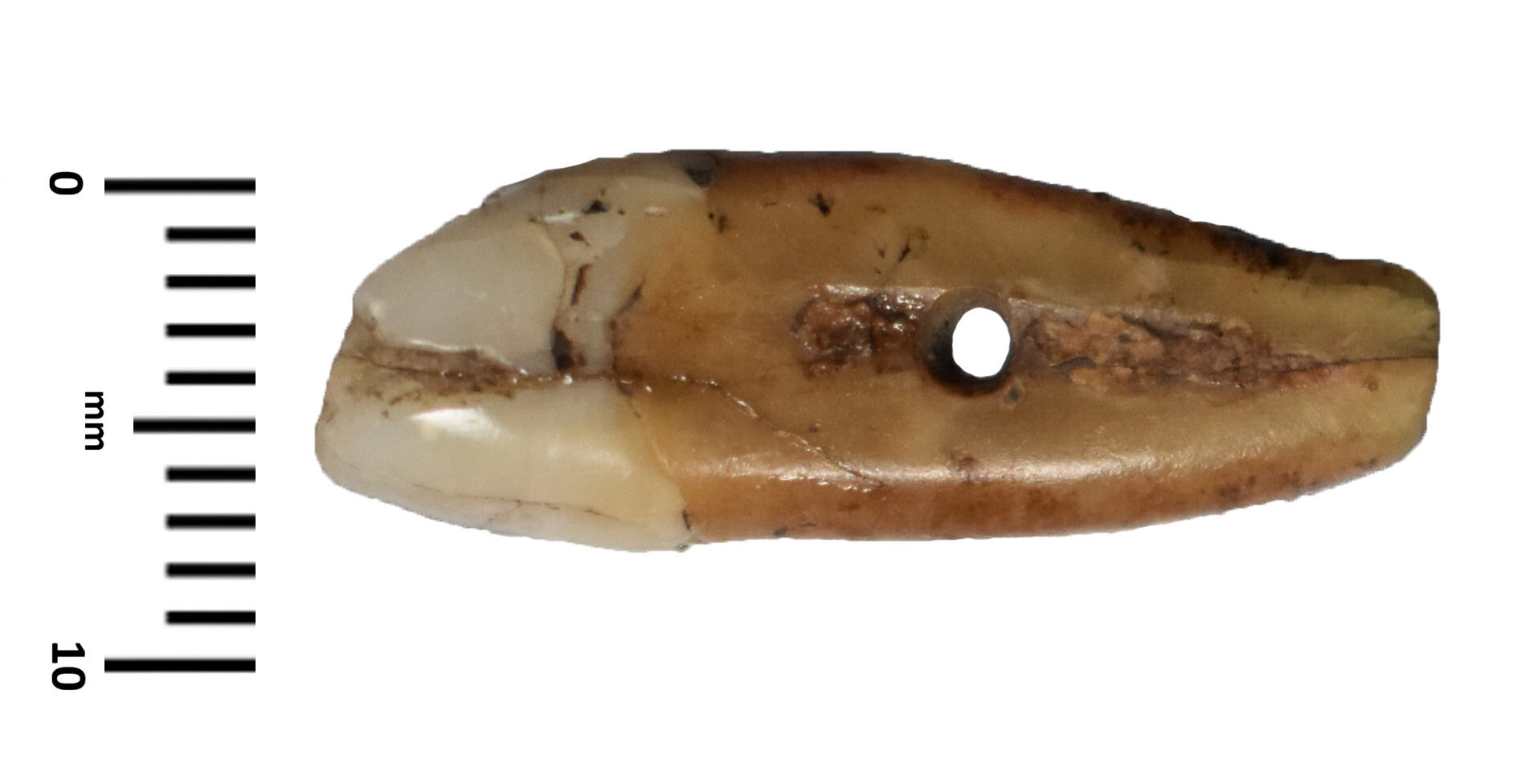
More than 6,500 years ago, a human canine was carefully drilled, worn on a cord and likely used as a pendant at a Neolithic settlement in what is now Serbia. The unusual ornament was overlooked for years because it had been mistaken for an animal tooth bead.
The tooth was found during field surveys at the Neolithic site of Jablanica, just south of Belgrade. The settlement belonged to the Vinča culture, a major prehistoric society in Europe.
The small tooth measures about 23 millimeters, or just under an inch, in length. Agricultural activity had damaged it, splitting its crown into two pieces. The fragments were collected and eventually taken to the Museum of Mladenovac, where they were identified as the remains of a bead.
They stayed there for nearly two decades.
Archaeologist Nemanja Marković of the Institute of Archaeology in Belgrade and his colleague Ana Maričić later examined the object more closely. Its shape revealed that it was not an animal tooth at all. It was a human canine.
That changed the significance of the find.
“My first reaction was curiosity rather than surprise,” Marković said. Once he recognized the tooth as human, “it became clear that we were looking at something much more unusual than an ordinary tooth bead.”
Evidence that the tooth came from a dead person
The researchers used visual inspection, microscopy and X-ray analysis to investigate the object.
Wear on the chewing surface indicated that the tooth came from a middle-aged adult. The root was smooth and undamaged, which suggested that the tooth had not been forcibly removed while its owner was alive.
Instead, the evidence indicated that the person had already died before the tooth was taken from the remains.
The researchers also examined how and when the tooth had been made into an ornament. Because the tooth had been recovered from the surface of a field, its archaeological context was missing, making an exact date impossible to establish.
They compared its drill marks with those on a shell bracelet from Jablanica that is securely dated to around 4700 B.C. The comparison was intended to determine whether similar techniques had been used to make the two objects.
The different lines of evidence pointed toward the same general period. Marković noted, however, that “absolute certainty is not possible” for a surface find.
Making the pendant required skill
Microscopic examination provided another important clue.
Marković said the tooth showed remarkable precision, suggesting that it was deliberately made rather than improvised. The researchers also found evidence that it had been worn for a prolonged period.
The finding is particularly unusual because ornaments are rare at Jablanica. Only two other pieces have been found at the site so far: a fragment of a shell bracelet and another shell pendant.
Human tooth pendants are also rare elsewhere in Europe. They are known to occur occasionally, but the researchers say none has been definitively documented from the Neolithic central Balkans.
That makes the Jablanica tooth the only reliably documented human tooth ornament reported from the region’s Neolithic period.
An old collection produced a new find
The discovery came not from a new excavation, but from a closer examination of an object that had already been sitting in a museum collection for years.
Marković hopes the case will encourage researchers to revisit older archaeological collections. Other objects that were once classified as ordinary or poorly understood items could potentially deserve another examination.
The researchers also interpret the tooth as evidence that human remains in prehistoric societies could be transformed into personal objects. In their view, such objects can provide new perspectives on identity, memory and relationships between living people and the dead in Vinča society and beyond.
The study was published in the International Journal of Osteoarchaeology.