Two newborn boys buried together at an ancient site in Austria have been identified as identical twins, with one surviving about 50 days longer than the other. Their remains are now the oldest known evidence of monozygotic twins.
The remains were found in 2005 at the Krems-Wachtberg archaeological site in Austria, where researchers have identified evidence of a Gravettian settlement dating to about 30,000 years ago. Three very young individuals were buried at the site.
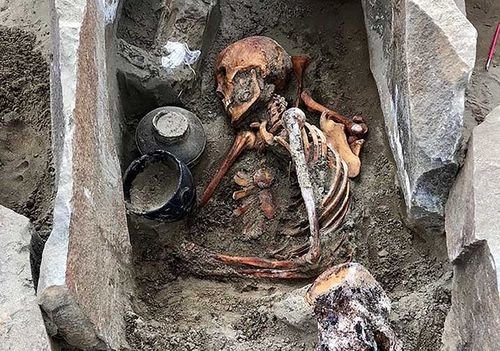
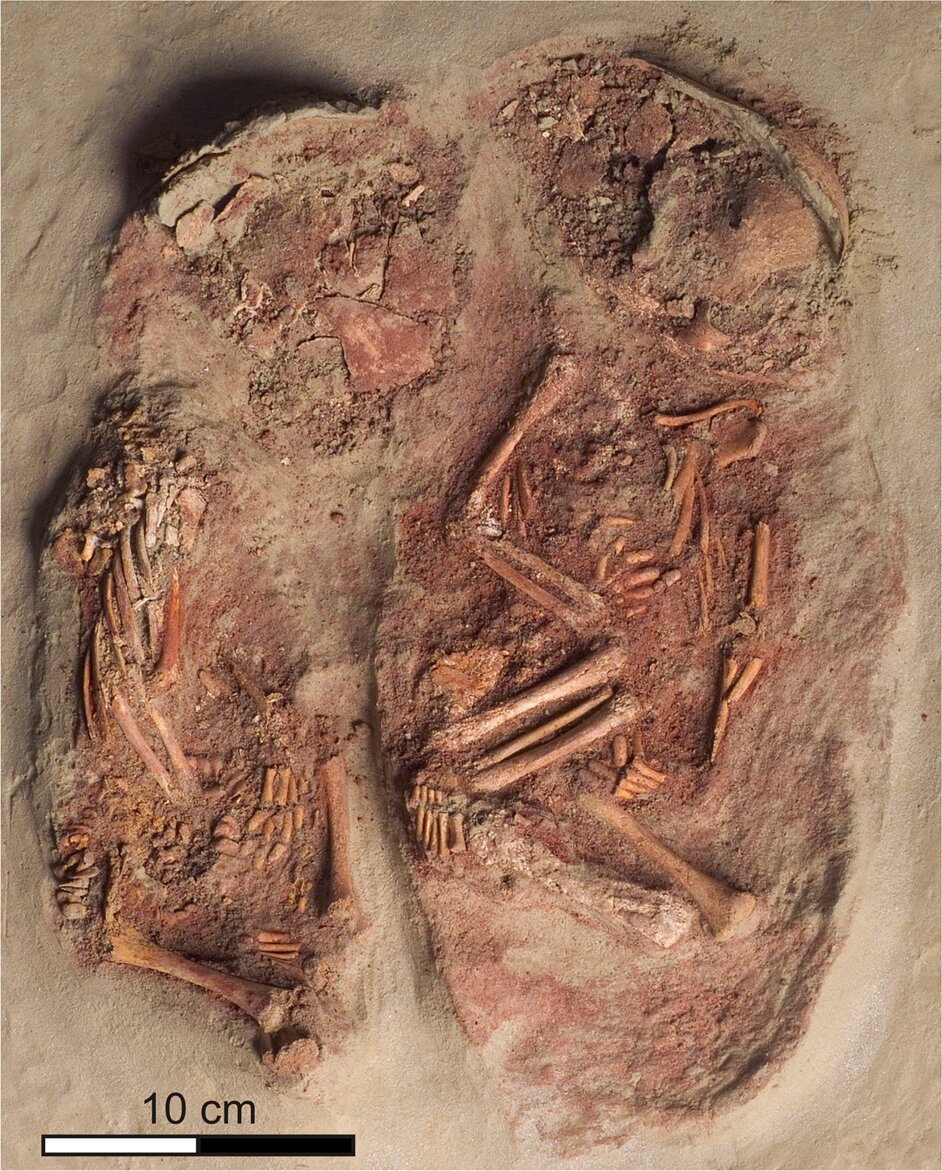
Two of them were placed close together beneath about five meters of soil. A mammoth shoulder bone had been cut and shaved to make a cover for the grave, protecting the remains and leaving them in unusually good condition.
DNA analysis identified both infants as boys and showed that they were identical twins. The first died shortly after birth. The second lived for about another 50 days before dying.
That difference in age at death provides an important clue about how the grave was used. Because the twins were buried together, the researchers concluded that the grave must have been reopened when the second infant died.
The third infant was a cousin
The third baby was buried a short distance away without the protective cover. Its remains were in much poorer condition, but researchers were still able to recover DNA.
The genetic evidence showed that the third infant was a cousin of the twins.
The cause of death for any of the three infants remains unknown.
Objects placed with the babies
The grave was oval-shaped, and the infants had been placed close together in a spooning position on a bed of red ochre.
Researchers also found 53 beads made from mammoth ivory inside the grave. The beads were arranged in a line, suggesting they had once been strung together. They showed no signs of wear, leading the researchers to conclude that they had likely been made into a string for the burial.
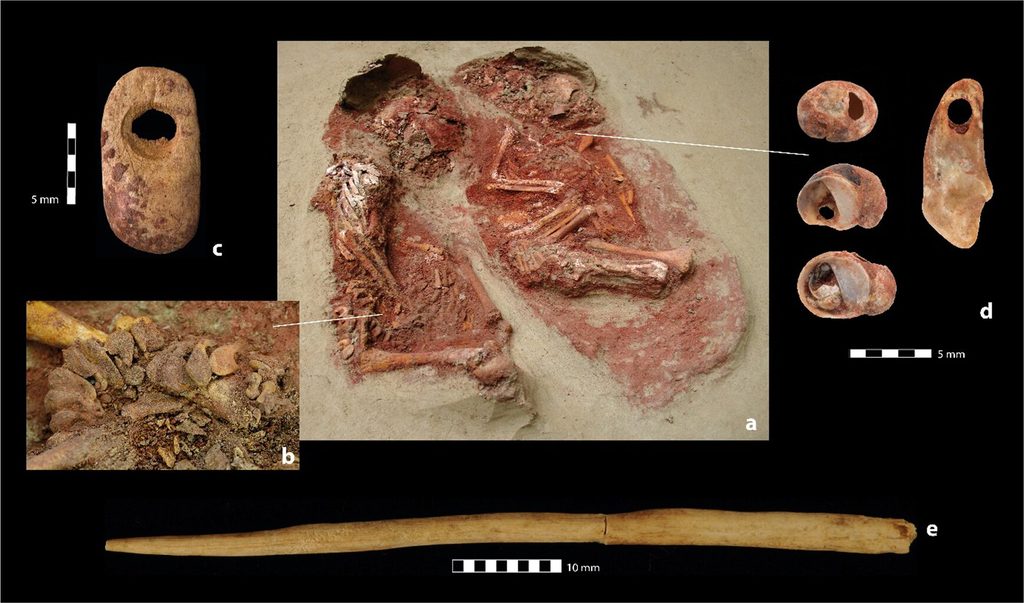
Three perforated mollusk shells and a fox incisor were also found in the grave.
Together, the preserved remains and the objects buried with them provide evidence of how the infants were placed in the grave and how the burial was arranged.
The remains of the two boys represent the oldest known monozygotic, or identical, twins ever found.
The study was published in Communications Biology.