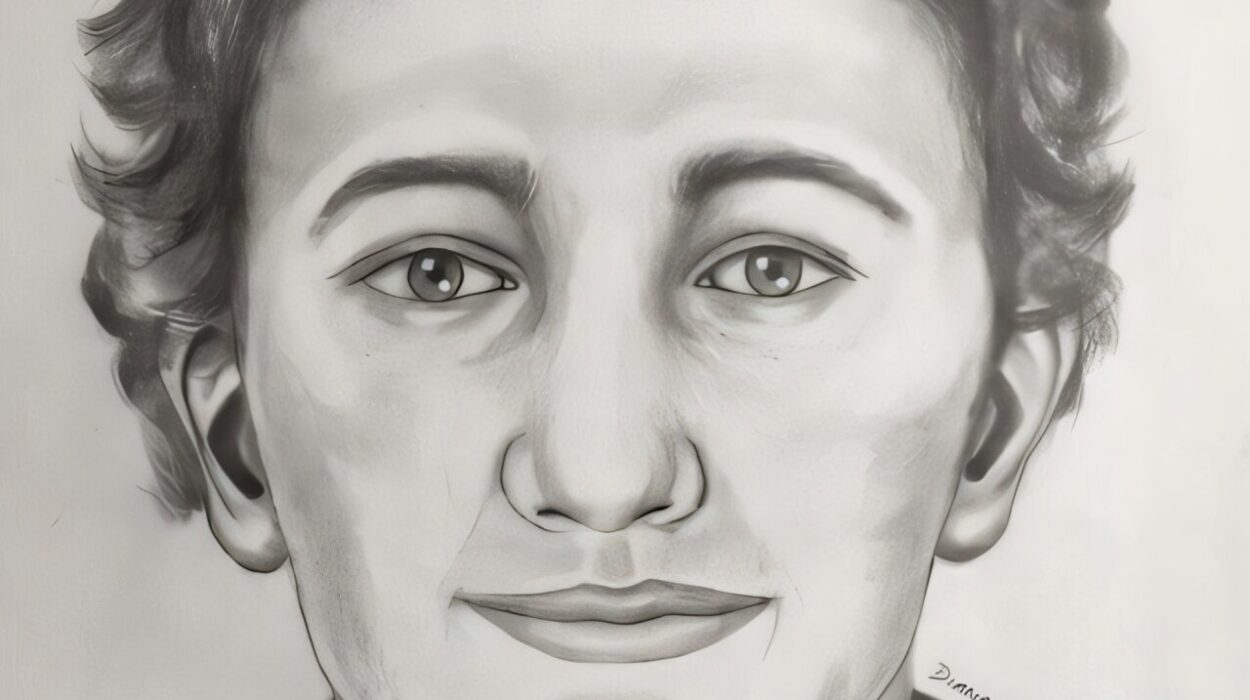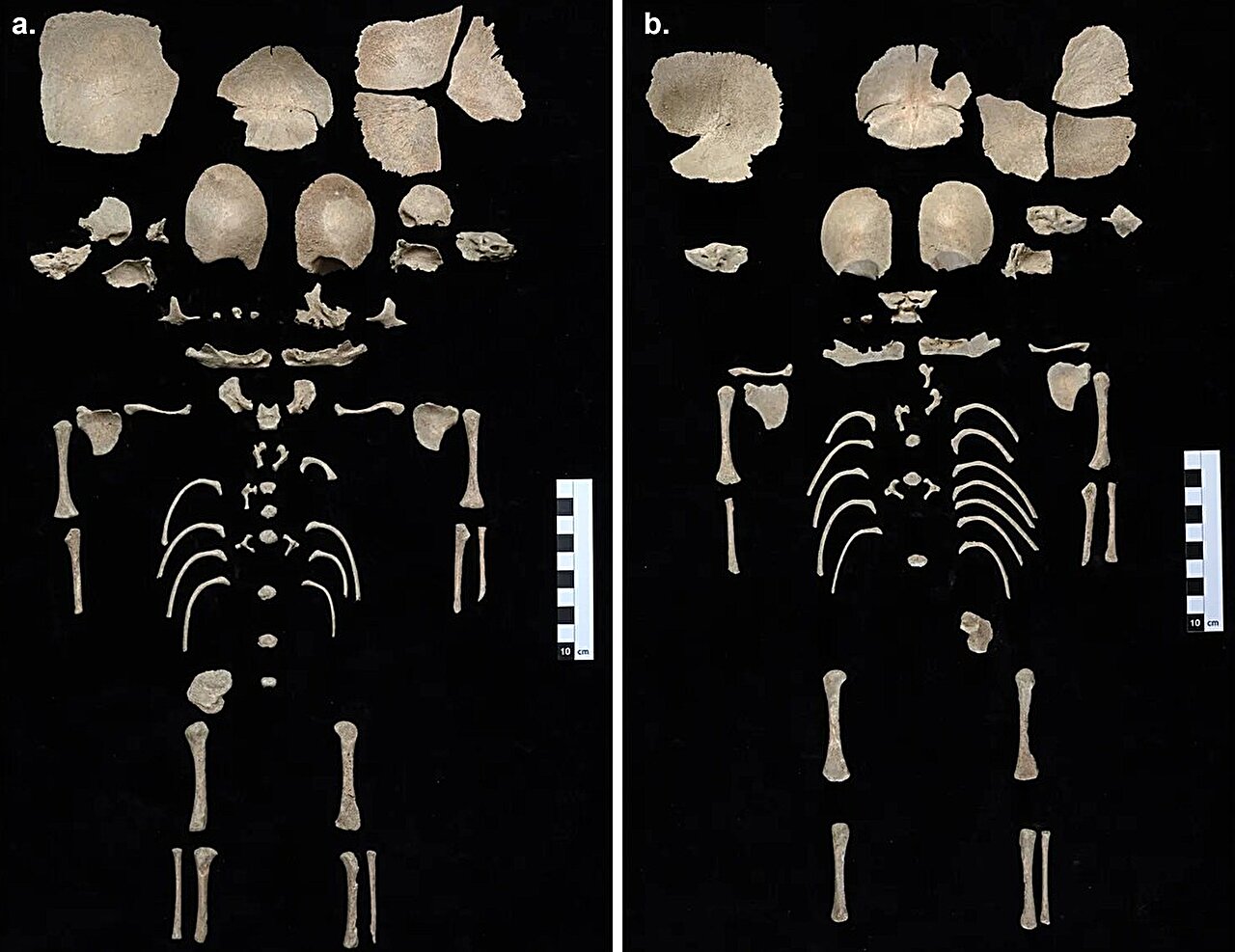
More than a millennium ago, two infants were placed side by side in the channel of an abandoned Roman toilet at Ephesos, in what is now Turkey. Their carefully prepared burial suggests they were not simply discarded, and their remains may belong to twins who were born about six weeks prematurely. One of the babies also had an exceptionally rare extra rib growing from a neck vertebra.
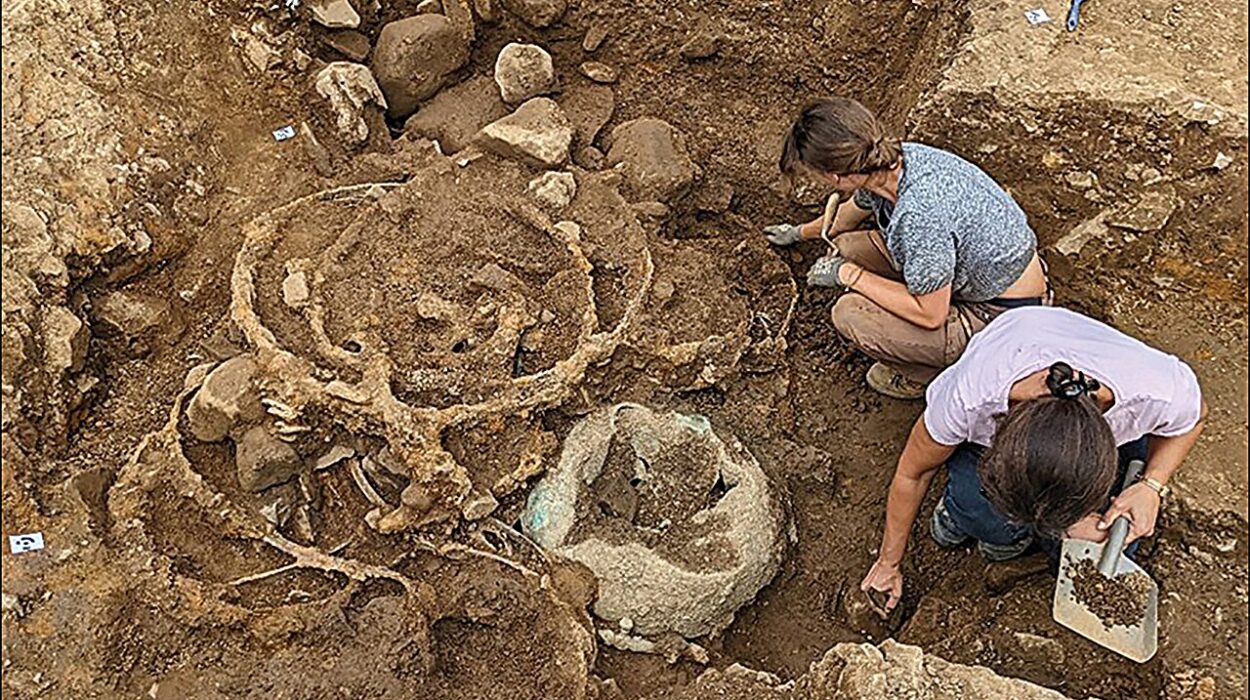
The burial was found inside an ancient Roman odeion, a building used for music and speeches. The structure was built during the 1st century A.D. and later received a public toilet. After a major fire, the building was abandoned and was eventually used for butcher’s scraps and broken pottery.
By the 8th or 9th century A.D., when the infants were buried, the latrine had been out of use for centuries. Its channel, however, remained intact.
That made the abandoned structure an unusual but sheltered place to bury the babies. They were laid next to each other in a small cist grave lined with tiles and stones. The people who prepared the grave had also brought earth from elsewhere and placed it beneath the infants.
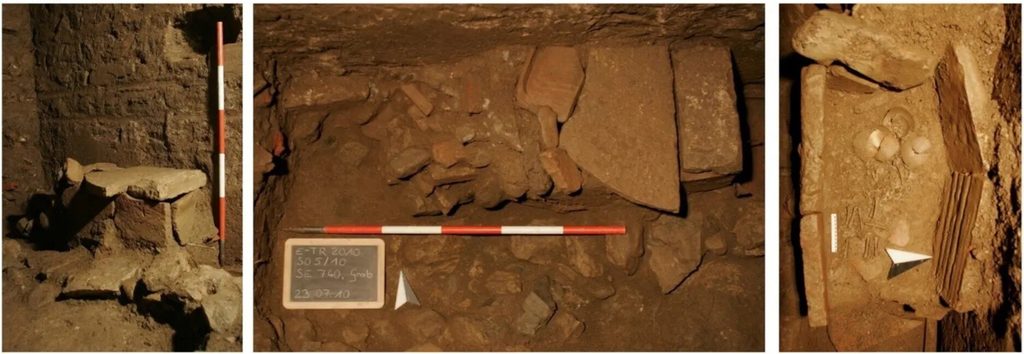
The arrangement suggests deliberate care rather than simple disposal. Researchers said the babies were probably wrapped in shrouds, indicating particular attention to their funerary treatment.
The infants may have been twins
The remains were small and incomplete, but measurements of the babies’ arm bones indicate that both may have been born about six weeks before full term. It is not certain that either infant survived birth.
Their similar size, age and burial date also raise the possibility that they were twins.
The study notes that infant burials are uncommon and that burials involving twins are even rarer. The researchers therefore considered the possibility of a twin burial while acknowledging that the evidence cannot establish it with certainty.
An unusually rare extra rib
One of the most distinctive findings was a tiny additional rib attached to a neck vertebra. The bone measured only about 5 millimeters long.
The researchers noted that a comparable case has been reported in only one other infant from an archaeological burial. An extra rib in this location can be harmless in adults, but its occurrence in babies is often associated with genetic and developmental problems, including tumors and stillbirths.
The finding adds another unusual feature to a burial that is already rare because of the infants’ possible age, possible twin status and location.
Why were they buried there?
The reason the infants were not placed in a cemetery remains uncertain.
The study notes that in Byzantine Ephesos, burial in consecrated ground was restricted to people who had been baptized. Babies were generally baptized weeks after birth, meaning these infants may not have met that condition.
The odeion, meanwhile, stood within the boundaries of the ancient sanctuary of Artemis. The researchers suggest that this location may have provided an alternative place for burial, although they cannot determine whether the former sanctuary still had spiritual significance for the infants’ parents at the time.
What is clearer is the care taken in preparing the grave. The infants were placed together in a protected space that remained undisturbed for more than 1,000 years.
The study was published in Childhood in the Past.