Cygnus X-3, a compact binary system far beyond the region traditionally linked to the Cygnus Bubble, may have been supplying the particles responsible for the giant gamma-ray structure’s highest-energy emission. A new model suggests the distant microquasar can account for both the Bubble’s brightness and the way its emission fades with distance.
The Cygnus Bubble is a vast structure of ultra-high-energy gamma rays extending thousands of light-years across the sky. Its origin has generally been associated with the Cygnus X star-forming region, which lies about 4,600 light-years away.
The new study examines a different possibility. Instead of the nearby cluster of massive, young stars, the source could be Cygnus X-3, a microquasar located roughly 31,600 light-years from Earth.
That distinction is important because the object producing high-energy particles does not necessarily have to sit inside the gamma-ray structure we observe. Particles accelerated to extreme energies can move outward through space before interacting with surrounding gas. Those interactions can produce gamma rays, meaning the resulting emission can appear far from the original accelerator.
Astronomers call objects capable of accelerating particles to petaelectronvolt energies Galactic PeVatrons. One petaelectronvolt is 10¹⁵ electron volts, or 1 followed by 15 zeros. Possible PeVatrons include supernova remnants, pulsar wind nebulae, star clusters and binary systems.
The study, led by Zhaodong Shi of the University of Science and Technology of China, focuses on whether Cygnus X-3 could be the PeVatron behind the Cygnus Bubble.
Cygnus X-3 can accelerate extremely energetic particles
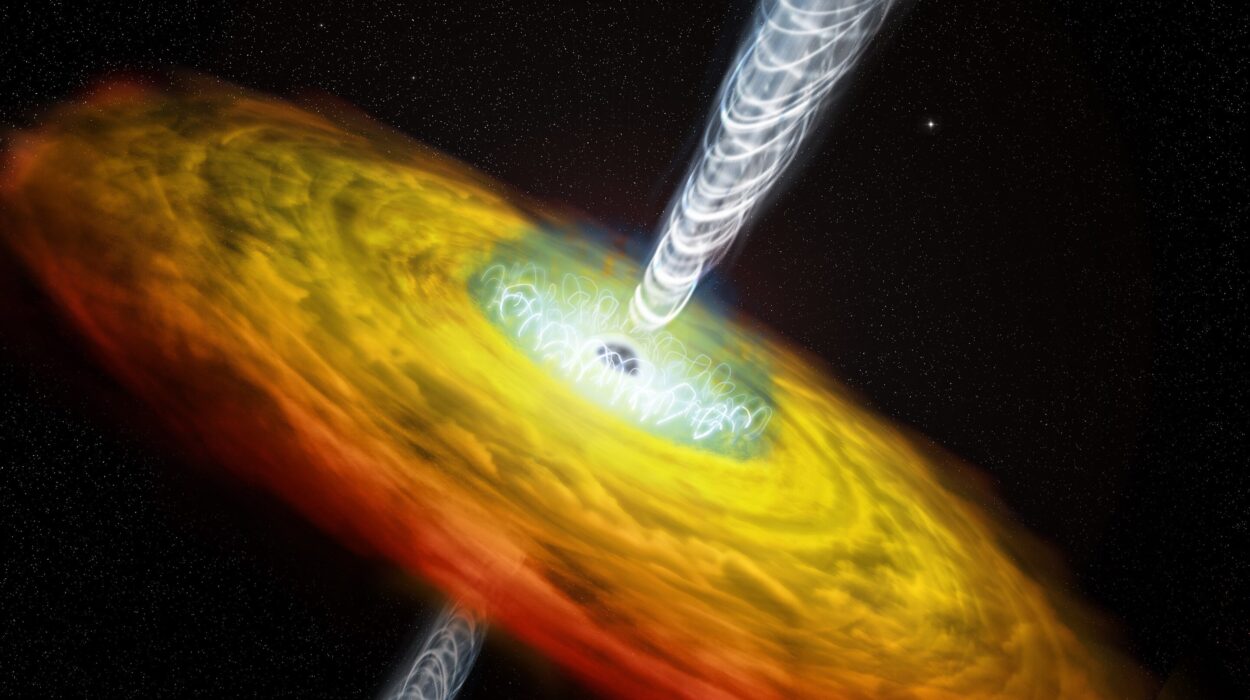
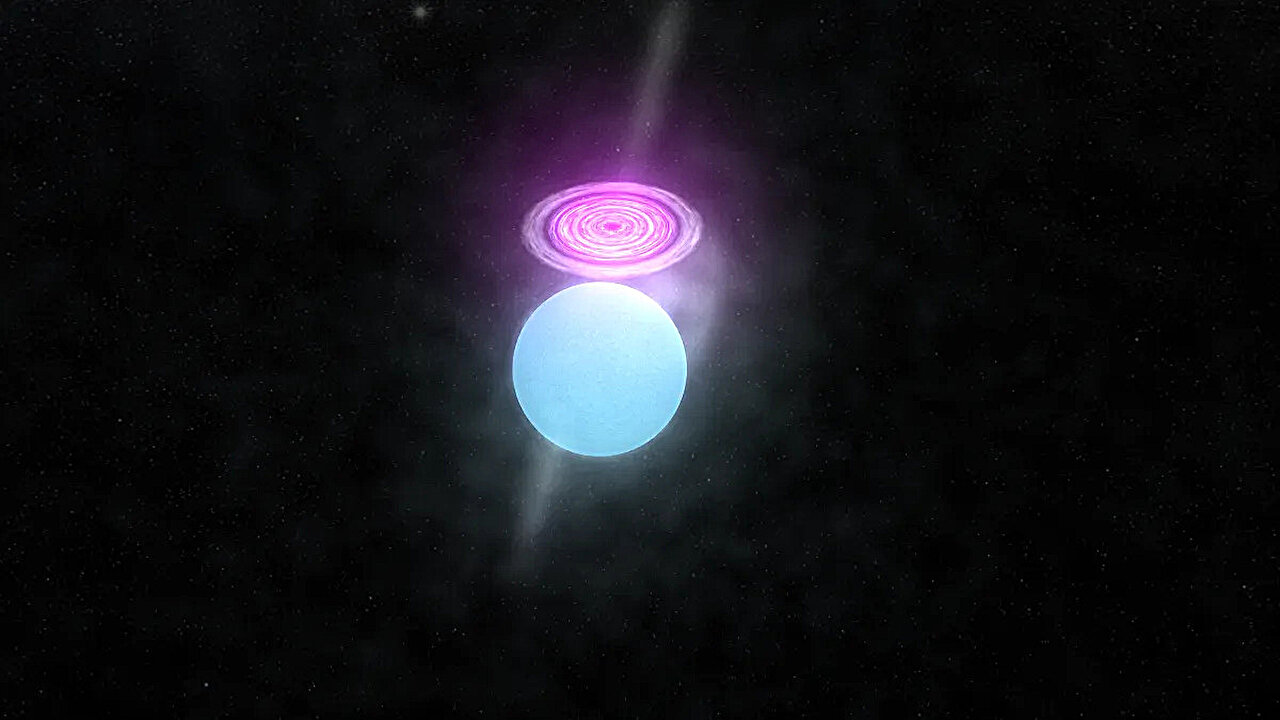
Cygnus X-3 is a binary system containing a compact object, either a black hole or neutron star, orbiting a normal star. The compact object draws in material from its companion and produces powerful jets or winds.
The system has an orbital period of 4.8 hours.
Evidence from the Large High Altitude Air Shower Observatory, or LHAASO, provides a reason to consider Cygnus X-3 as the Bubble’s possible accelerator. A separate recent finding confirmed the system as the Milky Way’s first “super-PeVatron,” with particles reaching at least 30 PeV in connection with its 4.8-hour orbit.
That observation provides direct evidence that extreme particle acceleration occurs within Cygnus X-3 itself.
The researchers then asked whether those particles could also produce the much larger gamma-ray structure observed in the Cygnus region.
The model reproduces the Bubble’s observed pattern
The team modeled Cygnus X-3 as a continuous source of high-energy protons releasing particles into space over hundreds of thousands of years.
As the protons spread through surrounding gas, some collide with gas atoms. Those interactions produce gamma rays that can eventually be detected from Earth.
The researchers adjusted the model using reasonable physical values and found that it could reproduce two features of the Cygnus Bubble. It matched the structure’s total brightness and also reproduced the way the brightness decreases outward from its center.
The model required Cygnus X-3 to devote only 1% to 3% of its power to particle acceleration. The particle-spreading rate required by the model also agreed well with independent theoretical predictions.
Those results support the possibility that Cygnus X-3 is responsible for the Bubble’s highest-energy emission.
But the model does not by itself establish that Cygnus X-3 is the source.
Future observations could separate the competing sources
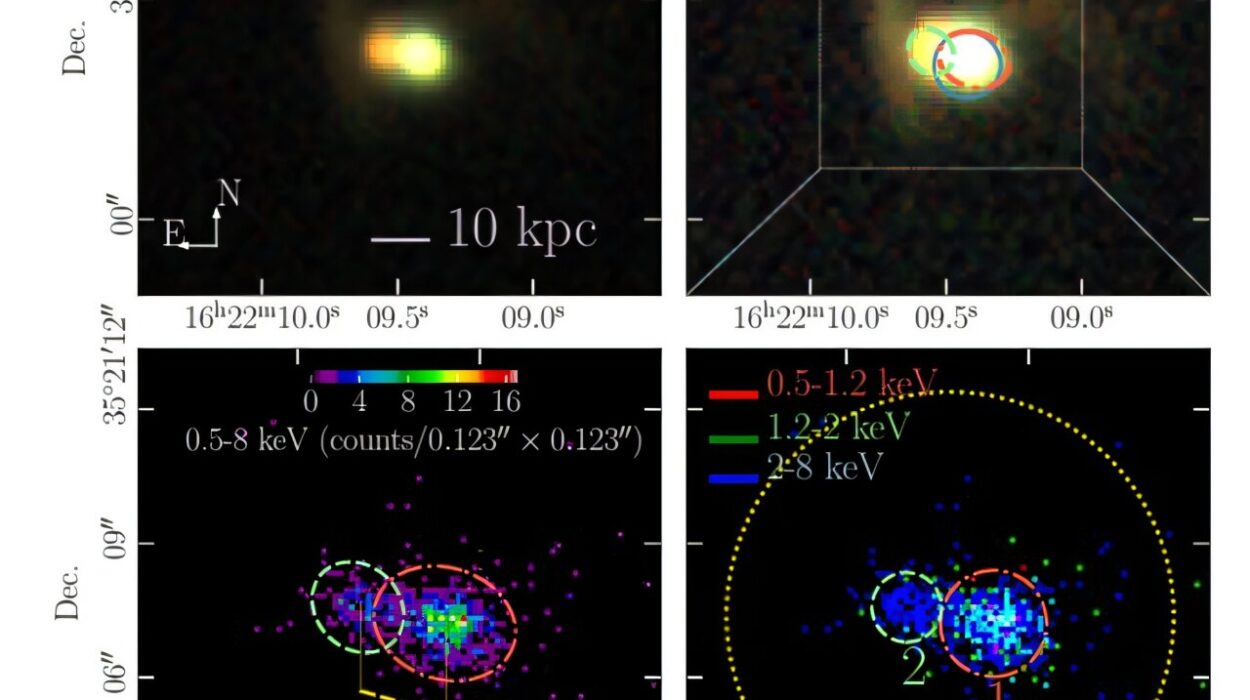
Cygnus X-3 and the star cluster in the Cygnus X region appear in the same part of the sky. Current telescopes cannot fully separate the gamma-ray contribution from Cygnus X-3 from that of the star cluster.
That leaves the source of the Cygnus Bubble unresolved.
If the Cygnus X-3 explanation is confirmed, the Bubble would join a small but growing group of gamma-ray halos that have recently been linked to microquasars elsewhere in the galaxy. In this case, astronomers would be able to observe both the proposed particle accelerator and the halo of particles that accumulated around it over time.
The researchers point to the Cherenkov Telescope Array, ASTRI and the proposed Large Array of Cherenkov Telescopes as future instruments that could test the idea. They are expected to provide clearer and more detailed observations of the highest-energy gamma rays, making it possible to better determine whether Cygnus X-3 really is the source.
The study was published in The Astrophysical Journal Letters.