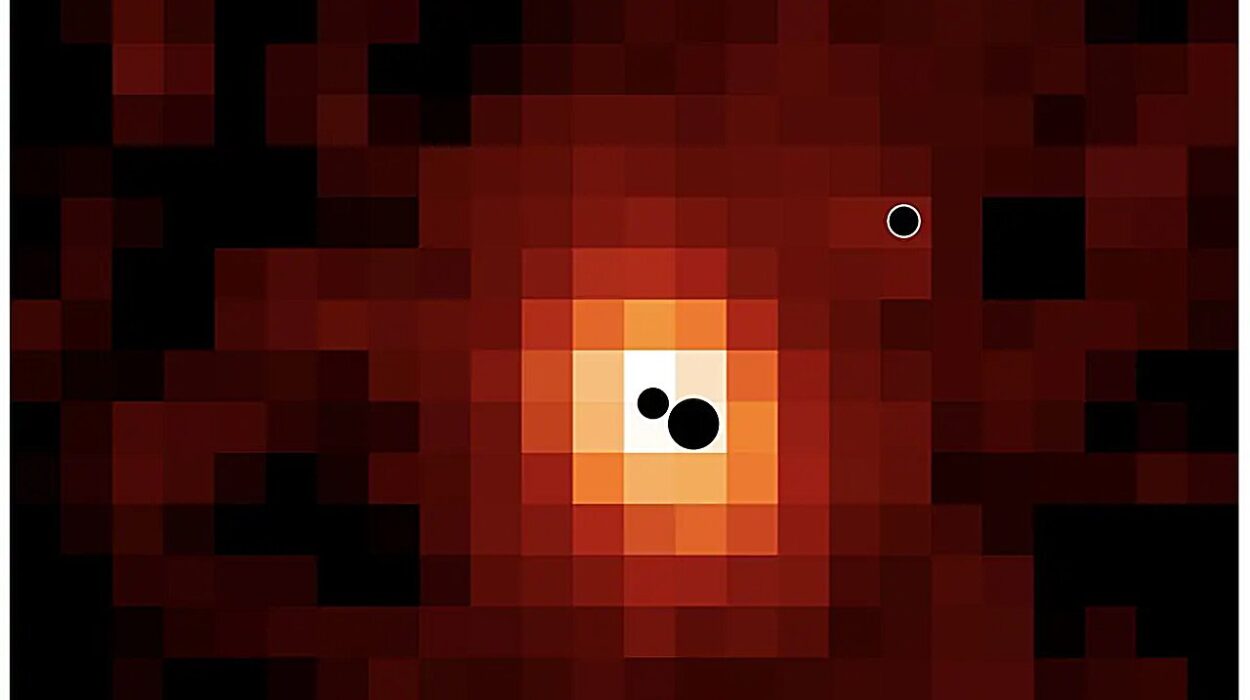
Astronomers have identified an extraordinarily bright red object from the early universe that appears too powerful to be an ordinary star. Their analysis suggests it could be a dense, star-like cloud of hydrogen surrounding a black hole about 100,000 times the mass of the Sun, creating what they call a “black hole star.”
The object, named MoM-BH*-1, was spotted by NASA’s James Webb Space Telescope while astronomers were searching for some of the earliest galaxies in the universe. The light comes from a time just a few hundred million years after the Big Bang.
At first, the object looked like an unusually bright early galaxy. But its properties quickly made it stand out.
It is roughly the size of our solar system, yet it produces about 100 billion times more energy than any known star can physically produce. That level of energy is closer to what a black hole can generate.
The researchers therefore considered a possibility that combines the appearance of a star with the power of a black hole.
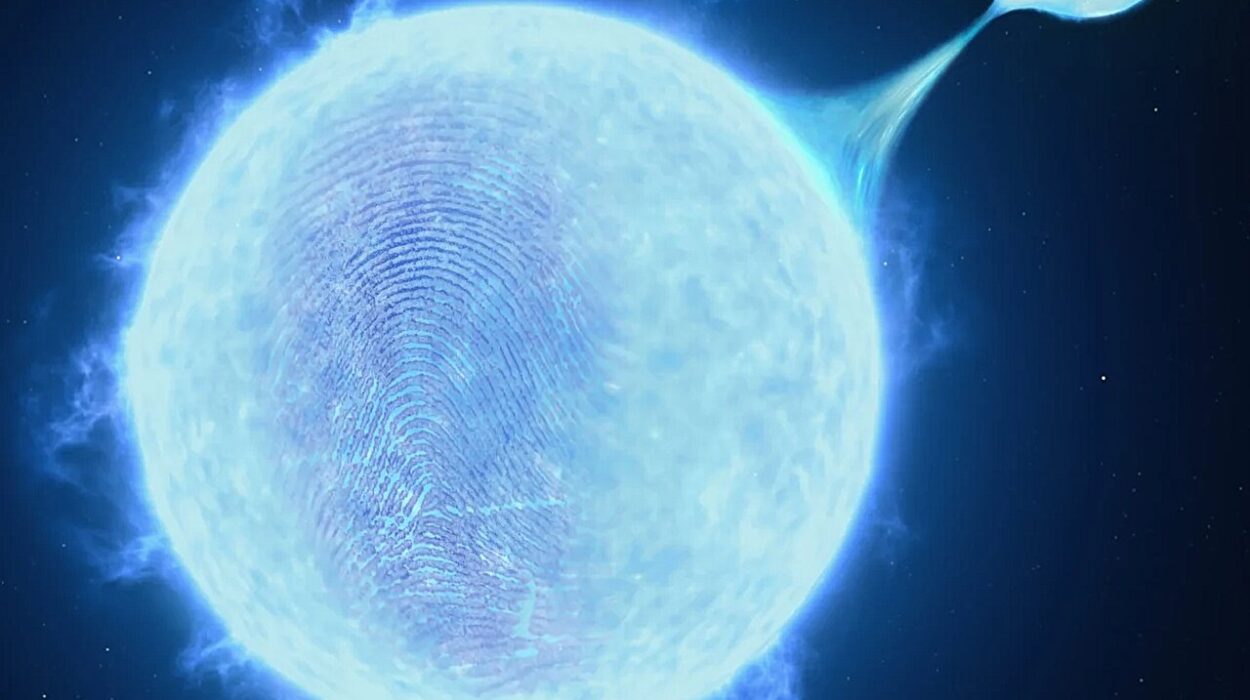
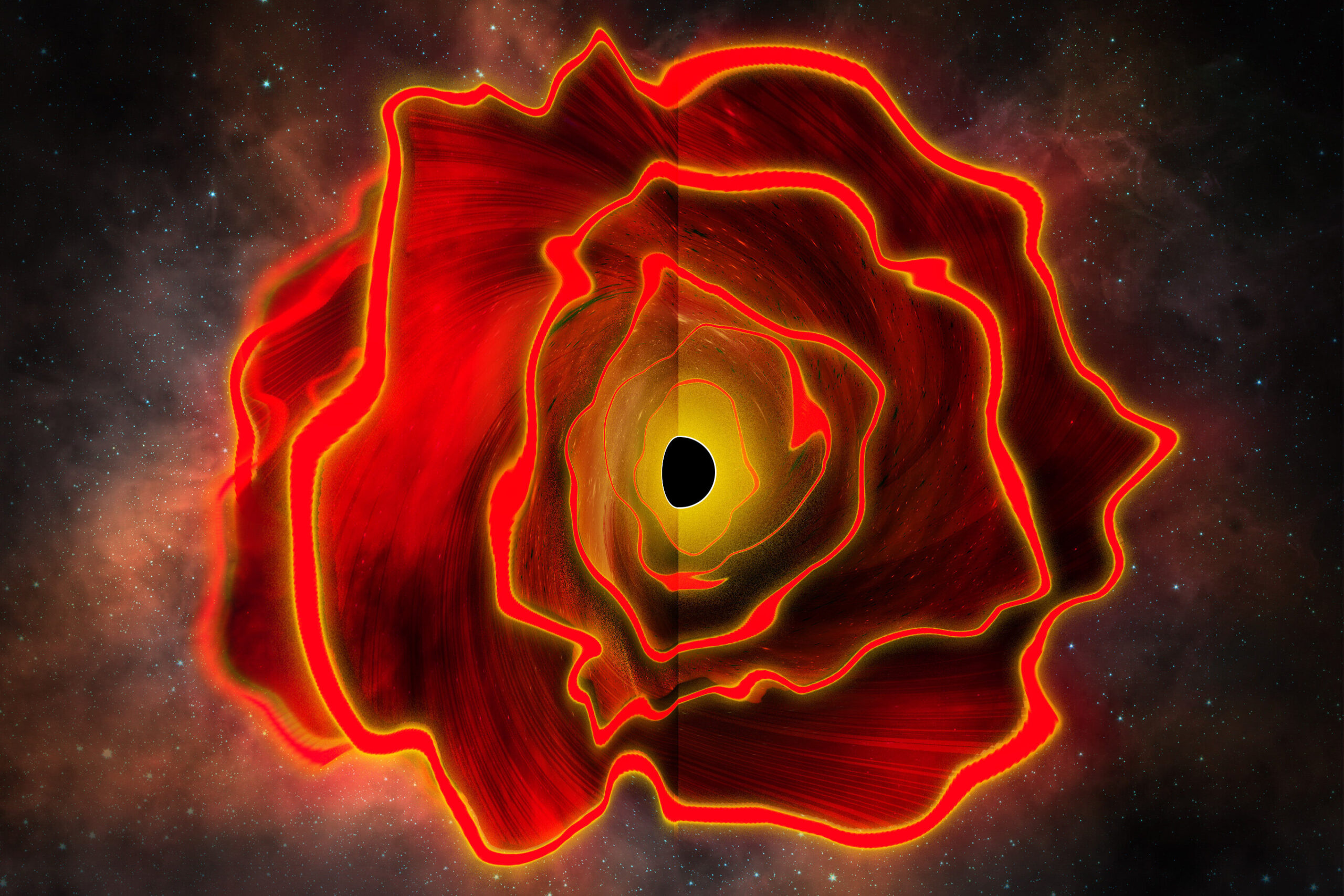
Their proposed object would contain a central black hole surrounded by an enormous, dense envelope of hydrogen. The envelope would look much like a star, even though its energy would come from the black hole inside rather than from nuclear fusion.
“Our picture of this object is evolving very rapidly,” lead author Rohan Naidu of MIT’s Kavli Institute for Astrophysics and Space Research said. The team thinks the central black hole could be about 100,000 times as massive as the Sun, with a gas envelope extending roughly to the size of the solar system.
The light did not fit a normal star
The unusual object first drew attention because it appeared both very red and very bright.
Red light from an astronomical object can sometimes indicate that dust is blocking or altering the light. But the researchers found other features that did not fit a straightforward explanation involving dust.
The object’s light was extremely bright across much of the observed spectrum, but it disappeared below certain wavelengths. This sharp change is known as a Balmer break.
A Balmer break is associated with dense gas absorbing photons in stellar atmospheres. The pattern is also seen in ordinary stars, including Vega.
But the break in MoM-BH*-1 was far deeper than any the researchers had observed in another object. That made an ordinary population of stars an unlikely explanation for what they were seeing.
The object’s light also contained almost no evidence of metals or elements other than hydrogen and helium.
Those properties led the team to consider whether an enormous concentration of hydrogen could produce the observed appearance without requiring dust.
A dense hydrogen cocoon could explain the color
The researchers ran simulations of different possible sources to see which could reproduce the object’s distinctive light.
The calculations indicated that hydrogen alone could produce such a red appearance if it were packed into an extremely dense screen. Under those conditions, the gas could resemble the surface of an enormous star rather than a diffuse cloud between stars.
That provided a possible explanation for the object’s unusual spectrum. A dense hydrogen envelope could account for the deep Balmer break and the lack of significant signatures from elements other than hydrogen and helium.
But another problem remained.
The object was far too bright to be powered by ordinary nuclear fusion. Stars produce their energy through nuclear fusion, but the researchers concluded that this process could not account for the extreme brightness observed in MoM-BH*-1.
The team therefore added an accreting black hole to its simulations.
The black hole provides the missing power
The researchers varied the mass of the black hole and other properties of the surrounding gas, then compared the simulated light with what JWST observed.
The closest match came from a model containing a central black hole about 100,000 times as massive as the Sun. Around it was a dense hydrogen cocoon roughly the size of the solar system.
That combination produced the properties observed in the red object closely enough for the researchers to identify a black hole star as the most likely explanation.
The proposed structure is therefore unusual in two ways. Its outer region would have the appearance of a huge star, while the source of its extraordinary energy would be a black hole at its center.
The researchers named the object MoM-BH*-1 after the Mirage or Miracle survey that found it. The “BH*-1” designation refers to their term “black hole star—one,” reflecting their expectation that other examples may exist.
The object may help explain other little red dots
MoM-BH*-1 could also provide a possible explanation for a larger population of unusual objects seen by JWST.
Astronomers have found many small, red sources in images of the early universe. These objects appear frequently in JWST’s deep observations but are essentially absent from the present-day universe. Their true nature has become one of the major unresolved questions associated with these observations.
The researchers propose that many of those little red dots could also be black hole stars embedded within early galaxies.
MoM-BH*-1 is unusual because it is much brighter than those other objects. In this case, the proposed black hole star appears to overwhelm the light from its surrounding host galaxy, allowing astronomers to see what the team describes as essentially pure black hole-star light.
The interpretation remains tied to the evidence from the object’s unusual spectrum and extreme brightness. The researchers’ simulations identify the black hole-star configuration as the most likely explanation for the observations.
The study was published in Nature.