A group of 1,500-year-old people buried high in the mountains of Ladakh carried an unusual genetic heritage that is rarely seen in South Asia today. Their genomes reveal that they descended almost equally from ancestors related to ancient Tibetans and North Indians, and the size of the DNA segments they inherited from each side shows that this blending had already begun around 2,800 years ago, opening an unexpected window into the early human history of the Himalayas.
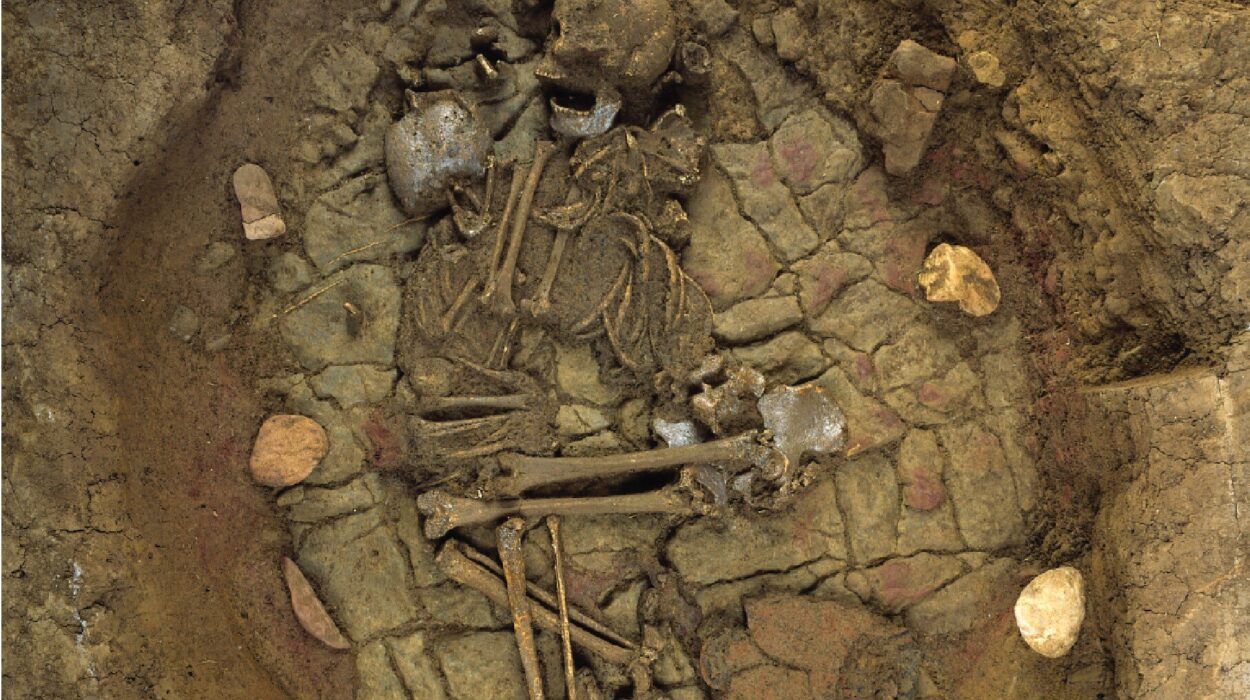
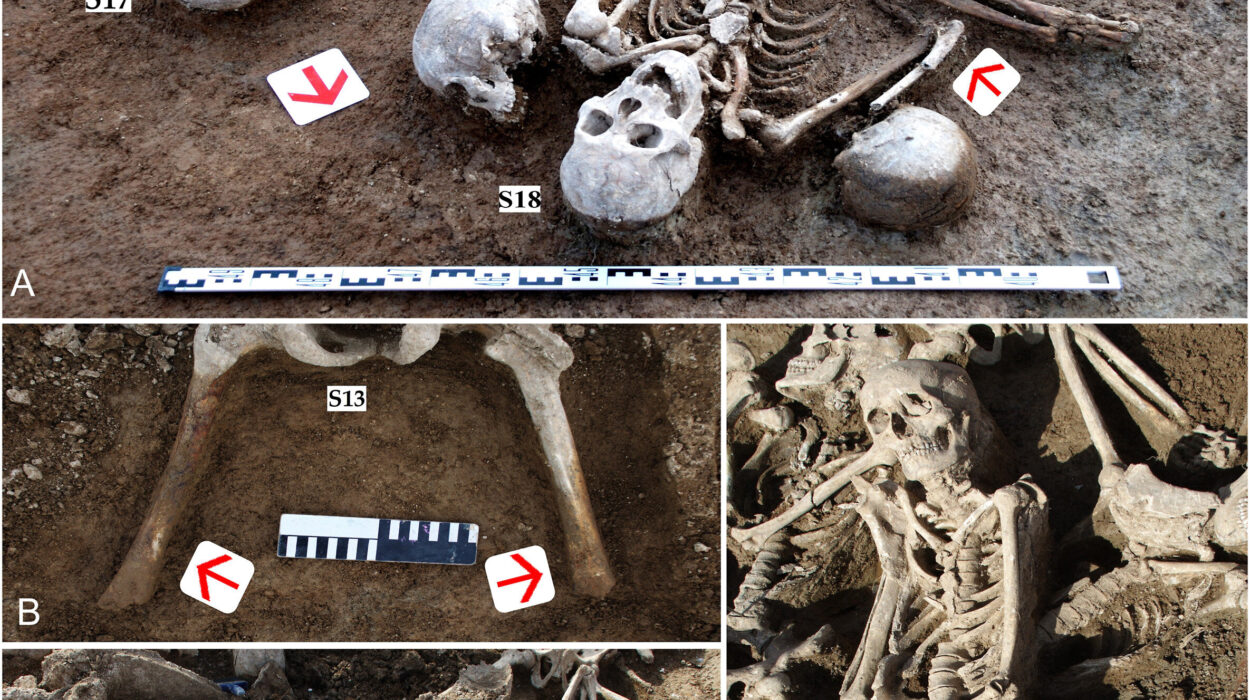
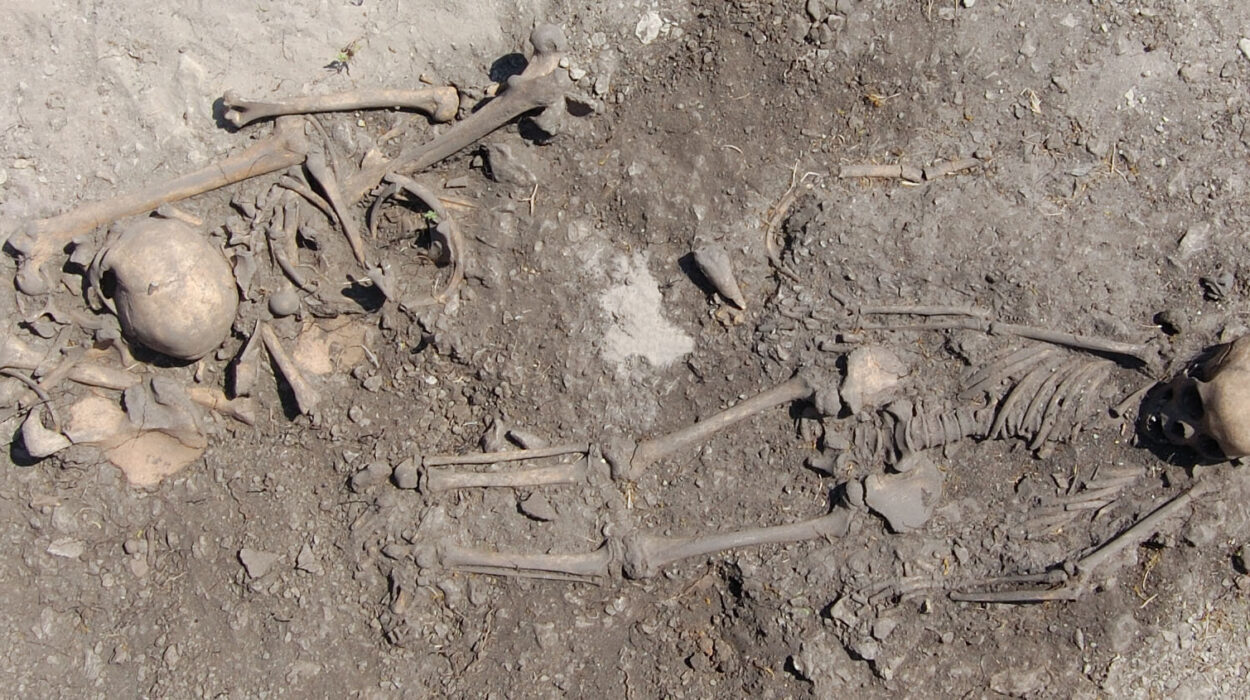
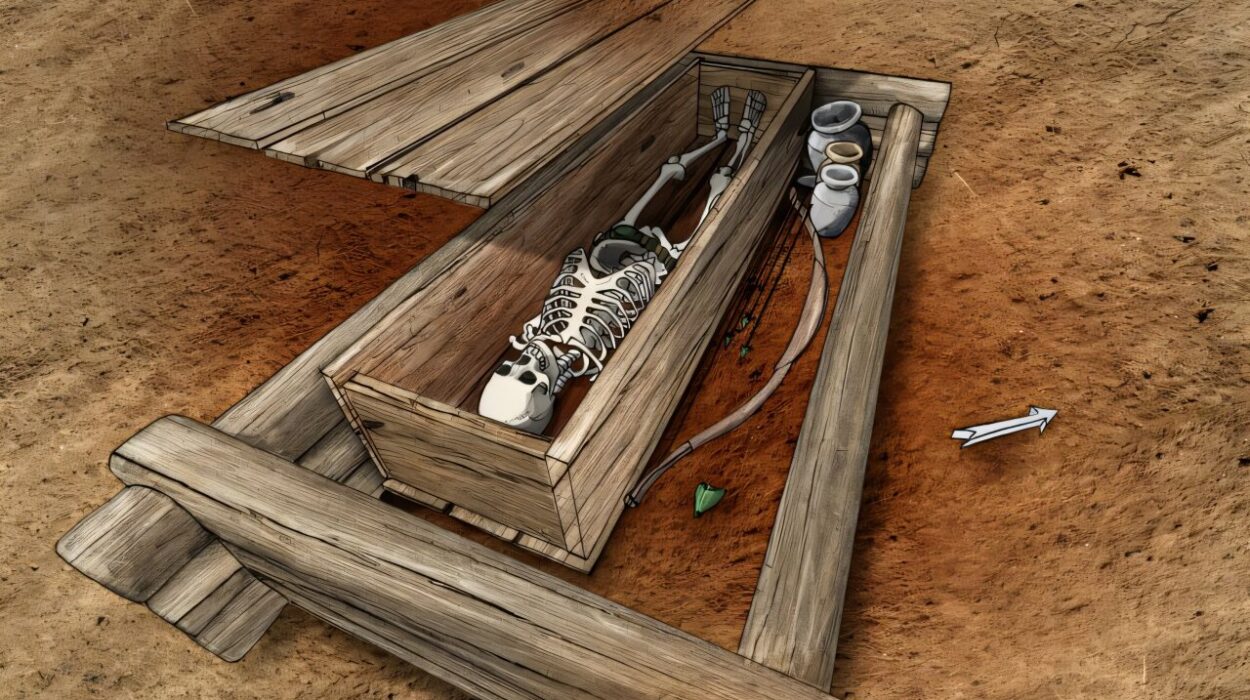
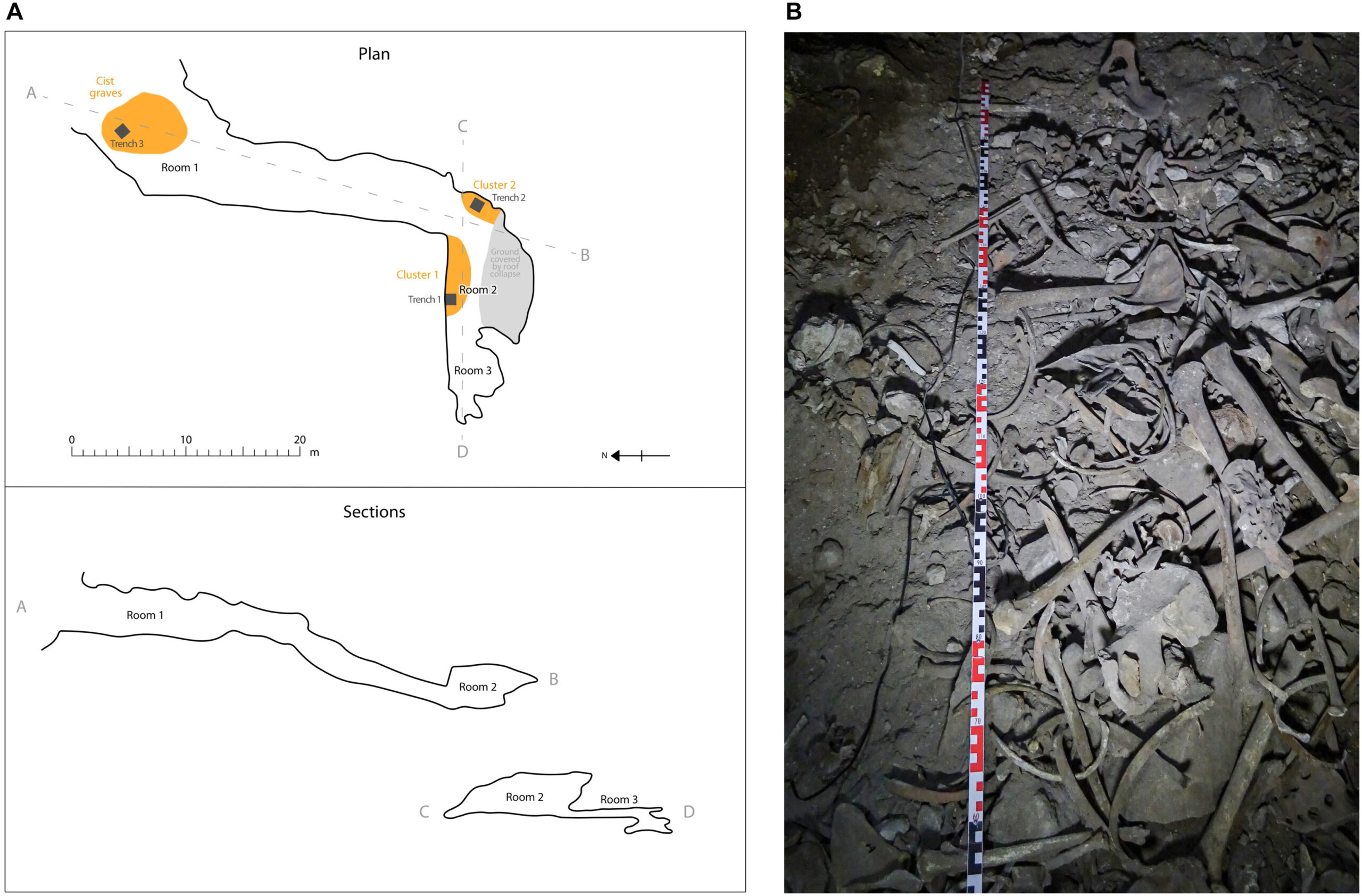
At an altitude of roughly 4,000 meters (13,100 feet) in India’s Ladakh region, the Old Lady Spider Cave has long been known for scattered human bones, ancient rock art, and evidence of repeated visits over centuries. But what looked like a disturbed burial site turned out to preserve something far more remarkable than archaeologists expected.
The cave sits in a landscape that has connected people traveling between the Tibetan Plateau, Central Asia, Kashmir, and the Indian subcontinent for thousands of years. Ancient carvings and ceramics already hinted that Ladakh occupied an important position along these routes. Even so, exactly who lived there during antiquity—and how different populations interacted across these mountains—has remained largely unknown.
One major obstacle has been the shortage of ancient DNA from South Asia. Compared with Europe and several other regions, very few ancient genomes have survived well enough to reconstruct population history. That makes every well-preserved ancient individual especially valuable.
The newly analyzed remains therefore offered an opportunity to investigate not only who these people were, but also whether their DNA preserved evidence of ancient movements across one of Earth’s most formidable mountain landscapes.
Ancient DNA survived in remarkable condition
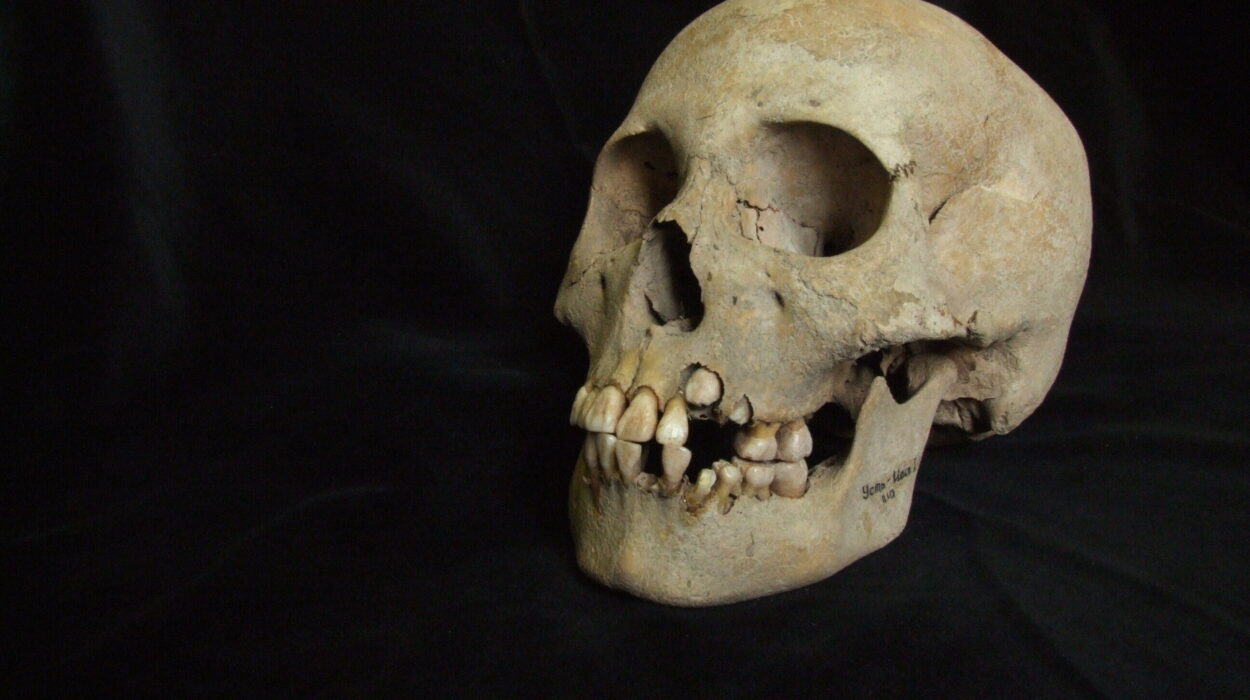
The research team extracted DNA from 11 specimens, including both bones and naturally preserved soft tissues recovered during excavations conducted in 2021.
Using specialized ancient DNA techniques, the scientists enriched genetic material at more than 1.35 million targeted genetic markers before sequencing the samples. After extensive quality control—including determining that two samples actually came from the same individual—they obtained usable genome-wide data from 10 distinct people.
Six individuals yielded particularly high-quality genomes, one provided limited but usable data, while three contained too little DNA for full population analyses.
The researchers also determined biological sex from the DNA, identifying six females and four males, and discovered that three individuals were closely related, including two who were likely second-degree relatives.
Radiocarbon dating placed the burials within a surprisingly narrow window. The individuals all lived roughly 1,500 years ago, with calibrated dates overlapping between about 1,513 and 1,422 years before present, indicating they belonged to a single ancient community rather than representing people buried across many centuries.
Their DNA landed almost exactly between two very different populations
When the researchers compared the ancient genomes with hundreds of modern and ancient populations from across Asia, an unusual pattern immediately appeared.
On genetic maps, the Ladakh individuals formed a remarkably tight cluster, indicating that they belonged to a genetically similar population. More strikingly, they occupied a position almost perfectly midway between populations related to ancient Tibetans and North Indians.
Among living populations, only a few Himalayan groups—including Minero and Balti—occupied nearby positions on these genetic maps. Most present-day South Asians did not.
That immediately suggested that the ancient Ladakh people inherited substantial ancestry from both regions.
The researchers then used increasingly sophisticated statistical models to determine whether this impression held up under rigorous testing.
The genetic mixture turned out to be almost perfectly balanced
The first analyses tested hundreds of possible two-population ancestry models.
Although none perfectly explained the data, nearly every successful model pointed toward the same basic picture: approximately half of the ancestry came from a population genetically similar to present-day North Indian Brahmins, while the remainder came from a population closely related to ancient Tibetans.
The imperfect statistical fit did not convince the researchers that the models were wrong. Instead, it suggested that the actual Tibetan-related ancestors had not yet been sampled directly by ancient DNA studies.
To test that possibility, the team expanded the models to include an additional ancestral source that could account for subtle genetic differences among ancient Tibetan populations.
Those more detailed analyses consistently produced successful models.
Across dozens of statistically acceptable reconstructions, the ancient Ladakh people repeatedly emerged as descendants of populations with roughly 46% to 50% North Indian-related ancestry, 43% to 52% Tibetan-related ancestry, and a small additional component reflecting unsampled variation among ancient Tibetan groups.
Rather than indicating ancestry from a completely different population, the researchers concluded that this small extra component most likely captured genetic diversity that once existed within ancient Tibet but has not yet been directly sampled.
The overall picture remained remarkably consistent.
The people buried in the cave descended from ancestors who were almost evenly split between populations related to ancient Tibetans and North Indians.
Their DNA also revealed when those ancestors first came together
Knowing that two ancient populations mixed is only part of the story.
The researchers also wanted to determine when that mixture happened.
To answer this, they used a method called DATES, which measures how blocks of DNA inherited from different ancestral populations become progressively shorter as generations pass. Every generation breaks chromosomes into smaller pieces through recombination, creating a kind of molecular clock.
The genomes of the Ladakh individuals contained exactly the kind of long-range genetic patterns expected after an ancient mixing event.
Using modern Tibetan-related populations and North Indian Brahmins as genetic stand-ins for the ancient source groups, the researchers estimated that the admixture began roughly 1,343 years before the people in the cave lived.
Assuming an average generation length of 29 years, this places the beginning of the genetic mixing at approximately 2,800 years before present.
The DNA signal also fit a single smooth exponential decay, implying that the population remained relatively isolated afterward instead of experiencing repeated large waves of additional mixing.
This timing carries broader implications.
Previous ancient DNA studies had already shown that populations in northern Pakistan possessed several major ancestral components by the Iron Age. The new evidence now indicates that people carrying ancestry resembling today’s northern Indian genetic profile had already formed by around 2,800 years ago, before later historical empires reshaped the region.
A Denisovan legacy had already reached these mountain people
The scientists also searched for one of the most famous examples of human adaptation to extreme environments.
Many Tibetans carry a version of the EPAS1 region that originally entered the human gene pool through interbreeding with Denisovans, an extinct group of archaic humans. This genetic variant helps people tolerate life at high altitude.
The researchers examined 11 diagnostic genetic markers capable of identifying this Denisovan-derived chromosome.
Enough data were available from five individuals to evaluate the region.
Only one chromosome carrying the Denisovan-derived version was observed.
Given that roughly half of ancient Tibetan chromosomes carried this variant and that the Ladakh people inherited about half of their ancestry from Tibetan-related ancestors, the researchers estimated that seeing only one copy was statistically plausible.
The result also suggests that after the ancestral populations mixed, this high-altitude adaptation was not undergoing strong positive natural selection within this community.
Their ancestry did not disappear with them
The people buried inside Old Lady Spider Cave were not simply an isolated genetic curiosity.
Additional analyses suggested that their descendants—or closely related populations—continued contributing to later Himalayan communities.
When the researchers compared the ancient genomes with present-day Himalayan populations, they found evidence that groups such as the Minero of Ladakh and, to a lesser extent, the Balti could be modeled as mixtures involving ancestry related to the ancient Ladakh population together with ancestry related to northern Indian groups.
This does not mean these living populations are direct descendants of the cave community alone. Instead, it indicates that populations carrying similar ancestry likely persisted in the Himalayan region and contributed to later generations.
The researchers also emphasize an important uncertainty.
The ancient genetic mixing did not necessarily occur inside Ladakh itself. The ancestral populations may have blended elsewhere—perhaps in another part of the Himalayas such as present-day Nepal—before descendants eventually settled in Ladakh.
What the genomes demonstrate with confidence is that by 1,500 years ago, the people buried in Old Lady Spider Cave belonged to a long-established population whose mixed ancestry had already existed for more than a millennium.
A rare glimpse into a chapter of Himalayan history that had almost vanished
Ancient DNA has transformed understanding of human history across Europe and parts of East Asia, but South Asia has remained comparatively underrepresented because suitable ancient remains are so difficult to recover.
The Ladakh genomes therefore fill an important gap.
They document a population whose genetic profile is rare today, reveal that large-scale interaction between Tibetan-related and North Indian-related peoples had already taken place by around 2,800 years ago, and provide direct biological evidence that people connected across the Himalayas well before the rise of the Tibetan Empire.
The researchers believe this is only the beginning. They argue that additional ancient remains from Ladakh and neighboring Himalayan regions will be needed to determine how widespread this previously unknown population was, how long it survived, and how its genetic legacy spread through the mountains.
For now, the quiet cave above the Himalayan valleys has preserved one of the clearest genetic snapshots yet of a forgotten population that emerged where two ancient worlds met.
Publication details
Nick Patterson et al, Ancient genomes from Ladakh reveal 2800-year-old admixture between Tibetans and South Asians, Science Advances (2026). DOI: 10.1126/sciadv.aeb3636