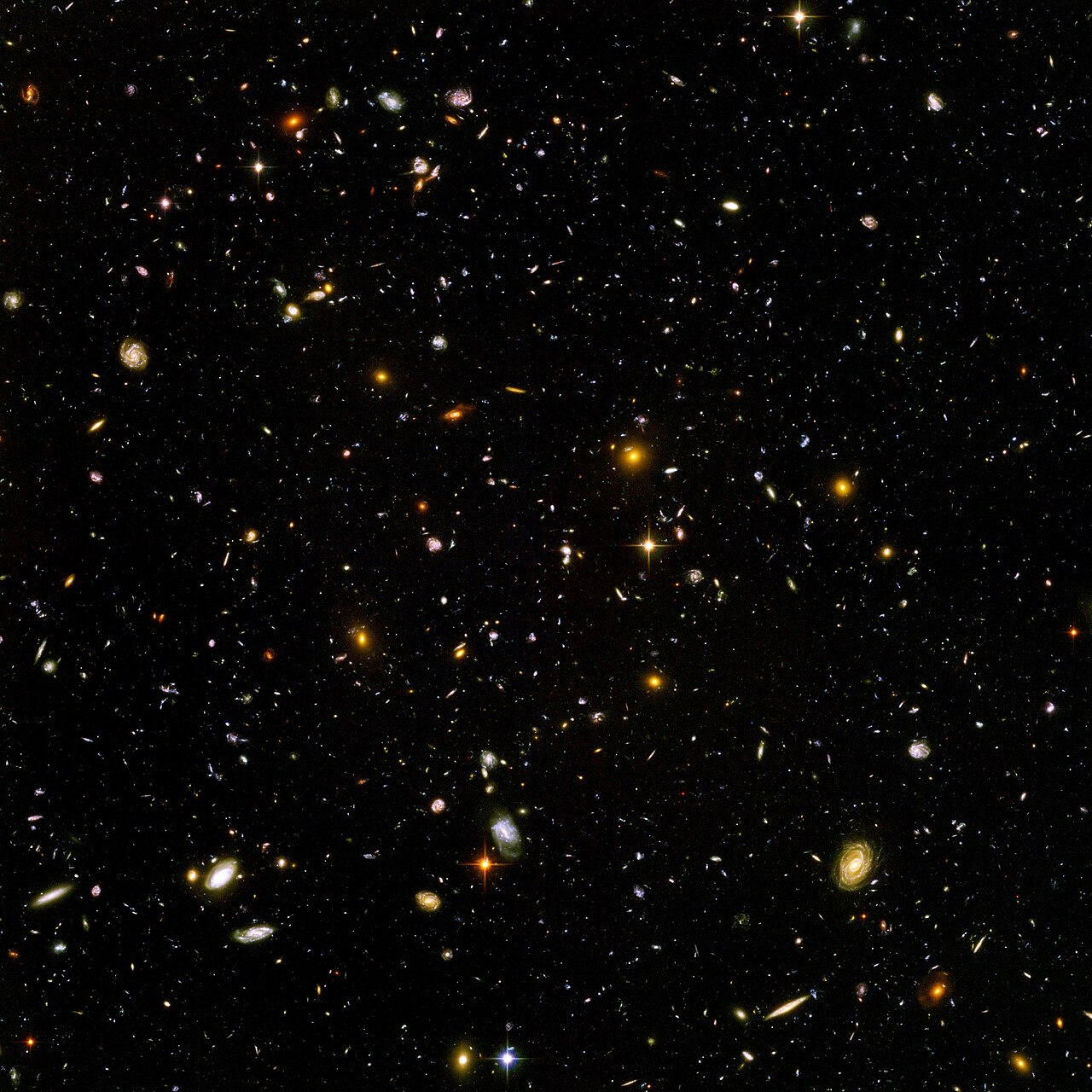
Every night, when we look up at the sky, we are greeted by countless stars scattered across the darkness. Some shine brightly, while others appear faint and distant. For thousands of years, people wondered what these lights were, how far they stretched, and whether there was an edge to the vastness above us. Today, thanks to centuries of scientific discovery, we know that those stars are only a tiny part of something unimaginably larger—the universe.
The universe is everything that exists. It includes every star, every planet, every galaxy, every atom, every beam of light, every cloud of gas, every black hole, every living creature, and even space and time themselves. It is the grand stage on which all of nature unfolds. Although scientists have learned an extraordinary amount about the universe, it still holds countless mysteries waiting to be explored.
Understanding the universe is one of humanity’s greatest scientific achievements. It has transformed the way we see our place in existence, revealing that our planet is only a tiny speck within an immense cosmic landscape.
What Does “Universe” Mean?
In science, the universe refers to the totality of everything that exists. It includes all matter, all forms of energy, all planets, stars, galaxies, cosmic dust, radiation, space, and time. Nothing known exists outside the universe because the universe, by definition, includes everything that physically exists.
Unlike a country or a planet, the universe is not located somewhere else. It is not surrounded by empty space in the ordinary sense. Space itself is part of the universe. Wherever there is matter, energy, or even empty space, it is already within the universe.
This makes the universe different from any object we encounter in everyday life. It is not simply a collection of things; it is the entire physical reality.
How Did the Universe Begin?
According to the best scientific evidence available today, the universe began approximately 13.8 billion years ago in an event known as the Big Bang.
Despite its name, the Big Bang was not an explosion that occurred in empty space. Instead, it marked the beginning of space and time themselves. At that early moment, the universe was incredibly hot, extremely dense, and unimaginably small.
As the universe expanded, it also cooled. During the first few minutes, simple atomic nuclei formed. Hundreds of thousands of years later, electrons combined with these nuclei to create the first neutral atoms, allowing light to travel freely through space.
Over millions and billions of years, gravity gradually pulled matter together to form the first stars, galaxies, and eventually planets.
The universe we observe today is the result of nearly 14 billion years of continuous evolution.
What Is the Universe Made Of?
Everything visible in the universe is made from matter.
Matter forms stars, planets, moons, asteroids, comets, oceans, mountains, trees, animals, and human beings. At the smallest scale, matter consists of atoms, which themselves are built from subatomic particles such as protons, neutrons, and electrons.
Matter also exists in enormous clouds of gas and dust floating between stars. These clouds often become the birthplaces of new stars and planetary systems.
Energy is equally important. Light from stars, radio waves traveling through space, heat, and cosmic radiation are all forms of energy moving throughout the universe.
Surprisingly, everything we can directly see—including all stars and galaxies—accounts for only about five percent of the universe’s total content.
The remaining portion appears to consist of two mysterious components known as dark matter and dark energy.
Dark matter does not emit, absorb, or reflect light, making it invisible to telescopes. Scientists infer its existence because its gravity influences the motions of galaxies and galaxy clusters.
Dark energy is even more mysterious. It appears to be causing the expansion of the universe to accelerate, although its true nature remains one of the biggest unanswered questions in modern physics.
The Expanding Universe
One of the greatest discoveries in astronomy is that the universe is expanding.
In the 1920s, astronomer Edwin Hubble found that distant galaxies are moving away from us. More importantly, the farther a galaxy is, the faster it appears to recede.
This observation showed that space itself is expanding.
A useful analogy is to imagine dots drawn on the surface of a balloon. As the balloon inflates, every dot moves farther away from every other dot. The dots are not traveling across the balloon’s surface on their own; instead, the surface itself is stretching.
Similarly, galaxies are carried apart as space expands.
Importantly, this does not mean Earth occupies the center of the universe. Observers in other galaxies would see the same overall pattern because expansion occurs throughout space.
Today, observations show that this expansion is not slowing down but accelerating, likely due to dark energy.
Galaxies: The Building Blocks of the Universe
Galaxies are enormous systems containing stars, gas, dust, planets, black holes, and dark matter held together by gravity.
Some galaxies contain millions of stars, while others contain trillions.
They come in several shapes, including spiral, elliptical, and irregular forms.
Our home galaxy is the Milky Way, a barred spiral galaxy stretching roughly 100,000 light-years across. It contains hundreds of billions of stars, including our Sun.
The Milky Way is only one galaxy among an estimated hundreds of billions—and possibly trillions—of galaxies in the observable universe.
Each galaxy represents an island of stars floating within the vast cosmic ocean.
Stars: The Cosmic Powerhouses
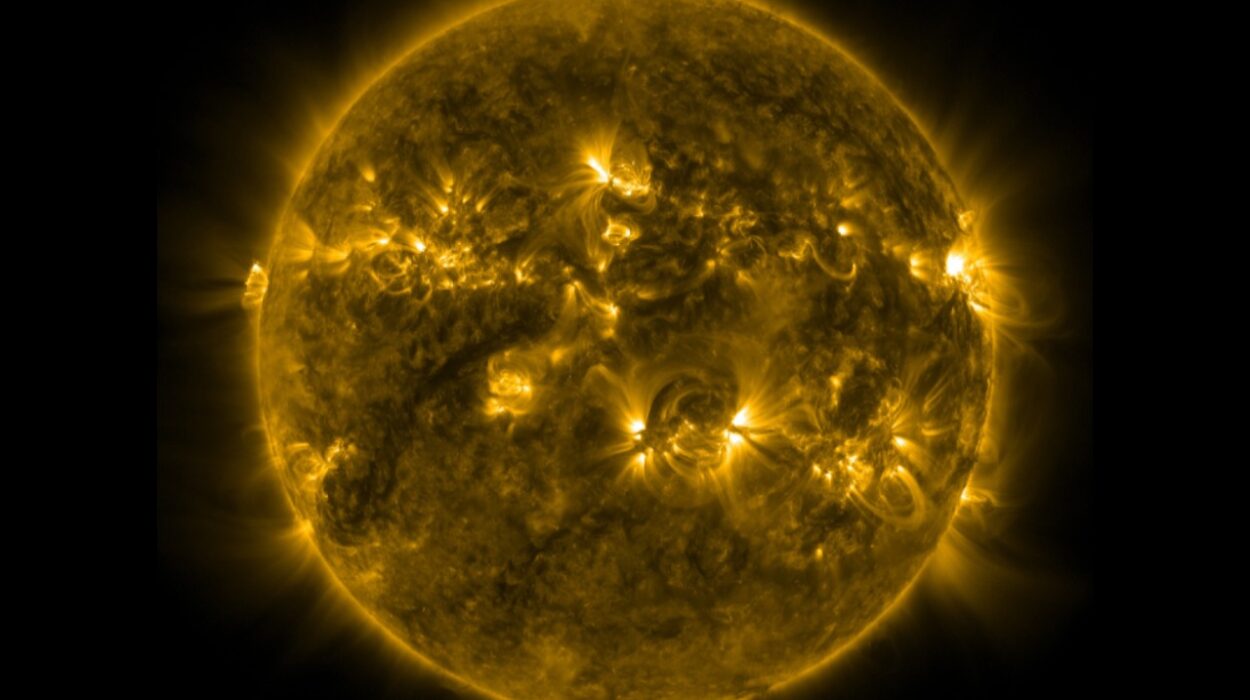
Stars are giant spheres of hot plasma that produce enormous amounts of energy through nuclear fusion.
Inside their cores, hydrogen atoms combine to form helium, releasing tremendous amounts of light and heat.
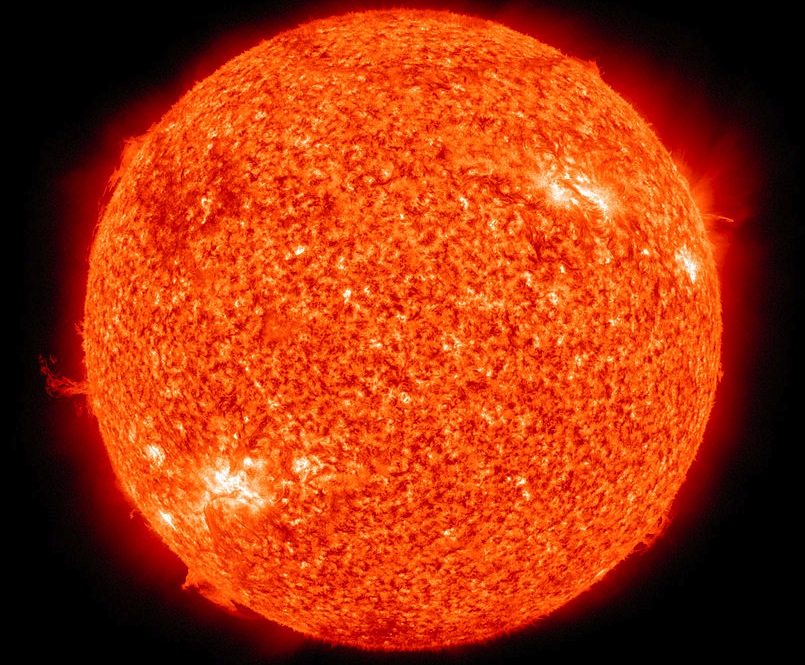
Our Sun is one of these stars.
Although it appears exceptionally bright, it is actually an ordinary star compared with many others in the universe.
Some stars are much larger.
Some are smaller.
Some shine blue-white and burn extremely hot.
Others glow red and are relatively cool.
Stars are born inside giant clouds of gas and dust. They spend millions or billions of years producing energy before eventually reaching the end of their lives. Depending on their mass, they may become white dwarfs, neutron stars, or black holes.
Many of the heavier elements found on Earth—including carbon, oxygen, calcium, and iron—were created inside stars and distributed through space when massive stars exploded as supernovae.
In a very real sense, every human being is made from material forged inside ancient stars.
Planets and Planetary Systems
Planets form from the disks of gas and dust surrounding young stars.
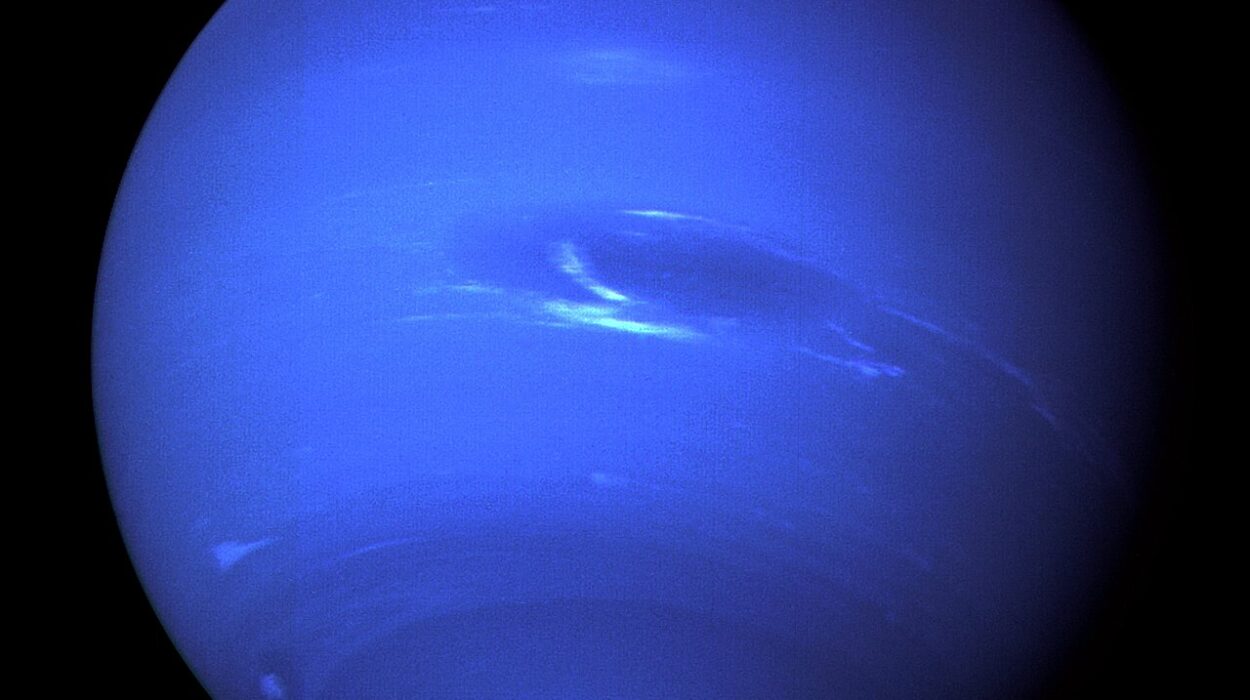
Our Solar System consists of the Sun, eight planets, dwarf planets, moons, asteroids, comets, and countless smaller objects.
Earth is the only known planet that supports life, but scientists have discovered thousands of planets orbiting other stars. These distant worlds are called exoplanets.
Some are larger than Jupiter.
Some are rocky like Earth.
Others orbit two stars instead of one.
Some may even possess conditions suitable for liquid water.
The discovery of thousands of exoplanets has transformed our understanding of planetary systems and suggests that planets are common throughout the universe.
Black Holes: Gravity at Its Most Extreme
Among the most fascinating objects in the universe are black holes.
A black hole forms when an extremely massive star collapses under its own gravity after exhausting its nuclear fuel.
Its gravity becomes so strong that nothing—not even light—can escape once it passes a boundary known as the event horizon.
Despite their name, black holes are not empty holes in space. They are regions where matter has been compressed into an extraordinarily small volume.
Scientists detect black holes by observing their effects on nearby stars, gas, and light.
Today, astronomers have even captured images of the shadows cast by supermassive black holes located at the centers of distant galaxies.
The Observable Universe
The universe may be vastly larger than what we can see.
Because light travels at a finite speed, observing distant objects means looking back in time.
Light from the Moon reaches Earth in about 1.3 seconds.
Sunlight takes about eight minutes.
Light from nearby stars may require years.
Light from distant galaxies can travel for billions of years before reaching our telescopes.
The observable universe includes everything whose light has had enough time to reach us since the Big Bang.
Its diameter is estimated to be about 93 billion light-years.
Beyond this observable region, the universe may continue much farther, although we currently have no direct way to observe those distant parts.
Space Is Not Completely Empty
When people imagine outer space, they often picture perfect emptiness.
In reality, space contains thin clouds of gas, tiny dust particles, magnetic fields, radiation, and invisible particles moving at high speeds.
Even the enormous regions between galaxies are not entirely empty.
Space also possesses structure.
Gravity shapes galaxies into clusters and giant filaments, creating an immense cosmic web stretching across the observable universe.
These structures represent the largest known patterns in nature.
Time and the Universe
Time is deeply connected to the universe.
According to Einstein’s theory of general relativity, space and time form a unified structure known as spacetime.
Gravity can slow the passage of time.
Objects moving at extremely high speeds also experience time differently.
These effects are not merely theoretical. They have been measured experimentally and must be taken into account for technologies such as the Global Positioning System (GPS) to function accurately.
The history of the universe is therefore also the history of time itself.
How Scientists Study the Universe
Astronomers cannot usually visit stars or galaxies directly.
Instead, they study the universe by collecting information carried by light and other forms of electromagnetic radiation.
Modern telescopes observe not only visible light but also radio waves, infrared radiation, ultraviolet light, X-rays, and gamma rays.
Each wavelength reveals different features of cosmic objects.
Space telescopes avoid Earth’s atmosphere, allowing scientists to capture clearer observations of distant galaxies, nebulae, and planets.
Scientists also study gravitational waves, tiny ripples in spacetime produced by massive cosmic events such as merging black holes and neutron stars.
Together, these observations provide an increasingly detailed picture of the universe.
The Cosmic Timeline
The universe has changed dramatically over billions of years.
Immediately after the Big Bang, it was an intensely hot and dense environment filled with fundamental particles.
As expansion continued, atoms formed, followed by the first stars.
Galaxies gradually assembled through gravity.
Stars produced heavier chemical elements.
Planets formed around many stars.
Life eventually emerged on at least one planet—Earth.
Human beings evolved and developed the ability to study the cosmos itself.
This remarkable sequence connects every person to the history of the universe.
Are We Alone?
One of humanity’s oldest questions is whether life exists elsewhere.
Scientists have not yet found confirmed evidence of extraterrestrial life.
However, the enormous number of stars and planets suggests that the ingredients necessary for life may be widespread.
Many exoplanets orbit within regions where temperatures could allow liquid water to exist.
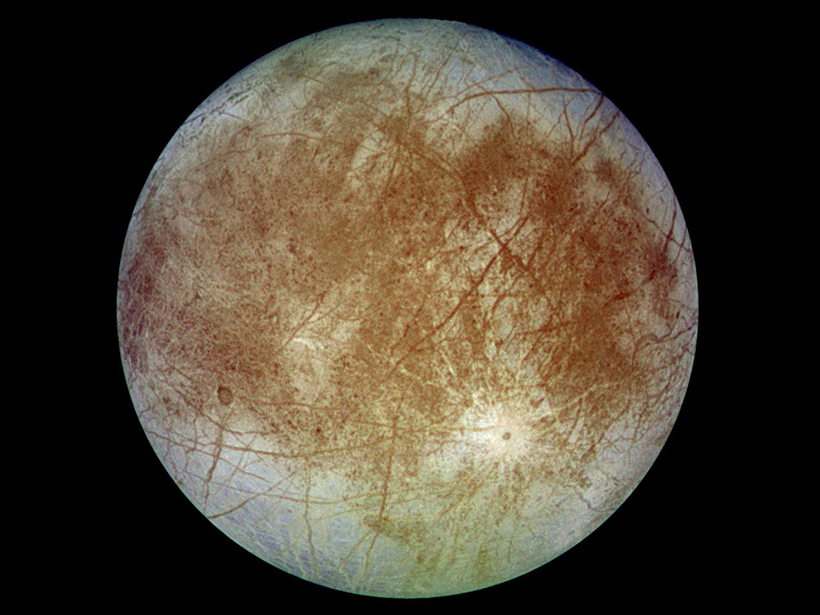
Space missions continue searching for signs of past or present life on Mars, icy moons such as Europa and Enceladus, and distant planetary systems.
The search continues, driven by both scientific curiosity and the possibility that life may not be unique to Earth.
The Greatest Mysteries of the Universe
Although modern astronomy has answered many ancient questions, numerous mysteries remain.
Scientists still do not know what dark matter actually is.
The true nature of dark energy remains unknown.
They do not fully understand what happened during the universe’s earliest moments.
The interiors of black holes remain beyond direct observation.
Researchers continue searching for a theory that unifies quantum mechanics with gravity.
Each unanswered question inspires new observations, new experiments, and new ideas.
The universe continually reminds us that every discovery opens the door to even deeper mysteries.
Why Studying the Universe Matters
Studying the universe is not simply about satisfying curiosity.
It helps us understand Earth’s place in the cosmos and reveals the physical laws governing everything around us.
Research in astronomy and cosmology has driven advances in computing, imaging technology, communications, navigation, materials science, and medicine.
Perhaps even more importantly, exploring the universe changes our perspective.
From space, national borders disappear.
Human differences become small compared with the immense scale of the cosmos.
The universe reminds us that we all share one tiny planet orbiting one ordinary star in one galaxy among countless others.
This realization encourages both humility and wonder.
Conclusion
The universe is everything that exists—every galaxy, every star, every planet, every atom, every ray of light, every form of matter and energy, and even space and time themselves. Born approximately 13.8 billion years ago, it has evolved into an unimaginably vast and complex cosmos filled with breathtaking structures, extraordinary phenomena, and profound mysteries.
Although scientists have uncovered many of its secrets, much of the universe remains unknown. Its immense size, mysterious dark matter and dark energy, powerful black holes, distant galaxies, and countless undiscovered worlds continue to challenge our understanding.
The study of the universe is ultimately the story of humanity’s search to understand its origins, its place in the cosmos, and the laws that govern all of existence. With every new telescope, every space mission, and every scientific breakthrough, we take another small but meaningful step toward understanding the greatest reality of all—the universe itself.