Since the dawn of humanity, people have looked up at the night sky with wonder. Long before cities, writing, or modern science existed, our ancestors watched the Sun rise each morning, the Moon change its shape, and countless stars sparkle across the darkness. Those distant lights inspired questions that have echoed through every generation. What are the stars? Why do they move? Why does the Moon change? Where does the Sun go at night? These simple observations marked the beginning of astronomy, one of the oldest sciences in human history.
Today, astronomy allows us to study galaxies billions of light-years away, discover planets orbiting distant stars, detect gravitational waves, and even capture images of black holes. Yet this incredible journey began with people simply watching the sky with their own eyes. The history of astronomy is not only the story of scientific discoveries but also the story of humanity’s growing understanding of its place in the universe.
What Is Astronomy?
Astronomy is the scientific study of celestial objects and phenomena beyond Earth’s atmosphere. It investigates the Sun, Moon, planets, stars, galaxies, nebulae, black holes, comets, asteroids, and the universe as a whole.
Unlike astrology, which claims that the positions of celestial bodies influence human personalities or future events without scientific evidence, astronomy is based on observation, mathematics, physics, and experimentation. Every modern discovery in astronomy is supported by measurable evidence and tested scientific theories.
Throughout history, astronomy has evolved from simple skywatching into one of the most advanced branches of science.
The First Skywatchers
Long before written history, prehistoric people carefully observed the heavens. The changing seasons determined when crops could be planted, animals hunted, or migrations begun. The sky became a natural calendar that helped early societies survive.
People noticed that the Sun followed a regular path across the sky and that its position changed throughout the year. They observed that the Moon completed a repeating cycle of phases roughly every month. Certain stars appeared only during specific seasons, providing reliable markers of time.
Many ancient monuments appear to reflect these observations. Structures such as Stonehenge in England and other prehistoric stone circles are aligned with the sunrise or sunset during the solstices, suggesting that ancient builders possessed remarkable astronomical knowledge despite lacking modern instruments.
These early observations laid the foundation for everything that followed.
Astronomy in Ancient Mesopotamia
One of the earliest centers of astronomy emerged in ancient Mesopotamia, located in present-day Iraq.
The Babylonians systematically recorded the movements of the Moon, planets, and stars over many centuries. Using clay tablets, they documented eclipses, planetary positions, and recurring celestial events.
Their careful records allowed them to recognize patterns and predict certain astronomical phenomena with surprising accuracy.
Although their explanations often mixed astronomy with religious beliefs, their observations became invaluable for later civilizations. Many mathematical methods developed by Babylonian astronomers influenced Greek astronomy centuries later.
Ancient Egyptian Astronomy
The people of ancient Egypt also relied heavily on astronomy.
The annual flooding of the Nile River was essential for agriculture. Egyptian astronomers noticed that the bright star Sirius became visible just before sunrise shortly before the Nile’s floodwaters arrived. This event helped them predict the coming agricultural season.
The Egyptians developed calendars based on both the Sun and the stars, enabling more accurate planning for farming, religious festivals, and construction projects.
The Great Pyramids of Giza are aligned with remarkable precision to the cardinal directions, reflecting sophisticated knowledge of the sky.
Astronomy in Ancient China
China developed one of the world’s longest continuous traditions of astronomical observation.
For thousands of years, Chinese astronomers carefully documented eclipses, comets, planetary motions, sunspots, and unusual celestial events.
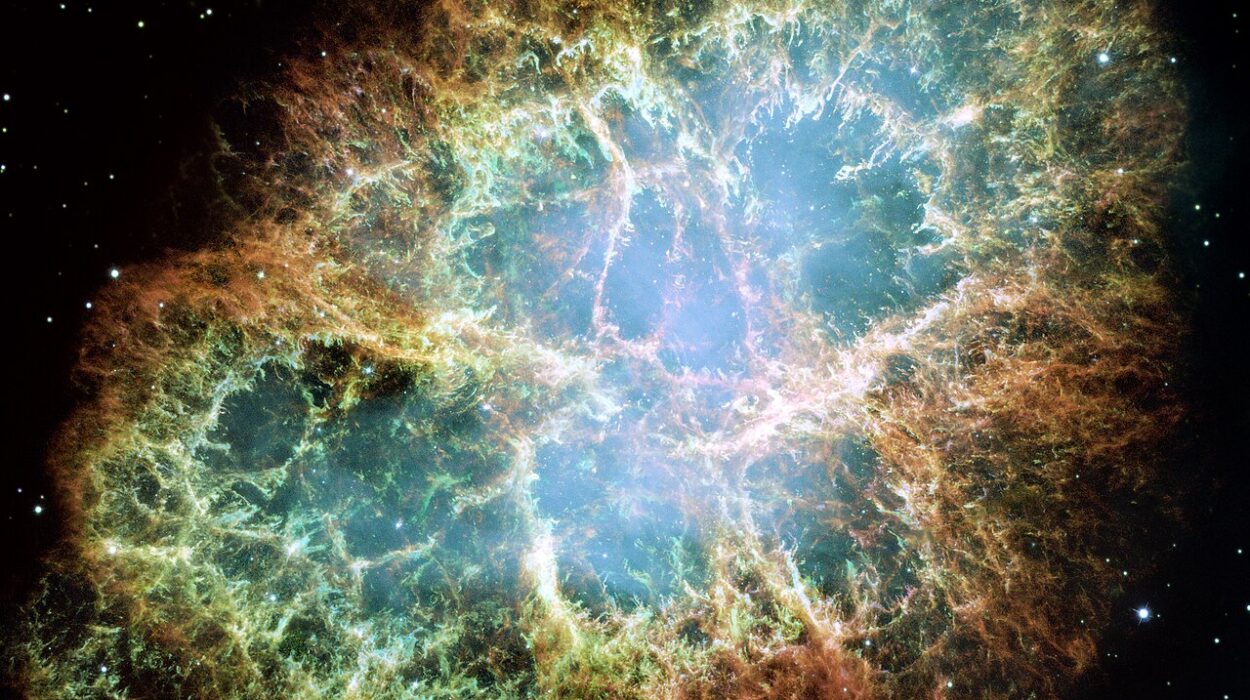
Their detailed historical records have proven extremely valuable to modern astronomers. Ancient Chinese observations of supernova explosions, including one in 1054 CE that created the Crab Nebula, continue to help scientists study stellar evolution today.
Chinese astronomers also created highly accurate star catalogs and developed advanced observational techniques centuries before similar achievements appeared elsewhere.
Ancient Indian Astronomy
Astronomy flourished in ancient India as both a practical and mathematical science.
Indian scholars studied planetary motion, eclipses, calendars, and celestial geometry with remarkable sophistication.
One of the greatest astronomers was Aryabhata, who lived during the fifth century CE. He correctly explained that Earth rotates on its axis, causing the apparent daily movement of the stars across the sky. He also provided mathematical explanations for solar and lunar eclipses rather than attributing them to mythical causes.
Later Indian astronomers continued improving mathematical models of planetary motion and contributed significantly to trigonometry, which remains essential in modern astronomy.
Ancient Greek Astronomy
The ancient Greeks transformed astronomy by emphasizing logical reasoning and mathematical explanation.
Rather than simply recording observations, Greek philosophers sought to understand why celestial bodies moved as they did.
Pythagoras proposed that Earth might be spherical.
Aristotle presented arguments supporting Earth’s spherical shape based on observations of lunar eclipses and changing constellations.
One of the greatest achievements came from Eratosthenes, who estimated Earth’s circumference using shadows cast by the Sun at different locations. His result was astonishingly close to the true value despite the limited tools available.
Hipparchus produced one of the first comprehensive star catalogs and discovered the slow wobble of Earth’s rotational axis, known today as the precession of the equinoxes.
These achievements demonstrated the growing power of observation combined with mathematics.
The Geocentric Model
For many centuries, the dominant view held that Earth occupied the center of the universe.
This idea reached its most complete form through the work of Claudius Ptolemy during the second century CE.
According to the geocentric model, the Sun, Moon, planets, and stars all revolved around Earth in complex circular paths.
Although incorrect, the model predicted planetary positions reasonably well and remained accepted for more than a thousand years because it matched everyday observations and fit prevailing philosophical and religious beliefs.
Its longevity illustrates how scientific ideas can persist until stronger evidence emerges.
Astronomy During the Islamic Golden Age
Between the eighth and fifteenth centuries, Islamic scholars preserved, expanded, and improved astronomical knowledge inherited from Greek, Persian, and Indian civilizations.
Across cities such as Baghdad, Damascus, Samarkand, and Maragheh, astronomers built sophisticated observatories and developed increasingly accurate instruments.
They measured planetary positions, improved astronomical tables, refined mathematical techniques, and corrected errors in earlier models.
Scholars such as Al-Battani, Al-Sufi, Nasir al-Din al-Tusi, and Ulugh Beg made lasting contributions to observational astronomy, mathematics, and celestial mechanics.
Many Arabic star names, including Betelgeuse, Rigel, Aldebaran, and Altair, remain in use today, reflecting the lasting influence of this remarkable period.
Nicolaus Copernicus and the Heliocentric Revolution
The history of astronomy changed dramatically during the sixteenth century.
Nicolaus Copernicus proposed that the Sun—not Earth—occupied the center of the planetary system.
In his heliocentric model, Earth rotates daily and orbits the Sun once each year.
Initially, this idea faced resistance because it contradicted centuries of accepted belief.
However, the heliocentric model offered a simpler explanation for the observed motions of the planets, especially their occasional apparent backward movement across the sky.
Copernicus ignited one of the greatest scientific revolutions in history.
Galileo Galilei and the Telescope
In the early seventeenth century, Galileo Galilei became one of the first scientists to use a telescope for astronomical observations.
His discoveries transformed humanity’s understanding of the cosmos.
He observed mountains and craters on the Moon, proving it was not a perfectly smooth celestial sphere.
He discovered four large moons orbiting Jupiter, demonstrating that not everything revolved around Earth.
He observed the phases of Venus, providing strong evidence for the heliocentric model.
He also discovered countless previously invisible stars and studied sunspots, revealing that the Sun itself changes over time.
Galileo’s observations marked the beginning of modern observational astronomy.
Johannes Kepler and Planetary Motion
Johannes Kepler improved upon Copernicus’ ideas using extraordinarily precise observations collected by Tycho Brahe.
Kepler discovered that planets travel around the Sun in elliptical rather than perfectly circular orbits.
His three laws of planetary motion accurately described how planets move.
These laws became one of the foundations of celestial mechanics and remain essential in astronomy today.
Isaac Newton Unites Heaven and Earth
Isaac Newton achieved one of the greatest breakthroughs in scientific history.
He realized that the same force causing an apple to fall also keeps the Moon in orbit around Earth and the planets in orbit around the Sun.
His law of universal gravitation united terrestrial and celestial physics under one mathematical framework.
For the first time, astronomers could explain not only where planets moved but why they moved that way.
Newton’s work established classical mechanics and transformed astronomy into a predictive physical science.
The Expanding Universe of Discovery
As telescopes improved during the eighteenth and nineteenth centuries, astronomers discovered Uranus and Neptune, observed countless nebulae, and mapped the Milky Way with increasing accuracy.
William Herschel discovered infrared radiation while studying sunlight, expanding humanity’s understanding of the electromagnetic spectrum.
Astronomers gradually realized that many fuzzy patches in the sky were enormous systems of stars rather than nearby clouds.
These discoveries hinted that the universe was vastly larger than previously imagined.
Edwin Hubble Changes Our View of the Cosmos
In the twentieth century, Edwin Hubble revolutionized astronomy.
Using powerful telescopes, he demonstrated that the Andromeda Galaxy lies far beyond the Milky Way, proving that our galaxy is only one among billions.
Hubble also discovered that distant galaxies are moving away from us.
The farther a galaxy is, the faster it appears to recede.
This observation revealed that the universe is expanding.
The expanding universe became one of the strongest pieces of evidence supporting what is now known as the Big Bang model.
The Birth of Modern Astrophysics
As physics advanced, astronomy entered a new era.
Scientists began studying not only where celestial objects are located but also how they form, evolve, and eventually die.
The development of spectroscopy allowed astronomers to determine the chemical composition of stars by analyzing their light.
Researchers discovered that stars are powered by nuclear fusion, converting hydrogen into helium while releasing enormous amounts of energy.
This understanding connected astronomy with physics, giving rise to the field of astrophysics.
Space Exploration Opens a New Window
The launch of artificial satellites during the twentieth century transformed astronomy once again.
Spacecraft visited every major planet in the Solar System.
Astronauts landed on the Moon.
Space telescopes escaped Earth’s atmosphere, capturing images impossible to obtain from the ground.
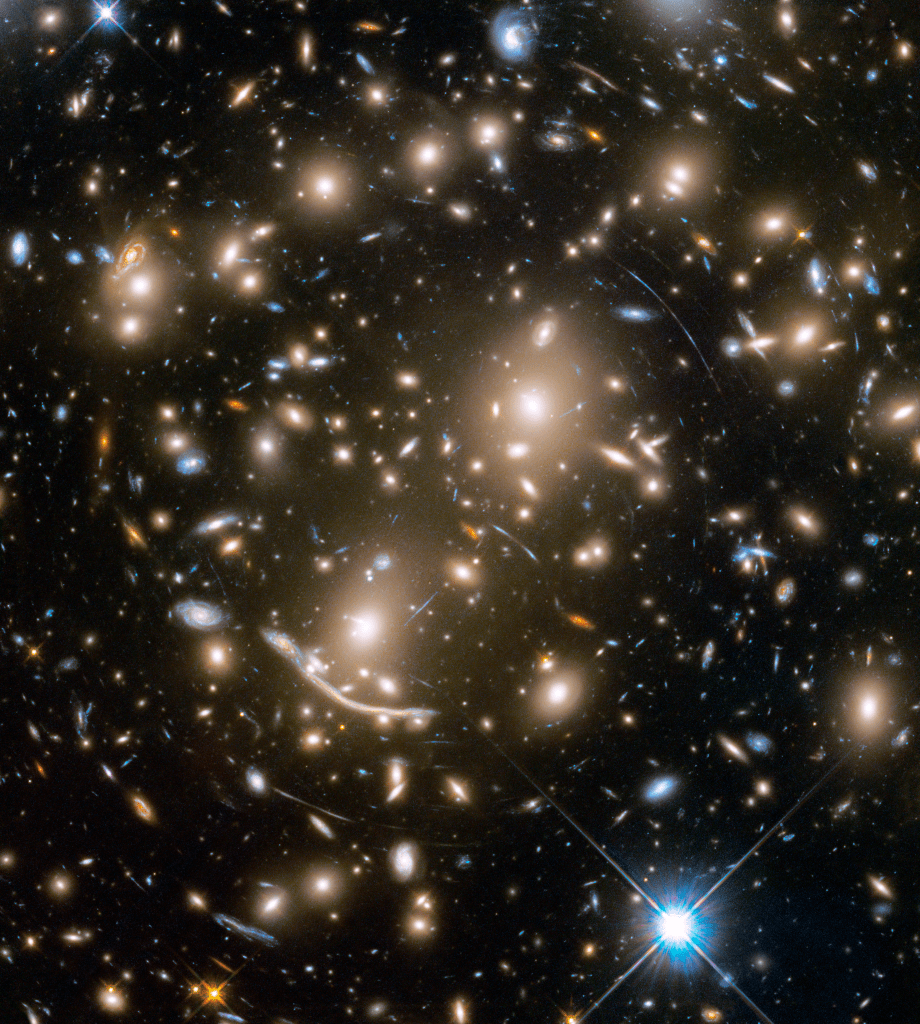
The Hubble Space Telescope revealed breathtaking galaxies, stellar nurseries, and distant supernovae.
Later observatories such as the James Webb Space Telescope extended humanity’s vision even farther, allowing scientists to observe some of the earliest galaxies formed after the Big Bang.
These missions have dramatically expanded our understanding of cosmic history.
Discovering Planets Around Other Stars
For most of history, people wondered whether planets existed beyond our Solar System.
In the 1990s, astronomers confirmed the first planets orbiting Sun-like stars.
Since then, thousands of exoplanets have been discovered.
Some are giant gas worlds larger than Jupiter.
Others are rocky planets similar in size to Earth.
A few orbit within regions where temperatures may allow liquid water to exist on their surfaces.
The discovery of exoplanets has transformed one of humanity’s oldest questions: Are we alone in the universe?
Although no confirmed evidence of extraterrestrial life has been found, astronomy continues searching.
Astronomy in the Twenty-First Century
Modern astronomy is more exciting than ever before.
Scientists now study black holes, neutron stars, dark matter, dark energy, gravitational waves, and the earliest moments of cosmic history.
Powerful observatories operate across the entire electromagnetic spectrum, from radio waves to gamma rays.
Advanced computer simulations recreate the formation of galaxies, while artificial intelligence helps analyze enormous volumes of astronomical data.
International collaborations combine observations from telescopes around the world and in space, enabling discoveries that no single nation could achieve alone.
Astronomy has become a truly global scientific endeavor.
Why the History of Astronomy Matters
The history of astronomy demonstrates how human understanding grows through curiosity, observation, and evidence.
Each generation built upon the knowledge of those who came before. Ancient skywatchers recognized patterns. Babylonian astronomers recorded celestial events. Greek thinkers introduced mathematical reasoning. Islamic scholars refined observations and preserved knowledge. Renaissance scientists challenged old assumptions. Modern astronomers use advanced technology to explore the deepest reaches of the universe.
This continuous journey reminds us that science is never finished. Every discovery opens new questions waiting to be answered.
Conclusion
The history of astronomy is the history of humanity’s quest to understand the universe. From prehistoric people watching the stars with the naked eye to modern scientists operating giant telescopes in space, each generation has expanded our view of the cosmos. Along the way, astronomy has transformed from simple observation into a sophisticated science grounded in physics, mathematics, and technology.
Today, we know that Earth is one planet orbiting an ordinary star in one galaxy among hundreds of billions. Yet even with all we have learned, much of the universe remains mysterious. Dark matter, dark energy, black holes, and the possibility of life beyond Earth continue to inspire exploration.
As long as people look up at the night sky with curiosity, the story of astronomy will continue to unfold, revealing new wonders and deepening our understanding of the extraordinary universe we call home.