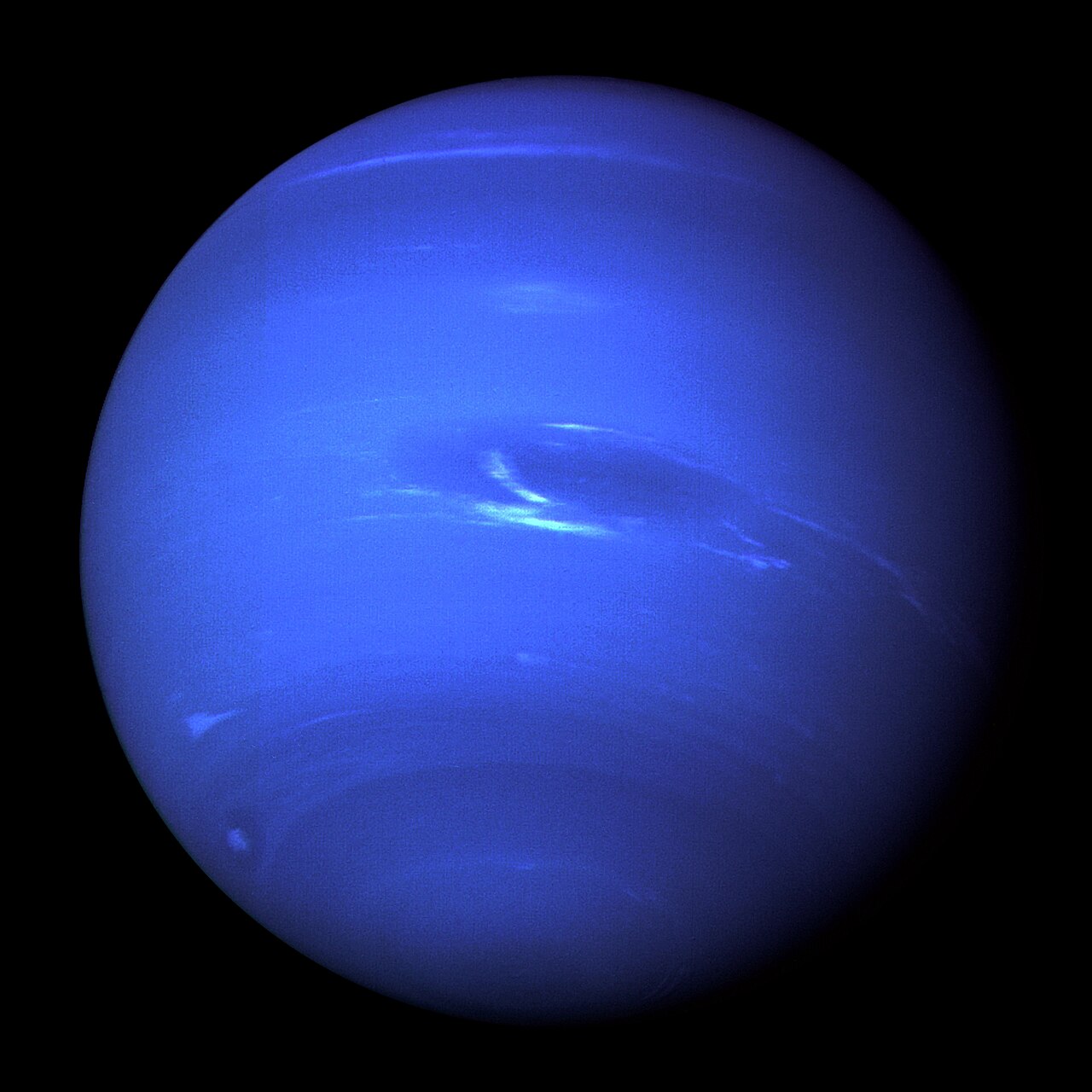
Imagine standing on a world where the wind blows faster than the speed of sound on Earth. Gusts powerful enough to race past a jet fighter roar through the atmosphere day and night. Giant storms the size of Earth swirl beneath deep blue clouds, while sunlight is so faint that noon looks like twilight.
This is Neptune, the eighth and most distant major planet from the Sun. Although it lies nearly 4.5 billion kilometers (2.8 billion miles) away and receives only a tiny fraction of the sunlight that warms Earth, Neptune has the fastest winds anywhere in the Solar System. Some of its winds have been measured at speeds of more than 2,000 kilometers per hour (about 1,200 miles per hour).
At first glance, this seems impossible. Since the Sun is the main source of energy for weather on Earth, you might expect the cold, dim outer reaches of the Solar System to be calm and quiet. Instead, Neptune is a planet of raging storms and incredible atmospheric violence.
So what makes Neptune so windy? The answer lies deep inside the giant planet itself.
A World at the Edge of the Solar System
Neptune orbits about 30 times farther from the Sun than Earth. Sunlight that reaches Neptune is about 900 times weaker than the sunlight we experience on Earth.
If you stood high above Neptune’s clouds, the Sun would appear as an unusually bright star rather than the blazing disk we see from Earth. Despite being so far away, Neptune is anything but peaceful.
Its atmosphere constantly changes. Bright white clouds form and disappear. Dark storms appear and drift across the planet before eventually fading away. Winds circle the globe at astonishing speeds.
Scientists have spent decades trying to understand why such an icy, distant planet has such energetic weather.
Neptune Is an Ice Giant
To understand Neptune’s weather, it helps to know what kind of planet it is.
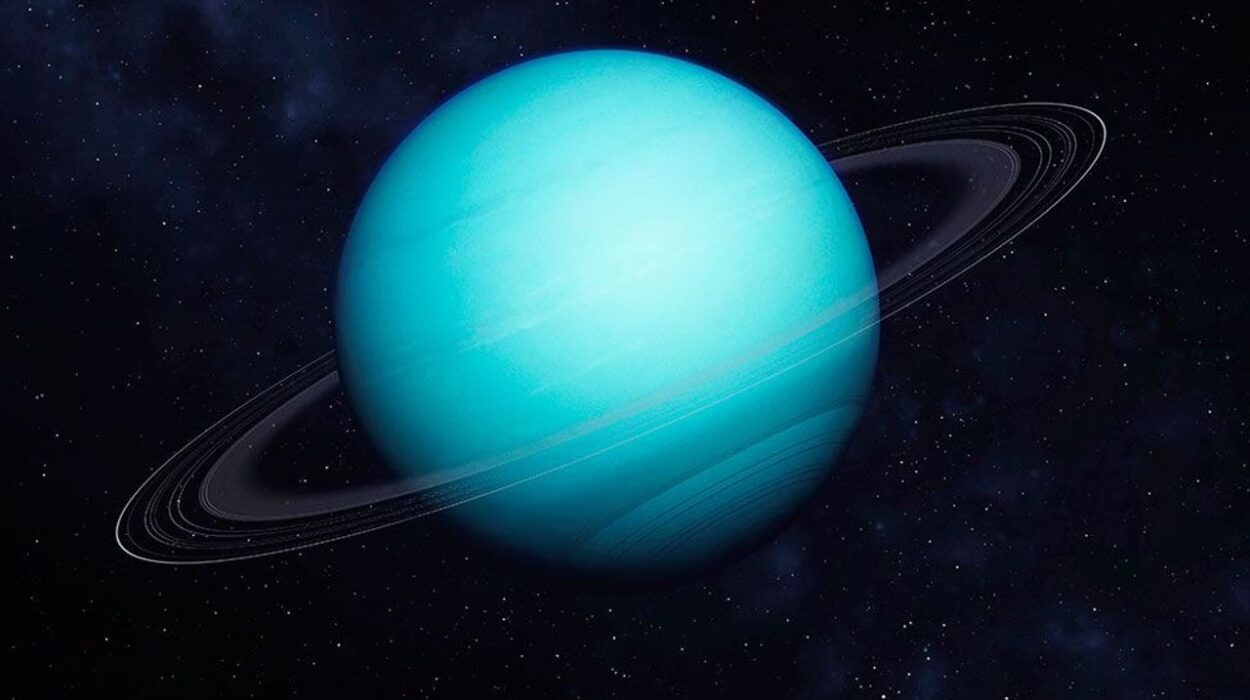
Neptune belongs to a class of planets called ice giants, along with its neighbor Uranus.
Unlike rocky planets such as Earth or Mars, Neptune has no solid surface that humans could stand on. Instead, its atmosphere gradually becomes thicker and denser with depth.
Most of Neptune consists of hydrogen and helium gas, along with significant amounts of substances astronomers call “ices.” These include water, ammonia, and methane, which exist under enormous pressures and temperatures deep inside the planet rather than as ordinary ice cubes.
The methane in Neptune’s upper atmosphere absorbs red wavelengths of sunlight while reflecting blue light, giving the planet its beautiful deep-blue appearance.
Beneath the visible clouds lies an enormous, complex interior where immense pressures create conditions unlike anything found on Earth.
The Mystery of the Fastest Winds
When scientists first measured Neptune’s winds during the flyby of NASA’s Voyager 2 spacecraft in 1989, they were astonished.
Some winds were racing around the planet at over 2,000 kilometers per hour, making them the fastest known planetary winds in the Solar System.
For comparison, the strongest hurricanes on Earth produce sustained winds around 250 to 300 kilometers per hour.
Even the powerful jet streams that influence Earth’s weather usually move at only a few hundred kilometers per hour.
Neptune’s winds can be several times faster than the strongest winds ever recorded on Earth.
The obvious question became: where does all this energy come from?
Neptune Makes Its Own Heat
The biggest reason Neptune is so windy is that the planet generates a surprising amount of its own internal heat.
Although sunlight reaching Neptune is very weak, the planet radiates roughly twice as much energy into space as it receives from the Sun.
In other words, Neptune has its own hidden energy source.
Scientists believe this internal heat comes from several processes.
The planet still contains leftover heat from its formation about 4.5 billion years ago. As Neptune formed, countless rocks, ice, and gas collided together, producing enormous amounts of heat. Some of that heat remains trapped inside today.
Neptune also slowly contracts under its own gravity. As material gradually sinks inward, gravitational energy is converted into heat.
This continuous supply of internal energy acts like a giant furnace hidden beneath the clouds.
Instead of relying mainly on sunlight, Neptune powers much of its weather from the inside out.
Heat Creates Motion
Heat naturally creates movement.
On Earth, warm air rises while cooler air sinks. This circulation drives winds, storms, and weather systems.
A similar process happens on Neptune, although under vastly different conditions.
Deep inside the planet, warmer material rises toward the upper atmosphere.
As it rises, it cools.
Cooler, denser gases then sink back downward.
This constant circulation transports enormous amounts of energy through Neptune’s atmosphere.
These rising and sinking motions help generate the powerful winds that sweep around the planet.
Rapid Rotation Adds More Power
Neptune spins remarkably fast.
Even though it is nearly four times wider than Earth, Neptune completes one rotation in only about 16 hours.
This rapid spinning has a dramatic effect on moving air.
As the planet rotates, the Coriolis effect bends moving air into powerful east-west jet streams.
The same effect influences hurricanes and large weather systems on Earth, but Neptune’s rapid rotation and enormous size create much stronger atmospheric bands.
Instead of simply flowing from warm regions to cold ones, Neptune’s winds are twisted into complex streams that circle the planet.
These jet streams help maintain extremely high wind speeds over long periods.
An Atmosphere With Very Little Friction
One reason Neptune’s winds can become so fast is that there is relatively little to slow them down.
On Earth, mountains, forests, oceans, and continents create friction that weakens winds.
Neptune has no solid surface where its visible atmosphere begins.
Instead, the atmosphere transitions gradually into deeper layers.
Without mountain ranges or continents interrupting the flow, winds can travel around much of the planet with relatively little resistance.
This allows atmospheric currents to maintain extraordinary speeds.
Giant Pressure Differences
Wind always moves from regions of higher pressure toward regions of lower pressure.
Neptune’s atmosphere contains powerful pressure differences created by rising heat from below and cooling near the upper atmosphere.
These pressure differences accelerate air to tremendous speeds.
The stronger the pressure difference, the faster the wind.
Scientists believe Neptune’s atmosphere contains some of the steepest pressure gradients found among the giant planets.
This contributes significantly to its extreme weather.
Storms Bigger Than Earth
Neptune is famous for its enormous storms.
When Voyager 2 flew past the planet, it discovered the Great Dark Spot, a gigantic storm roughly the size of Earth.
The storm resembled Jupiter’s Great Red Spot but behaved quite differently.
Unlike Jupiter’s famous storm, which has survived for centuries, Neptune’s dark storms appear and disappear over only a few years.
Since Voyager’s visit, the Hubble Space Telescope and other observatories have observed several new dark vortices forming, drifting across the planet, and eventually fading away.
These storms act somewhat like enormous hurricanes, although they form through different atmospheric processes than tropical cyclones on Earth.
Bright methane-ice clouds often appear around these dark storms, revealing powerful upward air currents.
Clouds Made of Frozen Methane
Although Neptune is extremely cold, clouds still form in its atmosphere.
Instead of being made mostly of water droplets like Earth’s clouds, many of Neptune’s highest clouds contain tiny crystals of frozen methane.
As warm gas rises, it cools.
When methane reaches cold enough temperatures, it condenses into ice crystals.
These brilliant white clouds often race across Neptune’s atmosphere, allowing astronomers to track wind speeds from Earth.
Some cloud features have been observed moving astonishingly fast around the planet.
The Coldest Planet?
Although Neptune is farther from the Sun than Uranus, Uranus actually has the colder upper atmosphere on average.
This surprised scientists because they expected the more distant planet to be colder.
One explanation is that Neptune’s stronger internal heat warms its atmosphere more effectively than Uranus does.
Ironically, the extra warmth from Neptune’s interior may actually help create stronger winds by increasing atmospheric motion.
In this way, being slightly warmer deep inside makes Neptune much stormier than its neighboring ice giant.
Why Uranus Is So Different
Neptune and Uranus are similar in size, composition, and distance from the Sun.
Yet their weather is dramatically different.
Uranus has a much calmer atmosphere most of the time.
Scientists think one major reason is that Uranus releases very little internal heat compared with Neptune.
Without a strong internal energy source, Uranus lacks the powerful atmospheric circulation needed to produce Neptune’s extreme winds.
This comparison provides important evidence that internal heat is one of the primary engines driving Neptune’s weather.
The Role of Methane
Methane does more than simply give Neptune its blue color.
It also influences atmospheric temperatures.
Methane absorbs certain wavelengths of sunlight and emits infrared radiation, affecting how heat moves through different layers of the atmosphere.
These temperature differences help shape atmospheric circulation and cloud formation.
Although methane is only a small fraction of Neptune’s atmosphere, it plays an important role in the planet’s weather system.
Seasonal Changes on Neptune
A year on Neptune lasts about 165 Earth years.
Each season therefore continues for more than 40 Earth years.
Even though sunlight is weak, seasonal changes still occur.
As the angle of sunlight slowly changes over decades, cloud activity and atmospheric circulation appear to change as well.
Astronomers have observed periods when Neptune became noticeably brighter because cloud formation increased across much of the planet.
Other times, clouds became less abundant.
These slow seasonal variations add another layer of complexity to Neptune’s already dynamic atmosphere.
Watching Neptune From Earth
Although Neptune is billions of kilometers away, modern telescopes allow scientists to monitor its weather regularly.
The Hubble Space Telescope has tracked the appearance and disappearance of giant dark storms.
Large ground-based telescopes equipped with adaptive optics can observe changing cloud patterns in remarkable detail.
By comparing images taken over many years, astronomers continue learning how Neptune’s atmosphere evolves.
Each new observation helps improve computer models that simulate the planet’s powerful weather systems.
Could Anything Survive Neptune’s Winds?
If a spacecraft somehow floated within Neptune’s upper atmosphere, it would face extraordinary challenges.
The violent winds would buffet the craft continuously.
Temperatures in the upper atmosphere can plunge to around −214°C (−353°F).
As the spacecraft descended, atmospheric pressure would rise dramatically.
Far deeper inside, temperatures and pressures become so extreme that no existing spacecraft could survive.
Although Neptune’s winds are incredibly fast, scientists think the atmosphere’s relatively low density means they may not feel exactly like winds of the same speed on Earth. Nevertheless, the environment remains among the harshest anywhere in the Solar System.
Scientists Are Still Solving the Puzzle
Despite decades of study, Neptune continues to surprise researchers.
Exactly how its internal heat interacts with atmospheric chemistry, cloud formation, and jet streams remains an active area of scientific research.
Computer simulations continue to improve, but many details of Neptune’s weather remain mysterious.
Future space missions to the outer Solar System could provide much more detailed measurements of the planet’s atmosphere, magnetic field, internal structure, and energy flow.
Such missions would help answer one of planetary science’s most fascinating questions: why does this distant ice giant produce the fastest winds in the Solar System?
What Neptune Teaches Us
Neptune reminds us that appearances can be deceiving.
From billions of kilometers away, it looks like a quiet blue sphere drifting through the darkness beyond Saturn and Uranus.
Yet beneath its peaceful appearance lies one of the most violent atmospheres known.
Its storms are enormous. Its clouds race across the sky. Its winds roar at more than 2,000 kilometers per hour. And much of this incredible activity is powered not by the distant Sun, but by heat rising from deep within the planet itself.
The story of Neptune’s winds is a reminder that nature often hides its greatest surprises in the places we least expect. At the frozen edge of our Solar System, where sunlight is little more than a faint glow, one of the wildest weather systems ever discovered continues to rage, challenging our understanding of planetary science and revealing just how dynamic distant worlds can be.