People living on Malta thousands of years ago faced a basic problem: the small island could not support a self-sustaining population for long. A new modeling study suggests that the foragers who occupied Malta between about 8,500 and 7,500 years ago therefore had to make repeated sea crossings, potentially over distances of up to 80 kilometers.
Malta and Sicily were once connected differently than they are today. By about 14,200 years ago, they had become separate islands, and both continued to shrink in area. Malta eventually reached its present size of 252 square kilometers.
Within about 1,000 years of the islands separating, the shortest distance between them had reached 80 kilometers, or about 50 miles.
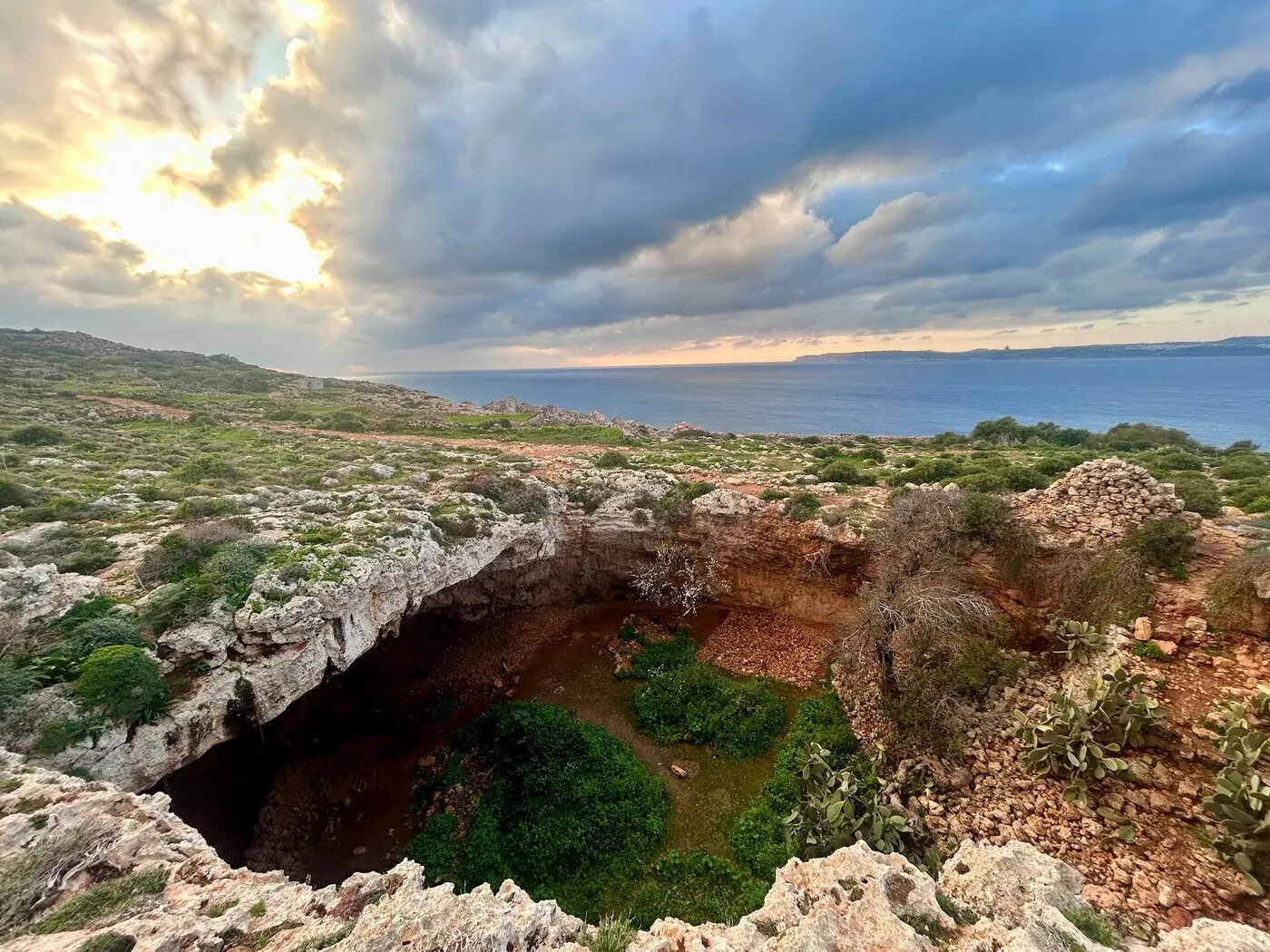
That distance creates a problem for understanding the people who later lived on Malta. Archaeological evidence places foragers on the Maltese islands between 8,500 and 7,500 years ago, and their arrival is thought to have involved travel by sea. But the island’s limited resources raise another question: how could a population remain there over an extended period?
James Blinkhorn and colleagues approached the question by modeling how many foragers Malta and Sicily could potentially support from the end of the Pleistocene into the Holocene.
The population estimates declined over time
The researchers accounted for changing sea levels and changes in vegetation productivity. They then estimated possible forager population densities using comparisons with recent ethnographic data.
For Malta, the model produced a maximum population of 419 people after the island became separated from Sicily. That estimate fell to 170 by 9,000 years ago, shortly before the earliest evidence of human occupation on Malta.
The researchers considered those numbers too small to meet the minimum population size needed for long-term viability. In their interpretation, a population living continuously on Malta could not have maintained itself using only the island’s resources.
Sea travel would have been essential
The modeling points instead to repeated, long-distance movement across the sea. The researchers conclude that the long duration of forager occupation on Malta must have depended on repeated crossings between Malta and other parts of the region.
The evidence does not establish exactly how people used the island. Malta could have served as a seasonal destination, or people may have stayed there for longer periods.
The possibility that Mesolithic hunter-gatherers were capable of this kind of seafaring also has implications for how the Mediterranean’s demographic and cultural landscape may have looked before farming, according to the researchers. They also connect the findings to questions about the origins of European hunter-gatherer ancestry in North Africa.
The study was published in PNAS Nexus.