On a rugged cliff edge in the Texas Panhandle, prehistoric hunters repeatedly drove herds of bison over a deadly drop, leaving behind layers of bones that record at least seven separate hunting events across nearly 3,000 years. The remains, preserved beneath an eroding escarpment at Caprock Canyons State Park, reveal a long history of communal hunting in a region where archaeologists had found surprisingly little evidence of this technique. The discoveries also suggest that some of the hunting practices traditionally associated with the northern Great Plains were used much farther south than previously recognized.
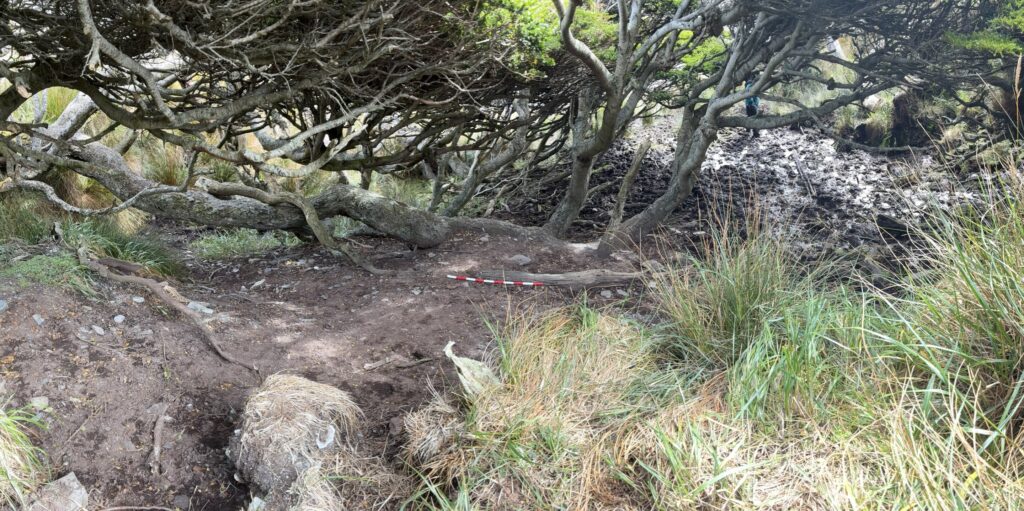
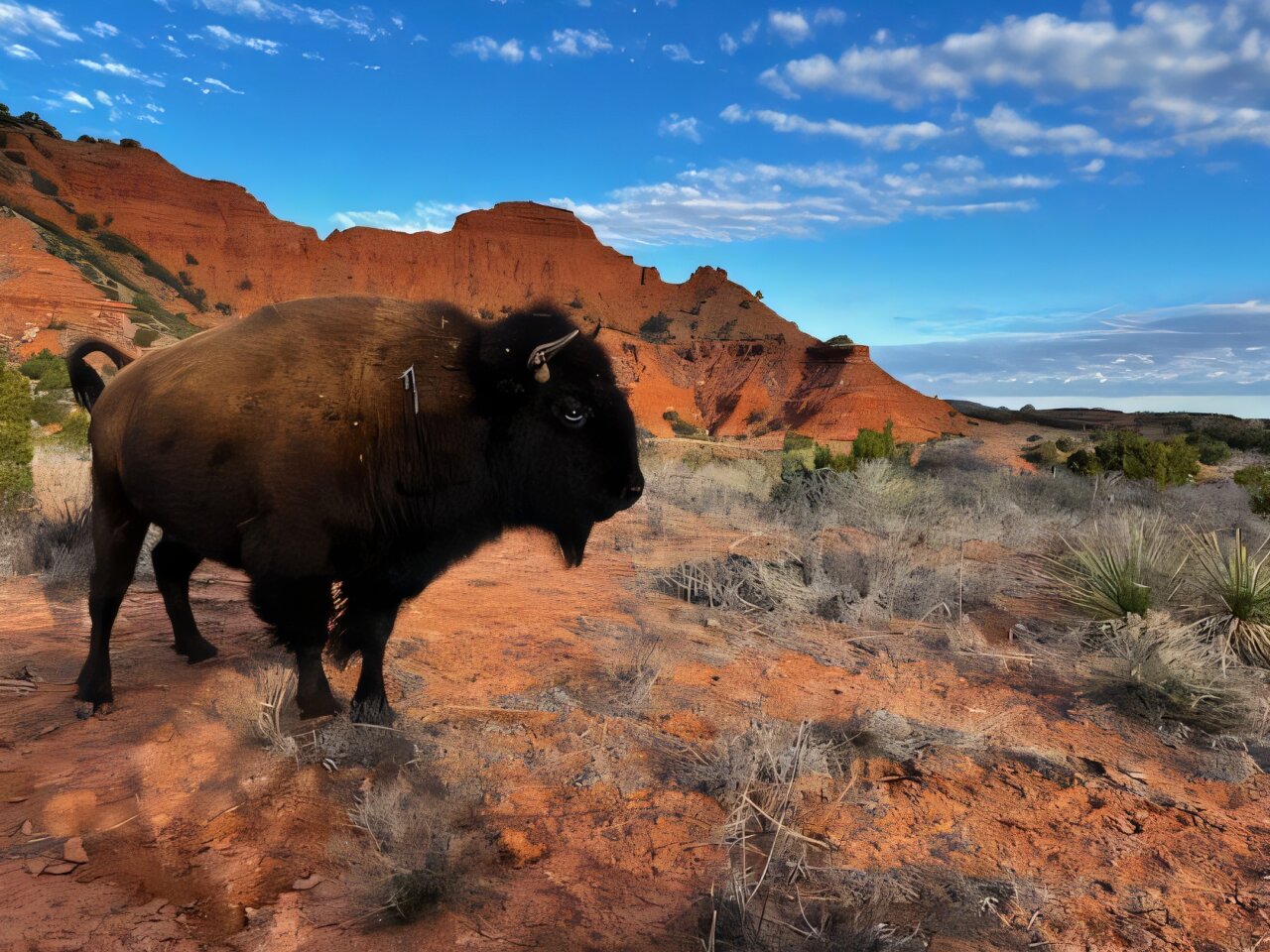
The site, known as the Nighthawk bison jump, lies along the eastern edge of the Caprock Escarpment, where the flat Southern High Plains meet the lower, heavily dissected landscape of the Rolling Plains.
The surrounding terrain is marked by steep cliffs, narrow ridges, gullies and exposed layers of ancient sedimentary rock. One particular cliff rises approximately 20 meters above a sloping area where archaeologists discovered extensive deposits of bison bones.
The remains first attracted attention in November 2021, when Texas Historical Commission steward Rick Day and his partner, Susan Day, noticed bones emerging from eroding sediments beneath the cliff. Subsequent investigations revealed that the deposits were not simply the remains of animals that had died naturally. Their location, archaeological context and relationship to the surrounding landscape pointed toward a much more organized process.
The research team identified at least seven distinct episodes of bison killing, spanning approximately 3,000 years, from the Late Archaic period into the Protohistoric period.
This discovery challenges a longstanding assumption about prehistoric hunting across the Great Plains. Large communal bison hunts involving cliffs were already well documented in the northern Plains, particularly in areas of present-day Montana, Wyoming and Alberta. Comparable evidence from the southern Plains, however, had been scarce.
Some archaeologists had suggested that southern Plains hunters rarely used this technique because the region lacked suitable cliffs.
Nighthawk presents a different picture. The Caprock Escarpment contains numerous steep scarps that could have served as hunting locations. The problem, the researchers argue, is that the same geological processes that created these landscapes have also been destroying the archaeological evidence.
How a bison jump worked
A bison jump was a coordinated hunting operation in which people manipulated the movement of a herd and drove the animals over a precipice.
Unlike hunting methods that relied on trapping animals inside constructed enclosures, a jump used gravity to kill or incapacitate the animals. Cliffs commonly reached heights of 10 to 30 meters, making the fall potentially fatal.
Such hunts required considerably more organization than an ordinary hunting expedition.
A successful operation typically involved several interconnected elements: an area where bison gathered, a route along which hunters could direct the herd, a suitable cliff edge, a place where the fallen animals accumulated, and a nearby location for processing the carcasses.
Hunters needed to coordinate their movements, guide the herd toward the precipice, maintain control of its direction and deal with the animals after the fall.
The scale of these operations could be substantial. Previous archaeological interpretations suggest that approximately 100 animals would be needed for a conventional bison jump to function effectively, although this is a general estimate rather than a measured threshold for Nighthawk.
Large herds and coordinated human activity were therefore central to the technique.
The archaeological record of the northern Plains contains hundreds of reported jump sites, although only a fraction have been excavated and securely dated. Many of the best-known examples belong to a period beginning approximately 2,000 to 1,500 years ago, when communal hunting became particularly prominent in the region.
The southern Plains presented a different archaeological picture. Although prehistoric communities there also hunted bison in large numbers, researchers had identified relatively few possible jump sites.
Nighthawk provides unusually detailed evidence that the technique was used repeatedly in this southern landscape.
Twenty-seven radiocarbon measurements establish the hunting chronology
To establish when the hunting occurred, the researchers combined archaeological excavation, geological investigation and direct dating of bison remains.
Between 2021 and 2024, they conducted surveys, test excavations and salvage excavations at the site. Their investigations included 47 square meters of hand excavation through deposits ranging from approximately 5 to 200 centimeters thick.
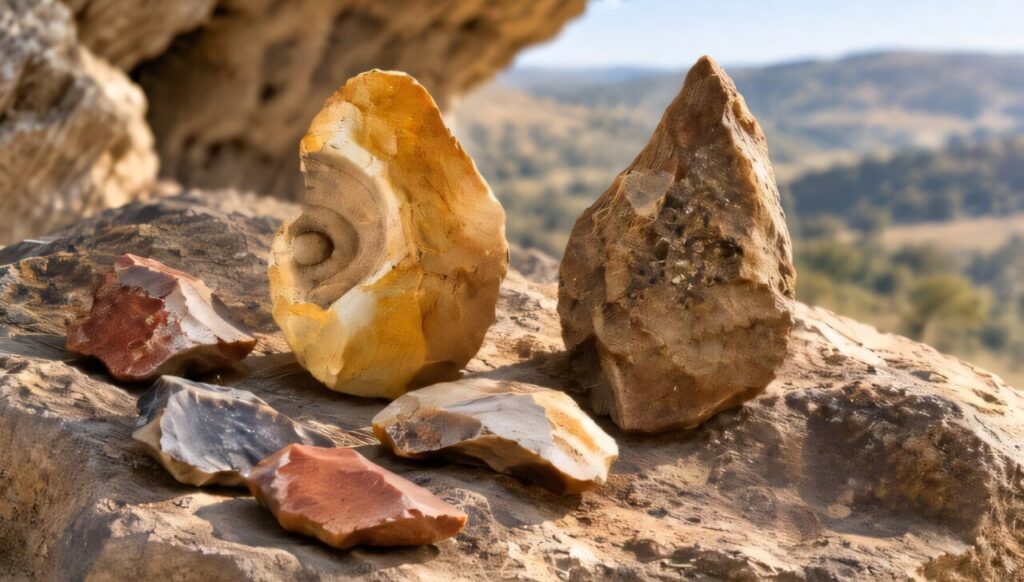
They collected bison bones, stone tools, charcoal and other archaeological materials. They also mapped the landscape using drone-based lidar, a laser-based surveying technique that produces detailed three-dimensional representations of the ground surface.
This mapping helped the team reconstruct the relationship between the bone deposits, cliffs, former slopes and possible hunting routes.
The most important chronological evidence came from radiocarbon dating. The researchers obtained 25 dates from bison bone collagen and two from charcoal, producing a total of 27 measurements.
Bone collagen is the preserved protein component of bone. Measuring its radioactive carbon content allows researchers to estimate when the animal died.
The team calibrated the measurements using the IntCal20 radiocarbon calibration curve and compared groups of dates statistically to determine whether different bones could reasonably belong to the same period of activity.
The resulting chronology identified seven distinct analytical components, which the researchers designated Kill 1 through Kill 7.
Almost all were represented by directly dated bison remains. The exception was Kill 4, which was identified through a dated charcoal-filled thermal feature interpreted as evidence of a separate hunting episode.
The earliest two components occurred at a different part of the site from most of the later deposits.
Kill 1 dates to approximately 3,575–3,400 calibrated years ago. Kill 2 followed around 2,965–2,855 years ago. The two episodes were separated by a gap of approximately 500–300 years.
The third component, Kill 3, dates broadly to approximately 1,740–1,525 years ago. It is the largest and most complicated bone deposit at Nighthawk.
The remaining components are considerably younger.
Kill 4 is represented by charcoal dated to approximately 880 calibrated years ago. Kill 5 dates to approximately 770 years ago, while Kill 6 falls around 630–510 years ago. The final identified event, Kill 7, dates to approximately 430–285 calibrated years ago.
These dates establish that Nighthawk was not used continuously. Instead, people returned to the location at widely separated intervals.
The researchers also found that some of the apparent hunting episodes might themselves represent more than one event.
Statistical testing indicated that the dates assigned to Kill 1 did not form a sufficiently consistent group to be combined confidently into a single event. Kill 3 also failed the statistical test for a single contemporaneous group.
The researchers explored different ways of dividing the Kill 3 measurements into statistically compatible groups. Several arrangements were possible, but the available evidence did not establish a definitive division.
Consequently, the seven identified components represent a minimum rather than necessarily the full number of hunting events. The researchers suggest that nine or more events could be represented in the preserved deposits.
Two additional excavated bone deposits also remain undated.
The cliff itself changed as hunters returned
One of the most important aspects of the Nighthawk discovery is that the landscape did not remain the same throughout its long history of use.
The researchers found that erosion had substantially altered the original hunting location, changing the relationship between the cliff and the places where the animals accumulated.
Today, the archaeological site consists of two separated areas, designated 41BI564 and 41BI565. They were initially recorded as separate archaeological sites, but further investigation showed that they were once parts of a larger, connected complex.
Erosion has removed the sediments between them, exposing the underlying bedrock and leaving the two areas physically separated.
The older deposits are found in area 41BI565, farther from the modern cliff. They include two Late Archaic hunting components, Kills 1 and 2.
The younger and more extensive deposits occur primarily in area 41BI564, closer to the present cliff face.
The researchers reconstructed two different phases of landscape development using the positions of the bone deposits, sediment characteristics and radiocarbon dates.
The first phase involved a broad accumulation of relatively soft sediment beneath an earlier cliff configuration. This sediment gradually covered and preserved bison remains.
After approximately 2,900 years ago, the original plateau spur became separated from the main plateau through erosion. This effectively shifted the likely jump-off location more than 100 meters westward, toward the area now associated with 41BI564.
A second major sediment accumulation developed beneath this later cliff configuration.
The oldest dated hunting component associated with this second landform, Kill 3, indicates that the relevant deposits began accumulating within the past approximately 1,660 years.
The cliff has continued to retreat since then, although its movement has been much more limited than the erosion affecting the older landform.
This geological history helps explain why the archaeological evidence appears scattered today. The bones were not necessarily deposited in the locations where they are now found. They were originally associated with slopes and sediment deposits that have subsequently been reshaped by erosion.
The researchers identified two main types of sediment accumulation.
The older deposits consist largely of relatively soft material produced when groundwater weakened and decomposed the sandstone in the cliff. As sections of the cliff collapsed, this material moved downslope and formed sediment blankets that could rapidly cover scattered bones.
Small depressions and channels in the underlying bedrock provided additional protection, allowing some remains to become buried before they were destroyed.
After approximately 1,000 years ago, these extensive soft sediment accumulations largely gave way to smaller deposits of coarse debris. These later deposits were thinner and offered less protection.
This difference in preservation is important. The older deposits often preserve more substantial bone concentrations, while younger remains are generally more scattered, shallowly buried and vulnerable to disturbance.
The researchers estimate that less than 25% of the original tableland surface now retains deposits with archaeological potential.
Much of the original site has already disappeared.
Why the researchers identify the site as a jump
Finding a large accumulation of bison bones beneath a cliff does not automatically establish that prehistoric hunters drove animals over it.
The researchers therefore examined several competing explanations, particularly the possibility that the remains came from animals trapped in a natural drainage channel.
Another communal hunting technique, known as an arroyo trap, involved driving bison into gullies or other confined depressions where they could be killed.
At Nighthawk, however, the evidence points strongly toward a cliff jump.
First, the archaeological deposits occur in sloping sediment accumulations beneath the cliff rather than in the concentrated deposits expected from a narrow drainage-channel trap.
The bones are distributed across several locations and occur in fan-like arrangements consistent with the movement of material downslope.
Second, the number of projectile points is small relative to the amount of bison bone. This is consistent with a hunting technique in which the fall itself killed or incapacitated animals, rather than one requiring hunters to dispatch every animal using projectile weapons.
Third, and most importantly, the researchers reconstructed the physical accessibility of the site.
The surface containing the archaeological deposits lies between two steep cliffs. It is approximately 50 meters above the valley floor to the east and about 20 meters below the cliff to the west.
Bison could not naturally reach this location through a gentle connecting slope. The researchers also noted that free-ranging bison living in the park today cannot access the surface.
In their reconstruction, the animals could reach the deposits only by falling from the cliff above.
Taken together, these observations allowed the researchers to reject an arroyo-trap explanation originating in the lowlands.
The likely approach route for the hunters was the plateau above the site. The only relatively gentle access corridor to this elevated area runs along Holmes Creek, south of the hunting location.
The creek corridor contained springs and other archaeological sites associated with bison activity, making it a plausible place for animals to gather before being driven toward the cliff.
The researchers also considered the area’s prevailing southwesterly winds. These could have helped hunters remain downwind of animals gathering between Holmes Creek and the jump-off point.
However, the exact arrangement of the hunting operation remains uncertain.
A different way of directing the herd
The physical shape of the Nighthawk cliff suggests that hunters may have used a somewhat different strategy from the one traditionally associated with northern Plains bison jumps.
Many well-known northern jumps occur along relatively straight escarpments. Hunters used drive lanes, sometimes marked with stone cairns or other structures, to funnel animals toward the cliff.
Nighthawk has a different configuration.
Its cliff projects outward into the surrounding landscape as a spur, resembling a peninsula extending from the plateau.
The researchers suggest that this projecting landform may have helped control the movement of the animals without requiring the same kind of constructed funnel.
They propose that the hunting operation might have functioned somewhat like an inverted arroyo trap. Instead of using the walls of a gully to confine the herd, hunters could have used the edges of the projecting cliff.
Under this interpretation, bison might have been guided onto the narrow spur and gradually restricted in their movement as hunters positioned themselves around them.
The researchers suggest that armed hunters could have helped direct the animals while other participants created apparent barriers using materials such as bison hides.
This could have allowed the hunters to guide the herd toward the edge in a controlled manner rather than relying entirely on a sudden stampede.
The authors describe this possibility as something closer to walking the animals toward the precipice than simply chasing them over it.
It remains a proposed reconstruction rather than a directly demonstrated hunting sequence.
One important piece of supporting context is the absence of durable stone drive lines.
Despite examining the plateau that would have served as the drive lane, the researchers have not identified the substantial cairn alignments found at many northern Plains jumps.
This does not establish that the hunters lacked barriers or other hunting structures. Such features could have been constructed from perishable materials, including brush or logs, which would be much less likely to survive archaeologically.
The researchers also identified another possible jump location at the base of a similar cliff spur farther south. A bison bone sample from that separate site produced a radiocarbon age of approximately 600 years.
The deposit is poorly preserved, so its interpretation remains tentative, but it suggests that the Nighthawk configuration may not have been unique to a single location.
Thousands of bones reveal what happened after the fall
The excavation and laboratory analysis recovered 2,143 bison bone specimens, of which 1,473 could be identified to a particular skeletal element.
The researchers estimated a minimum of 27 individual bison across the seven analytical components.
That number should not be mistaken for the total number of animals originally killed. Most of the deposits have been heavily affected by erosion, and only a fraction of the original remains survive in identifiable archaeological contexts.
The largest concentration belongs to Kill 3, which accounts for 1,436 specimens, or nearly 70% of the entire assemblage.
Kill 1 contributed another 248 specimens, while Kill 6 contained 188.
The other components are represented by much smaller collections.
The skeletal composition also varies considerably between hunting episodes.
Kill 3 contains remains representing at least 17 individual bison, including 12 skulls and 20 mandibles. Kill 1 represents at least four individuals.
Most of the other components contain remains from only one or a few animals.
This uneven distribution reflects differences in both the original deposits and their subsequent preservation.
The researchers also examined the animals’ ages and sex, although this analysis was possible only for the two components that preserved suitable lower jaws.
By examining tooth eruption and wear, they identified nine age cohorts among the mandibles from Kills 1 and 3.
Kill 1 included a yearling calf estimated to have been approximately 1.5–1.7 years old and an adult cow approximately 8.5–8.7 years old.
Kill 3 contained a much wider range of ages. The sample included a yearling calf, two animals approximately 2.5–2.7 years old, four approximately 3.5–3.7 years old, and several older animals ranging from approximately 6.5 to 12.7 years.
The researchers also examined skeletal differences associated with sex.
Most of the adult remains appeared consistent with female bison, although males were also represented.
An analysis of 13 metacarpals, the long bones of the lower forelimbs, suggested an approximate ratio of two cows for every bull in the Kill 3 sample.
The researchers interpret the overall demographic composition as consistent with herds dominated by females and calves, although the available evidence is too limited to establish the composition of every hunting episode.
The age of the yearling calves also provides a clue about the timing of the hunts.
Assuming a calving season comparable to that of the Texas State Bison Herd currently living in the park, which typically centers on late March and extends through April, the researchers estimate that Kills 1 and 3 probably occurred during late fall or early winter.
This interpretation is based on the animals’ estimated ages rather than direct evidence of the precise season in which they died.
The younger hunting components do not preserve sufficient information to establish comparable seasonal patterns.
Cut marks reveal selective processing
The bison remains also preserve evidence of what people did after the animals died.
The researchers identified human-related modifications in Kills 1, 3, 4 and 6, including cut marks, fractures and burned bone.
Kill 1 contains four cut marks on a cluster of articulated remains. One occurs on the front portion of a lower jaw, in a location consistent with the removal of the tongue.
Three additional marks occur on bones from articulated limbs, one of which was partly burned.
The concentration of these modified limb bones led the researchers to suggest that carcasses or portions of carcasses may have been stacked in this location.
Kill 3 provides considerably more evidence of butchery, with 37 identified instances of modifications associated with human processing.
Most of these were found on the northern slope beneath the cliff.
The cut marks were concentrated on ribs and vertebrae, which belong to the central portion of the animal’s skeleton.
These same skeletal elements were underrepresented in the recovered assemblage.
The researchers interpret this combination as evidence that people selectively processed these portions of the bison and carried them away from the site.
Twenty-five bones from Kill 3 were also fragmented. Some of the breakage is consistent with activities associated with extracting bone marrow.
However, the researchers caution that the pattern is difficult to interpret because much of the fragmentation occurred in the higher parts of the slope, where bones could have broken during the animals’ impact with the ground or through subsequent collisions with falling sediment and rock.
Two bones from Kill 6 also display unusual compressive fractures that the researchers consider consistent with injuries sustained during the fall.
The distinction between human processing and damage caused by the landscape is important because bones at Nighthawk experienced considerable movement before and after burial.
Gravity, flowing water, rodents and other animals all contributed to the modification and redistribution of the remains.
The assemblage also contains 13 rodent-gnawed bones and three specimens with tooth damage consistent with a carnivore, probably a canid.
Prairie dog remains were recovered in shallow deposits associated with some of the younger bison bones. A radiocarbon date from one prairie dog specimen indicates relatively recent occupation of the site.
Burned remains provide additional evidence of human activity. One component, Kill 4, is represented by a thermal feature containing burned tabular quartzite, juniper charcoal and thermally altered bone.
The researchers interpreted this feature as evidence of another distinct bison-killing episode, partly because no other prey animals or unrelated activities were identified in the assemblage.
However, they did not recover a complete processing area that would establish precisely how the animals were prepared and consumed.
Why southern Plains jumps were less visible
The Nighthawk discovery also raises a broader archaeological problem.
Why have so few bison jumps been recognized in the southern Plains when the northern Plains contain hundreds of reported examples?
The researchers identify two major factors that may help explain the difference: the preservation of archaeological deposits and the different ways communities used bison.
The first concerns the landscape itself.
The Caprock Canyonlands are among the most heavily dissected environments in the region. Groundwater erosion, the collapse of weakened rock and the retreat of cliff faces continually reshape the terrain.
Previous geological estimates for the eastern Caprock Escarpment suggest historical retreat rates ranging from approximately 60 to 190 meters per 1,000 years. Measurements based on monitoring pins and stream head cuts have produced lower estimates of approximately 6–10 meters per 1,000 years.
These estimates vary considerably, but both illustrate the importance of erosion in the region.
At Nighthawk, the effects are visible in the separation of formerly connected archaeological deposits and the destruction of large portions of the original site.
The researchers argue that suitable cliffs were available for prehistoric hunting, but the archaeological evidence associated with them was particularly vulnerable to destruction.
The second factor concerns how easily archaeologists recognize these locations.
The team reports that eight bison jump sites, including Nighthawk, have now been identified within an area of approximately 15 square kilometers in and around Caprock Canyons State Park.
Some were known previously but had received little investigation. Others had been recorded during archaeological surveys without the significance of the bison remains beneath nearby cliffs being recognized.
In spring 2026, the researchers identified another deposit, site 41BI254, on the northern edge of the park. It had previously been recorded as a lithic scatter, but further investigation revealed bison bones in sediment deposits beneath a cliff.
A directly dated bison sample produced an age of approximately 875 radiocarbon years, similar to Kill 5 at Nighthawk.
Another location, site 41BI209, lies on an elevated alluvial surface beneath a cliff along Holmes Creek. Although little intact material survives, the preserved deposits contain both stone artifacts and bison remains. A bone collagen measurement produced an unexpectedly late radiocarbon age of approximately 190 years before present.
Four additional possible jump sites, designated 41BI280, 41BI281, 41BI279 and 41BI278, were identified during surveys conducted nearly 50 years ago on private land approximately 6 kilometers northeast of Nighthawk.
These discoveries suggest that the apparent scarcity of southern Plains jumps partly reflects how archaeological sites survive and how investigators search for them.
Nevertheless, the researchers do not argue that preservation and recognition explain the entire difference between the northern and southern Plains.
Even after accounting for those factors, the known archaeological records remain substantially different, with roughly 10 identified jumps in the southern Plains compared with hundreds reported in the north.
Differences in hunting practices and economic organization may also have contributed.
Different ways of using bison in the north and south
The northern Plains developed a particularly intensive form of bison exploitation during the Late Prehistoric period.
Many northern jump sites contain enormous bone deposits, extensive stone drive lines and evidence of large-scale processing.
One important product associated with these operations was pemmican, a compact, calorie-rich food made from dried, pounded meat mixed with rendered animal fat.
Pemmican could be stored for extended periods and transported relatively easily. It was particularly useful in northern environments where winter conditions created strong seasonal demands on food supplies.
The researchers suggest that the production and exchange of pemmican may have encouraged northern communities to organize large hunting operations and generate substantial food surpluses.
The southern Plains had a different set of conditions.
Late Prehistoric communities in the region included semisedentary villagers who combined farming with hunting. They were not necessarily dependent on pursuing bison year-round or producing enormous quantities of meat for exchange.
Climate may also have influenced the relative usefulness of pemmican.
Rendered animal fat can become unstable in warm conditions. The researchers discuss temperatures of approximately 90–100°F as potentially exceeding the melting point of the fats used in pemmican, creating difficulties for storage and preservation.
The warmer and more variable conditions of the southern Plains may therefore have made long-term pemmican production less reliable than in colder northern regions.
Strong winds could also have favored the rapid drying of meat into jerky, offering a different approach to food preservation.
However, the researchers emphasize that there is no conclusive evidence connecting bison bone grease extraction at southern Plains sites directly to pemmican production.
The Rush site near San Angelo, Texas, has previously been interpreted as a possible pemmican-making camp, but its relationship to an actual bison kill location remains unknown.
At Nighthawk itself, the researchers found burned rock concentrations that may indicate food processing. Yet they did not identify the paired hearths and boiling pits or the extensive crushed bone deposits that would provide stronger evidence of intensive bone grease rendering and pemmican production.
The limited processing evidence from the Late Archaic deposits appears more consistent with what the researchers describe as a gourmet strategy, in which animals were processed for relatively immediate consumption rather than extensive long-term preservation.
The Late Prehistoric remains are too limited and poorly preserved to establish processing intensity confidently.
These differences offer a possible explanation for why the southern Plains did not develop the same industrial-scale hunting facilities seen in the north.
But the Nighthawk evidence complicates the idea that southern communities generally avoided large communal hunts.
The site demonstrates that they sometimes organized operations capable of killing multiple bison through coordinated hunting.
The reasons for doing so remain uncertain. The researchers suggest that some communal hunts may have served social or political purposes rather than simply meeting immediate food requirements.
The long gaps between hunts
The chronology at Nighthawk also raises questions about how frequently prehistoric communities returned to the same hunting location.
Although the site was used over approximately 3,000 years, the dated components are separated by substantial intervals.
The researchers calculate an average gap of more than 500 years between the identified hunting events, with more than 150 years between the Late Prehistoric components.
These figures should not be interpreted as proof that bison jumps were conducted only once every several centuries.
The archaeological record is incomplete. Erosion has destroyed much of Nighthawk, two excavated bone deposits remain undated, and some of the dated components may combine multiple closely spaced events.
The researchers also point out that prehistoric communities could have moved their hunting operations between different locations as bison herds shifted across the landscape.
Other jump sites in and around Caprock Canyons may therefore preserve evidence of hunting episodes that took place during gaps in the Nighthawk record.
A useful comparison comes from the Vore site in Wyoming, where researchers identified 22 hunting events in deposits dating between approximately AD 1500 and 1800.
The estimated recurrence interval there is about 25 years, suggesting that even well-established northern hunting facilities were not necessarily used every year.
Nighthawk’s much longer apparent intervals may reflect the incomplete preservation of its deposits, the movement of hunting groups between different locations, or genuinely infrequent reuse of the same cliff.
The researchers consider the possibility that knowledge of communal hunting techniques was passed between generations even when a particular hunting location was not used regularly.
They also acknowledge that archaeologists have limited ability to identify closely spaced hunting episodes. Radiocarbon measurements can distinguish events separated by substantial periods, but resolving events only a few years or decades apart is considerably more difficult.
Better pretreatment of bone collagen, including the use of XAD purification, could improve the accuracy of future dating efforts.
Hunting continued into the Protohistoric period
The youngest identified component, Kill 7, provides evidence that the Nighthawk hunting location remained in use well after its Late Archaic beginnings.
Its single identified bison individual is represented by hind limbs and ribs preserved in a small sediment deposit within a gully south of the main 41BI564 area.
The calibrated radiocarbon age has a probability distribution extending across approximately AD 1520–1665, with the researchers identifying a possible overlap with the period of Spanish colonial intrusion into the region.
They suggest that the final hunting event may have occurred around the time of the Coronado expedition into the region in AD 1540–1542.
The date does not establish that the hunt took place during the expedition itself. Rather, it places the final identified component within a period that overlaps with early Spanish colonial activity.
The broader chronology is notable because Nighthawk was used during both the period preceding the classic northern Plains bison jump tradition and the time when that tradition was well established.
The researchers identify it as the first documented example of Late Prehistoric bison jumping in the southern Plains.
They argue that the evidence is consistent with the transmission of communal hunting knowledge from Late Archaic communities to later groups, despite major changes in technology and lifeways.
During this long period, people in the region adopted new technologies, including pottery and archery. The researchers also identify a multigenerational gap in the local archaeological sequence associated with the Palo Duro complex interval.
Nevertheless, the Nighthawk chronology indicates that bison jumping continued into the Protohistoric period.
The findings also place the southern Plains evidence alongside an important northern Plains site, Head-Smashed-In Buffalo Jump in Alberta.
That site preserves a much longer history of bison jumping, extending from approximately 5,800 to 100 calibrated years before present. Its chronology has traditionally included a substantial gap between Middle and Late Archaic use.
The beginning of the Late Holocene hunting sequence at Head-Smashed-In roughly corresponds to the earliest identified Nighthawk component.
The researchers consider this timing interesting but caution against interpreting it as evidence of a widespread change in hunting practices. The comparison may partly reflect the limited availability of reliable radiocarbon measurements from older excavations.
Much of the earlier archaeological research on bison jumps took place before direct dating of bone collagen became widely available.
The researchers therefore emphasize the need for additional dating at other sites before drawing broader conclusions about when and where the technique was used.
At Nighthawk, the seven identified hunting components remain the minimum number supported by the preserved evidence, and the extent of the original bone deposits has been reduced by thousands of years of erosion.
The youngest dated remains place the final identified hunting episode within the Protohistoric period, while the oldest deposits preserve evidence of communal bison hunting approximately 3,500 years ago.
The study was published in American Antiquity.