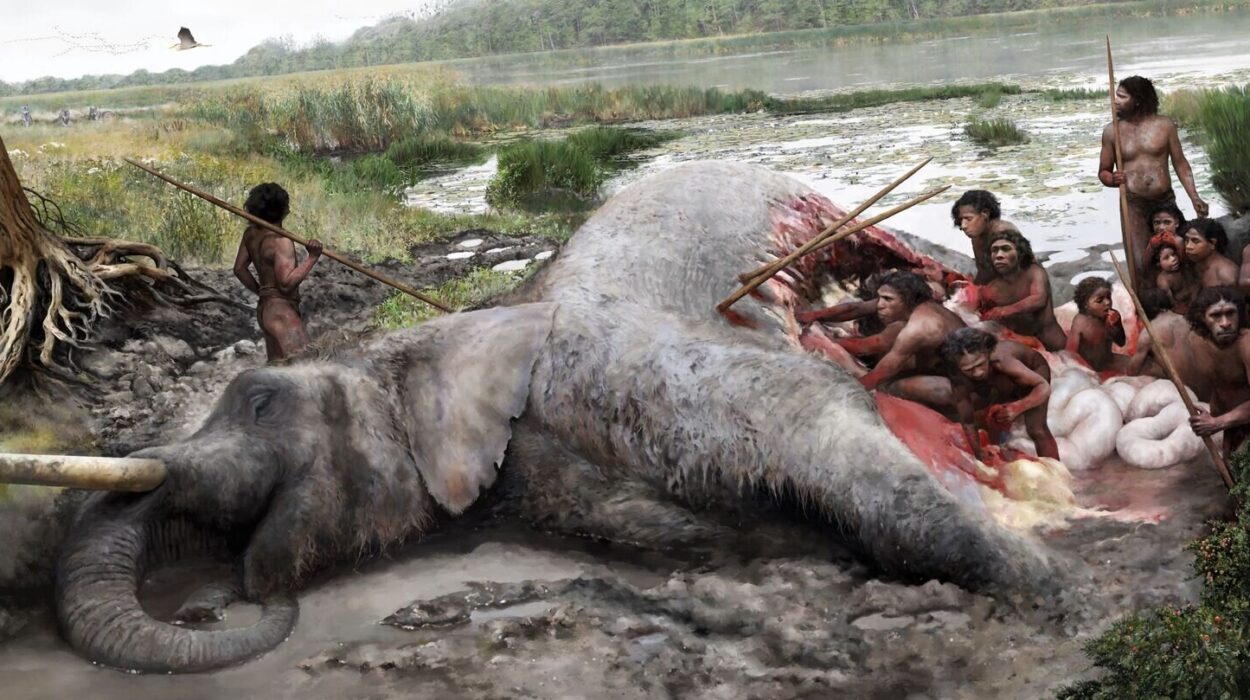
The earliest Native Americans appear to have relied heavily on a narrow set of enormous plant-eating mammals, from mammoths in Alaska to giant ground sloths in South America, a pattern that may help explain how humans spread across the Americas so quickly.
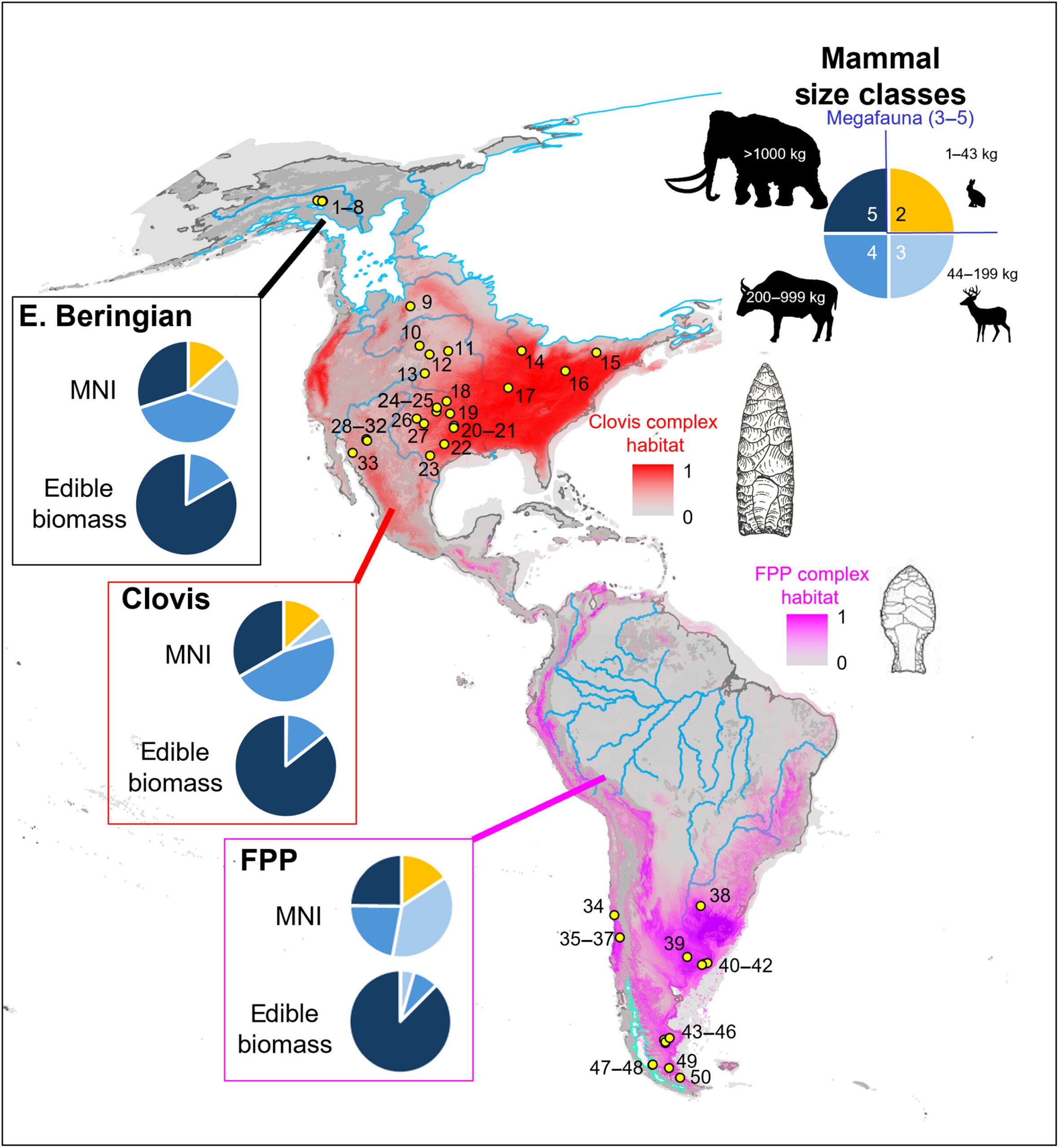
An international research team reached this conclusion after examining animal remains from 50 archaeological sites across the Americas. The sites belonged to three of the earliest and most widespread cultural groups in the region: Eastern Beringians in Alaska and the Yukon, Clovis people in North America, and Fishtail Projectile Point people in South America.
The researchers identified the animal species represented by bones found at the sites and considered how much food each species could have provided. They also estimated which animals, and how many of them, would have been living around each site.
Because animals differ greatly in size, the researchers accounted for the amount of edible material each individual animal could provide. They then compared those estimates with the archaeological remains.
The result pointed to a highly specialized diet. Between 83% and 88% of the food represented by the researchers’ calculations came from enormous plant eaters, including mammoths, elephant-like gomphotheres and giant ground sloths. Together, these animals are known as megaherbivores.
That pattern was not simply a reflection of which animals were most numerous in the environment. When the researchers deliberately increased the estimated numbers of small animals in their models, megaherbivores still supplied most of the available food.
“If early people were dietary generalists, you’d expect to find the most common animals would be more common in peoples’ campsites,” said Ben Potter, a University of Alaska Fairbanks anthropology professor and one of the study’s leaders.
The archaeological record instead showed that rare, very large animals were disproportionately represented, while abundant small animals such as rabbits and mice were scarcely represented.
Large prey may help explain similar tools
The researchers connect this dietary pattern with another feature of early American archaeology: similar toolkits appearing across very different environments.
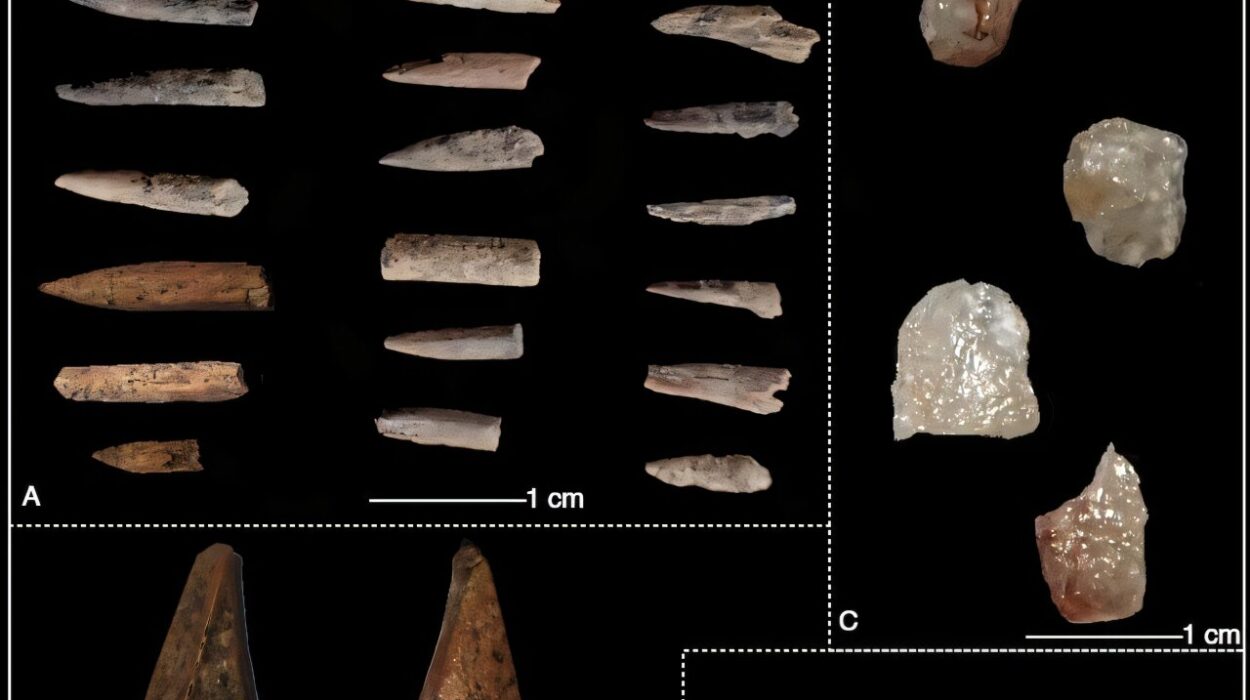
The sites contained tools associated with hunting and processing large animals, including large fluted projectile points and specialized butchering implements. Fishing equipment and tools for processing plants were notably absent.
The researchers argue that people pursuing the same kinds of large herbivores across different landscapes would have had less reason to develop substantially different hunting technology for each region.
The pattern also relates to the question of how humans moved so rapidly from Alaska through North and South America.
One possibility is that early people were dietary generalists who adapted their food sources to each new environment. The other is that they specialized in a small number of large-bodied animals.
The researchers’ evidence supports the second pattern.
Large mammals could range across broad territories. According to study co-author Mat Wooller, people who already knew how to hunt megaherbivores could carry that knowledge into new regions rather than spending generations learning how to hunt smaller local animals and identify edible plants in every new ecosystem.
Megafauna disappeared in a southward sequence
The study also examined when different megafauna disappeared relative to human occupation.
In Alaska, mammoths and horses disappeared around 13,300 years ago, near the end of the earliest known human occupation there. Megafauna associated with the Clovis period in North America were gone by 12,800 years ago. Farther south, gomphotheres and giant ground sloths survived until about 11,600 years ago.
The researchers found that the sequence of human arrival, overlap with megafauna and disappearance of those animals repeated farther south over time.
They interpret this pattern as circumstantial evidence that human hunting was a major contributor to megafauna extinctions. They also point to climate change as a contributing factor that could have reduced the animals’ habitat and made them more vulnerable to hunting.
Megaherbivores may have been particularly vulnerable because they reproduce slowly and spread births widely. The researchers also note that adults had no natural predators and therefore would not have had learned wariness of newly arrived human hunters.
The study was led by Potter and James Chatters of McMaster University. Other members of the team included Wooller, Luciano Prates, S. Ivan Perez, Todd Surovell, Robert Kelly and Gustavo Politis.
The study was published in Science Advances.