An infant buried beneath the floor of a Roman military workshop in León, Spain, may be the first known perinatal burial found inside a Roman military context on the Iberian Peninsula. Its unusual location offers evidence that family life, military life and ritual practices may have overlapped inside a legionary fortress, even as Roman reforms sought to restrict the presence of women and children there.
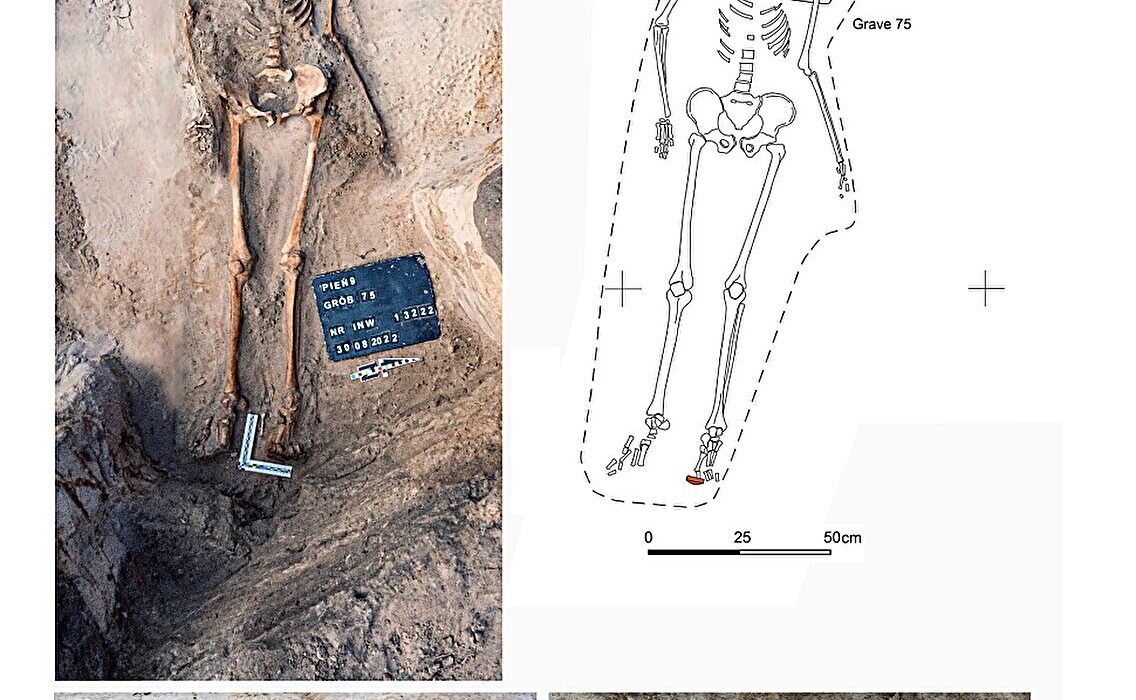
The burial was discovered during excavations in 2006 at the castrum of Legio VI Victrix, part of the earliest Roman occupation of the site in León. The remains were found in Sector 1, beneath the floor and near a doorway, inside a Roman roof tile known as a tegula.
Using the remains and their archaeological context, Marta Fernández-Viejo and colleagues from the University of Burgos and the University of León examined the infant’s age, development and possible cause of death, as well as why it might have been buried in that particular location.
Infant burials in tegulae were not unusual in the Roman world, particularly for infants who died around the time of birth. What made this case different was where the burial was found.
The infant had been placed inside a contubernium workshop, a space associated with the everyday activities of lower-ranking soldiers. Infant burials are known from other Roman military settings, including forts along Hadrian’s Wall, but these were generally found in external cemeteries, nearby villas or settlements surrounding military installations.
The location at Legio VI Victrix therefore makes this burial unusual within a military setting.
The infant was near full term but incompletely developed
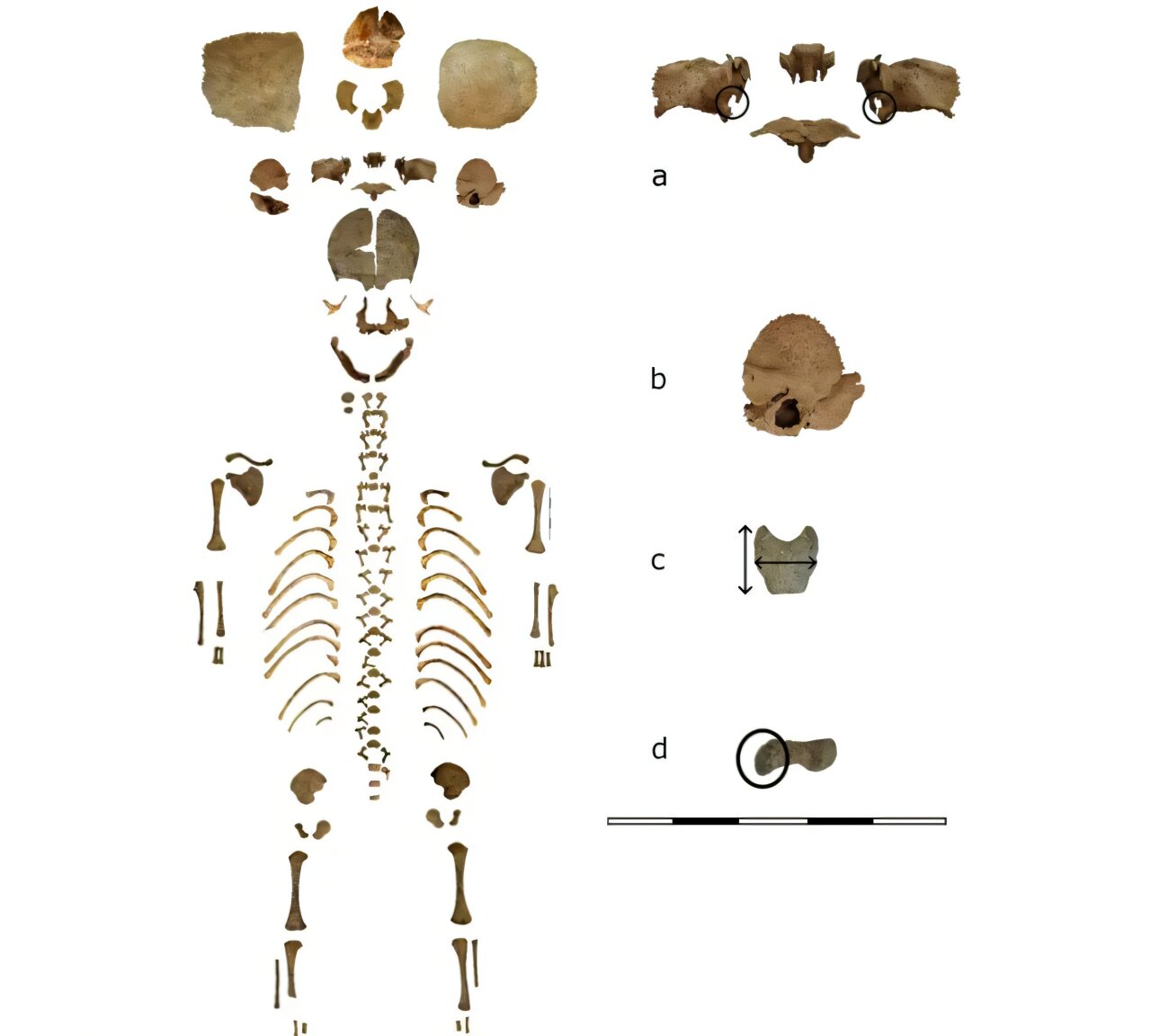
The researchers estimated the infant’s age from the length of the femur because no teeth were recovered. The measurement indicates an age of about 40.54 weeks, within a range of 38 to 42 weeks, when the infant died.
At the same time, several bones suggested that development was incomplete compared with what would be expected for that estimated gestational age. The evidence came from parts of the skull, including the tympanic ring and sphenoid bones, as well as the pubis and the base of the skull.
The researchers suggest that this pattern may indicate poor nutrition, illness or stress during gestation.
The remains did not show signs of external physical trauma. This may indicate that the infant was not a victim of infanticide, although the researchers note that some possible causes of death, including smothering, drowning and exposure, would not necessarily leave marks on bones.
The burial dates to a period of changing military rules
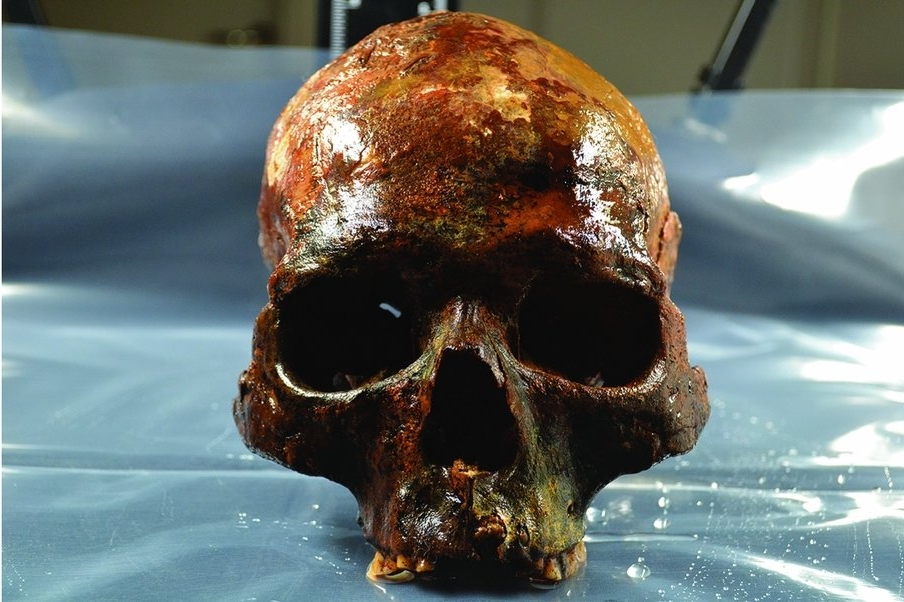
Radiocarbon dating places the burial between about 47 BCE and 61 CE. That period overlaps with reforms associated with Augustus concerning the presence of women and children in Roman legionary fortresses.
Under Augustan regulations, Roman soldiers were officially prohibited from marrying during their service, preventing the formation of legitimate families within the army. In theory, wives and children were therefore not supposed to live inside military camps.
The archaeological and documentary evidence, however, indicates that these restrictions were not always strictly enforced in frontier provinces. Evidence associated with women and children has been found within and around Roman military forts.
The researchers propose that the infant at Legio VI Victrix may have lived during this period of transition, when older practices allowing women and children in legionary fortresses persisted alongside the new regulations. They also suggest that the burial could reflect an attempt to navigate the uncertainty surrounding how those rules were enforced at the empire’s frontier.
The location may have had a ritual purpose
The position of the burial also raises another possibility.
The researchers suggest that Roman beliefs about people who died prematurely or in infancy may have influenced where the infant was placed. According to those beliefs, perinatal remains were associated with particularly powerful spirits that could influence the living.
The infant’s burial inside the workshop may therefore have been intended to protect the workplace and support the success of the soldiers’ activities there.
Another possibility is that the burial was part of a foundation ritual. Human or animal remains could be deposited beneath new buildings, particularly near thresholds or entrances, where such deposits could provide divine protection and mark a transition between ordinary and sacred space.
The infant was buried near a doorway and during the earliest stage of the site’s use. The researchers therefore suggest that its position is consistent with the possibility of a foundational burial.
The evidence does not establish which of these purposes was intended. Instead, the burial context raises the possibility that both ideas about the treatment and ritual significance of perinatal remains may have influenced the decision to place the infant there.
A rare overlap of military and domestic life
The burial at Legio VI Victrix complicates the assumption that military, domestic and religious activities were kept strictly separate inside Roman legionary forces.
Its date falls during a period when regulations restricted soldiers’ family lives, while its location inside a military workshop suggests that an infant was nevertheless present within the fortress. The burial context also points to possible ritual considerations connected with the place where the remains were deposited.
The researchers interpret the evidence as indicating that women and children may have continued to be present in legionary contexts during the early transitional period surrounding Augustus’ reforms. The burial also provides evidence for the intersection of military life, family relationships and ritual practices at the frontier of the Roman Empire.
The study was published in Childhood in the Past.