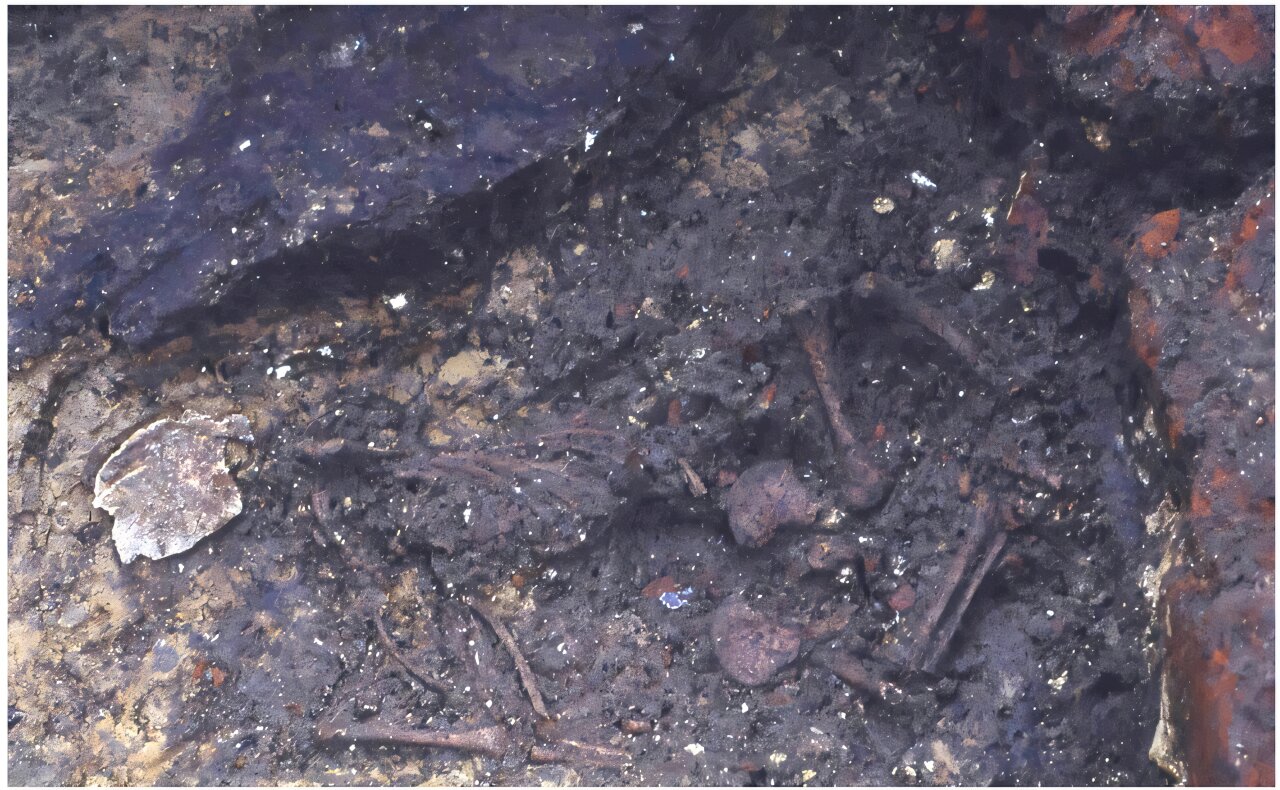
When archaeologists uncovered a three-month-old baby’s burial beneath the floor of a medieval brothel in Aalst, Belgium, the unusual location raised an obvious question: had the child been killed? Ancient DNA and chemical evidence now point to a different possibility. The infant had been well nourished, showed no evidence of several bacterial diseases tested for, and may have died from an infection or illness rather than infanticide.
The burial was discovered in 1998 during excavations ahead of construction of the Oude Vismarkt square in Aalst. The two-room building had two keyhole-shaped ovens used as heated baths and a hearth in the neighboring room. Archaeologists identified it as the Nederstove, a medieval bathhouse recorded in historical documents.
In the medieval Low Countries, bathhouses known as stews often also operated as brothels. Historical records strengthen the identification of the Aalst building. One document describes city authorities tolerating prostitution in the stew establishments, while another records a bathhouse in Aalst with 16 beds and names several women who worked there.
The infant was buried within the building’s floor, an unusual practice for the period.
That location was especially difficult to interpret because historical accounts of medieval prostitution often connect women working in brothels with abortion and infanticide. But the child in Aalst was about three months old. Infanticide was more commonly associated with newborns or babies only a few days old.
That made other explanations for the child’s death important to investigate.
The child had been well nourished
Stable isotope analysis provided evidence about the infant’s diet before death. The results indicate that the child had been well nourished and was likely regularly breastfed.
That evidence ruled out starvation or malnourishment as explanations for the death.
Ancient DNA analysis established that the child was male. It also found no evidence that he had died from the bacterial diseases tested for, including plague, leprosy, tuberculosis, or cholera.
The testing could not identify viral infections, however. Infant mortality in the medieval period was high, at around 30%, and the researchers note that male infants can have weaker immune responses than females.
The evidence therefore leaves open the possibility that the child died from an infection or disease despite being adequately cared for.
Why was he buried outside a cemetery?
The unusual burial raises another question. In late-medieval Europe, burial in a churchyard was the normal practice, making burials outside cemeteries rare.
Domestic infant burials from this period are known, but only in very small numbers. Dr. Maxime Poulain, who studied the remains with Céline Bon and Jessica Palmer, notes that the Aalst burial is the only example of this type she is aware of in Belgium. A small number of comparable cases have been reported internationally, including in France and the United Kingdom.
Several possible explanations were considered.
One was that the infant had not been baptized. Baptism was required for cemetery burial, but babies were generally baptized within a few days of birth. If a newborn appeared likely to die and no priest was present, the baptism could also be performed by someone else, including a brothel keeper. The absence of baptism is therefore considered unlikely to explain the burial location.
Another possibility was the cost of a cemetery burial. Candles, bell ringing, a coffin and digging the grave all required payment. In the 16th century, even the cheapest burial could cost at least six days’ wages for an unskilled laborer.
Yet people without sufficient money were sometimes able to secretly bury children in cemeteries, so cost does not provide a definite explanation either.
The hearth may have had a special meaning
The child’s position near the hearth offers another possible interpretation.
Medieval folklore included stories about souls remaining near hearths after death. The researchers suggest that the mother may have buried her child there in the hope of keeping him warm and protected while allowing his soul to remain close to her.
This is presented as a hypothesis rather than a conclusion established by the archaeological evidence.
The combination of the child’s age, good nutritional condition and the absence of the tested bacterial diseases makes the usual association between children in brothels and infanticide less straightforward in this case. The evidence instead supports the possibility that the child died from disease or infection.
The research is expanding to other medieval brothel sites
The Aalst burial adds to the limited archaeological evidence about the people who lived and worked in medieval brothels. Material remains from such places can be difficult to identify because ordinary objects such as ceramics and hairpins are not unique to brothel environments.
Poulain is now studying skeletal material from a medieval red-light district in Bruges to examine disease prevalence there compared with other parts of the city.
The researchers also hope to return to the Aalst brothel site and study environmental remains preserved in the loam floor levels.
The study was published in Archaeological and Anthropological Sciences.