Two Early Bronze Age graves more than 500 kilometers apart contain an unexpected family connection: one buried a mother with her young son, while the other held a young woman with her paternal niece. Ancient DNA now provides the first genetic evidence that Bell Beaker communities in Northwest Europe buried children with close biological relatives, offering clues about how family relationships shaped burial practices.
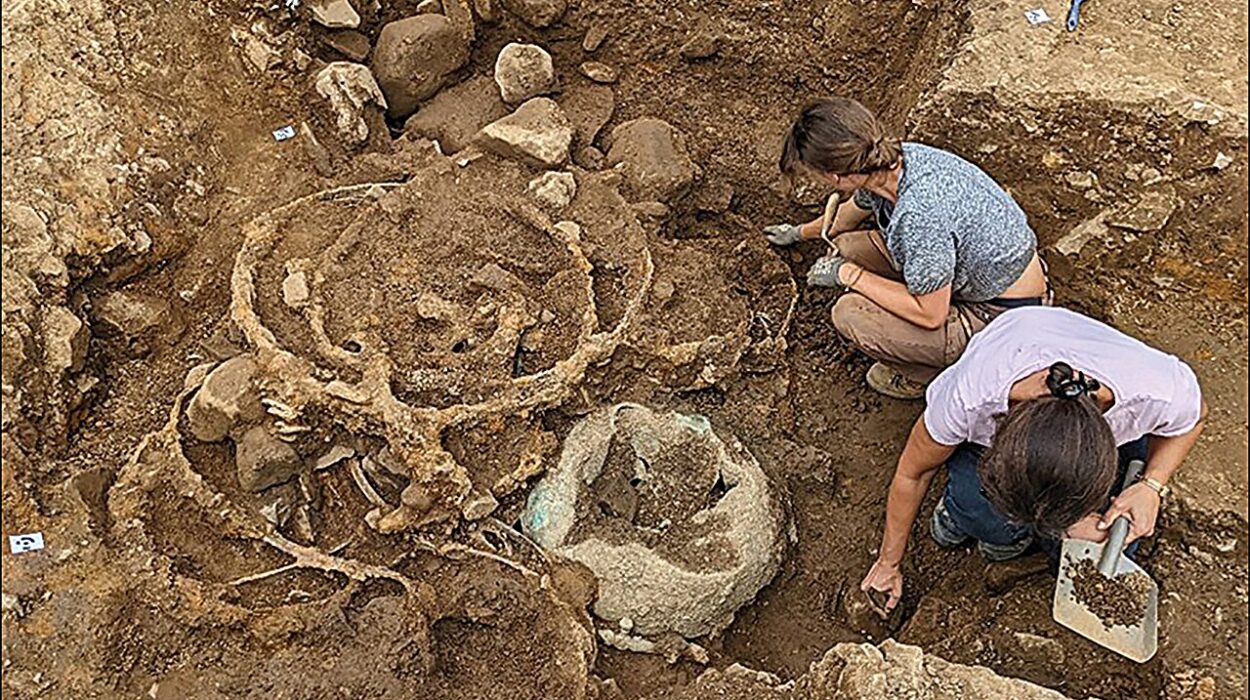
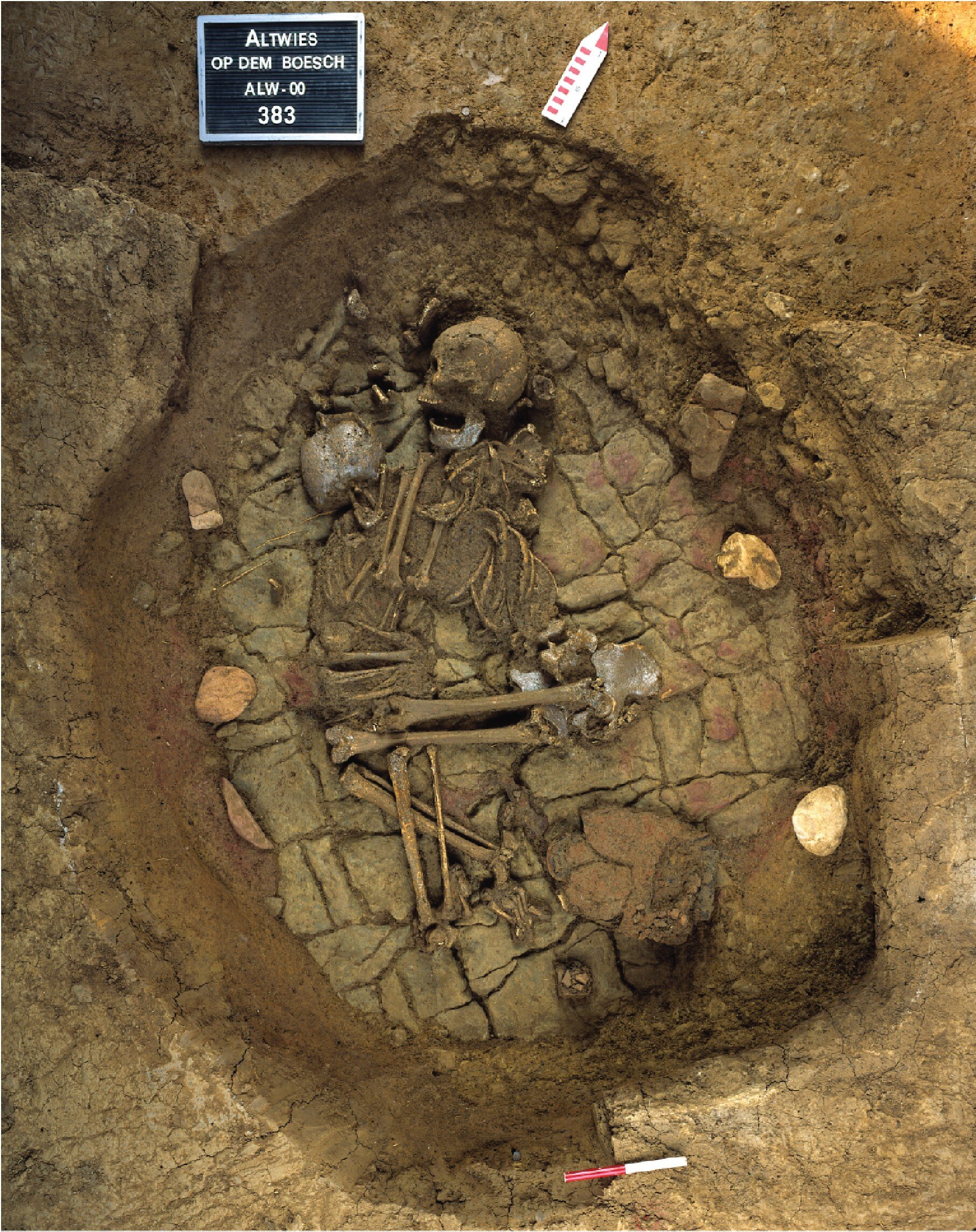
The first burial was discovered in 2000 at Altwies “Op dem Boesch” in southern Luxembourg during highway construction. It contained a woman and a boy of about 3 years old, placed facing each other. The adult’s hand rested on the child’s head.
The grave dates to the Bell Beaker period, between about 2450 and 1800 BC. Its unusual arrangement caught the attention of archaeologists because a remarkably similar burial had been found much farther away.
At Dunstable Downs in Bedfordshire, Britain, archaeologists uncovered a double burial in a round barrow in 1887. It contained a young woman and a girl of about 6 years old. The similarities between the two graves raised questions about whether the people were related, whether their deaths had been connected and why communities separated by more than 500 kilometers had used such similar burial arrangements.
Researchers from Johannes Gutenberg University Mainz and the University of Ferrara brought together archaeological, anthropological and genetic evidence to investigate the two graves.
DNA changed the picture
The skeletal remains from Dunstable Downs had been preserved and documented well enough to allow modern analysis. Anthropologist Nicoletta Zedda examined the remains with geneticists from Johannes Gutenberg University Mainz, and the team analyzed the genomes of all four people from the two burials.
The genetic evidence established close biological relationships in both graves.
At Altwies, the adult was the boy’s biological mother. At Dunstable Downs, however, the relationship was different. The young woman was the girl’s paternal aunt.
The four individuals also shared most of their ancestry with steppe populations that had migrated from Eastern and Central Europe during the 3rd millennium BC.
The genetic results therefore linked the burial arrangements not simply to two adults and children who happened to be buried together, but to close biological family relationships.
The graves also reflect strict burial rules
The researchers found another clue in how the graves were arranged.
Bell Beaker graves in continental Europe followed strict rules for orientation based on the sex of the person being buried. At Altwies, the grave’s orientation corresponded to the sex of the child, who was male, rather than to that of his mother.
The Dunstable Downs burial provides a different but related clue. The adult and child were second-degree relatives on the paternal side. The researchers suggest that the paternal aunt may have served as a substitute parent or primary caregiver for the girl, at least in death.
These findings led archaeologist Maxime Brami to suggest that the genetic evidence may point to a patrilineal descent system among western Eurasian Bell Beaker people.
The researchers also suggest that, in at least some Early Bronze Age communities, extended families lived and buried their dead together, with biological and kin relationships playing an important role.
Why the adults and children were buried together remains unknown
The genetic evidence establishes the relationships between the people, but it does not explain why they died or why they were buried together.
The skeletons showed no marks of violence. The researchers therefore cannot determine whether the deaths occurred at the same time or what caused them. Possible explanations for joint burials include violence, infections or pandemics, but the study does not establish any of these as the cause in the two graves.
Further investigation identified more than 100 similar joint burials of adults and children across Eurasia, dating to the 3rd and 2nd millennia BC.
The close similarities between the Luxembourg and British burials suggest that Bell Beaker communities followed formal burial practices that were shared across considerable distances. The precise meaning of those rituals, however, has not survived.
The study was published in Scientific Reports.