Parts from at least seven substantial four-wheeled wagons are among more than 950 Iron Age objects uncovered in northern England, providing the first evidence of such vehicles in Britain.
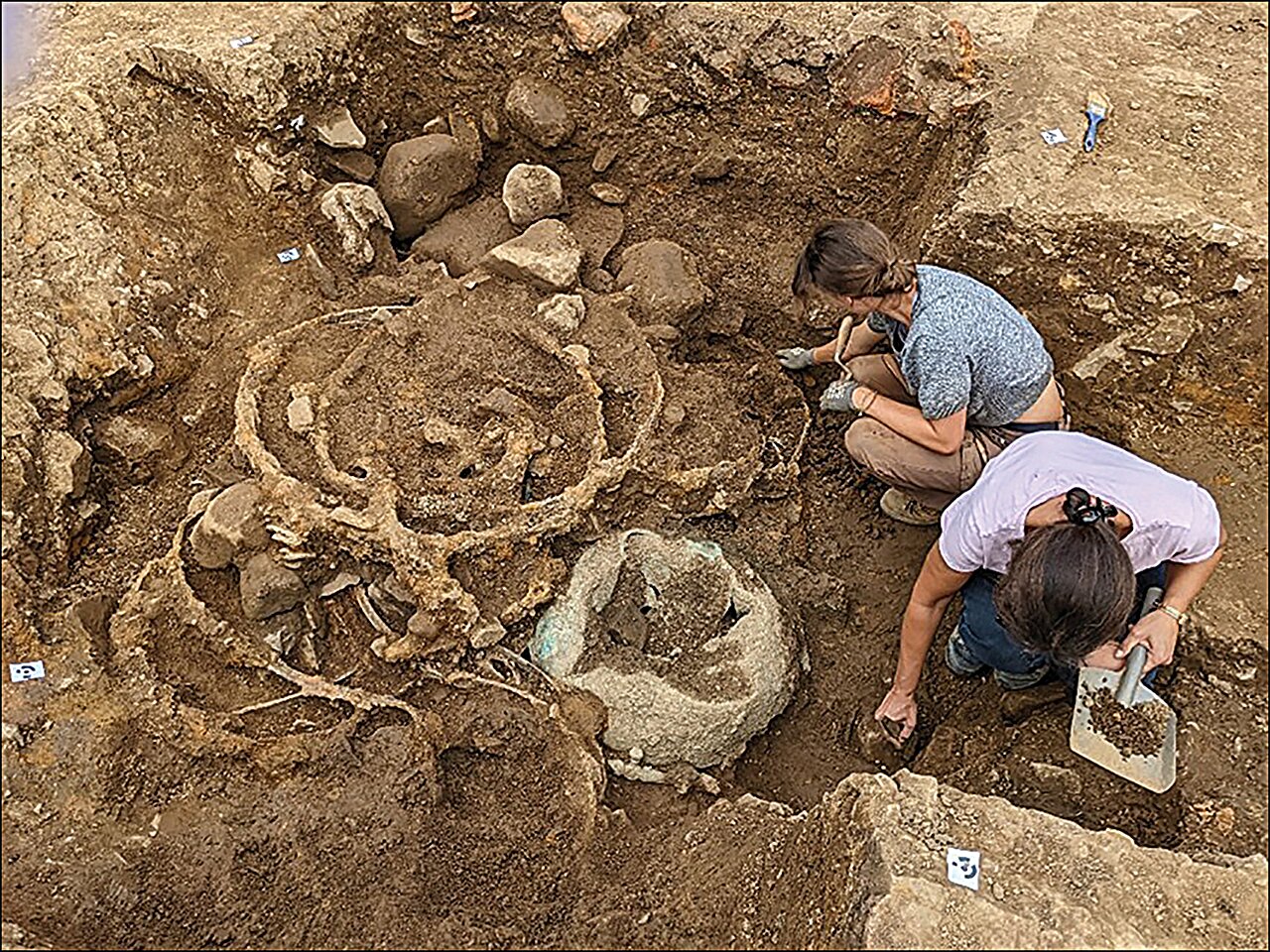
In 2021, metal detectorist Peter Heads found large quantities of metal objects at Melsonby in North Yorkshire and contacted Tom Moore of Durham University’s Department of Archaeology. The objects were later identified as belonging to the Late Iron Age.
The location is near Stanwick, described as a major Iron Age power center and a “royal site.” But the nature of the objects at Melsonby proved less expected.
The material came from two separate hoards containing more than 950 objects. Most were fragments of roughly 300 complete objects. Many had apparently been deliberately dismantled or damaged before being placed in ditches.
About two-thirds of the artifacts were made from copper alloy, with most of the remainder made from iron. Hoard 1 contained most of the material, while at least 88 objects came from Hoard 2.
Vehicle parts make up much of the hoards
About three-quarters of the objects in the two hoards appear to have belonged to vehicles. The researchers identify them as likely parts of four-wheeled wagons.
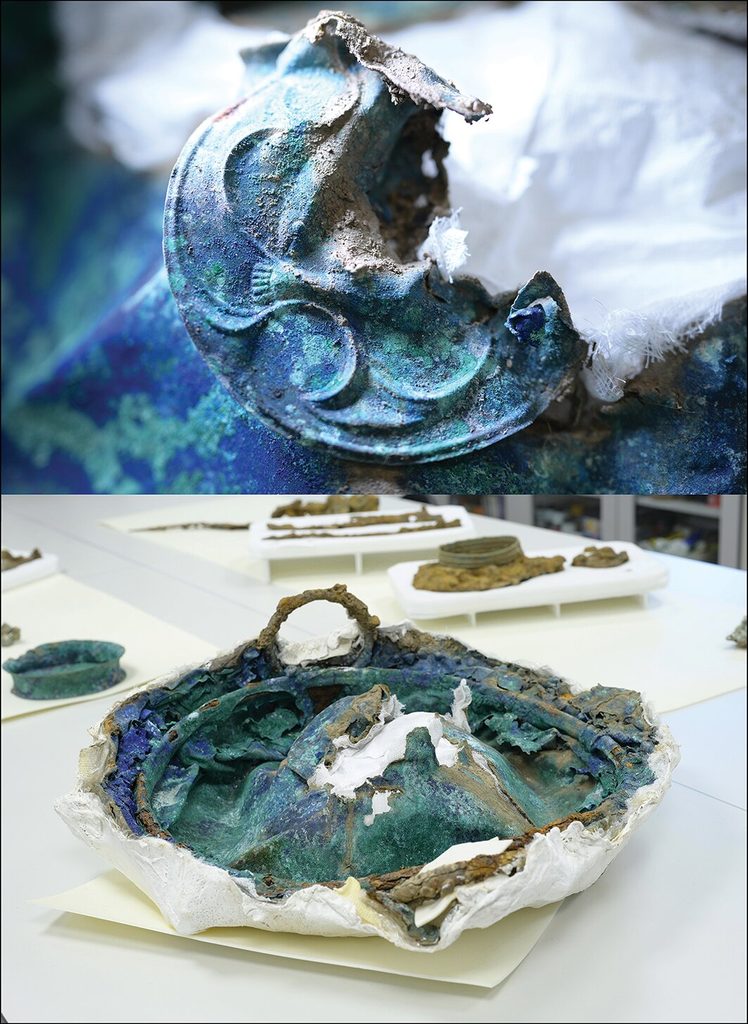
Among the finds were iron tires, brackets, linchpins, yoke fittings, kingpins, bolts, rein rings and tubular decorations. Other objects included vessels such as a cauldron, spears, an iron mirror, box components, a shield boss, edge bindings and melted copper-alloy pieces.
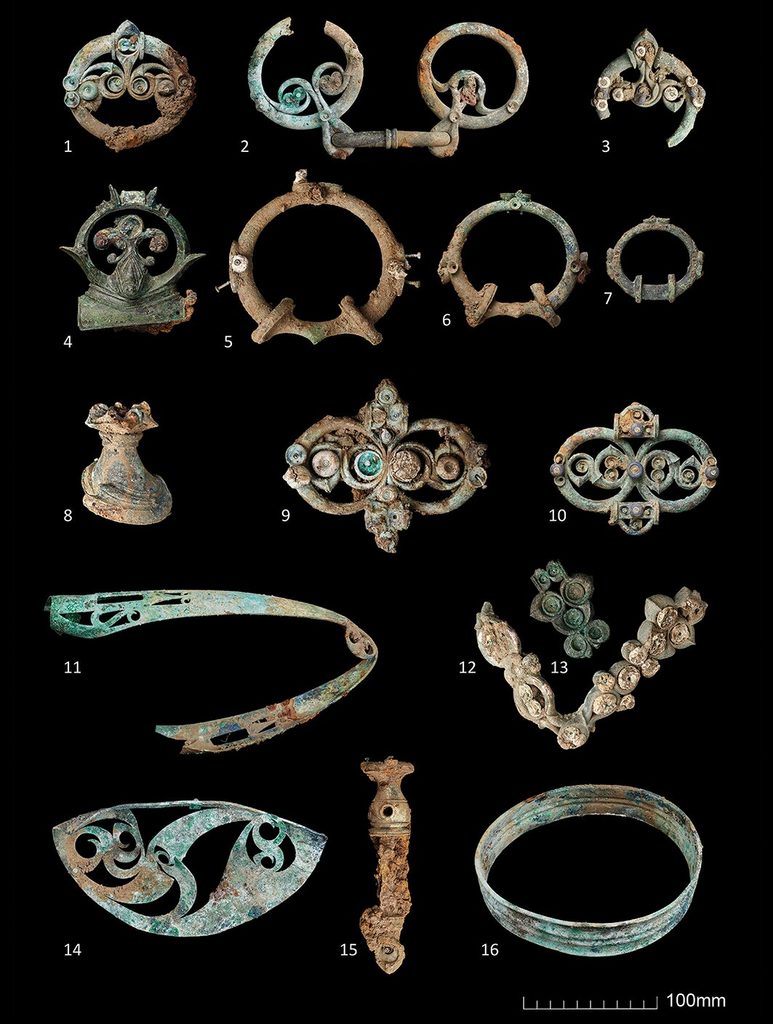
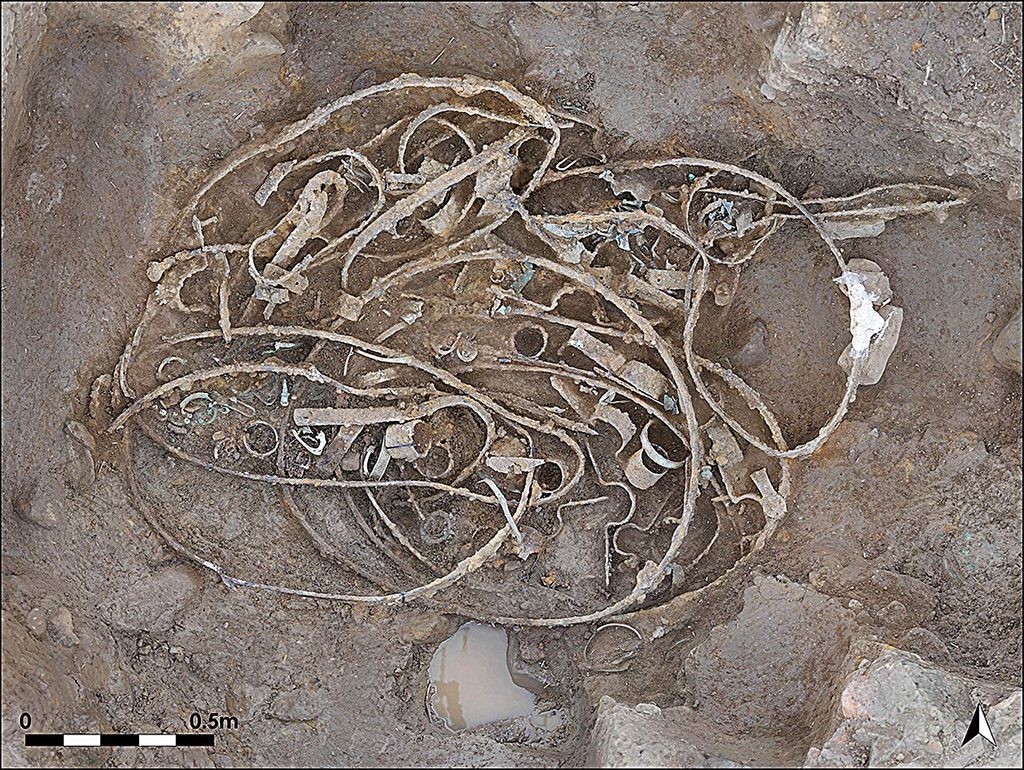
The researchers point particularly to the kingpins, which were important parts of wagon steering mechanisms, along with the large tires, brackets and substantial horse-harness fittings. Together, these features led them to identify substantial four-wheeled wagons rather than only lighter two-wheeled chariots or carts.
The material represents at least seven wagons if the vehicles were four-wheeled. The total could be higher if some of the parts came from two-wheeled vehicles. The researchers also cannot rule out the possibility that parts from different vehicles, rather than complete vehicles, were buried.
The objects date to a period of major change
Radiocarbon dating places the hoards between the late first century BC and the early first century AD. The dates are preliminary, but the researchers found them consistent across the objects examined.
Some of the artifacts also resemble Roman objects from around the same period. The dating overlaps with the Roman conquest of southern Britain, which began in AD 43.
That timing adds historical context to the collection, although it does not by itself establish why the objects were deposited.
Why were the objects buried?
The purpose of the hoards remains uncertain. The researchers argue that a significant event, or series of events, must have led to the destruction and deposition of a very large quantity of portable wealth.
One possibility is that the objects were collected for metalworking, later retrieval or recycling. Another Stanwick hoard nearby has been interpreted as a metalworker’s collection that may have been intended for future use.
Several details at Melsonby make that explanation less convincing, however. The hoards contain no crucibles or other metalworking equipment. Some objects show little wear, while coral and glass decorations on many of the harness fittings remain well preserved. The researchers note that such decorative elements would likely have been removed if the objects were being prepared for recycling.
The deliberate selection and structured placement of the material also argue against the hoards simply being scrap intended for reuse.
Burning may point to a ritual event
Another possibility is that the objects were connected with a funerary event. No human remains were detected, but some of the objects had been burned or melted.
The presence of feasting vessels and other decorative objects also fits with this interpretation. The researchers note that a funerary event does not necessarily require human remains to survive in the archaeological record.
They also leave open the possibility that material was exposed to funerary pyres without a burial taking place at Melsonby. Although there is no evidence of cremation in North Yorkshire, the researchers say a practice that was becoming more common in Late Iron Age southern Britain could have occurred in a way that left no archaeologically visible human remains.
The hoards therefore leave important questions unresolved. Their contents provide evidence for substantial vehicles, valuable metalwork and possible ritual activity, while their deliberate destruction and deposition remain difficult to explain with certainty.
The study was published in Antiquity.