Evidence from a damaged molar found in a Siberian cave suggests that a Neanderthal deliberately drilled into an infected tooth, indicating the individual could identify the source of dental pain and use a stone tool to remove damaged tissue.
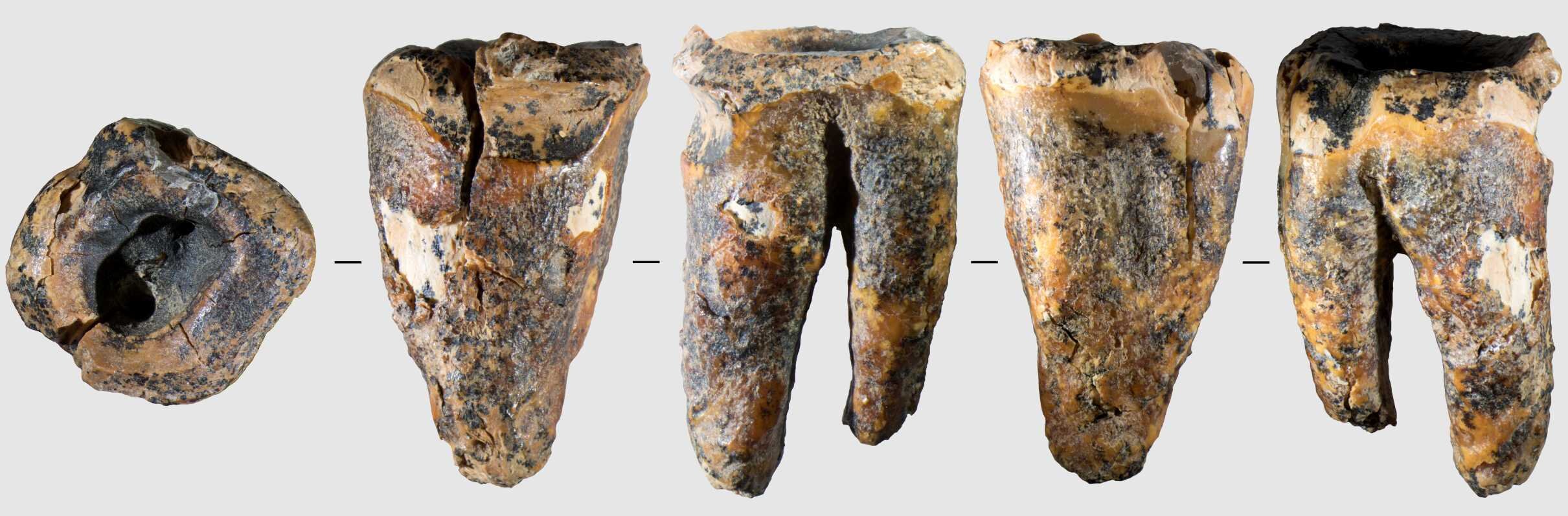
The tooth is a single molar from Chagyrskaya Cave in Russia, dating to about 59,000 years ago. A deep hole runs through the center of the tooth and into the pulp cavity, the innermost part where nerves and blood vessels are found.
The unusual shape of the hole led researchers to investigate whether it was caused by natural damage or deliberate action. The tooth also has grooves along its side that are consistent with toothpick use.
Microcomputed tomography revealed changes in the mineralization of the tooth’s dentin that were consistent with severe tooth decay, or caries. Researchers also found areas where mineral loss had preserved remnants of the decay.
The evidence led the researchers to propose that the cavity was associated with an attempt to treat the infection.
Stone tools could have made the hole
To test that idea, the researchers drilled three modern human teeth using a sharp stone point similar to tools found at Chagyrskaya Cave.
The experimental drilling produced a hole with the same shape and microscopic groove patterns seen in the Neanderthal tooth. According to the researchers, the comparison indicates that a thin, sharp stone tool could have been used to rapidly remove damaged dental tissue.
The researchers also found distinct scratches on the Neanderthal tooth. These scratches did not fit natural damage, supporting the interpretation that the cavity resulted from intentional manipulation.
The tooth provides another clue as well. Signs of wear indicate that the individual continued using the tooth while alive after the alteration was made. The researchers interpret this as evidence of antemortem treatment rather than damage that occurred after death.
Dental treatment was already known much later
Neanderthals are known to have used toothpicks to remove food from between their teeth, and there is evidence they may have used medicinal plants. But the extent of their medical knowledge has remained uncertain.
Deliberate manipulation of tooth decay has previously been documented in later human populations, including the Upper Paleolithic and Mesolithic periods. The Chagyrskaya tooth places comparable dental intervention much earlier.
The researchers describe it as the oldest evidence currently known of successful dental treatment and say it is the first demonstrated example of this behavior outside Homo sapiens. They date it to more than 40,000 years earlier than the next evidence of such behavior.
The procedure itself would have been painful. The researchers argue that removing the damaged part of the tooth would ultimately have reduced the pain caused by the infection.
What the tooth suggests about Neanderthal abilities
The researchers interpret the alteration as evidence that the Neanderthal was able to locate the source of pain, decide how to address it and carry out a procedure requiring precise hand movements. The individual also appears to have tolerated the painful intervention in an effort to relieve later discomfort.
Chagyrskaya Cave was occupied by Neanderthals who reached the region between 70,000 and 60,000 years ago and remained there until at least 40,000 to 45,000 years ago. The researchers say the group was closely related to Neanderthals associated with the Micoquian stone-tool industry in the Caucasus and Crimea.
The molar’s physical evidence, combined with the experimental drilling, provides the basis for interpreting the unusual cavity as an intentional attempt to treat severe tooth decay.
The study was published in PLOS One.