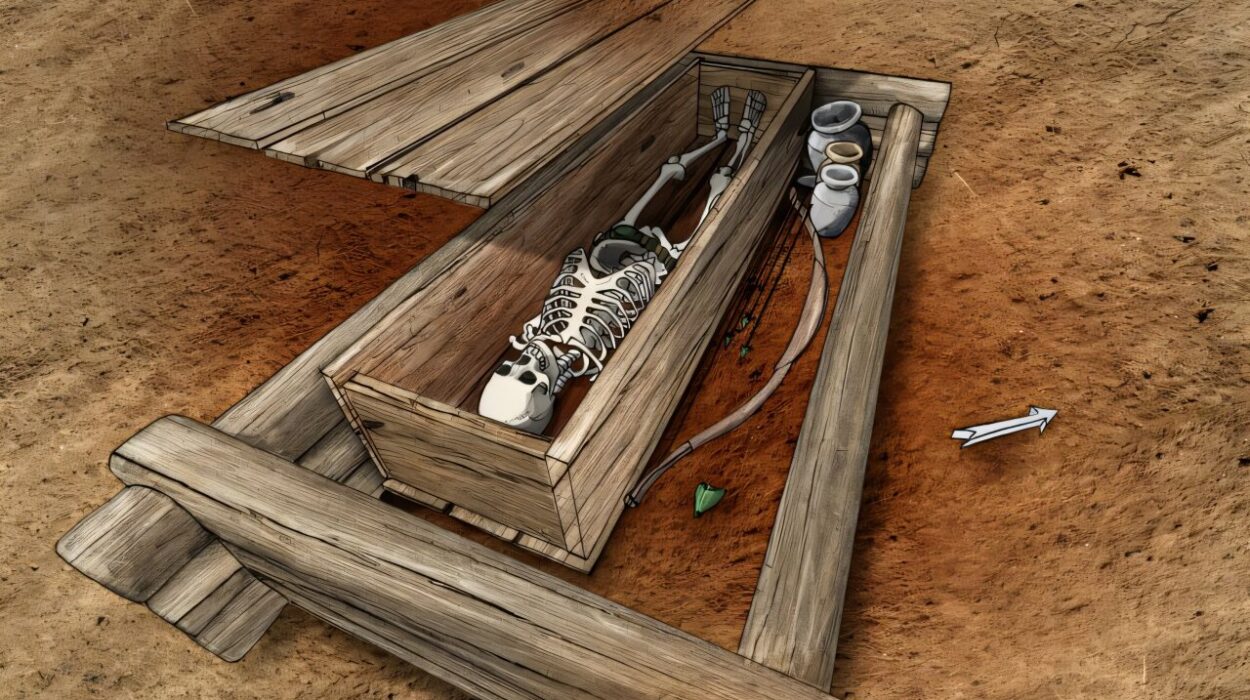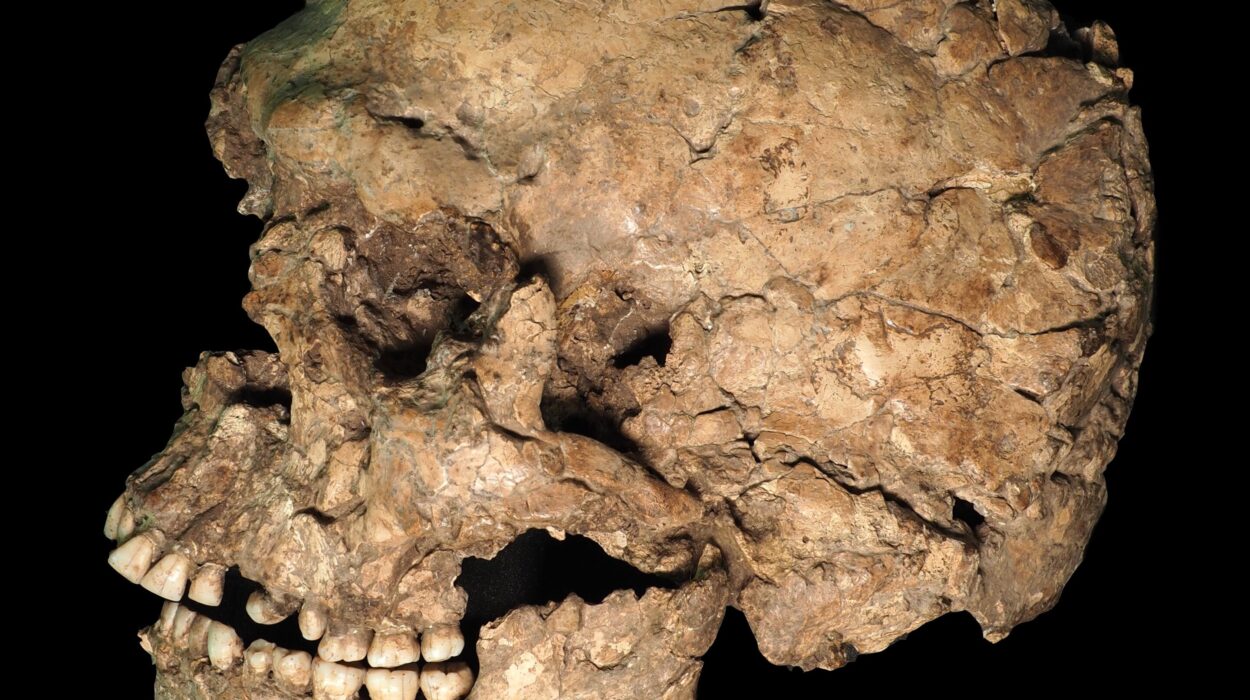
Long after the mourners disappeared and the graves were sealed, one quiet image endured across prehistoric Europe: adults and children buried side by side, sometimes locked in an embrace that seemed to preserve a final act of care. For more than a century, archaeologists could only wonder whether these touching scenes reflected real family bonds, ritual symbolism, or something far darker. Ancient DNA has now begun to untangle that mystery, revealing that beneath many of these carefully arranged burials lay a surprisingly diverse network of biological relationships that reshapes how we understand death, kinship, and remembrance during the third millennium BC.
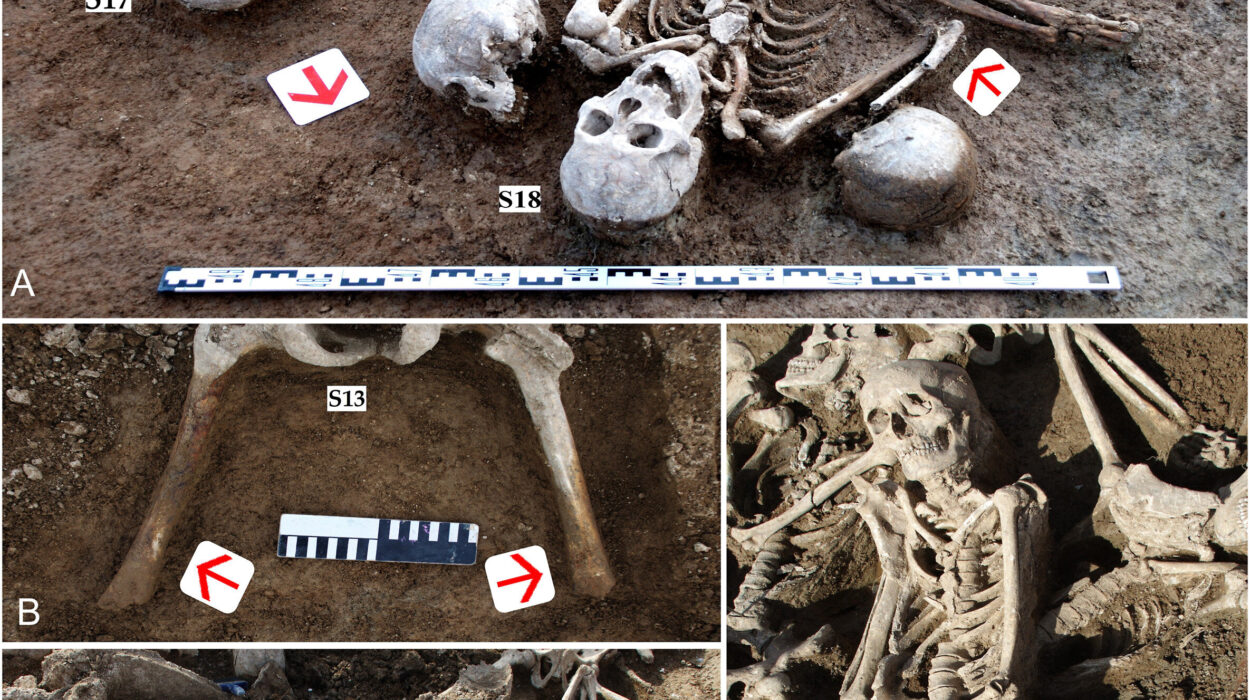
Some of the most striking prehistoric graves discovered across Europe contain an adult and a child placed together with remarkable care. In several cases, the child appears to rest in the adult’s arms or against the adult’s body, creating scenes that still evoke powerful emotions thousands of years later.
These burials have fascinated archaeologists since the nineteenth century. Early interpretations often assumed the adults were mothers and the children were their biological offspring. Others proposed much darker explanations, including human sacrifice, ritual killing, or children buried alive alongside deceased adults.
Yet almost all of these ideas rested on appearances rather than evidence.
Skeletons can sometimes reveal age and biological sex, but they cannot reliably identify family relationships. An adult woman buried beside a child may be the child’s mother—but she could equally be an aunt, stepmother, caregiver, unrelated community member, or someone connected through social rather than biological ties.
The new study set out to answer a deceptively simple question that archaeology alone could never fully resolve:
Who were these people to each other?
Ancient DNA turned centuries-old assumptions into testable questions
Instead of relying solely on burial position or skeletal examination, the researchers extracted ancient DNA from four individuals recovered from two famous shared burials.
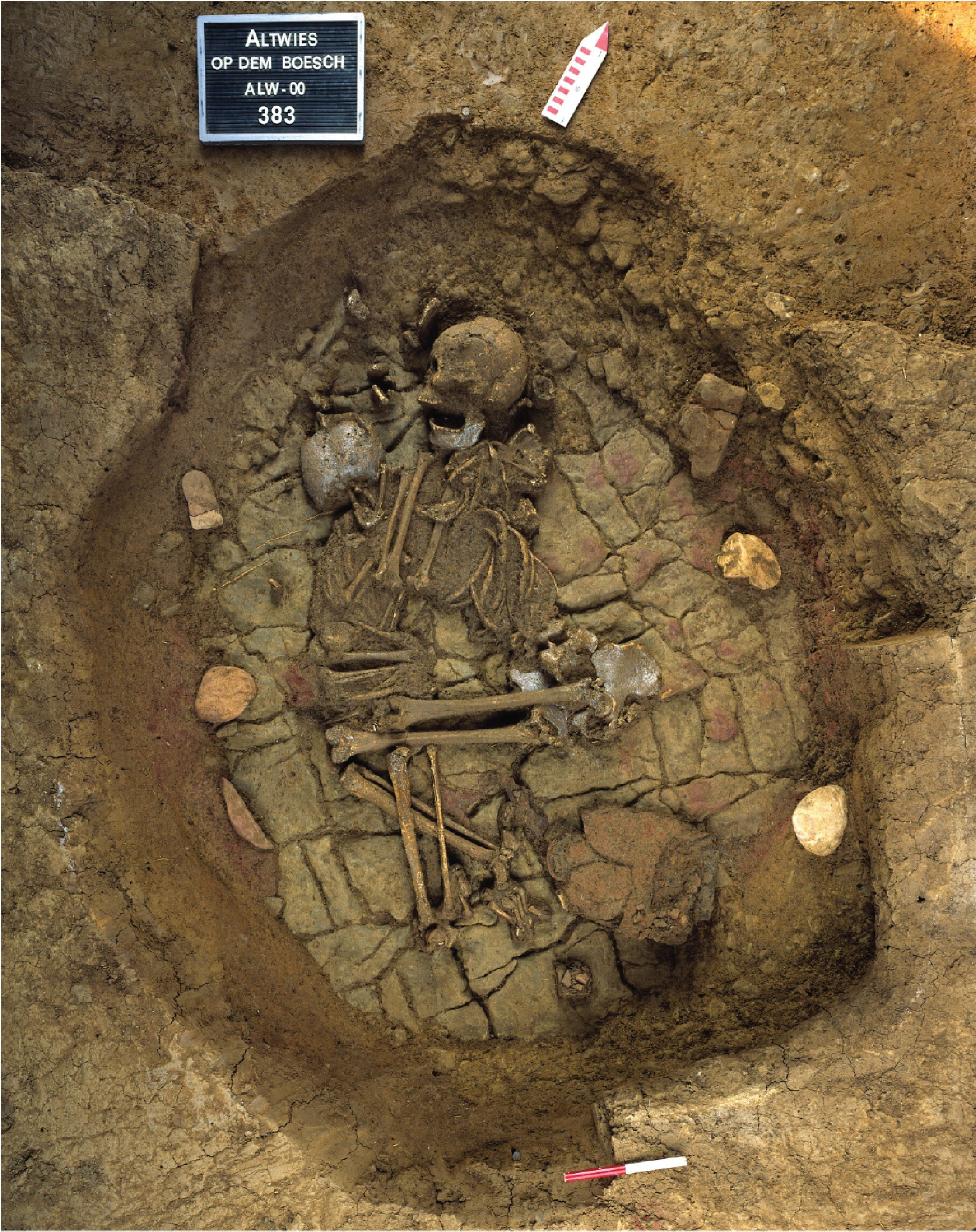
One burial came from Altwies in present-day Luxembourg and dates to the Bell Beaker period. The second came from Dunstable Downs in England and belongs to the early Bronze Age.
The team generated whole-genome data from all four individuals and combined the genetic evidence with archaeological observations, osteological analyses, and new radiocarbon dating. Rather than stopping there, they expanded the investigation by examining published archaeological and genetic evidence from 88 shared adult-child burials spanning the third and second millennia BC across Eurasia.
This broader survey allowed the researchers to place the two newly analyzed graves into a much wider prehistoric context.
The family relationships proved far more complicated than anyone expected
The Bell Beaker burial at Altwies had long been interpreted as a woman buried with her young son.
Ancient DNA confirmed only part of that story.
The adult was indeed female, and the child was male. Genetic analysis demonstrated that they were first-degree relatives, making them either mother and son or siblings.
To distinguish between those possibilities, the researchers combined the genetic evidence with age estimates.
The woman was approximately 30 to 35 years old, while the boy was between three and five years old, making a mother-son relationship the most plausible interpretation.
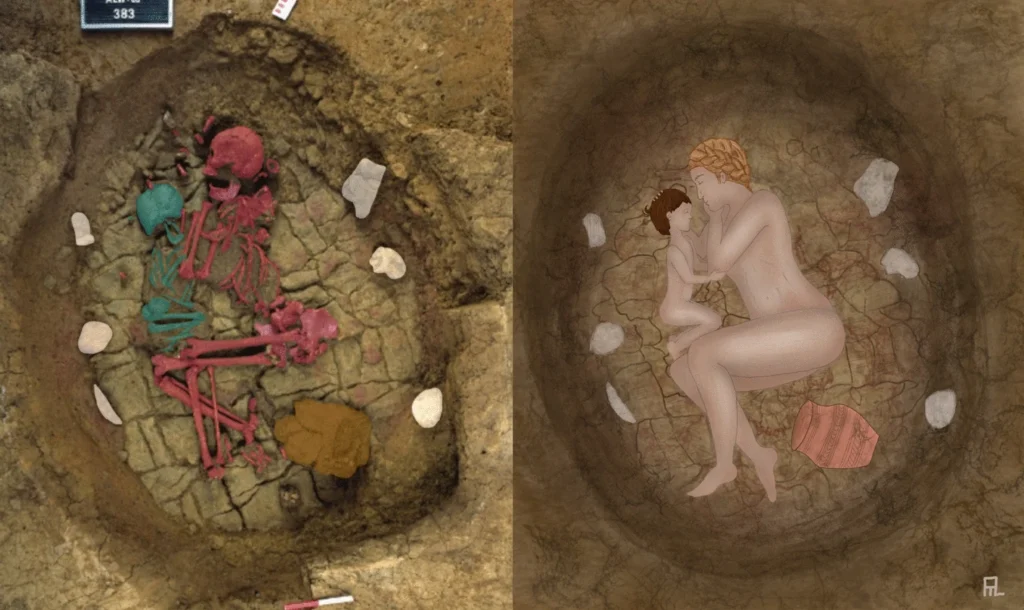
At first glance, this appeared to confirm the traditional archaeological interpretation.
The second burial, however, produced a much more surprising result.
The second burial overturned a long-held belief
At Dunstable Downs, archaeologists had traditionally interpreted the shared grave as another mother-and-child burial.
Ancient DNA told an entirely different story.
The adult was genetically confirmed as male, while the child was female.
Even more unexpectedly, they were second-degree relatives rather than parent and child.
Second-degree relationships include possibilities such as grandparent and grandchild, aunt or uncle with niece or nephew, or half-siblings.
By comparing genetic signals inherited from the X chromosome as well as the autosomal genome, the researchers concluded that the relationship most likely passed through the father’s side of the family.
Although the exact family connection cannot be determined from the available evidence, the genetic data rule out the long-standing assumption that the burial represented a biological mother and child.
One of Europe’s classic prehistoric “mother-and-child” graves therefore turned out to preserve a completely different family story.
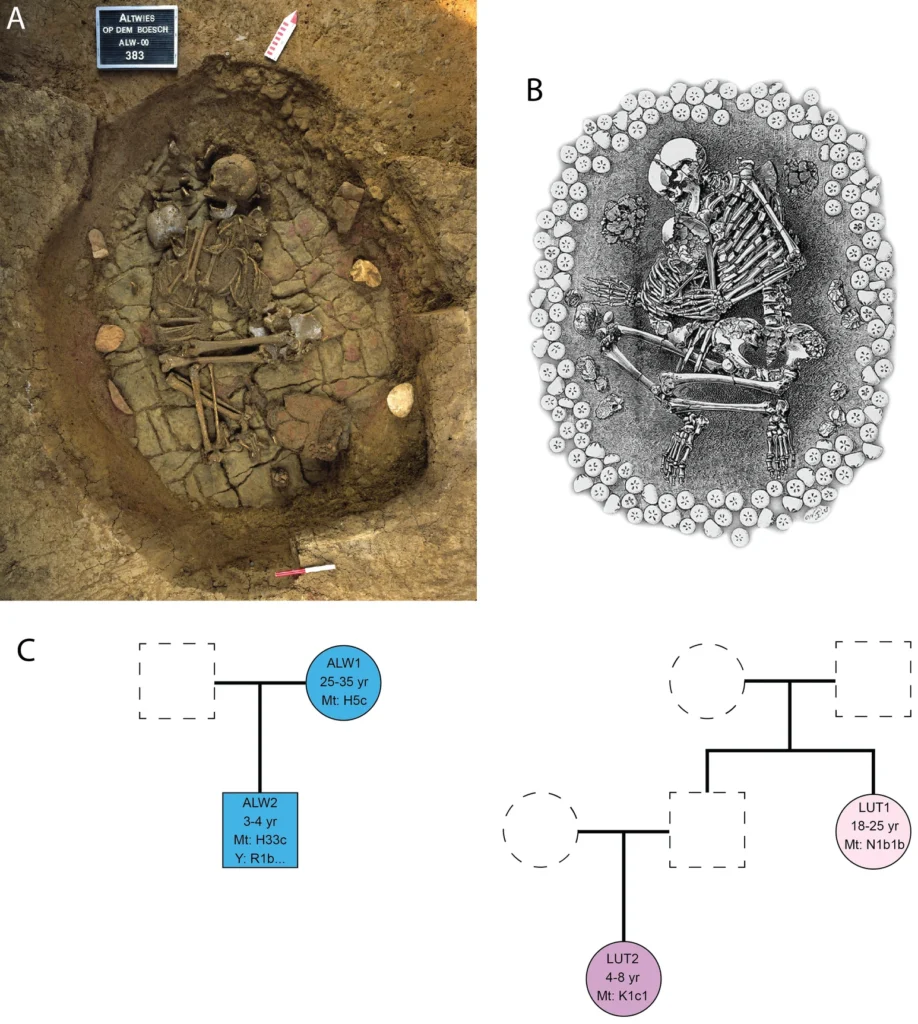
The careful positioning of the bodies carried meaning beyond biology
Although the two burials represented different biological relationships, they shared striking similarities in how the bodies had been arranged.
In both graves, the adult and child had been placed in close physical contact, creating compositions that appear intentional rather than accidental.
The researchers argue that these positions formed part of a broader ritual language used across large areas of prehistoric Europe.
Rather than simply disposing of the dead, communities appear to have carefully arranged bodies in ways that expressed meaningful social relationships.
Importantly, those relationships were not limited to biological parenthood.
The study suggests that prehistoric communities may have used similar burial poses to express bonds between biological parents and children, extended family members, caregivers, or other socially significant relationships.
Looking across Eurasia revealed an even broader pattern
The researchers expanded their investigation far beyond the two newly sequenced burials.
Their survey identified 88 shared adult-child burials dating to the third and second millennia BC across western Eurasia.
These burials occurred in a remarkable range of archaeological cultures, including the Bell Beaker, Corded Ware, Únětice, Yamnaya, Pitted Ware, Globular Amphora, Afanasievo, and several others.
Despite major cultural differences, adult-child shared burials appeared repeatedly across vast geographic distances.
This widespread distribution suggests that burying adults and children together was not an isolated local custom.
Instead, similar burial practices emerged across many prehistoric societies, although the specific meanings may not always have been identical.
DNA from other prehistoric graves showed that biology was only part of the story
The researchers compared their findings with previous ancient DNA studies from other archaeological sites.
Several shared burials did indeed contain biological parents and children.
Others contained siblings.
Still others included relatives connected through the father’s family rather than direct parenthood.
Some children were buried beside adults who were not their biological parents at all.
For example, previous studies of Corded Ware burials found children placed beside women who carried different maternal genetic lineages, indicating that those women could not have been their biological mothers.
Such findings make it difficult to reduce all shared burials to a single explanation.
Instead, the evidence points toward a wide variety of family and social relationships being expressed through burial.
Caregivers may have mattered as much as biological parents
One of the study’s most thought-provoking interpretations concerns caregiving.
If some children were buried beside adults who were not their biological parents, those adults may nevertheless have occupied important roles within their lives.
The researchers discuss several possibilities.
Some adults may have been paternal aunts or other close relatives.
Others could have been step-parents.
The exchange of foster children has also been proposed for prehistoric kinship systems in earlier research discussed by the authors.
The evidence does not allow researchers to determine which explanation applies in each case.
Nevertheless, the repeated appearance of close but non-parental relatives suggests that prehistoric communities may have recognized caregiving relationships that extended beyond the nuclear family.
The burials cannot simply be explained by childbirth
Because many shared graves contain women and children, childbirth has often been proposed as the obvious explanation.
The researchers argue that this idea accounts for only a small minority of cases.
Among the many examples surveyed, only a few involve newborn infants where death during or shortly after birth remains plausible.
Most children were considerably older.
The Altwies boy, for example, was around three to five years old.
The child from Dunstable Downs was approximately six to eight years old.
These ages alone rule out fatal childbirth as the explanation for those burials.
Disease could explain some deaths, but not every burial
The study also considers whether epidemics might account for multiple family members dying close together.
Theoretically, infectious diseases could produce simultaneous deaths among relatives.
The authors note that Yersinia pestis, the bacterium responsible for plague, circulated across parts of Eurasia during the Bronze Age.
However, no direct evidence currently links plague or other epidemics to the third-millennium shared burials examined in this study.
Without such evidence, disease remains only one possible explanation rather than a demonstrated cause.
Earlier ideas about violence remain difficult to prove
Some prehistoric cemeteries preserve clear evidence of violent deaths.
The paper discusses previous discoveries of fatal arrow wounds and blunt-force trauma at several Bronze Age sites.
Historical interpretations also proposed ritual sacrifice or honor killings to explain certain shared burials.
The researchers urge caution.
Although ritual killing cannot be completely excluded, neither should it be assumed.
Likewise, interpreting every shared burial as the aftermath of warfare or raids fails to explain why these graves display such carefully repeated and standardized burial practices.
Many graves contain rich grave goods and evidence of deliberate preparation rather than hurried emergency burials.
At Altwies, archaeological evidence indicates that the burial pit was even cleansed by fire before the bodies and grave goods were placed inside, suggesting a carefully planned funerary ceremony.
Radiocarbon dating helped resolve another puzzle
The researchers also produced new radiocarbon dates for three of the analyzed individuals.
One particularly important outcome involved the Dunstable Downs burial.
Earlier dates suggested that the adult and child may have lived centuries apart despite their close biological relationship.
The new investigation discovered that old conservation materials—including gelatin and shellac used during earlier archaeological work—had probably contaminated the original samples.
After carefully removing the contaminated bone surfaces and repeating the dating, the new results brought the ages of the two individuals into much closer agreement.
Even so, the authors advise caution because one sample preserved very little collagen, limiting confidence in the precise age estimate.
The study reveals a surprisingly flexible picture of prehistoric families
One of the clearest messages emerging from the research is that shared adult-child burials cannot be explained by a single universal rule.
Some graves contained mothers and sons.
Others brought together extended relatives connected through the father’s family.
Elsewhere, children appear beside adults who were not their biological parents.
These different combinations suggest that prehistoric communities recognized multiple kinds of meaningful relationships when deciding how to bury their dead.
Biological kinship clearly mattered in many cases.
At the same time, the evidence indicates that social roles, caregiving, age, and perhaps other factors also influenced burial decisions.
The embrace may have carried a message that words can no longer preserve
Although genetics has answered some of archaeology’s oldest questions, it cannot explain every aspect of these ancient ceremonies.
DNA identifies biological relationships but cannot reveal emotions, beliefs, or the symbolic meanings that prehistoric communities attached to death.
The repeated image of an adult holding a child may therefore have represented something that transcended biology alone.
The researchers argue that the carefully arranged body positions likely formed part of a powerful ritual language shared across much of prehistoric Europe. Whether the adult was a biological parent, an extended relative, or another trusted caregiver, placing the bodies together in an intimate embrace appears to have expressed a relationship considered profoundly important by the living.
More than four thousand years later, ancient DNA has finally begun to identify who some of these people were to one another. Yet the emotional significance that inspired communities to preserve those relationships in death remains one of the most compelling mysteries still resting within Europe’s prehistoric graves.
Publication details
Nicoletta Zedda et al, Biological and substitute parents in Beaker period adult–child graves, Scientific Reports (2023). DOI: 10.1038/s41598-023-45612-3