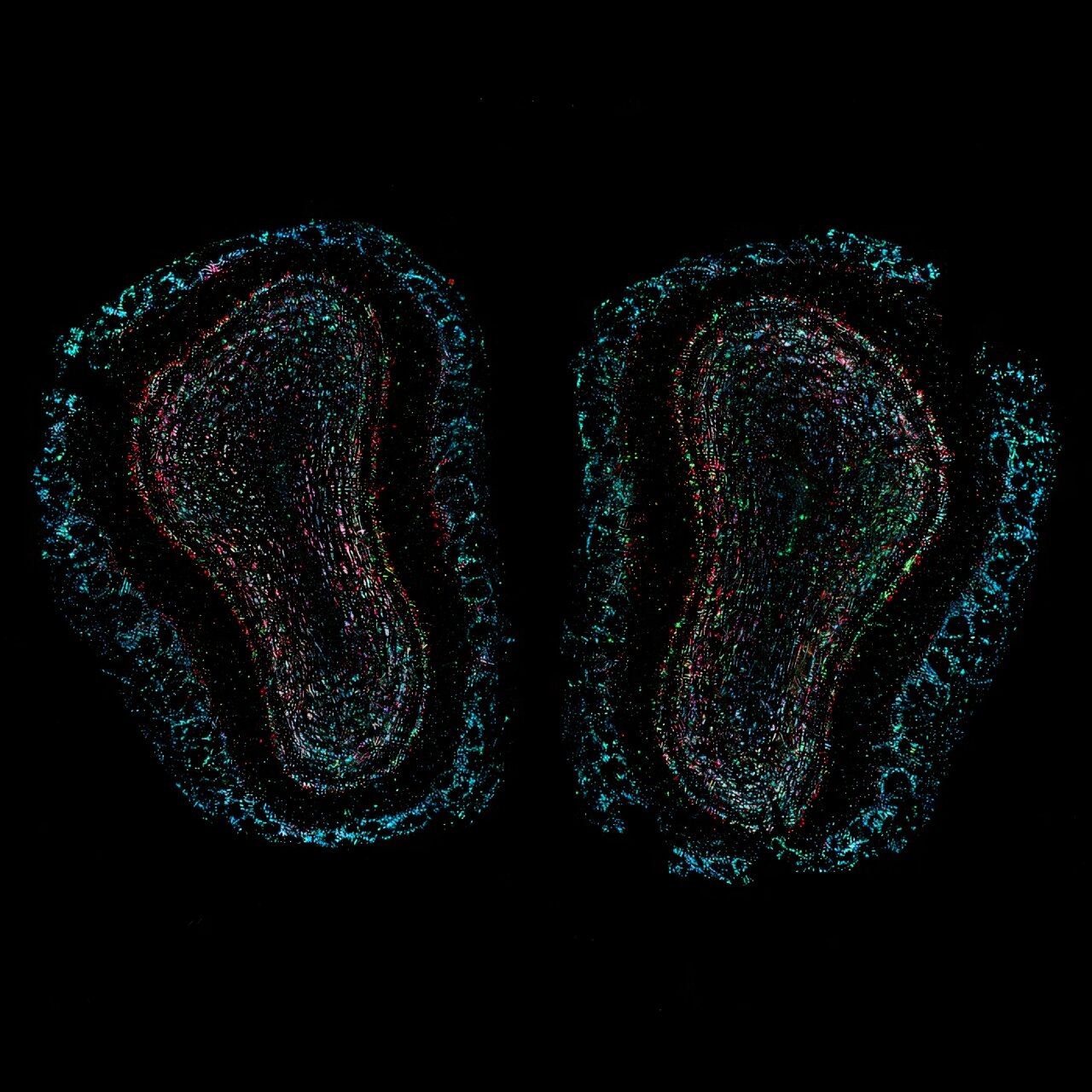
A pleasant smell encountered again and again during childhood can leave behind a memory that lasts far beyond the original experience, but the brain does not preserve that memory in a fixed form. Instead, this study found that the neural circuits supporting it change with age, beginning in the olfactory bulb during early adulthood before shifting toward broader emotion-related networks later in life if the scent continues to return.
For many people, a familiar smell can instantly transport them back to childhood with an intensity that photographs or sounds rarely achieve. Those memories often feel unusually emotional, deeply personal, and vividly alive. Although this phenomenon has long fascinated scientists, the biological reason why childhood odors seem to hold such lasting power has remained largely unknown.
To investigate this question, researchers combined a large human survey with experiments in mice designed to recreate one specific type of childhood memory: repeated positive experiences associated with a pleasant smell. Rather than asking how fear or danger becomes permanently stored in the brain—a far more common approach in laboratory research—they focused on positive memories formed during early life.
The work traced how those memories were established, how they were recalled months later, and how the brain reorganized itself as the memories aged.
Childhood smell memories appear to follow a remarkably consistent pattern
Before developing the mouse experiments, the researchers first wanted to understand what childhood smell memories actually look like in people.
They surveyed 647 adults, asking them to recall the earliest smell-related memory they could remember from childhood and describe the circumstances surrounding it.
Several patterns emerged.
Participants consistently rated these memories as emotionally positive. Feelings such as happiness and pleasantness received the strongest ratings, while negative emotions—including fear, sadness, disgust, and anger—were much lower.
The survey also showed that these memories usually did not originate from a single extraordinary event. Instead, 73.1% of participants reported that the experience had happened more than five times during childhood. Only 13.4% described a unique event, and another 13.4% remembered something repeated only two to five times.
The smells themselves also tended to be pleasant rather than unpleasant. When participants rated the odor associated with their earliest childhood memory on a nine-point scale, the average score reached 7.1.
The researchers compared these reported odors with an independent database containing pleasantness ratings for odor descriptions. The odors remembered from childhood were associated with significantly higher pleasantness ratings than descriptors that participants did not report, supporting the idea that naturally pleasant smells are especially likely to become part of long-lasting autobiographical memories.
Another striking observation emerged later in the survey. Eighty-two percent of participants said they continued encountering their childhood smell throughout life, although the frequency varied considerably from person to person.
That detail became central to the next phase of the study.
Building a childhood memory in mice
The researchers designed an animal model that reflected the patterns seen in people.
Young mice, corresponding to a childhood stage of development, repeatedly experienced an attractive odor while spending time inside a large enriched environment filled with objects that encouraged exploration, play, and social interaction. Another group encountered the same odors without the enriched environment.
The mice visited these environments five times between postnatal days 23 and 33.
To confirm that the enriched setting actually produced a more positive emotional state, the team recorded ultrasonic vocalizations, which are commonly used to assess emotional responses in rodents.
Mice in the playful environment produced more ultrasonic calls, and those calls also had higher frequencies than mice housed under standard conditions. Call duration did not differ, but the increased number and frequency indicated a more positive affective state during the childhood experiences.
Months later, the childhood odor still mattered
When the animals reached young adulthood, the researchers tested whether they reacted differently to the childhood odor.
The mice that had experienced the odor during positive childhood sessions showed greater preference for that specific scent than control animals.
This preference appeared in two different behavioral tests.
In one experiment, mice tended to spend more time investigating the childhood odor. In another, they remained interested across repeated presentations instead of gradually losing interest through normal habituation.
Importantly, this effect was specific.
When both groups encountered an unfamiliar attractive odor that had not been associated with childhood experiences, the differences disappeared. Likewise, exposure to the enriched environment alone, without an accompanying odor during childhood, did not produce the same preference later in life.
Together, these findings indicated that the lasting behavioral effect depended on linking a pleasant odor with repeated positive experiences during childhood.
The memory first depended on neurons born immediately after birth
The researchers then asked where this memory was stored.
Their attention focused on the olfactory bulb, the brain structure that first processes incoming smell information.
Within this region are granule cells, inhibitory neurons that help shape odor processing. Many of these neurons are produced shortly after birth, with particularly intense production around the first postnatal day.
The researchers labeled neurons born at that time and later examined which ones became active when adult mice smelled their childhood odor.
The results pointed to a very specific population.
Neurons born on the first postnatal day were significantly more likely to become active in mice that had formed childhood odor memories than in control animals. Overall activity across the olfactory bulb did not increase, nor did the number of these early-born neurons differ between groups, indicating that the memory was associated with selective recruitment rather than widespread activation or increased cell survival.
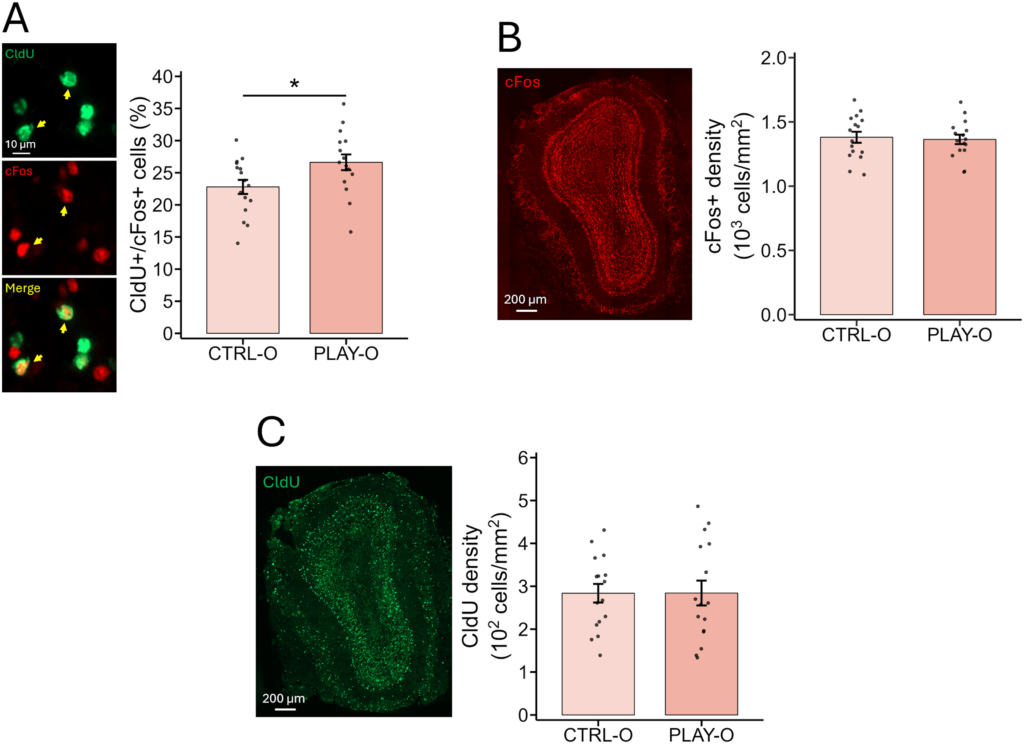
To determine whether these neurons were actually necessary for recalling the memory, the researchers performed an optogenetic experiment.
Using light-sensitive proteins introduced shortly after birth, they temporarily inhibited these early-born neurons while adult mice performed the behavioral tests.
When those neurons were silenced, the animals’ preference for the childhood odor declined. They investigated the odor less and habituated more quickly, eliminating much of the behavioral advantage previously seen.
The same manipulation had no detectable effect when the mice encountered unfamiliar attractive odors.
According to the researchers, these experiments indicate that neurons generated immediately after birth play an important role in encoding and recalling positive childhood odor memories during young adulthood.
The memory reached far beyond the smell centers
The team next examined whether recalling the childhood odor altered communication across larger brain networks.
Instead of looking only at individual brain regions, they measured activity across 27 areas involved in smell processing, emotion, reward, memory, and broader cortical function. They then analyzed how activity in different regions varied together, using these correlations as an indicator of functional connectivity.
Average activity levels within individual regions did not differ between experimental groups.
The network organization, however, did.
Young adult mice recalling their childhood odor showed stronger functional connectivity within memory-related regions and greater interaction between memory and reward systems than control animals.
The analyses also identified a connected subnetwork linking the main olfactory bulb with structures including the dorsal hippocampus, orbitofrontal cortex, caudate putamen, and medial prefrontal cortex.
The researchers interpret these network changes as reflecting the unusually vivid and emotionally meaningful nature of childhood odor memories.
Without reminders, the memory gradually faded
The investigators also wanted to know what happened as the animals aged.
A separate group of mice was left without further exposure to the childhood odor until six months of age.
By then, the earlier behavioral preference had disappeared.
The mice no longer spent more time investigating the childhood odor, nor did they show the altered habituation pattern seen in younger adults.
At the same time, the selective activation of neurons born shortly after birth also disappeared.
These findings suggested that the childhood odor memory naturally weakened over time and that the early-born olfactory neurons no longer played the prominent role they had during young adulthood.
Repeated encounters kept the memory alive—but changed the brain supporting it
The human survey had already hinted that childhood odors are often encountered repeatedly throughout life.
To test whether these later reminders mattered, the researchers periodically reintroduced the childhood odor to another group of mice every three weeks between two and six months of age.
This changed the outcome.
At six months, mice that received these repeated odor exposures once again showed stronger preference for their childhood odor than control animals.
Surprisingly, however, the early-born olfactory neurons were no longer recruited more strongly despite the preserved memory.
The memory survived, but the underlying neural machinery appeared to have changed.
Aging reorganized the memory network
The large-scale connectivity analyses also revealed a different pattern in older animals.
Rather than emphasizing memory and reward systems as seen in young adults, the preserved childhood memory became associated with stronger connectivity inside the olfactory-limbic system and between that system and cortical regions.
The dorsal hippocampus, which had participated in the earlier network, was no longer functionally connected in the same way.
A distinct network involving the accessory olfactory bulb, main olfactory bulb, medial prefrontal cortex, and orbitofrontal cortex became characteristic of the older animals that retained the memory through repeated odor exposure.
The researchers interpret these findings as evidence that the neural organization supporting childhood odor memories changes substantially with age.
What the results may mean—and what remains uncertain
The study proposes that neurons generated immediately after birth provide an important biological foundation for positive childhood odor memories during early adulthood.
Over time, however, repeated encounters with the same smell may allow those memories to persist while relying on different neural systems.
The authors discuss several possible explanations for this transition.
One possibility is that repeated re-exposure gradually shifts the memory from depending on early olfactory circuits toward broader brain systems through processes resembling systems consolidation. Another is that later-born neurons may gradually assume some of the functions originally carried by the earliest neurons. The study did not directly test these possibilities.
The researchers also speculate that repeated childhood experiences may eventually become represented in a more generalized form rather than remaining detailed episodic memories, although they emphasize that further work is needed to determine exactly why the hippocampus appears to disengage over time and whether this change reflects aging alone or the repeated nature of the original experiences.
Rather than presenting childhood smell memories as static traces preserved unchanged for decades, the study paints a more dynamic picture. A pleasant odor repeatedly encountered early in life may first become anchored by neurons born almost immediately after birth, then gradually recruit different brain networks as the years pass—especially if that familiar scent continues to reappear, quietly reconnecting the present with childhood long after the original moments have ended.
Publication details
Jules Dejou et al, Positive early-life olfactory memory is rooted in the olfactory bulb and triggers large-scale changes beyond the olfactory system, PLOS Biology (2026). DOI: 10.1371/journal.pbio.3003845