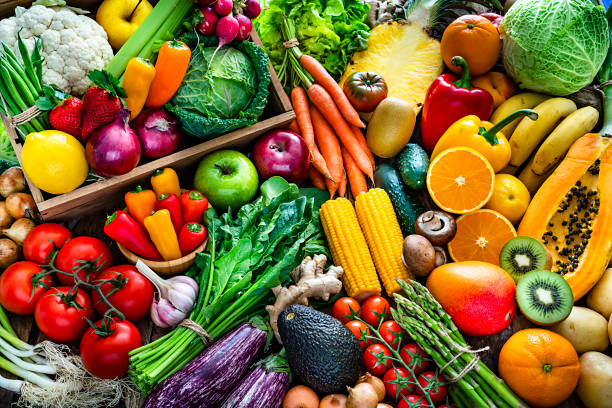
Walk through almost any grocery store today and protein is everywhere, from fortified snacks to drinks promising strength and healthy aging. At the same time, many older adults are encouraged to increase their protein intake to protect muscle and prevent frailty. Yet a growing body of research reviewed by scientists paints a far more complicated picture, arguing that consuming less protein—or restricting certain individual amino acids rather than all protein—may activate biological programs linked to healthier aging, better metabolism, and, in laboratory animals, longer life.
For decades, calorie restriction has stood as one of the most reliable ways to extend lifespan in laboratory organisms. Since the first reports in the 1930s that eating fewer calories prolonged the lives of rats, researchers have repeatedly observed similar benefits across species ranging from yeast to non-human primates, while shorter human studies have documented improvements in health.
The challenge has always been practicality. Sustaining long-term calorie restriction is difficult for many people, prompting scientists to ask whether similar biological benefits might be achieved without reducing total calories.
That question has increasingly shifted attention toward dietary protein.
Rather than focusing on how much food people eat overall, researchers have been investigating whether lowering protein intake—or even reducing only particular amino acids that make up proteins—might trigger many of the same protective biological responses associated with calorie restriction.
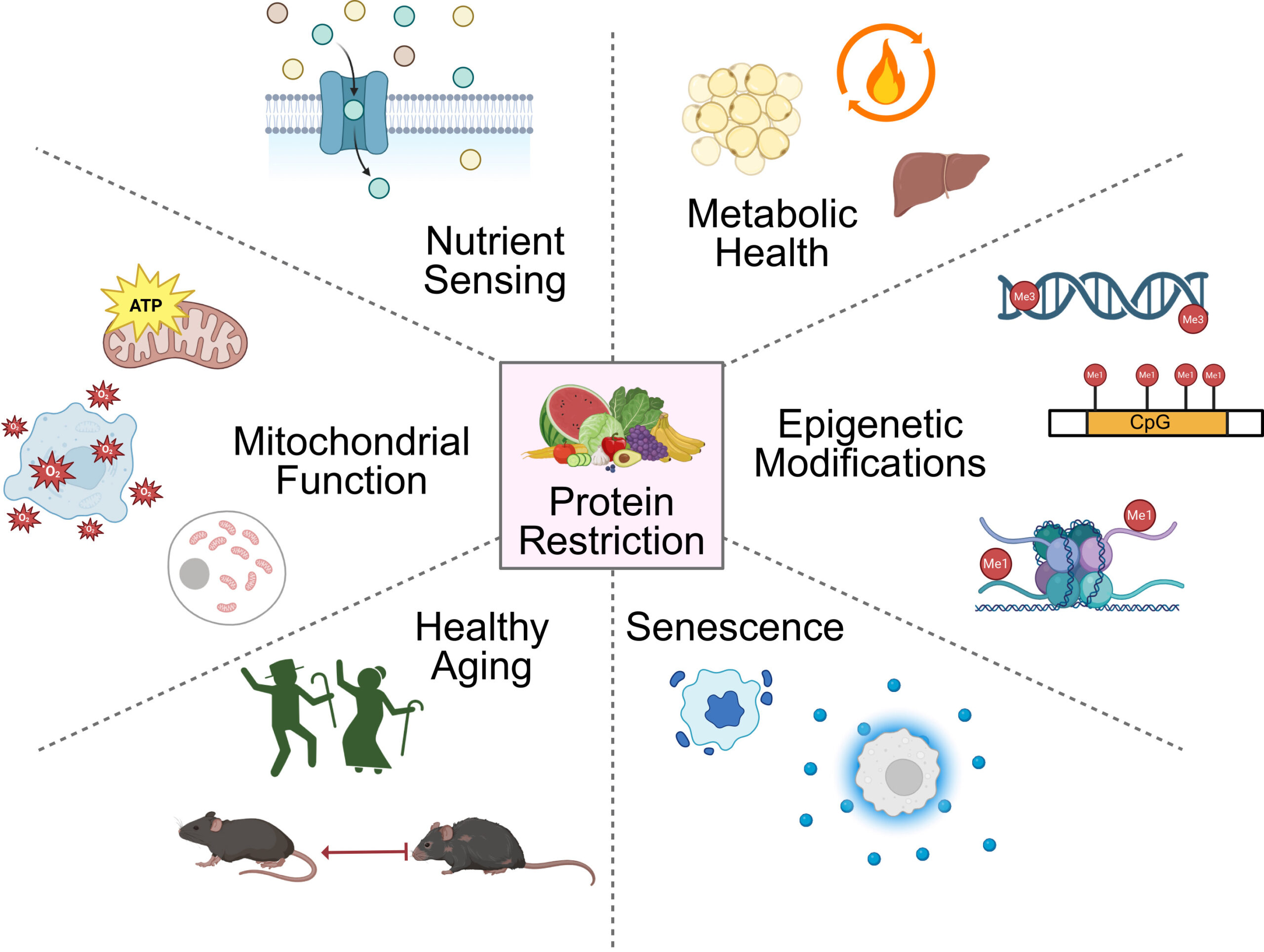
In their review, the authors examine decades of experimental and clinical research to propose what they describe as the “hallmarks” of protein restriction, outlining the major biological processes through which this dietary approach appears to influence aging.
Why protein has become such a controversial nutrient
The debate exists because different lines of evidence appear to point in different directions.
Current dietary recommendations generally encourage higher protein intake with advancing age. While the Recommended Dietary Allowance remains 0.8 grams of protein per kilogram of body weight regardless of age or sex, recommendations for many adults over 65 commonly range from about 1.0 to 1.2 grams per kilogram, and the latest Dietary Guidelines for Americans suggest 1.2 to 1.6 grams per kilogram. These recommendations are largely intended to reduce sarcopenia, the age-related loss of muscle mass, especially when combined with resistance exercise.
Short-term high-protein diets have also been reported to promote weight loss, largely because they increase feelings of fullness and reduce food intake.
At the same time, however, accumulating evidence reviewed by the authors raises questions about whether consistently high protein intake is universally beneficial.
Large observational studies have associated higher protein consumption with increased risks of diabetes, cancer, cardiovascular death, and overall mortality. Analyses of data from the U.S. National Health and Nutrition Examination Survey linked greater protein intake with higher mortality and increased incidence of age-related diseases, including diabetes.
A more recent study involving older British twins even reported a positive association between higher dietary protein intake and sarcopenia, challenging the assumption that eating more protein necessarily protects aging muscles.
Clinical trials examining protein restriction have also produced intriguing results.
In one 43-day trial, participants eating a low-protein diet lost body weight and body fat while lowering fasting blood glucose despite consuming more calories. Another five-week study in lean men found improved insulin sensitivity alongside increased energy expenditure. Short-term protein restriction in people with metabolic syndrome reduced body fat, improved insulin sensitivity, lowered circulating glucose and lipids, and reduced overall inflammation.
These findings have become increasingly relevant as consumer behavior changes. According to data discussed in the review, 61% of American consumers reported increasing their protein intake during 2024, up from 48% in 2019, while food manufacturers have continued expanding protein-enriched products.
The researchers argue that protein restriction follows several recurring biological patterns
Drawing together evidence from many experimental studies, the review identifies six interconnected biological hallmarks that repeatedly appear during protein restriction.
The first is improved metabolic health.
Across numerous rodent studies, animals consuming lower-protein diets generally eat more food rather than less, yet simultaneously lose body fat, maintain lower body weight, expend more energy, and improve blood sugar regulation. These effects have been observed even when protein restriction begins relatively late in life.
The review highlights fibroblast growth factor 21 (FGF21) as one of the central drivers behind these changes.
Protein restriction consistently increases production of this hormone in mice, rats, and humans. Rather than simply slowing metabolism, elevated FGF21 increases energy expenditure, promotes heat production in fat tissue, improves insulin sensitivity, lowers circulating triglycerides, and influences how the body stores and uses fat.
Experiments also indicate that FGF21 is essential for many of protein restriction’s benefits. Mice genetically unable to produce FGF21 fail to gain the lifespan extension normally associated with protein restriction, while animals engineered to produce extra FGF21 live substantially longer than normal mice.
Cells also begin responding differently to nutrients
The second hallmark centers on nutrient sensing.
Cells constantly monitor whether nutrients are abundant or scarce. Protein restriction appears to activate one stress-response pathway known as GCN2 while suppressing another called mTORC1.
These molecular systems help determine whether cells prioritize growth or maintenance.
Activation of GCN2 occurs when amino acids become limited. This response suppresses much of the cell’s protein production while activating genes involved in stress resistance and cellular recycling.
Meanwhile, inhibition of mTORC1 reduces signals that normally encourage growth and protein synthesis.
Together, these changes promote autophagy—a process often described as the cell’s internal recycling system—which removes damaged proteins and worn-out cellular components. Because impaired autophagy has been linked to numerous age-related diseases, including neurodegenerative disorders, this shift may represent one mechanism through which protein restriction supports healthier aging.
Less protein may also influence cellular aging itself
Another hallmark identified by the authors involves cellular senescence.
Senescent cells permanently stop dividing after experiencing damage or stress but remain metabolically active. Over time they release inflammatory molecules collectively known as the senescence-associated secretory phenotype, or SASP, which can contribute to tissue dysfunction during aging.
The review summarizes evidence showing that high-protein diets increase markers of senescence in the liver, adipose tissue, and kidneys.
Protein restriction appears to reverse many of these effects.
In several animal studies, lowering dietary protein reduced senescence and inflammation in fat tissue through FGF21-dependent mechanisms while also decreasing senescent cells in the liver and kidneys.
Laboratory experiments further suggest that FGF21 itself can suppress senescence-related changes in cultured cells.
Mitochondria may benefit, although evidence remains incomplete
Mitochondria—the structures responsible for generating much of a cell’s energy—typically become less efficient with age.
Some studies reviewed by the authors indicate that protein restriction reduces production of damaging reactive oxygen species while improving mitochondrial activity.
High-protein diets have been associated with reduced activity of the mitochondrial electron transport chain in skeletal muscle and decreased exercise endurance in mice.
However, the evidence is not entirely consistent.
Some studies reported improved mitochondrial function following protein supplementation, while others found little effect after short-term protein restriction. One mouse study detected no meaningful changes in skeletal muscle mitochondria.
The authors conclude that understanding how dietary protein influences mitochondrial function remains an important unanswered question.
Protein intake may even reshape the epigenome
The review also highlights growing evidence that dietary protein influences epigenetics—the chemical modifications that regulate gene activity without changing DNA itself.
Protein restriction during pregnancy has been shown to alter histone methylation and gene expression in offspring in several animal studies.
Particularly intriguing are findings involving methionine, an essential amino acid that supplies methyl groups used in many epigenetic modifications.
Reducing methionine availability changes histone methylation patterns, although cells appear capable of adapting by preserving important chromosomal regions despite reduced methyl donors.
The authors note that relatively little is currently known about how protein restriction affects the epigenome throughout life, making this an important area for future research.
Not all amino acids appear to have equal importance
One of the review’s strongest conclusions is that lowering overall protein may not be the only—or even the most precise—way to influence aging.
Research increasingly suggests that restricting certain essential amino acids reproduces many of protein restriction’s biological effects.
Among these, methionine, isoleucine, and valine stand out most consistently.
Methionine restriction has repeatedly extended lifespan in laboratory animals while improving metabolic health, mitochondrial function, frailty, and lipid metabolism. Some early human studies restricting sulfur-containing amino acids have increased FGF21 while reducing body weight.
Branched-chain amino acids—including leucine, isoleucine, and valine—have attracted particular attention.
Restricting branched-chain amino acids in rodents improves metabolism, reduces frailty, suppresses mTORC1 signaling, decreases liver senescence, and extends lifespan.
Two human intervention studies also reported improved insulin sensitivity, glucose regulation, increased circulating FGF21, and reduced mTORC1 activity after dietary branched-chain amino acid restriction.
Among the three branched-chain amino acids, isoleucine appears especially influential.
According to the review, restricting isoleucine consistently improves metabolic health in multiple dietary settings, extends lifespan in both fruit flies and mice, reduces frailty, alters nutrient-sensing pathways, changes epigenetic markers, and improves several features associated with Alzheimer’s disease in male mice.
Valine restriction likewise improves metabolic health, reduces liver senescence, lowers body weight, and extends lifespan in male mice.
Leucine presents a more complicated picture.
Although leucine strongly stimulates muscle protein synthesis and promotes muscle growth, evidence regarding its effects on metabolism, cardiovascular health, and aging remains inconsistent, with different studies reaching different conclusions.
Scientists are beginning to look beyond the essential amino acids
Traditionally, researchers paid relatively little attention to non-essential amino acids because the body can manufacture them when necessary.
The review argues that this assumption may have overlooked important biology.
Although restricting non-essential amino acids has not broadly reproduced the lifespan benefits of protein restriction, evidence is emerging that several influence specific aspects of aging.
For example, glycine supplementation has extended lifespan in both mice and nematodes and has been associated with improved metabolic health.
Proline supplementation has extended lifespan in yeast and nematodes while reducing markers of cellular senescence in cultured stem cells.
Serine supplementation has improved metabolic health in rodents and extended lifespan in several experimental organisms.
Other amino acids, including arginine, glutamine, glutamate, cysteine, tyrosine, alanine, and asparagine, have produced mixed or context-dependent results depending on the organism, dose, tissue, or disease model being studied.
Rather than pointing toward one universal dietary strategy, these findings suggest that individual amino acids may influence aging through different biological pathways.
Healthy aging involves more than simply living longer
The review emphasizes that lifespan alone is not the primary goal.
Many studies indicate that protein restriction improves healthspan—the years spent in relatively good health.
In mice, lifelong protein restriction reduces frailty despite modest reductions in lean body mass. Exercise appears capable of offsetting much of this muscle loss in human studies, raising the possibility that some benefits of lower protein intake might be achieved while preserving muscle through physical activity.
The authors also discuss resilience—the ability to recover from stresses such as infection, fasting, or environmental challenges.
Experiments in fruit flies indicate that protein restriction improves resilience to starvation, bacterial infection, and heat stress, although comparable evidence in mammals remains limited.
Many important questions remain unanswered
Despite the promising evidence, the review repeatedly cautions against treating protein restriction as a universal recommendation.
The authors stress that certain groups—including pregnant women, growing children, people recovering from injuries, individuals consuming very low-calorie diets, and many older adults who already consume insufficient protein—may have higher protein requirements. Restricting protein or specific amino acids could be harmful in these situations.
Exercise may also alter protein needs, potentially allowing higher protein intake without the same metabolic consequences.
Many questions also remain about the optimal intake of individual amino acids, particularly the non-essential amino acids, where much of the available evidence still comes from yeast, worms, or other lower-order organisms rather than mammals.
For the researchers, the central message is not that everyone should immediately eat less protein. Instead, the growing evidence suggests that protein itself—and even the balance of specific amino acids within it—may be one of the body’s most powerful nutritional regulators of aging.
Determining exactly who could benefit, which amino acids matter most, and how these dietary strategies can be safely translated into human therapies now represents one of the field’s most important challenges.
Publication details
The Hallmarks of Protein and Amino Acid Restriction in Aging and Longevity, Cell Press Blue (2026). DOI: 10.1016/j.cpblue.2026.100079