The internet has become one of the most important parts of modern life. Whether you are streaming movies, attending online classes, playing games, working from home, making video calls, or simply browsing your favorite websites, a reliable internet connection makes all the difference. But not all internet connections are built the same way. Some rely on copper telephone lines, others use television cables, while one of the most advanced technologies available today uses strands of glass as thin as a human hair to carry information at the speed of light.
This technology is called fiber internet, and it is transforming the way people connect to the digital world.
Fiber internet is widely recognized as the fastest and most reliable type of broadband connection available to homes and businesses. It delivers incredible speeds, extremely low latency, and consistent performance, even when many devices are connected at the same time.
But what exactly is fiber internet? How does it work? Why is it so much faster than traditional internet connections? And is it worth upgrading to fiber?
Understanding fiber internet begins with understanding one remarkable invention—the optical fiber.
What Is Fiber Internet?
Fiber internet, also known as fiber-optic internet, is a broadband internet service that uses fiber-optic cables to transmit data as pulses of light instead of electrical signals.
Unlike older internet technologies that rely on copper wires, fiber internet carries information through extremely thin strands of pure glass or plastic called optical fibers.
These tiny fibers allow data to travel at incredibly high speeds with very little loss of signal, even across long distances.
When you stream a video, send an email, play an online game, or join a video meeting, your information is converted into light pulses that race through fiber-optic cables before reaching your destination.
Because light travels extraordinarily fast and fiber cables experience very little interference, fiber internet offers much higher performance than DSL, cable, or satellite internet.
The Amazing Science Behind Fiber Internet
The secret behind fiber internet lies in physics.
Fiber-optic cables use the behavior of light to transmit information.
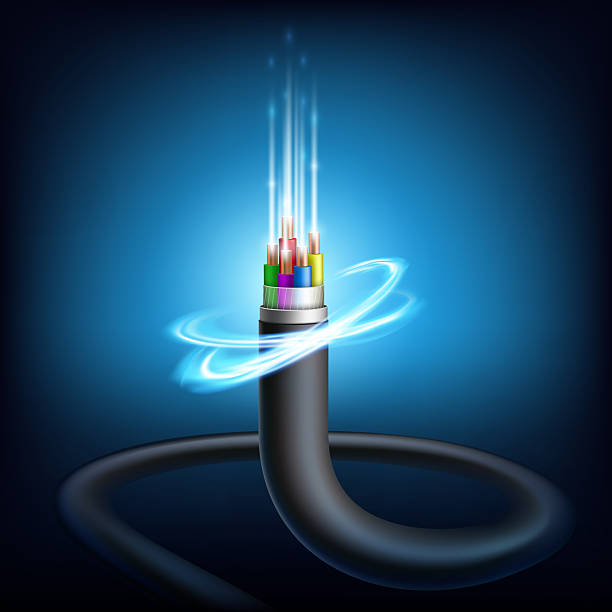
Each cable contains one or more optical fibers. Every fiber has two main parts: a central core through which light travels and an outer layer called the cladding.
The cladding has a slightly lower refractive index than the core. This difference causes light traveling inside the core to repeatedly bounce off the inner walls instead of escaping.
This phenomenon is called total internal reflection.
Thanks to total internal reflection, light remains trapped inside the fiber while traveling over extremely long distances.
Tiny lasers or light-emitting devices convert digital information into rapid flashes of light. These flashes represent the binary data used by computers.
At the receiving end, special sensors convert the light back into electrical signals that computers, smartphones, televisions, and other devices can understand.
This entire process happens millions or even billions of times every second.
What Is an Optical Fiber?
An optical fiber is an incredibly thin strand of transparent material designed specifically to carry light.
Most optical fibers are made from ultra-pure glass because glass allows light to travel with very little signal loss.
A typical optical fiber is about the same thickness as a human hair.
Although each fiber is tiny, thousands of them can be bundled together inside a protective cable.
These bundles allow enormous amounts of information to travel simultaneously.
Modern fiber cables can carry terabits of data every second, making them among the highest-capacity communication systems ever developed.
How Fiber Internet Works
When you request a webpage, start a video stream, or download a file, your device sends digital information to your home router.
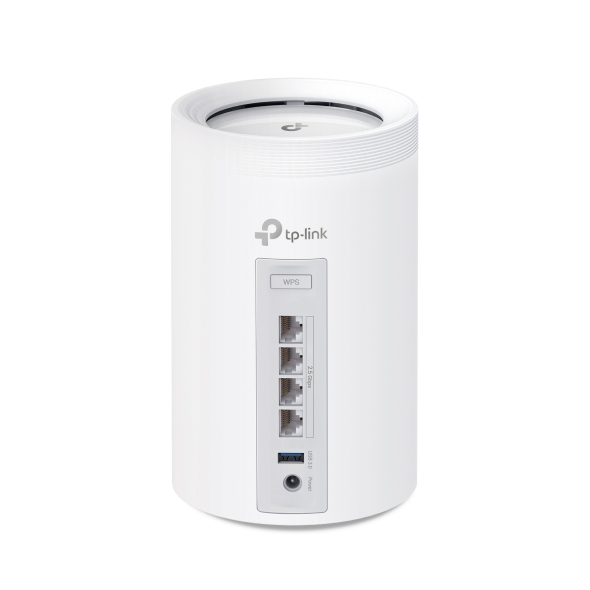
The router communicates with an Optical Network Terminal (ONT), which is installed where the fiber connection enters your home.
The ONT converts electrical signals into optical signals.
These optical signals travel through fiber-optic cables as pulses of light.
The light reaches your internet service provider’s network, where powerful networking equipment directs your data toward its destination across the internet.
When information returns to your home, the process happens in reverse.
The light pulses are converted back into digital electrical signals that your devices can use almost instantly.
Although this sounds complicated, the entire journey often takes only milliseconds.
Why Fiber Internet Is So Fast
The biggest advantage of fiber internet is speed.
Because fiber uses light instead of electricity, it can carry much larger amounts of data simultaneously.
Copper cables have physical limitations that restrict their speed and cause greater signal degradation over distance.
Fiber cables experience much lower signal loss.
They also support much higher bandwidth, allowing far more information to travel at once.
Many fiber providers offer download speeds ranging from hundreds of megabits per second to multiple gigabits per second.
Some commercial fiber networks can even reach speeds measured in tens or hundreds of gigabits per second.
As technology continues improving, these limits continue to increase.
Symmetrical Upload and Download Speeds
One of fiber internet’s greatest strengths is its ability to provide symmetrical speeds.
This means upload speeds are often just as fast as download speeds.
Many older internet technologies prioritize downloading while offering much slower uploads.
For example, uploading a large video using cable internet might take several minutes.
With fiber internet, the same upload may finish in only seconds.
Fast upload speeds are especially important for cloud storage, remote work, online backups, video conferencing, live streaming, and content creation.
Low Latency Makes Everything Feel Instant
Internet speed is not the only measure of performance.
Latency also matters.
Latency refers to the time it takes for data to travel from your device to its destination and back again.
Lower latency means faster response times.
Fiber internet generally offers significantly lower latency than DSL, cable, satellite, or fixed wireless connections.
This creates smoother experiences during online gaming, voice calls, virtual meetings, and interactive applications.
When you click a button online, the response feels nearly instantaneous.
Fiber Internet Is Highly Reliable
Fiber cables are remarkably reliable.
Unlike copper wires, fiber cables do not carry electricity.
Instead, they carry light.
Because of this, they are immune to electromagnetic interference from nearby electrical equipment, power lines, radio transmitters, or lightning-induced electrical noise.
Weather also affects fiber less than many wireless technologies.
Fiber networks generally experience fewer slowdowns and interruptions.
This consistency is one reason hospitals, research laboratories, universities, financial institutions, and major technology companies rely heavily on fiber-optic communication.
Fiber Internet Maintains Speed Over Long Distances
Traditional copper cables gradually lose signal strength as distance increases.
This often reduces internet speed for customers located farther from network equipment.
Fiber experiences much less signal loss.
Data can travel many kilometers before requiring amplification.
This makes fiber ideal for connecting cities, countries, and even continents.
Undersea fiber-optic cables stretching across the oceans form the backbone of the global internet.
These submarine cables carry the overwhelming majority of international internet traffic.
Without them, modern global communication would not be possible.
Fiber Internet vs DSL
DSL, or Digital Subscriber Line, uses existing telephone lines made from copper.
Although DSL was revolutionary when first introduced, it has significant limitations compared with fiber.
DSL speeds decrease rapidly as the distance from the telephone exchange increases.
Copper wires are also more susceptible to electrical interference.
Fiber provides much faster speeds, better reliability, lower latency, and much higher bandwidth.
For households with many connected devices, fiber delivers a much smoother experience.
Fiber Internet vs Cable Internet
Cable internet uses coaxial television cables.
These cables generally offer faster speeds than DSL but still rely partly on electrical signals traveling through metal conductors.
Cable networks are often shared among many nearby homes.
During busy hours, speeds may decrease because multiple users are sharing available bandwidth.
Fiber networks typically provide more consistent performance, even during peak usage.
Fiber also usually offers much faster upload speeds than cable internet.
Fiber Internet vs Satellite Internet
Satellite internet works by sending data between Earth and satellites orbiting high above the planet.
Although satellite internet provides access in remote regions where wired infrastructure is unavailable, the enormous travel distance increases latency.
Fiber internet is dramatically faster and more responsive.
Video calls, online gaming, and real-time applications generally perform much better on fiber connections.
However, satellite remains an important solution for rural areas where fiber has not yet been installed.
Fiber Internet vs Fixed Wireless Internet
Fixed wireless internet delivers broadband using radio signals transmitted between towers and receivers.
Performance depends on signal quality, weather, and distance.
Fiber generally provides higher speeds, lower latency, and greater reliability because the connection is physically protected inside cables rather than traveling through open air.
Types of Fiber Internet Connections
Fiber networks can be deployed in different ways.
The most advanced approach is Fiber to the Home (FTTH), where fiber-optic cables run directly into individual homes.
Another common approach is Fiber to the Building (FTTB), where fiber reaches a building before connecting individual apartments.
Some networks use Fiber to the Curb (FTTC) or Fiber to the Node (FTTN), where fiber reaches a nearby location before the final connection uses copper wiring.
Generally, the closer fiber reaches your home, the better the performance.
A full FTTH connection usually delivers the fastest and most consistent experience.
What Is a Gigabit Internet Connection?
Many fiber providers advertise gigabit internet.
A gigabit equals one billion bits of data every second.
One gigabit per second is approximately 1,000 megabits per second.
At these speeds, downloading massive files, streaming ultra-high-definition video, backing up data to the cloud, and supporting multiple users simultaneously become much easier.
As internet applications become increasingly demanding, gigabit fiber connections are becoming more common around the world.
Fiber Supports Many Devices at Once
Modern homes contain dozens of connected devices.
Smartphones
Laptops
Smart TVs
Gaming consoles
Tablets
Security cameras
Smart speakers
Smart thermostats
Video doorbells
All compete for internet bandwidth.
Fiber’s enormous capacity allows multiple users to stream, download, upload, and video chat simultaneously with minimal slowdowns.
This makes fiber especially valuable for families and businesses.
Fiber Internet and Streaming
Streaming services require continuous delivery of data.
High-resolution video, especially 4K and 8K content, demands substantial bandwidth.
Fiber provides enough capacity to stream multiple ultra-high-definition videos simultaneously without buffering.
It also improves live streaming by offering fast upload speeds.
Content creators who broadcast games, tutorials, or educational videos benefit greatly from fiber’s symmetrical performance.
Fiber Internet and Online Gaming
Gamers care about more than download speed.
Latency plays a crucial role.
Fast response times reduce delays between player actions and game servers.
Fiber’s low latency helps provide smoother gameplay, quicker reactions, and more stable multiplayer experiences.
Although gaming uses relatively little bandwidth, consistent low latency can significantly improve competitiveness.
Fiber Internet for Remote Work
Working from home has become increasingly common.
Video conferencing, cloud collaboration, file sharing, and remote desktop access all depend on reliable internet.
Fiber internet provides stable connections with fast uploads and downloads, making professional communication smoother and reducing interruptions during meetings.
Fiber Internet for Education
Online education relies heavily on broadband connectivity.
Students attend live classes, access digital textbooks, watch educational videos, submit assignments, and collaborate with classmates online.
Fiber internet supports these activities with high reliability and minimal buffering, helping create better learning experiences.
Is Fiber Internet Safe?
Fiber-optic cables themselves are very safe.
Because they transmit light rather than electricity, they do not present the same electrical hazards associated with conductive cables.
From a health perspective, fiber cables do not emit radiofrequency radiation like wireless transmitters because the light remains contained within the cable.
However, as with any internet connection, users should still protect themselves from cybersecurity threats by using strong passwords, enabling software updates, and practicing safe online behavior.
Are There Any Disadvantages?
Although fiber internet offers many advantages, it also has some limitations.
The biggest challenge is availability.
Installing fiber infrastructure requires significant investment.
Technicians must lay underground cables or install aerial fiber lines across neighborhoods.
Because of these costs, some rural or remote regions still lack fiber access.
Installation can also take time, especially in newly developed areas.
Despite these challenges, fiber networks continue expanding worldwide as governments and private companies invest in faster communication infrastructure.
The Future of Fiber Internet
Demand for internet bandwidth continues growing every year.
Artificial intelligence, cloud computing, virtual reality, augmented reality, remote healthcare, autonomous vehicles, and smart cities all require extremely fast and reliable communication.
Fiber-optic technology provides the foundation for these future innovations.
Researchers continue improving fiber systems through advanced laser technologies, better optical amplifiers, and more efficient methods of transmitting multiple light wavelengths through a single fiber.
Future fiber networks will likely support speeds that seem astonishing by today’s standards.
Why Fiber Internet Represents the Future of Connectivity
Fiber internet is much more than simply a faster way to browse websites. It is a revolutionary communication technology built upon one of the most elegant principles in physics—the transmission of light through optical fibers using total internal reflection. By replacing electrical signals in copper wires with pulses of light traveling through ultra-pure glass, fiber delivers exceptional speed, reliability, capacity, and efficiency.
As our lives become increasingly connected, from streaming entertainment and online education to remote work, smart homes, cloud computing, and emerging technologies, the need for robust internet infrastructure continues to grow. Fiber internet is uniquely positioned to meet these demands because it combines extraordinary performance with remarkable reliability.
Although fiber is not yet available everywhere, its expansion is steadily reshaping global communication networks. Every new fiber cable installed brings communities closer to a future where information moves faster, connections become more dependable, and the digital world feels almost instantaneous. In many ways, fiber internet is not simply the next step in broadband—it is the foundation upon which the future of the internet is being built.