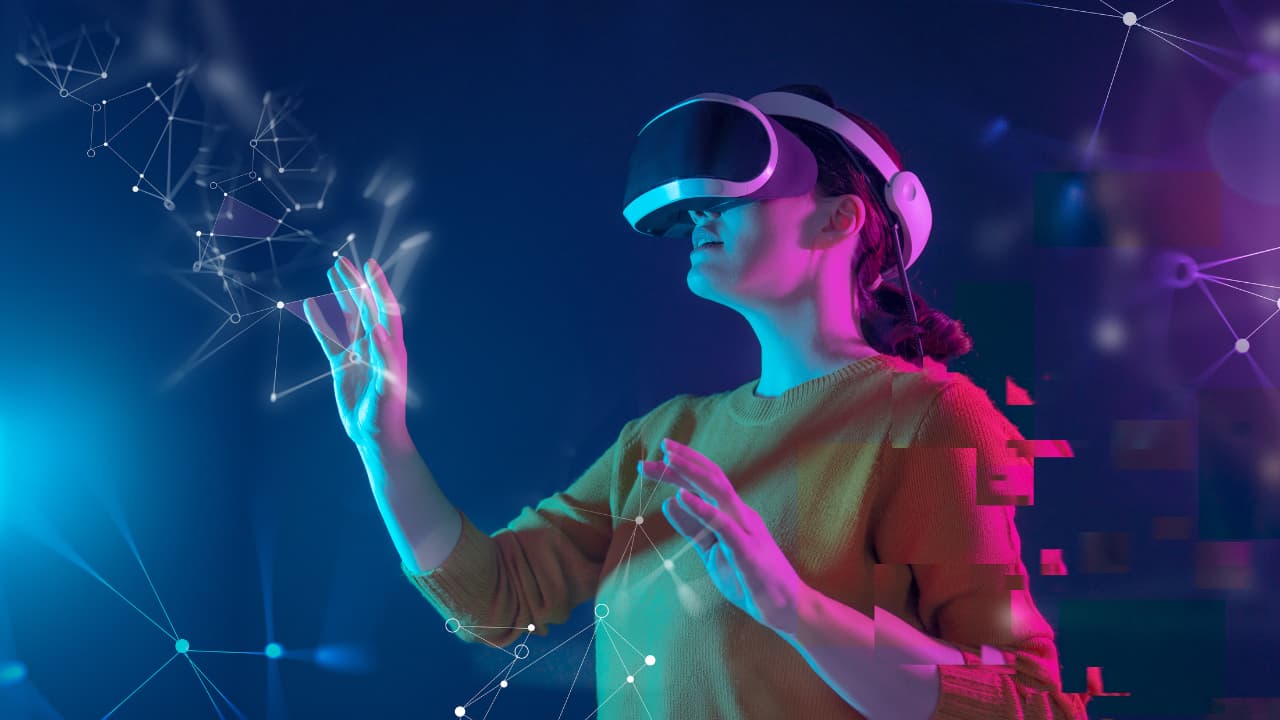
Imagine putting on a lightweight headset and watching your living room transform into a tropical rainforest. Colorful birds fly through the air, a waterfall appears against your wall, and digital creatures walk across your floor as though they truly belong there. Now imagine removing the headset and seeing helpful directions floating in front of you while walking through a city, or collaborating with colleagues who appear as life-sized holograms despite being thousands of miles away.
These experiences are no longer science fiction. They are becoming possible through Extended Reality (XR), one of the most exciting technological developments of the twenty-first century.
Extended Reality is changing the way people learn, work, play, communicate, and interact with digital information. Instead of viewing content on a flat computer or smartphone screen, XR allows people to experience digital environments in immersive and interactive ways. It is creating entirely new possibilities for education, healthcare, engineering, entertainment, scientific research, and many other fields.
As computers become more powerful and wearable devices continue to improve, Extended Reality is gradually becoming a part of everyday life. Understanding what XR is and how it works provides a glimpse into a future where the boundaries between the physical and digital worlds become increasingly seamless.
What Is Extended Reality (XR)?
Extended Reality (XR) is an umbrella term that describes technologies that combine or replace the real world with computer-generated digital experiences. Instead of referring to a single technology, XR includes several related forms of immersive computing that allow people to interact with both physical and virtual environments.
The “X” in XR stands for “extended,” reflecting the idea that reality can be expanded, enhanced, or completely recreated using digital technology.
XR mainly includes Virtual Reality (VR), Augmented Reality (AR), and Mixed Reality (MR). Each offers a different level of interaction between the physical and digital worlds, but they all share the goal of creating immersive experiences that feel natural and engaging.
Rather than separating humans from technology, XR aims to make digital information feel like a natural extension of our surroundings.
The Evolution of Extended Reality
Although XR may seem like a recent innovation, its roots stretch back several decades.
Researchers began exploring immersive computer graphics during the 1960s. Early experimental head-mounted displays were large, heavy, and offered only simple wireframe images. At the time, computing power was extremely limited, making realistic virtual environments impossible.
As computer processors became faster and graphics technology improved, researchers developed increasingly sophisticated virtual simulations. During the 1990s, Virtual Reality attracted widespread public attention, although the equipment remained expensive and often uncomfortable.
The introduction of powerful smartphones in the 2000s dramatically accelerated the development of XR technologies. Smartphones included high-resolution displays, cameras, motion sensors, GPS receivers, and increasingly capable processors—all essential components for immersive experiences.
In recent years, advances in artificial intelligence, computer vision, cloud computing, graphics processing, and display technology have transformed XR from an experimental concept into a practical technology used across many industries.
Today, lightweight headsets, smart glasses, handheld devices, and wearable sensors continue pushing XR toward mainstream adoption.
Understanding the Different Types of XR
To fully understand Extended Reality, it is helpful to recognize how its different forms relate to one another.
Virtual Reality creates a completely digital environment that replaces the user’s view of the real world. Wearing a VR headset allows users to enter computer-generated spaces where they can explore, interact with objects, and experience immersive simulations.
Augmented Reality works differently. Instead of replacing reality, AR adds digital information to the real world. Through smartphones, tablets, or specialized glasses, users can see virtual objects placed on top of their physical surroundings. Digital labels, navigation arrows, educational models, and animated characters can all appear as though they exist in the real environment.
Mixed Reality goes a step further by allowing digital objects to interact intelligently with the physical world. Virtual objects can appear attached to real surfaces, hide behind furniture, respond to room geometry, and interact with users in more natural ways. MR combines elements of both AR and VR to create experiences where physical and digital environments work together.
Extended Reality encompasses all of these technologies, providing a unified way to describe immersive digital experiences.
How Extended Reality Works
Creating convincing XR experiences requires many advanced technologies working together simultaneously.
The system begins by understanding the user’s surroundings. Cameras continuously capture images of the environment while depth sensors estimate the distances to nearby objects. Motion sensors detect head movements, body position, and orientation with remarkable precision.
Specialized software analyzes this information in real time, allowing the device to understand the shape of rooms, recognize surfaces such as walls and tables, and track the user’s movement through space.
Powerful graphics processors then generate realistic three-dimensional images. These images are displayed inside headsets or smart glasses with extremely low delay so that virtual objects appear stable even as users move their heads.
Audio also plays an essential role. Spatial sound creates the impression that voices, music, or environmental sounds originate from specific directions, making virtual experiences feel more convincing.
Many XR systems also use hand tracking, eye tracking, voice recognition, and motion controllers, allowing users to interact naturally with digital content.
The Science Behind XR
Extended Reality relies on several branches of science and engineering working together.
Physics helps simulate realistic lighting, reflections, gravity, and object motion.
Computer graphics generate lifelike three-dimensional environments.
Optics enables high-quality lenses and displays that present images comfortably to human eyes.
Computer vision allows machines to recognize objects, understand environments, and track movement.
Artificial intelligence improves scene recognition, gesture detection, speech understanding, and object interaction.
Neuroscience contributes valuable knowledge about how humans perceive depth, motion, color, and spatial awareness, helping designers create immersive experiences that feel comfortable and realistic.
Psychology also plays an important role by studying how users respond emotionally and cognitively to virtual environments.
Together, these scientific disciplines make XR possible.
The Hardware That Powers XR
Although software creates immersive experiences, specialized hardware brings those experiences to life.
XR devices typically include high-resolution displays positioned close to the eyes, producing detailed three-dimensional images.
Optical lenses focus these images to create the illusion of depth and distance.
Motion sensors continuously measure head movements using accelerometers and gyroscopes.
Cameras observe both the user and the surrounding environment.
Microphones enable voice commands and communication.
Speakers or headphones produce realistic spatial audio.
Modern processors perform billions of calculations every second to maintain smooth, responsive experiences.
Some XR systems connect to powerful computers, while others operate independently using built-in processors.
As technology advances, devices continue becoming lighter, faster, and more energy efficient.
Why Immersion Matters
One of XR’s defining features is immersion.
Immersion refers to the feeling of truly being present inside an environment, whether real, virtual, or blended.
The human brain naturally combines visual information, sound, movement, and touch to build an understanding of the world.
XR systems take advantage of this ability by presenting consistent sensory information that responds instantly to the user’s actions.
When users turn their heads, the digital world moves exactly as expected.
When they reach toward an object, it responds naturally.
This synchronization helps create a powerful sense of presence, making virtual experiences feel remarkably convincing.
Extended Reality in Education
Education is one of the fields benefiting most from XR.
Instead of reading only from textbooks, students can explore interactive scientific models, historical locations, or distant planets in three dimensions.
Biology students can examine the human heart from every angle.
Chemistry students can observe molecular structures floating before them.
Astronomy learners can travel through the Solar System without leaving the classroom.
History lessons become more engaging when students virtually visit ancient civilizations or archaeological sites.
Engineering students can assemble complex machines without requiring expensive physical equipment.
These immersive experiences often improve understanding because learners actively engage with concepts rather than simply reading about them.
XR in Healthcare
Healthcare has become another important area for Extended Reality.
Medical students use virtual simulations to practice surgical procedures before working with patients.
Doctors can visualize three-dimensional medical images during planning for complex operations.
Rehabilitation programs increasingly use immersive exercises that encourage patients recovering from injuries or neurological conditions.
Therapists also use carefully designed virtual environments to assist with certain psychological treatments under professional supervision.
Researchers continue studying how XR may improve patient education, medical training, pain management, and rehabilitation.
While these applications are promising, they are used alongside established medical practices rather than replacing them.
Extended Reality in Scientific Research
Scientists increasingly use XR to analyze complex information.
Researchers can explore enormous datasets in three dimensions, making hidden patterns easier to identify.
Astronomers visualize galaxies.
Climate scientists examine atmospheric simulations.
Biologists study detailed models of proteins and cells.
Geologists investigate underground structures.
Engineers inspect virtual prototypes before manufacturing begins.
By transforming abstract data into immersive experiences, XR often helps researchers understand problems from entirely new perspectives.
XR in Industry and Engineering
Manufacturing companies use XR to improve design, production, and maintenance.
Engineers inspect digital prototypes before physical construction begins, reducing errors and saving resources.
Factory workers receive step-by-step instructions displayed directly within their field of view.
Maintenance technicians can identify equipment components more quickly using digital overlays.
Architects and construction teams walk through virtual buildings before construction starts, allowing them to detect design problems early.
These applications improve efficiency while reducing costs and minimizing mistakes.
Entertainment and Gaming
Entertainment remains one of the most recognizable applications of XR.
Players can explore fantasy worlds, solve mysteries, compete in sports simulations, or experience interactive adventures with unprecedented immersion.
Virtual concerts, museums, films, and artistic performances allow audiences to participate rather than simply observe.
Theme parks increasingly incorporate XR technologies to create attractions that combine physical environments with digital storytelling.
As creative industries continue experimenting with immersive media, entirely new forms of entertainment are emerging.
Social Interaction in XR
Extended Reality is also transforming communication.
People located in different countries can meet inside shared virtual spaces where they interact using digital avatars.
Friends can watch movies together, attend virtual events, collaborate on creative projects, or participate in educational activities despite being physically separated.
Businesses increasingly use immersive collaboration tools for meetings, design reviews, and employee training.
Although XR cannot replace face-to-face relationships, it offers new ways for people to connect across long distances.
Artificial Intelligence and XR
Artificial intelligence has become an increasingly important partner for Extended Reality.
AI helps XR systems recognize objects, understand spoken language, interpret gestures, and respond intelligently to user actions.
Machine learning algorithms improve environmental mapping, facial expression recognition, and eye tracking.
AI can also create realistic virtual characters capable of natural conversation and adaptive behavior.
As both technologies continue advancing together, immersive experiences are becoming increasingly responsive, personalized, and realistic.
The Challenges Facing XR
Despite remarkable progress, Extended Reality still faces several important challenges.
Creating realistic graphics requires enormous computing power.
Battery life limits the operating time of portable devices.
Some users experience motion sickness or visual discomfort during prolonged use, particularly when display timing or movement does not closely match natural human perception.
High-quality XR equipment can also be expensive, limiting accessibility for many people.
Privacy presents another important consideration. Because XR devices often use cameras, microphones, location tracking, and environmental mapping, protecting user data is essential.
Engineers, researchers, and policymakers continue working to address these technical and ethical challenges as the technology evolves.
Is XR Safe?
For most healthy users, Extended Reality can be used safely when following manufacturer recommendations.
However, extended use may lead to temporary eye strain, fatigue, or discomfort for some individuals. Taking regular breaks and ensuring devices are properly adjusted can help reduce these effects.
People with certain medical conditions, such as epilepsy triggered by flashing lights or balance disorders, should consult healthcare professionals before using immersive devices.
Children may also require age-appropriate supervision depending on the specific hardware and software being used.
Ongoing scientific research continues improving both the safety and comfort of XR systems.
The Future of Extended Reality
The future of XR is expected to be shaped by continuous advances in computing, artificial intelligence, networking, and wearable technology.
Future devices will likely become smaller, lighter, and more comfortable while offering higher image quality and longer battery life.
Researchers are developing displays that more closely match natural human vision, making virtual experiences even more realistic.
Faster wireless networks will allow complex virtual environments to be streamed with minimal delay.
Artificial intelligence will enable smarter digital assistants and more realistic virtual characters.
Future smart glasses may display helpful information throughout daily life without requiring large headsets, blending digital experiences seamlessly into ordinary activities.
Although widespread adoption will take time, XR is steadily moving toward becoming an everyday computing platform rather than a specialized technology.
Why Extended Reality Matters
Extended Reality represents far more than a new way to play games or view digital content. It marks a significant shift in how humans interact with information, technology, and one another. By merging the physical and digital worlds, XR enables experiences that were once impossible, allowing people to explore distant places, visualize invisible concepts, practice complex skills, and collaborate across vast distances.
Its impact is already being felt in classrooms, hospitals, laboratories, factories, museums, design studios, and workplaces around the world. As hardware improves and software becomes more intelligent, XR has the potential to reshape many aspects of everyday life in ways that are both practical and transformative.
At its core, Extended Reality is about expanding human experience. Rather than replacing reality, it gives us new tools to understand, interact with, and enhance the world around us. As science and technology continue to evolve together, XR stands as one of the most promising frontiers in the ongoing relationship between humans and the digital universe.