Every device connected to the internet needs an address. Just as your home has a street address that allows mail to reach the correct destination, every computer, smartphone, tablet, gaming console, and smart TV connected to the internet needs a unique address so data knows exactly where to go. This address is called an Internet Protocol (IP) address.
Most people use the internet every day without ever thinking about their IP address. You browse websites, stream movies, play online games, send emails, and join video meetings, all thanks to your device having an IP address. But not all IP addresses work in the same way. Some remain the same for months or even years, while others can change regularly.
These two types are known as Static IP and Dynamic IP.
Although they perform the same basic function—identifying a device on a network—they are designed for different purposes. Understanding the difference can help you choose the right internet connection for your home, business, or online services.
What Is an IP Address?
An Internet Protocol (IP) address is a numerical label assigned to a device connected to a network that uses the Internet Protocol. It serves two essential purposes.
First, it identifies a device on a network, making it possible to distinguish one device from another.
Second, it allows data to be routed correctly across networks. When you visit a website, send a message, or download a file, the information travels through many routers and networks before reaching your device. Your IP address tells the internet exactly where that information should be delivered.
Without IP addresses, the internet simply would not function.
Why Every Device Needs an IP Address
Imagine sending a letter without writing the recipient’s address. The postal service would have no idea where to deliver it.
The internet works in a remarkably similar way.
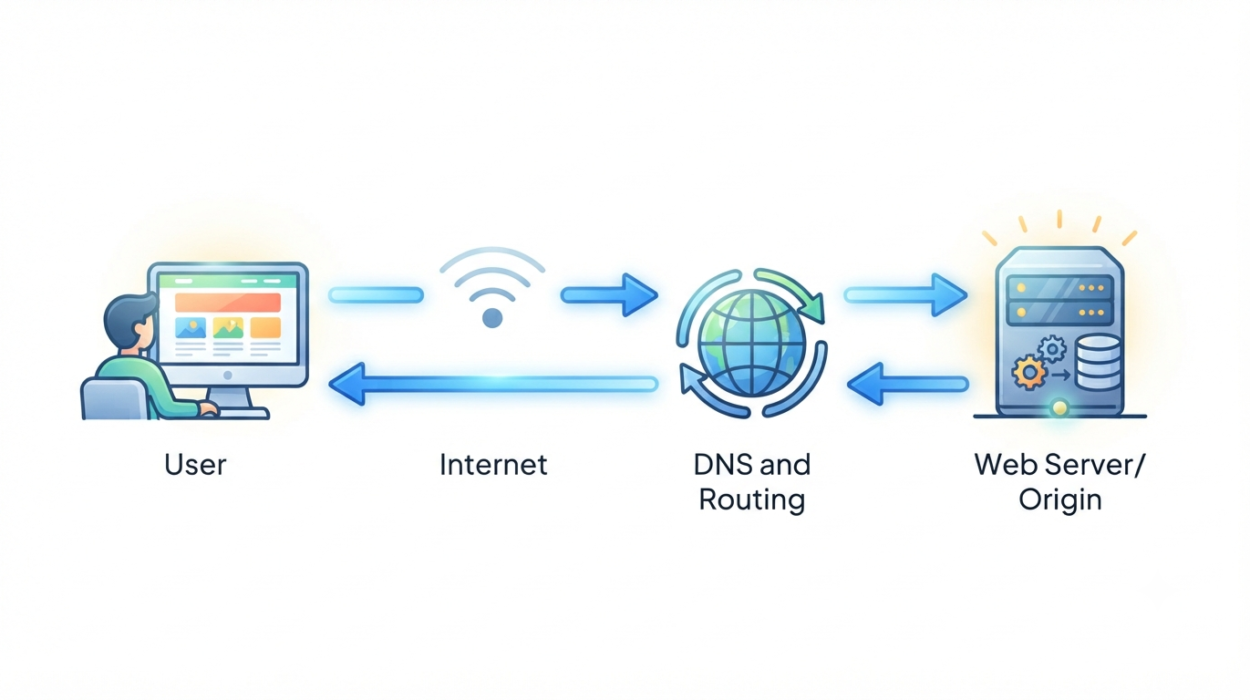
Whenever you open a webpage, your device sends a request to a web server. The server processes that request and sends the webpage back to your IP address.
Whether you are watching videos, using cloud storage, joining a video conference, or scrolling through social media, your IP address quietly makes all of this possible.
What Is a Static IP Address?
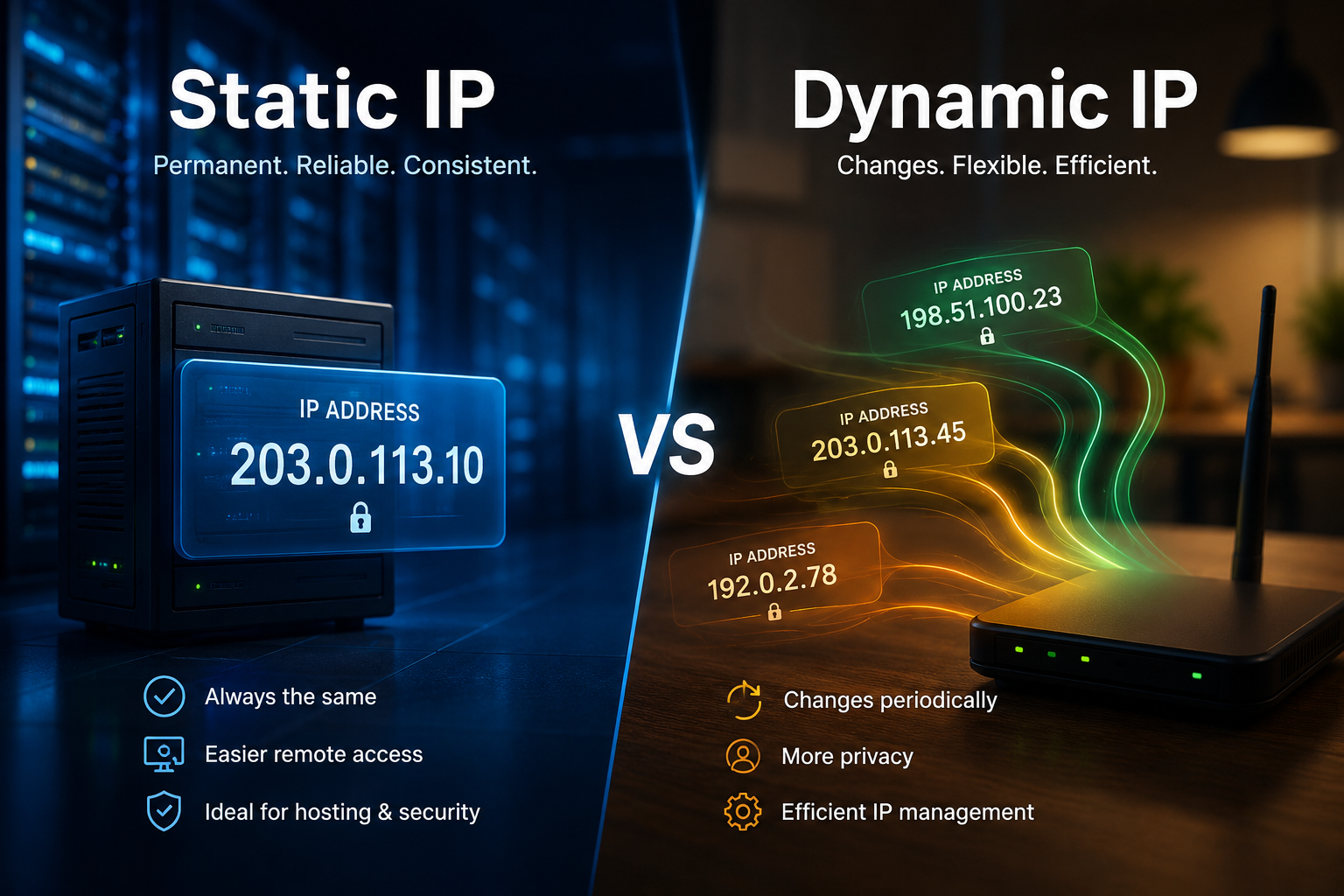
A Static IP address is an IP address that remains fixed. Once assigned to a device or internet connection, it does not normally change unless it is manually reconfigured or the internet service provider (ISP) changes it.
Think of a static IP as owning a permanent home address. Every time someone wants to reach you, they already know exactly where you are.
Because the address stays the same, devices and services become easier to locate over the internet.
Businesses commonly use static IP addresses for servers, websites, email systems, security cameras, remote access solutions, and other services that must always be available at a known address.
How a Static IP Works
When an ISP assigns a static IP address, it reserves that address specifically for your connection.
Every time your modem reconnects to the internet, it receives the same IP address.
Since the address never changes automatically, applications that depend on a permanent location continue working without interruption.
For example, if a company hosts its own website, visitors can always reach the server because its IP address remains constant.
What Is a Dynamic IP Address?
A Dynamic IP address is an IP address that can change over time.
Instead of permanently assigning one address to a customer, the ISP automatically provides an available IP address whenever the customer’s device connects to the network.
This assignment is handled using the Dynamic Host Configuration Protocol (DHCP).
A dynamic IP is similar to checking into a hotel. Each time you arrive, you might receive a different room number, but you still have a place to stay.
The address works perfectly while it is assigned to you, but it may change later.
Most home internet connections around the world use dynamic IP addresses.
How Dynamic IP Addresses Are Assigned
Internet service providers maintain large pools of IP addresses.
When your router connects to the ISP, it requests an IP address.
A DHCP server automatically selects an available address and temporarily assigns it to your connection.
This temporary assignment is known as a lease.
When the lease expires, the ISP may renew the same address or assign a different one.
Many users keep the same dynamic IP for weeks or months, while others may receive a new one after restarting their modem or following a network maintenance event.
Static IP vs Dynamic IP: The Fundamental Difference
The biggest difference lies in whether the address changes.
A static IP remains constant unless someone intentionally changes it.
A dynamic IP may change automatically without the user doing anything.
Everything else—including internet browsing, streaming videos, downloading files, and sending emails—works almost identically.
The difference becomes important only when certain applications require a permanent internet address.
Why Internet Providers Prefer Dynamic IP Addresses
Dynamic addressing offers several important advantages for internet service providers.
IPv4 addresses are limited. Although billions exist, the enormous growth of internet-connected devices has made efficient management increasingly important.
Dynamic allocation allows providers to reuse addresses efficiently among customers.
It also reduces administrative work because IP addresses are assigned automatically rather than manually.
This system has become the standard for residential internet services worldwide.
Advantages of a Static IP Address
A static IP offers consistency.
Because the address never changes, remote connections become easier to establish.
Businesses often need employees to access office computers securely from home. A fixed IP address makes this much simpler because the destination never changes.
Hosting websites is also easier with a static IP.
Although modern technologies such as Dynamic DNS can work with changing addresses, a permanent IP eliminates additional complexity.
Email servers also benefit from static IP addresses because many mail providers use IP reputation to reduce spam.
Some online security systems and firewalls allow connections only from approved IP addresses. Static addresses make these security rules much easier to manage.
Video surveillance systems installed at offices or homes can also be accessed more reliably when connected through a fixed IP address.
Advantages of a Dynamic IP Address
Dynamic IP addresses are ideal for everyday internet users.
They require almost no configuration.
Everything happens automatically behind the scenes.
Most people simply plug in their router and start browsing the internet without worrying about IP management.
Dynamic IP services are also generally less expensive because ISPs do not need to reserve a dedicated address for each customer.
Changing addresses can also provide a modest privacy benefit. Since the public IP may change periodically, it becomes somewhat harder for external observers to associate internet activity with a single long-term IP address. However, this should not be viewed as a substitute for privacy tools such as VPNs or encrypted connections.
Is One Faster Than the Other?
A common misconception is that static IP addresses provide faster internet speeds.
In reality, the type of IP address does not directly determine internet speed.
Your download speed, upload speed, latency, and network performance depend primarily on factors such as your internet plan, network congestion, router quality, Wi-Fi performance, and the distance to servers.
Whether your address is static or dynamic, your internet connection can perform equally well.
Which One Is More Secure?
Security depends far more on proper network management than on whether an IP address is static or dynamic.
A static IP can make it easier to secure systems because administrators always know the correct address to monitor and protect.
At the same time, because the address remains constant, attackers always know where that system is located if they discover the IP.
Dynamic IP addresses change periodically, making continuous targeting slightly more difficult in some situations. However, this alone does not provide strong security.
Firewalls, software updates, encryption, strong passwords, and multi-factor authentication remain the most important defenses.
Static IP and Remote Work
Remote work has made secure internet access increasingly important.
Many businesses allow employees to connect directly to office computers or internal company networks.
A static IP simplifies this process because remote software always knows the destination address.
Many organizations also restrict access so only approved IP addresses can connect, improving security.
Static IP for Hosting Websites
Companies that host their own web servers often use static IP addresses.
A fixed address ensures that domain names consistently point to the correct server.
Although cloud hosting and modern web infrastructure often reduce the need for dedicated static IPs, many enterprise environments still rely on them for stable network services.
Dynamic IP for Home Internet
For ordinary households, dynamic IP addresses are usually the best choice.
Streaming movies, playing online games, video conferencing, online shopping, social media, and web browsing all work perfectly with dynamic addressing.
Most users never notice when their IP changes because the process happens automatically.
In fact, millions of people use dynamic IP addresses every day without even knowing they have one.
Can You Change from Dynamic to Static?
Yes.
Many internet service providers offer static IP addresses as an optional service.
Businesses often request one when setting up office internet.
Some residential customers also purchase static IP addresses if they operate servers, need reliable remote access, or have specialized networking requirements.
In many cases, switching simply requires contacting the ISP and choosing the appropriate plan.
Public IP and Private IP
Understanding static and dynamic IPs becomes even easier when distinguishing between public and private IP addresses.
Your internet service provider assigns your public IP address, which is visible to the internet.
Inside your home, your Wi-Fi router assigns private IP addresses to devices such as laptops, smartphones, smart TVs, printers, and gaming consoles.
These private addresses are used only within your local network.
Interestingly, your router may have a dynamic public IP while every device inside your home also receives dynamic private IP addresses through DHCP.
Alternatively, network administrators can manually assign static private IP addresses to certain devices, such as printers or network-attached storage systems, so they always keep the same local address.
How DHCP Makes Dynamic IP Addresses Possible
The Dynamic Host Configuration Protocol, or DHCP, is one of the internet’s most useful automation technologies.
Without DHCP, every computer joining a network would need to be configured manually.
Instead, DHCP automatically provides devices with an IP address, subnet mask, default gateway, and DNS server information within seconds.
This automation allows millions of devices to connect effortlessly every day.
Can Dynamic IP Addresses Stay the Same?
Yes.
Many people assume dynamic IP addresses change constantly.
In reality, many ISPs renew the same address repeatedly.
A customer may keep the same dynamic IP for several months or even years if the modem remains connected continuously.
The important distinction is that the ISP can change the address whenever necessary.
When Should You Choose a Static IP?
A static IP becomes valuable when your internet connection must always be reachable from outside your network.
Businesses operating servers often need static IP addresses.
People who frequently access home security cameras remotely may benefit from one.
Organizations hosting email services, VPN gateways, or enterprise applications also commonly use static IP addresses.
For these situations, having a permanent address improves reliability and simplifies configuration.
When Is a Dynamic IP the Better Choice?
For most households, students, families, and casual internet users, a dynamic IP is more than sufficient.
If your online activities mainly involve browsing websites, watching streaming services, participating in video calls, using cloud storage, shopping online, and playing multiplayer games, a dynamic IP provides all the functionality you need.
It requires less maintenance, works automatically, and is generally included with standard broadband service.
The Future of IP Addresses
As internet-connected devices continue to multiply, the world is gradually transitioning from IPv4 to IPv6.
IPv6 offers an enormous number of available addresses, solving many of the limitations associated with IPv4.
Even with IPv6, however, the concepts of static and dynamic addressing remain relevant.
Network administrators will continue choosing between fixed and automatically assigned addresses based on the needs of users, businesses, and connected devices.
Final Thoughts
Although Static IP and Dynamic IP addresses perform the same essential job—identifying devices on a network—they serve different purposes. A static IP provides permanence and predictability, making it well suited for servers, remote access, business networks, and services that must always be reachable. A dynamic IP, on the other hand, offers simplicity, automation, and efficient resource management, making it the preferred choice for most residential internet users.
For the vast majority of people, a dynamic IP is all they will ever need. It quietly handles everyday internet activities without requiring any technical knowledge. Businesses and advanced users, however, often benefit from the stability and consistency of a static IP.
Understanding the difference helps demystify one of the internet’s most fundamental technologies. Whether your IP address changes regularly or remains fixed for years, it is an essential part of the invisible infrastructure that allows billions of devices around the world to communicate seamlessly every second.