Astronomers have detected most stellar-mass black holes in pairs, but new simulations suggest that these systems may represent only a small part of the Milky Way’s true black hole population. More than 90% could be isolated, leaving a large population that has so far been largely hidden from observation.
Black holes do not emit light, so astronomers generally find them by watching what their gravity does to nearby objects. In a binary system, a black hole can reveal itself through its effects on a companion star, including pulling material from the star or heating it.
An isolated black hole has no companion to provide that kind of signal. With little surrounding material to disturb, it can be extremely difficult to detect. That makes it harder to study how these objects form and how they change over time.
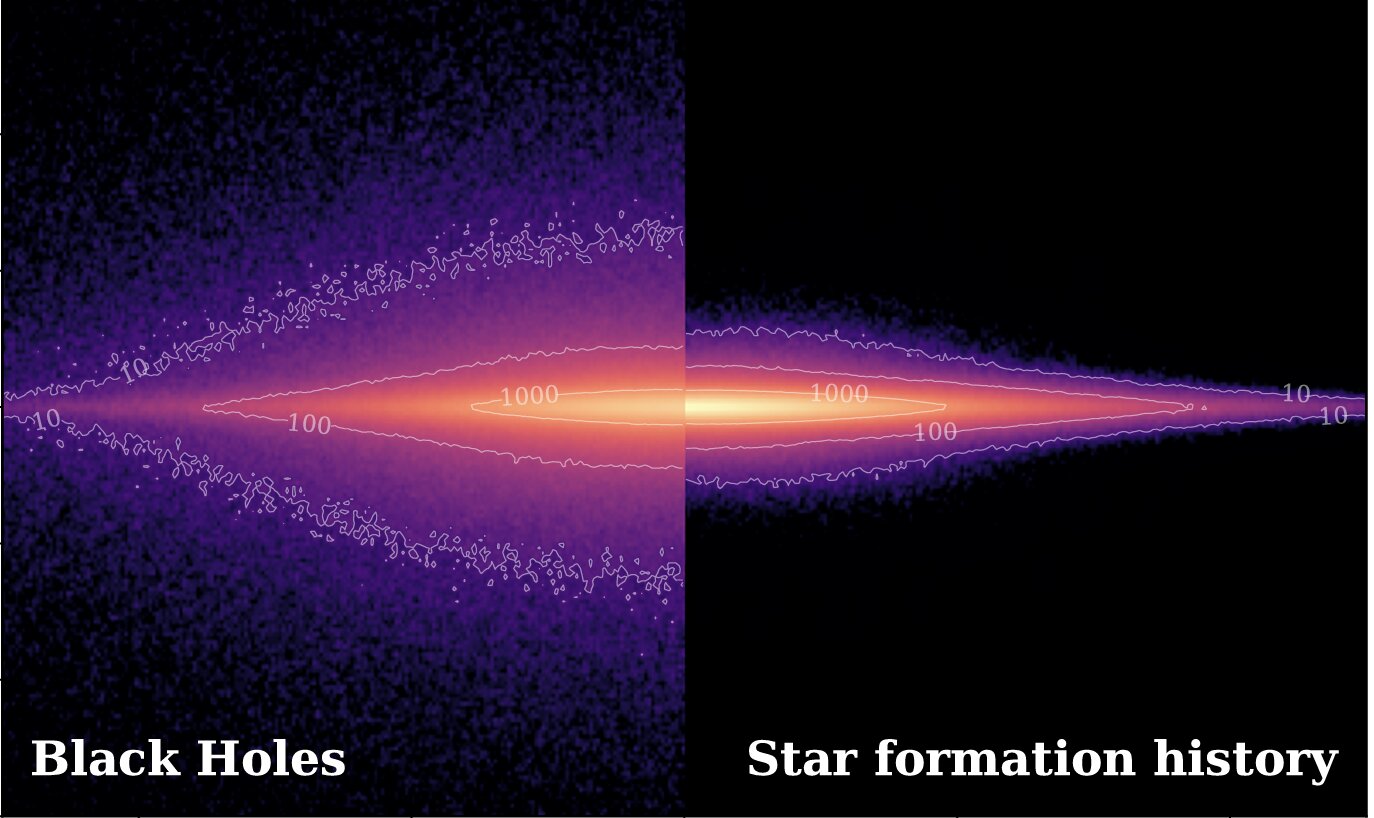
A team led by Wagg at the Flatiron Institute in New York approached the problem through computer simulations. Rather than starting with the black holes that astronomers can currently see, the researchers modeled the history of the Milky Way and followed stars as they were born, evolved and died over billions of years.
Simulating how black holes move through the galaxy
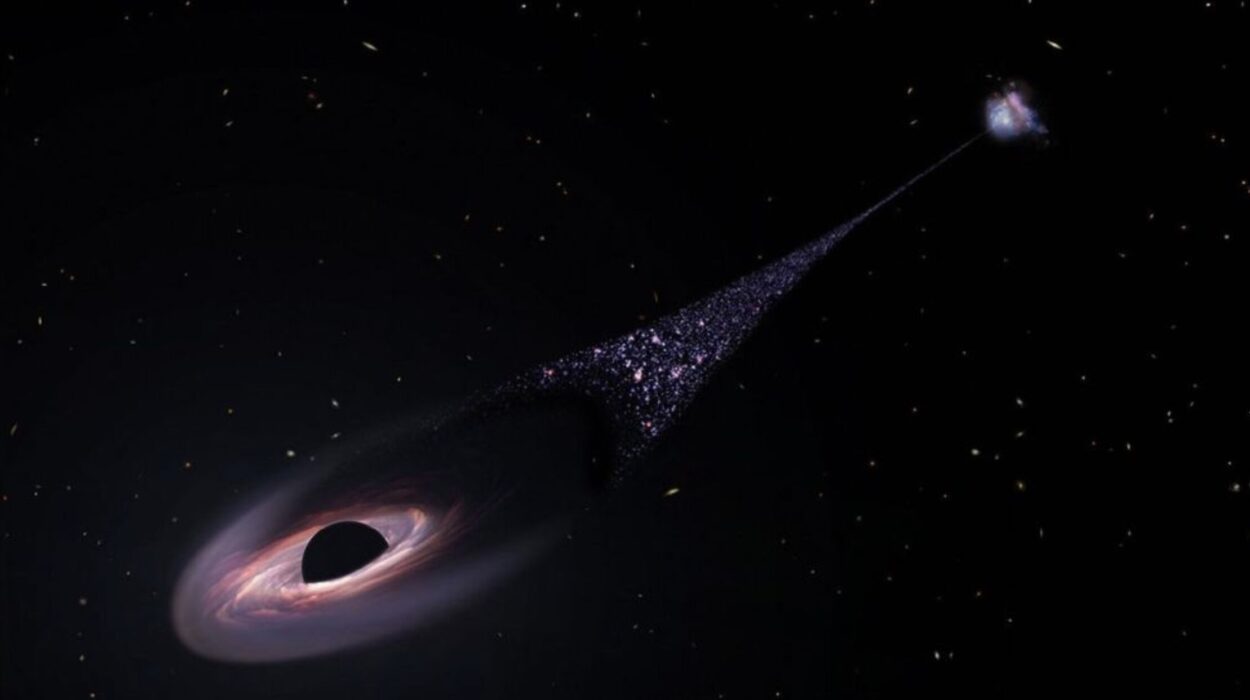
The model included the supernova explosions that can create stellar-mass black holes. It also included the recoil, or “kicks,” that black holes can receive at birth. Those kicks can send them moving through the galaxy and, in some cases, fast enough to escape it.
By following these processes through cosmic time, the researchers estimated how many stellar-mass black holes should remain in the Milky Way today, where they might be located and how quickly they could be moving.
The simulation produced a striking difference between the black holes astronomers have generally been able to detect and the larger population predicted by the model.
About 91% may have no companion
The simulations suggest that about 91% of the Milky Way’s stellar-mass black holes are isolated and have no companion star. Another roughly 3% may have received enough of a birth kick to escape the galaxy altogether.
That leaves only a small fraction in binary systems like those that have provided most of the stellar-mass black holes detected so far.
The result suggests that the observed population is not necessarily representative of the full population predicted by the simulation. Most of the galaxy’s stellar-mass black holes may simply lack the companion stars or surrounding material that would make them easier to detect.
New surveys could search for their gravitational effects
The difficulty of seeing isolated black holes does not mean there are no possible ways to find them. Upcoming observations from the Roman Space Telescope, Gaia’s next data release and various spectroscopic surveys could help astronomers search for subtler effects.
One possibility is gravitational lensing, in which the gravity of a black hole bends light from a more distant background star. An isolated black hole could potentially be identified through that effect even without a companion star.
The simulations provide predictions for where these hidden black holes may be and what astronomers might look for. Those predictions could then be tested against future observations, giving researchers a way to compare models of stellar death and black hole formation with a larger population of black holes than the binary systems currently available for study.
The study was published on the arXiv preprint server.