Europe’s Neanderthals went through a major population turnover during the Ice Age, leaving almost all of the later Neanderthals with ancestry from a single lineage before their disappearance about 40,000 years ago.
Neanderthals lived in Europe continuously from about 400,000 to 40,000 years ago, but their population history during the final part of that period has been difficult to reconstruct.
A new analysis of Neanderthal DNA and archaeological evidence points to a major change around 75,000 years ago, when harsh Ice Age conditions severely affected European populations. Archaeological sites became fewer and increasingly concentrated in southwestern Europe.
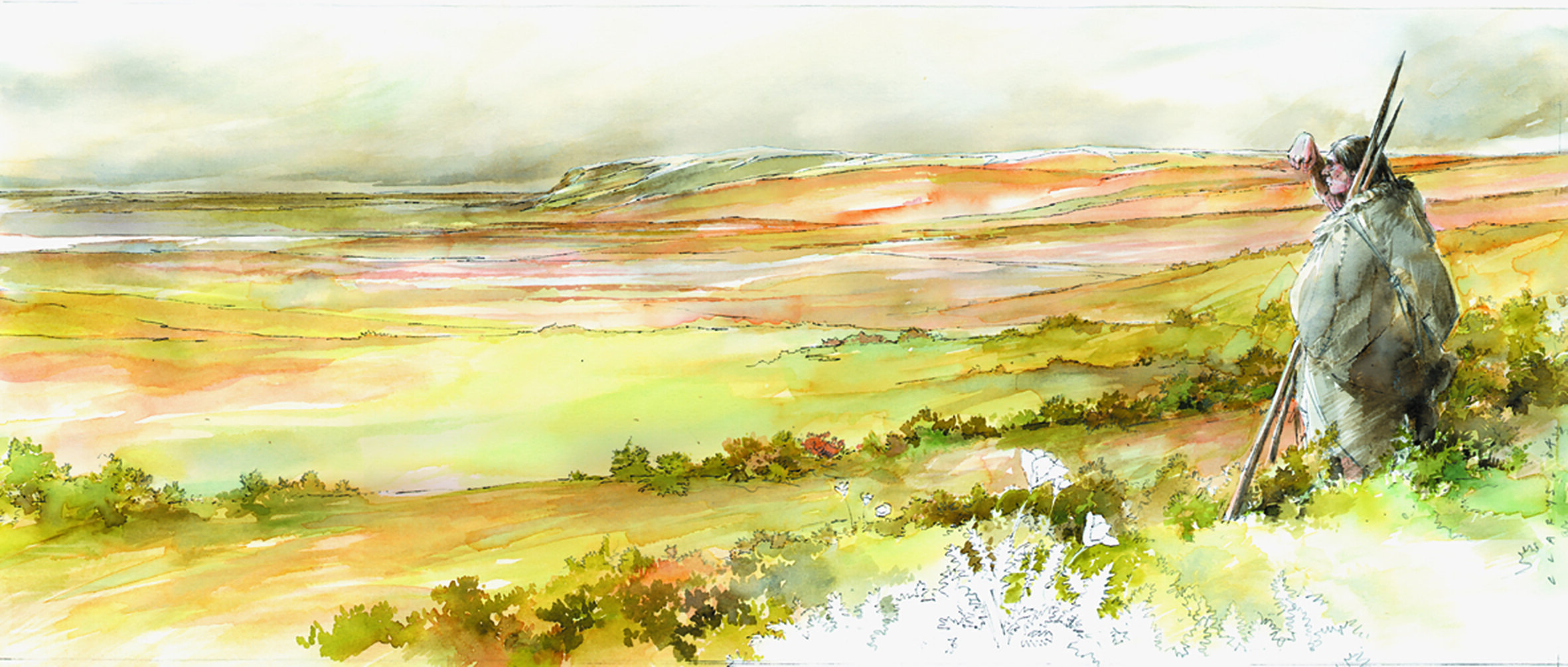
The genetic evidence indicates that one localized group survived by retreating to a climate refuge in what is now southwestern France. Around 65,000 years ago, a new population emerged there and later spread across Europe.
That movement appears to have reshaped the genetic makeup of the continent’s later Neanderthals. Almost all Late Neanderthals whose DNA has been sequenced so far, from the Iberian Peninsula to the Caucasus, belong to the same inherited mitochondrial DNA lineage.
Ten new Neanderthals add genetic evidence
The researchers focused on mitochondrial DNA, which is found in mitochondria, structures inside cells that have their own genetic material. Unlike most of a cell’s DNA, mitochondrial DNA is inherited independently of DNA in the cell nucleus.
The team sequenced mitochondrial DNA from 10 previously unstudied Neanderthals found at six archaeological sites in Belgium, France, Germany and Serbia. They combined those results with 49 previously published Neanderthal mitochondrial DNA samples.
The researchers then compared the genetic evidence with archaeological records documenting Neanderthal presence across Europe. Those records came from the ROAD database, developed through the ROCEEH project involving the Heidelberg Academy of Sciences, the Senckenberg Research Institute and Natural History Museum Frankfurt, and the University of Tübingen.
Combining the genetic and archaeological evidence allowed the researchers to examine changes in Neanderthal populations across both geography and time.
The final decline was rapid
The genetic picture also points to another major population change near the end of the Neanderthals’ history.
Using a statistical program, the researchers tested whether changes in mitochondrial DNA diversity over time were consistent with a population that had remained constant in size. They were not.
Instead, the analysis indicated a rapid and sharp decline in Neanderthal numbers between about 45,000 and 42,000 years ago. The population reached a minimum around 42,000 years ago, shortly before Neanderthals disappeared altogether.
The result was a genetically homogeneous Late Neanderthal population. The researchers suggest that the low genetic diversity, and possibly the later isolation of small groups, may have contributed to the Neanderthals’ disappearance.
The study was published in PNAS.