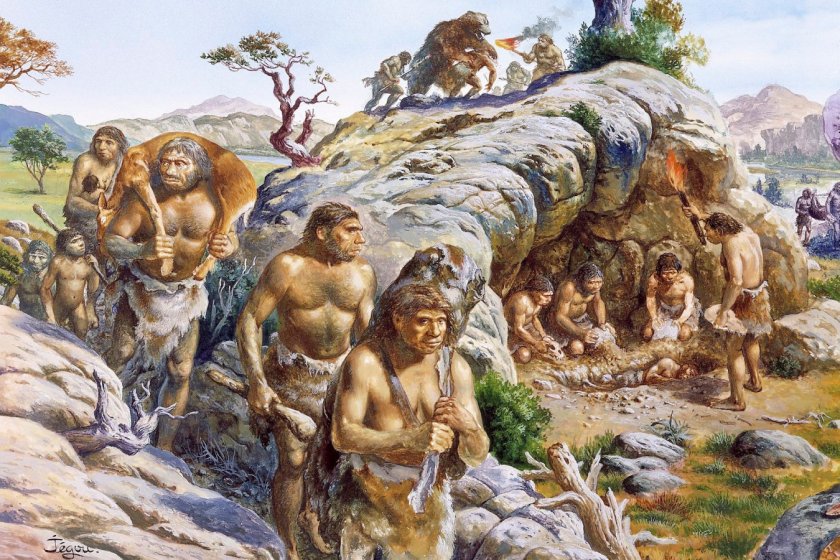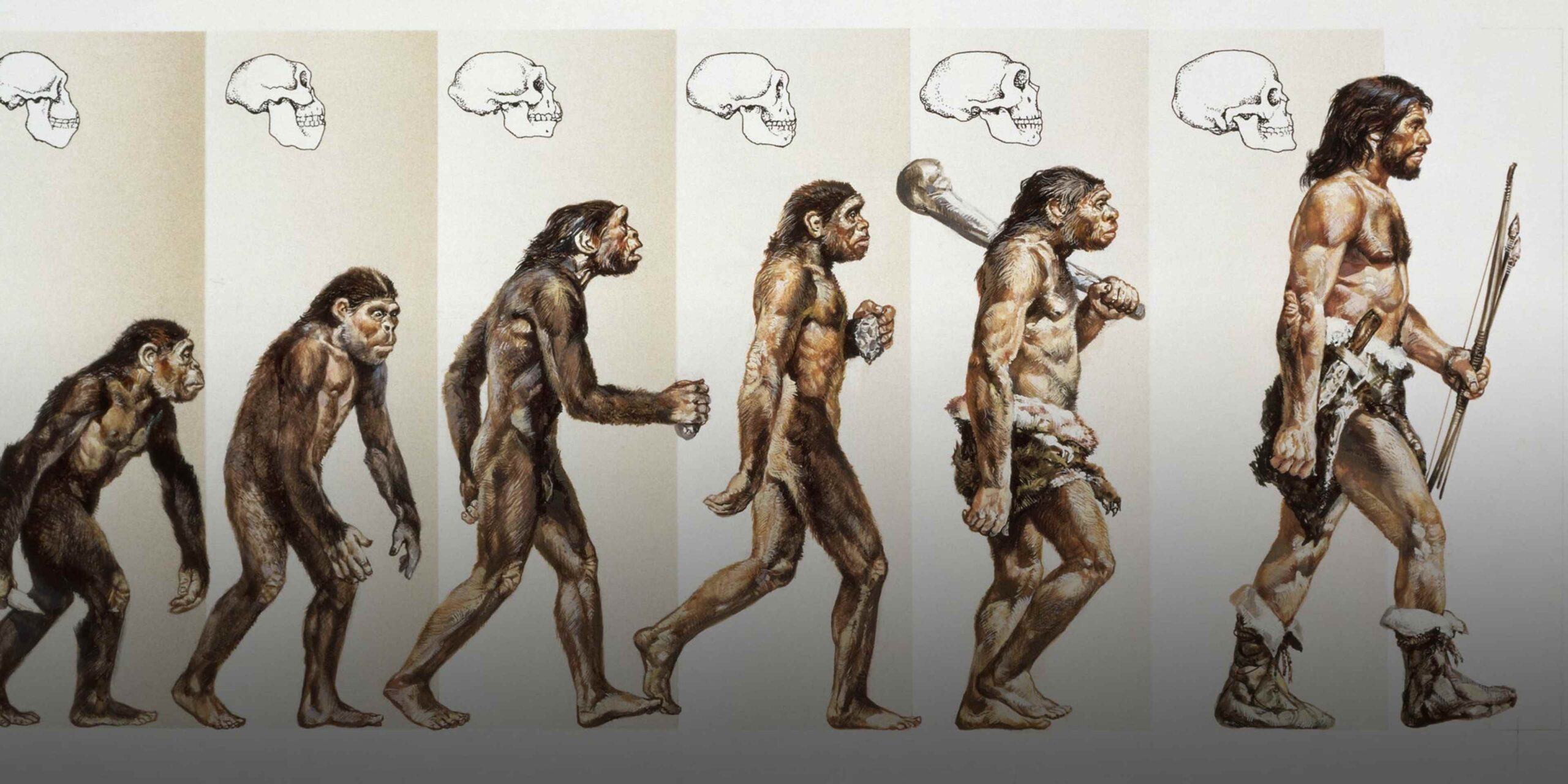
The transition from ancient humans to the people we recognize as modern may not have happened in a single burst around 50,000 years ago. Instead, archaeological, fossil and genetic evidence points to a long, uneven process in which different modern traits appeared at different times and in different parts of Africa.
For decades, one influential idea in paleoarcheology has pictured human evolution as a dramatic turning point. Under the “Upper Paleolithic Revolution” model, a sudden cognitive or genetic change roughly 50,000 years ago helped drive humans out of Africa and led to innovations such as art, sophisticated tools and more organized social structures.
That explanation has become harder to reconcile with the evidence.
Archaeologists initially placed the proposed revolution in Europe. As evidence accumulated, the focus shifted toward Africa as its possible starting point. But research has since pointed to complex behaviors and anatomical traits emerging at different times and in different regions of Africa rather than appearing together in one event.
Genetic evidence also points to multiple dispersals and episodes of admixture, adding further complexity to the history of Homo sapiens outside Africa.
Archaeologist Huw S. Groucutt argues that the continued appeal of a single “human revolution” is partly shaped by the desire for a simple turning point. In his view, the idea can encourage researchers to select evidence that fits a revolutionary narrative rather than examining the full range of evidence.
The dates are less precise than they can appear
The timing of human dispersals is another source of uncertainty. Different dating techniques can produce substantially different age estimates, making it difficult to construct a precise timeline from individual findings.
Groucutt points to a fossil from Misliya Cave in Israel as an example. A maxilla fragment was identified in one study as Homo sapiens and dated to between 180,000 and 190,000 years ago. That would make it very early evidence of modern humans outside Africa.
But the dating evidence is more complicated than that single age range suggests. Uranium-series dating of a crust on the fossil produced an estimate of about 185,000 years ago, while the minimum age was around 70,000 years ago. Another dating approach produced a maximum age of about 175,000 years ago. The older estimate depended heavily on thermoluminescence dating of burned stone tools from the same sediment layer rather than directly dating the bone.
Groucutt does not argue that age estimates are inherently unreliable. Instead, he stresses the need to examine how dates are connected to the deposits and materials being studied, how uncertainty is handled and how chronological patterns are described.
Dating sites, tools and human remains can provide useful broad estimates, particularly when different objects from the same area produce similar ages using independent methods. But relying too heavily on a single dating method can make the resulting history appear more precise than the evidence allows.
Modern behavior appeared in uneven bursts
The archaeological record also does not fit neatly into a story of one sudden behavioral transformation.
Groucutt points to innovations such as shell beads, structured hearths and bone tools. These features appeared and disappeared at different times, suggesting that the development of human behavior was not a simple progression toward a fixed endpoint.
Some of the complex behaviors associated with the European Upper Paleolithic also appeared tens of thousands of years earlier in Africa.
The timing of the transition from the Middle to Later Stone Age varied by tens of thousands of years across Africa. Researchers increasingly recognize that Middle Stone Age sites sometimes contain examples of behaviors that can be described as complex or “modern.” But these examples often occur only intermittently rather than becoming part of a continuous pattern.
As Groucutt puts it, there is no evidence of a behavioral revolution that produced continuous and fully expressed “modern behavior.”
That uneven pattern makes the idea of a single threshold difficult to sustain.
Human anatomy changed in a similarly complicated way
The same problem appears in the fossil record.
Groucutt argues that the phrase “anatomically modern humans” is itself ambiguous because traits considered modern did not all appear at the same time.
Fossils from Jebel Irhoud in the Maghreb, for example, contain features regarded as modern and are thought to be more than 300,000 years old. Yet some archaeologists have argued that uniformly modern anatomy did not emerge until around 50,000 years ago.
There are also examples of older anatomical forms persisting much later. Groucutt notes a long brain case associated with much older fossils that appeared between 16,000 and 12,000 years ago, long after modern anatomical features were considered widespread.
Taken together, these observations make a simple dividing line between “archaic” and “modern” humans difficult to define.
Genetic evidence points to a long process
The idea that a single genetic mutation produced a modern human brain has also largely fallen away because of a lack of evidence.
Instead, Groucutt points to genetic evidence indicating a long and complex evolution of Homo sapiens within structured populations.
That does not rule out the importance of broad, gradual genetic changes affecting cognition. But Groucutt says there is currently no evidence for a sudden genetic “eureka moment” that produced cognitive modernity.
Other versions of the revolution model remain influential, including explanations that emphasize cultural or demographic changes rather than a sudden cognitive mutation.
Different evidence can tell different versions of the story
The archaeological, fossil and genetic records do not always produce the same account of when and how Homo sapiens dispersed from Africa.
Groucutt argues that this disagreement should not be solved by choosing whichever evidence best fits a preferred narrative. Instead, the different forms of evidence need to be considered together.
The resulting picture is one in which human evolution was gradual, complex and regionally varied. Modern anatomical and behavioral traits emerged in different places and at different times, while some characteristics appeared intermittently rather than becoming permanent immediately.
For Groucutt, the contradictions between archaeological, fossil and genetic evidence are themselves a reason for caution. A fuller account of human dispersal requires researchers to consider all three categories rather than treating any single one as sufficient.
The study was published in Quaternary Science Reviews.