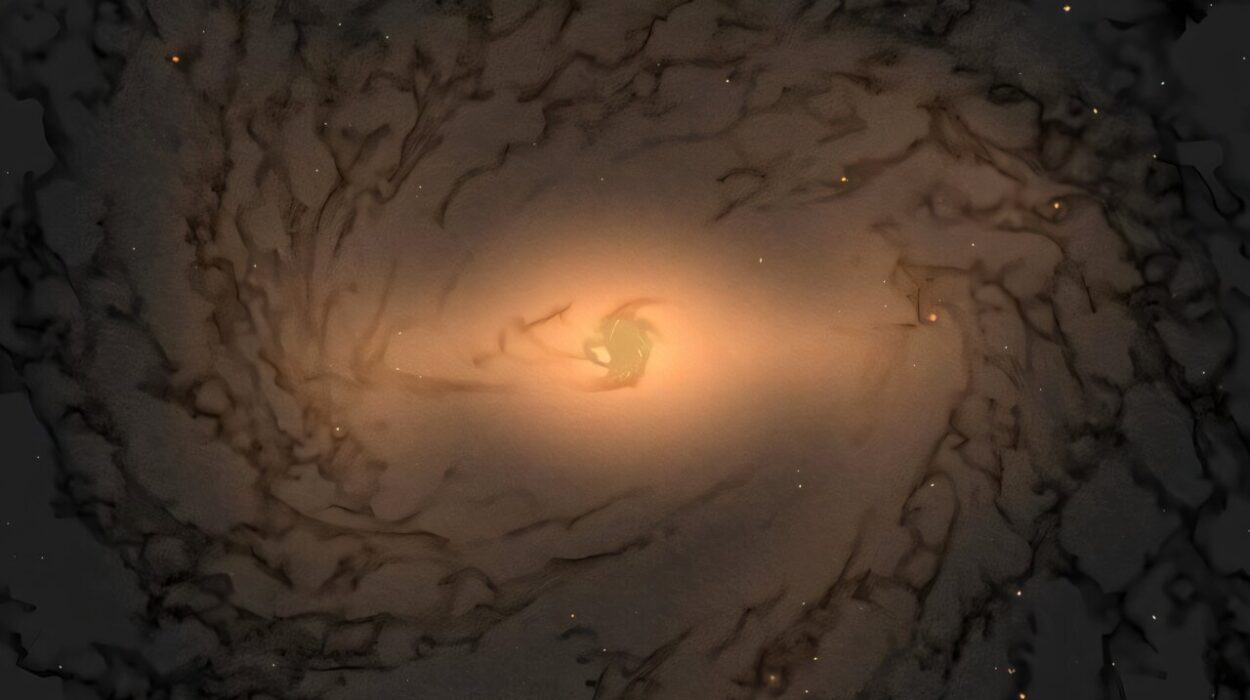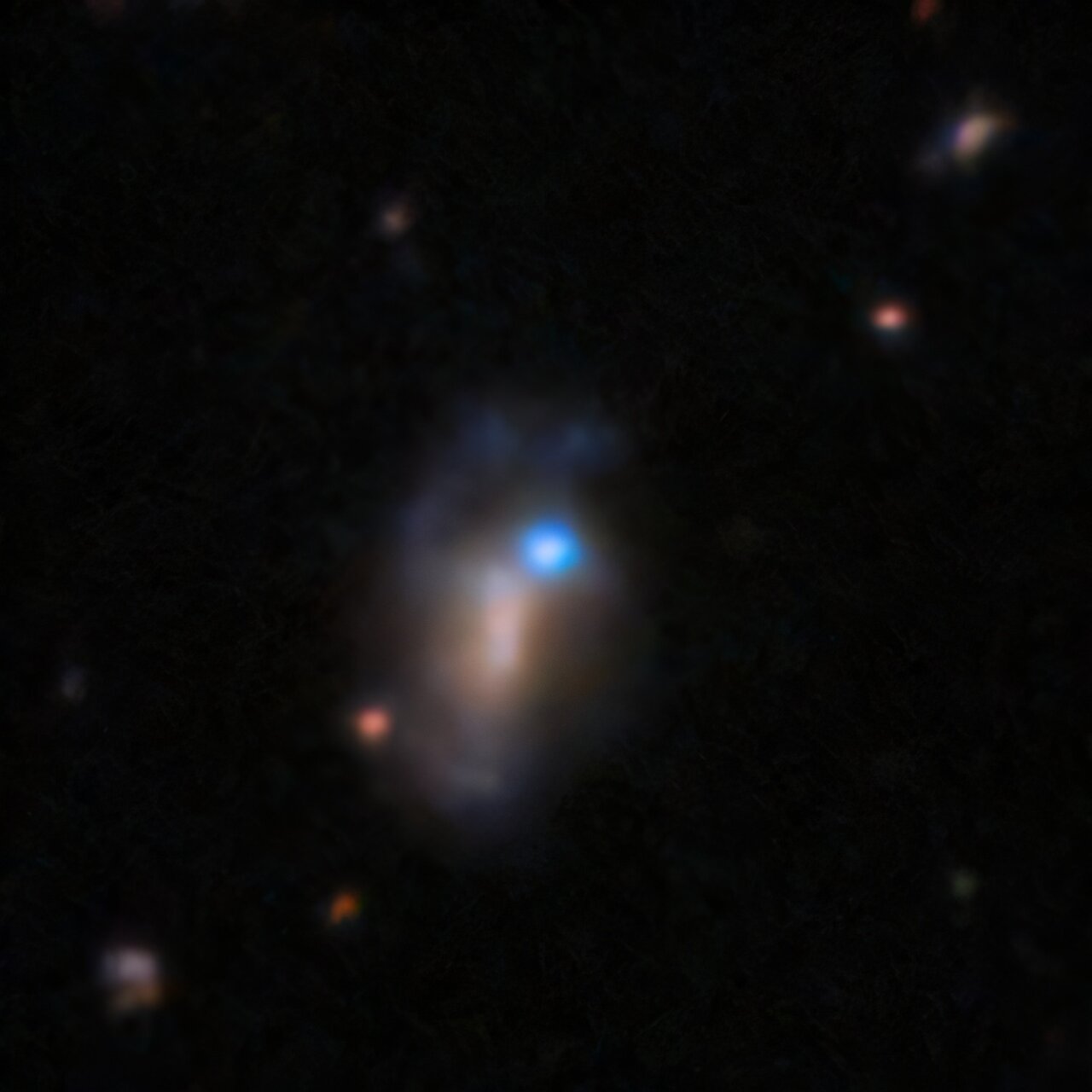
Soft X-rays from a galaxy roughly 500 million light-years away have given astronomers a rare look at the earliest moments of a supernova. The event, known as EP260321a and later identified as SN 2026gzf, produced the faintest X-ray shock breakout yet seen from a broad-lined Type Ic supernova, while follow-up observations found no evidence of the relativistic jet or gamma-ray burst often linked to such explosions.
The Einstein Probe detected EP260321a in March 2026. Within an hour, ground-based telescopes were watching the source as it rapidly brightened into a supernova.
Two independent teams, led by Brendan O’Connor of Carnegie Mellon University and Jillian Rastinejad of the University of Maryland, College Park, identified the X-ray flash as a shock breakout. This is the brief stage when the shock wave from a stellar explosion reaches the star’s surface and releases the first light from the supernova.
Shock breakouts are expected in supernova explosions, but catching one is difficult because the event can last only seconds to hours. Astronomers had confidently identified just one other clear X-ray shock breakout in the previous two decades.
That made EP260321a an unusually rare observation. It also turned out to be unusual in another way.
The supernova did not produce the expected high-energy signature
Both teams independently classified SN 2026gzf as a broad-lined Type Ic, or Ic-BL, supernova. These explosions are typically associated with jets of material moving close to the speed of light and are commonly linked to gamma-ray bursts.
SN 2026gzf did not follow that pattern.
The X-ray shock breakout was the faintest ever associated with an Ic-BL supernova, even though the overall explosion was not similarly weak. Follow-up observations across multiple wavelengths also found no evidence of a relativistic jet or its afterglow, and no gamma-ray burst followed the explosion.
O’Connor said the supernova otherwise looked remarkably similar to energetic explosions that have previously been connected with gamma-ray bursts.
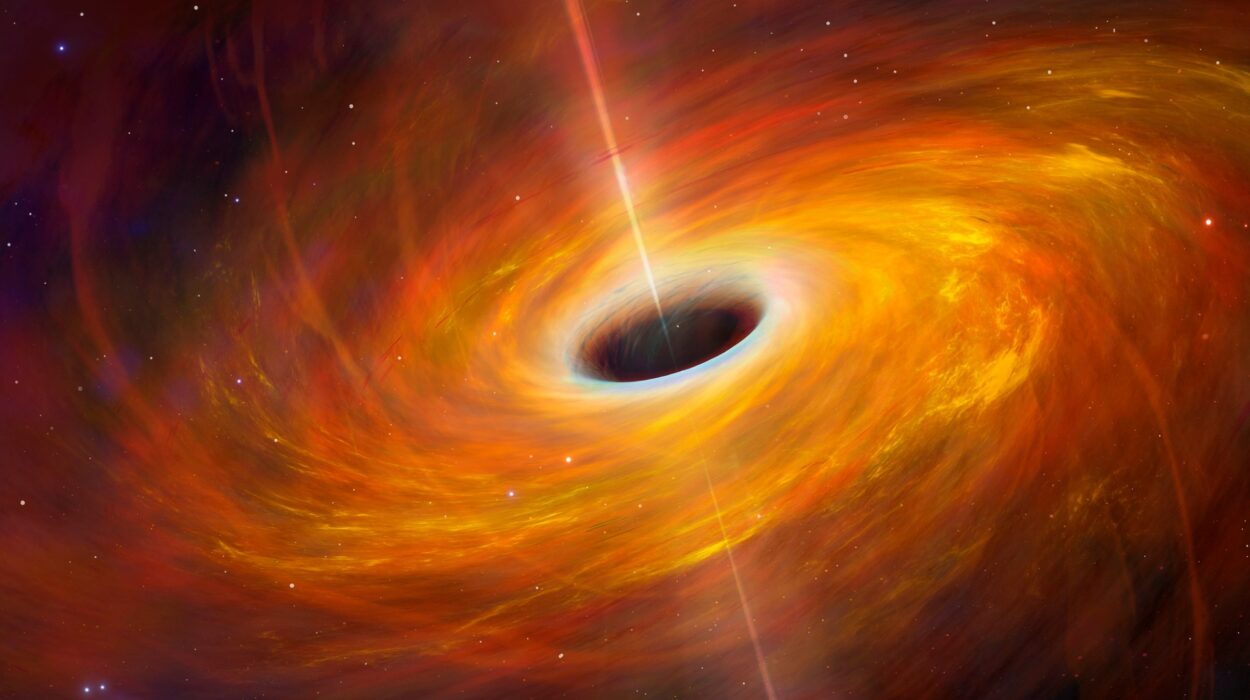
One possibility, he said, is that a jet formed but became “choked,” either by the star itself or by material surrounding it.
The observations did not establish that explanation, leaving the absence of a relativistic outflow as a central feature of the event.
Old images captured the star’s surroundings before it exploded
The researchers were able to look backward as well as forward.
Deep images from the Dark Energy Camera on the 4-meter Blanco Telescope in Chile tracked SN 2026gzf as it brightened toward peak luminosity. But archival DECam images taken 10 years before the explosion also showed a blue source at the same location.
Those older observations provided clues about the system before the star’s death.
The supernova also occurred inside the COSMOS Deep Drilling Field of the NSF–DOE Vera C. Rubin Observatory. Public commissioning data from Rubin’s alert broker, Babamul, supplied additional observations at multiple wavelengths. Those data tracked the supernova’s development and showed evidence of activity from the progenitor system shortly before the explosion.
Rubin’s observations are expected to continue following the event as it changes over the coming years.
The Dark Energy Spectroscopic Instrument, or DESI, provided another kind of record. Its spare-fiber transient program repeatedly obtained spectra of SN 2026gzf, allowing the team to follow changes in the explosion’s spectrum and confirm its Ic-BL classification.
The star had shed its outer layers before collapsing
Rastinejad’s team used observations from Gemini North and Gemini South, along with the Goodman spectrograph on the SOAR telescope, to study the explosion at multiple wavelengths. Their observations, combined with data from Rubin, Palomar Observatory and the Very Large Array, helped establish that the event lacked relativistic jets and provided information about the star’s immediate surroundings.
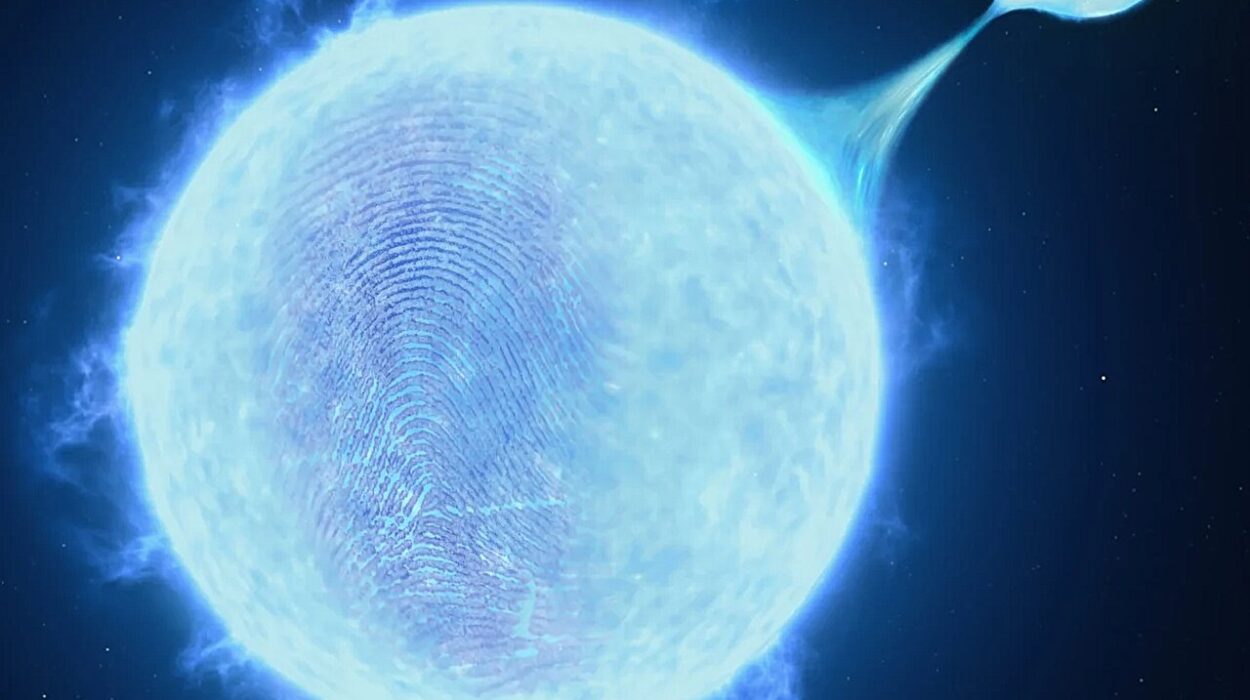
The progenitor was identified as a Wolf-Rayet star, which the researchers describe as a star born with about 20 times the mass of the Sun that burns through its hydrogen early in its life.
Before it exploded, the star underwent irregular episodes of mass loss. It eventually lost both its hydrogen and helium, leaving a stripped star made mostly of carbon and oxygen.
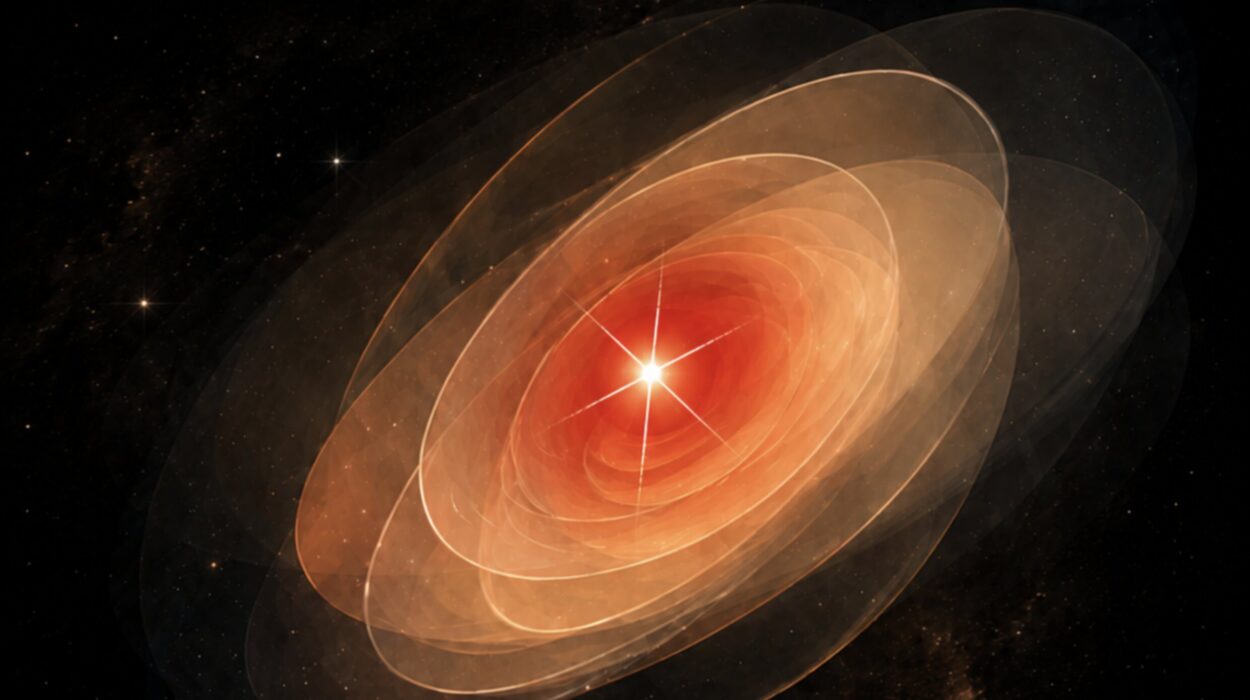
That mass loss also shaped the material around the star. The researchers identified multiple shells. A compact, low-mass shell close to the star produced the initial X-ray signal, while a more extended and asymmetric shell produced the optical supernova signal.
Rastinejad said the observations allowed her team to examine three parts of the event: the X-ray shock breakout, the supernova itself, and the supernova’s interaction with material that the star had previously expelled.
The combined observations allowed the team to map the structure of material around the star and reconstruct aspects of its mass loss before collapse.
The event therefore connects two unusual features: an exceptionally faint X-ray shock breakout and an energetic Ic-BL supernova without the relativistic outflow or gamma-ray burst that can accompany this class of explosion.
The researchers say the result indicates that energetic Ic-BL supernovae do not always produce gamma-ray bursts, relativistic outflows or long-lived afterglows.
The study was published in The Astrophysical Journal Letters.