Fractons, unusual quasiparticles that are almost unable to move on their own, have long been predicted to exist in exotic quantum materials. New numerical simulations now provide evidence that they could arise in a more realistic model of a solid, bringing the idea closer to experimental testing.
Quasiparticles are collective behaviors that emerge from the interactions of many particles inside a solid. Phonons, for example, describe vibrations moving through a crystal.
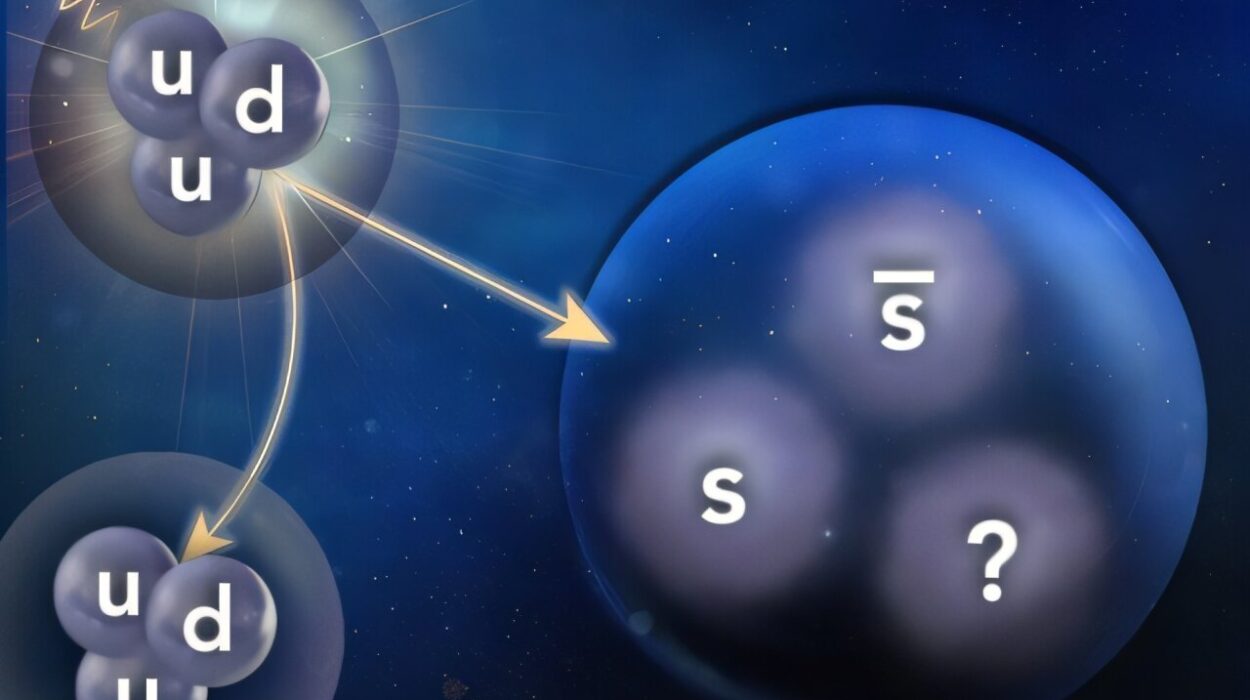
Fractons are a more unusual type of quasiparticle. They are predicted to occur at the vertices of magnetic domain walls separating different spin orders. Unlike ordinary particles that can move through a material, fractons are virtually immobile. They can only be displaced by other fractons.
That unusual restriction is one reason fractons have attracted interest from theoretical physicists. Their limited mobility could, in theory, be used to store quantum information in a robust way.
Fractons have been postulated in several systems, including quantum spin liquids. In these exotic states of matter, the magnetic moments of electrons do not settle into a fixed arrangement even at 0 K. Instead, they remain in constant motion.
But the predicted fractons in quantum spin liquids have not yet been observed experimentally.
Earlier models struggled with quantum effects
Until now, the theoretical prediction of fractons in these systems was possible only within highly generalized gauge field theories known as rank-2 U(1) gauge theories.
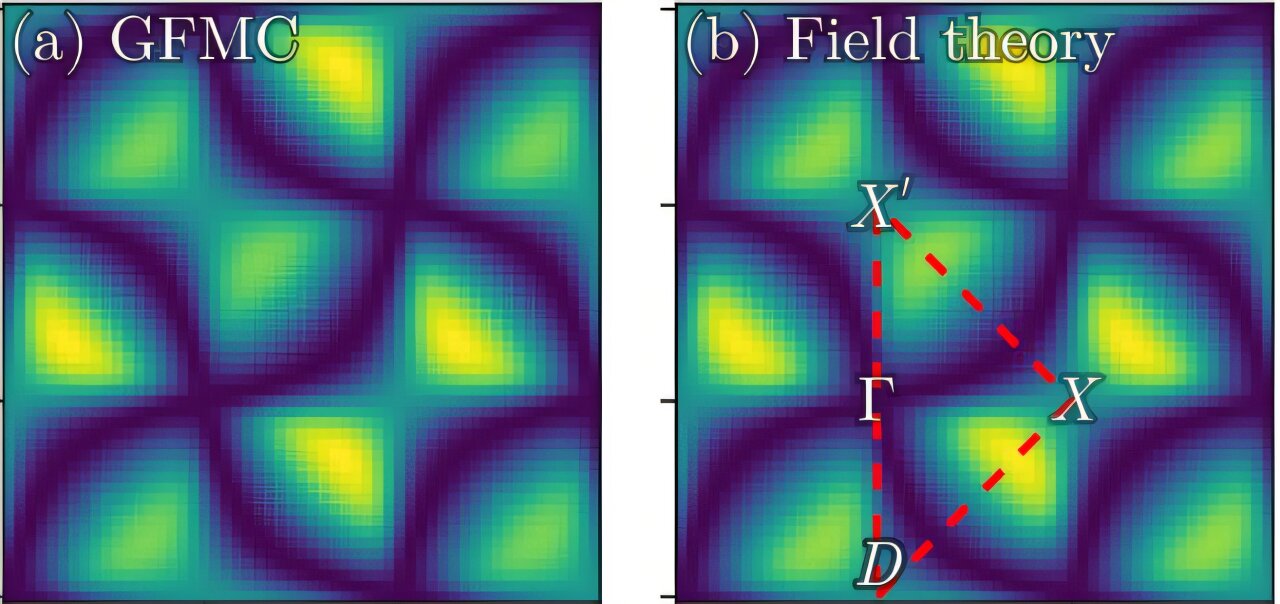
A study led by Johannes Reuther and Dr. Nils Niggemann has extended the prediction to a more realistic solid-state model. The researchers used numerical simulations that included quantum effects as well as spin interactions.
That had been difficult in earlier work by the group. In previous models, quantum effects were either too strong or too weak. When they were too strong, the fractons were destroyed. When they were too weak, the fractons could exist only as classical particles and did not retain quantum properties.
The improved modeling produced numerical evidence for a phase of matter in which fractons can exist with the relevant quantum properties.
The next step is experimental testing
The new result does not constitute an experimental observation of fractons. Instead, it provides evidence from numerical simulations that the predicted phase can occur in a more realistic solid-state model.
Reuther said that modeling the complex spin interactions benefited from exchanges with colleagues at the Helmholtz-Zentrum Berlin who work in experimental solid-state physics.
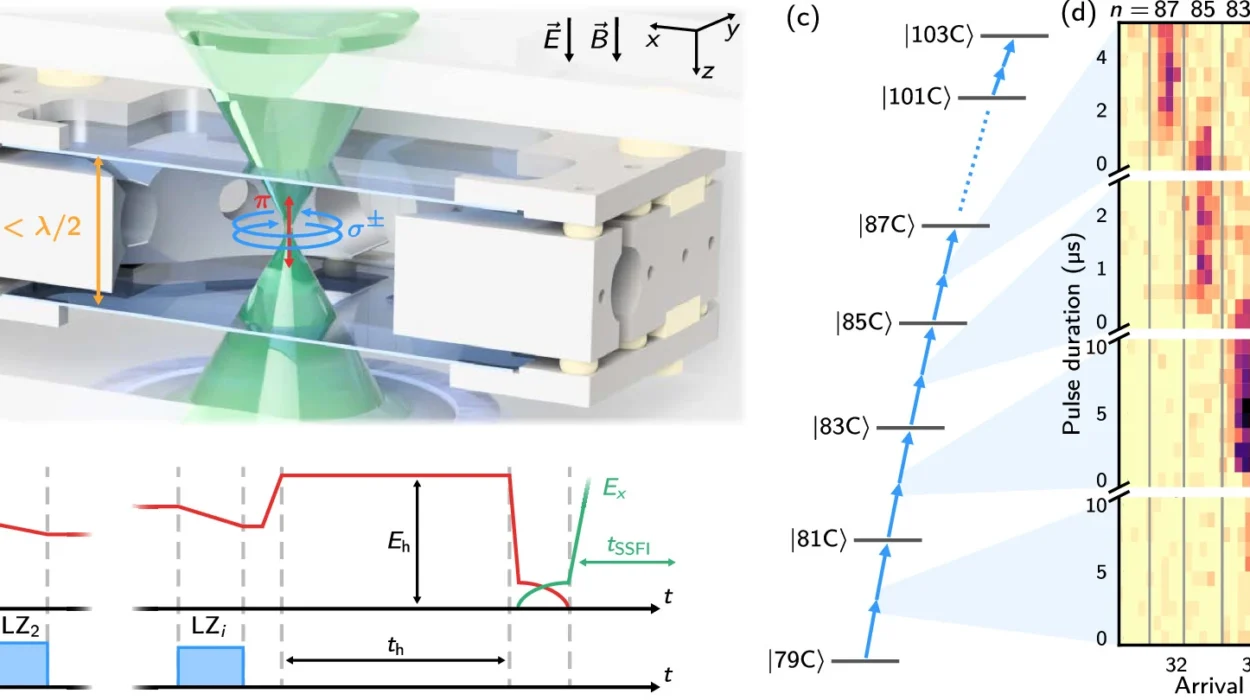
The next step is to develop real materials that reproduce the properties assumed by the theoretical model. Rydberg atom simulators are also being considered as a possible candidate for an experiment designed to detect the predicted behavior.
The study was published in Nature Communications.