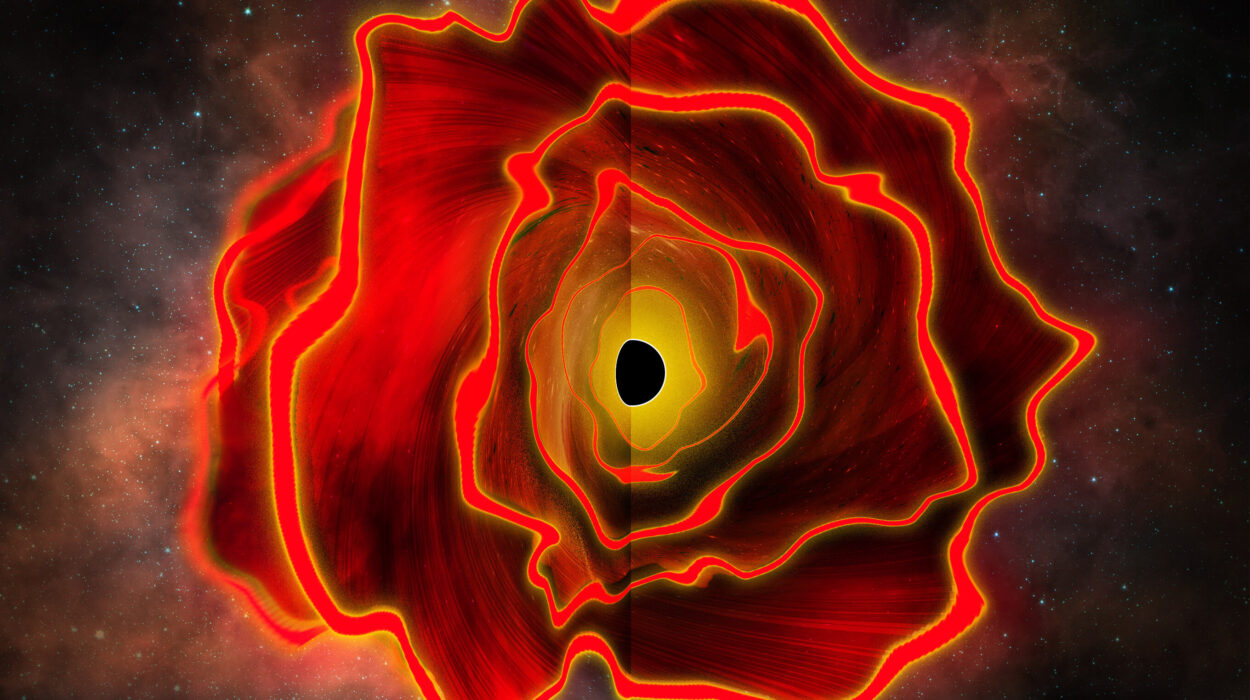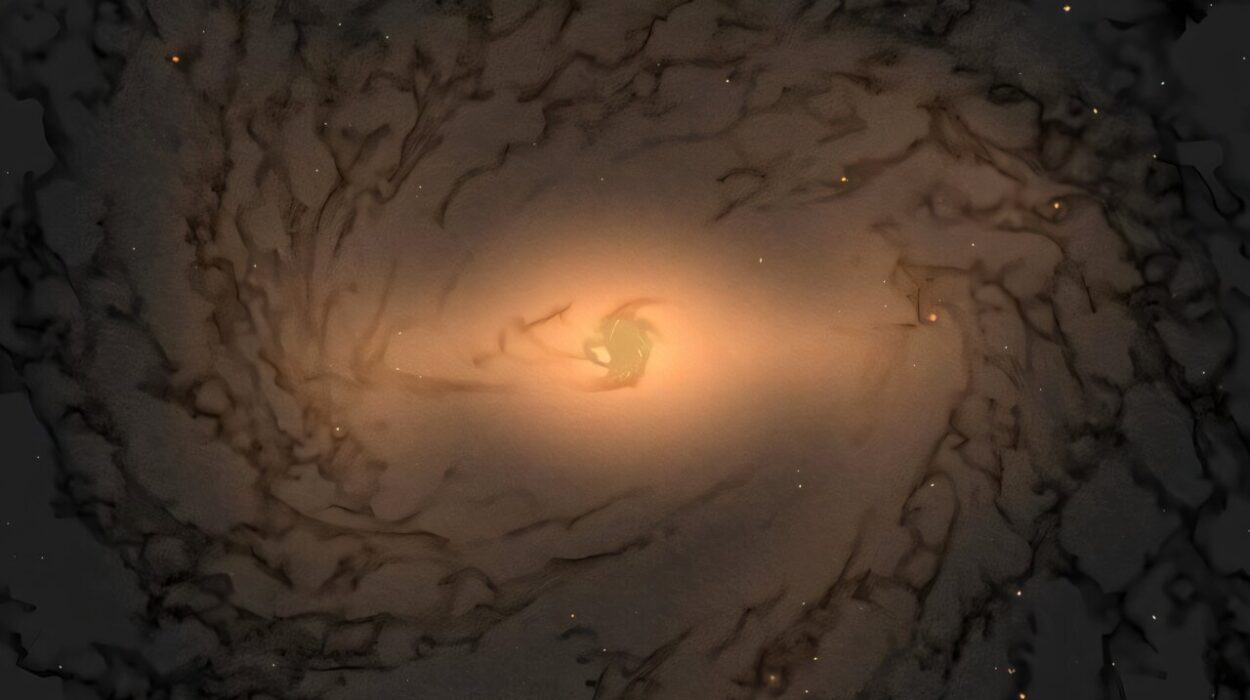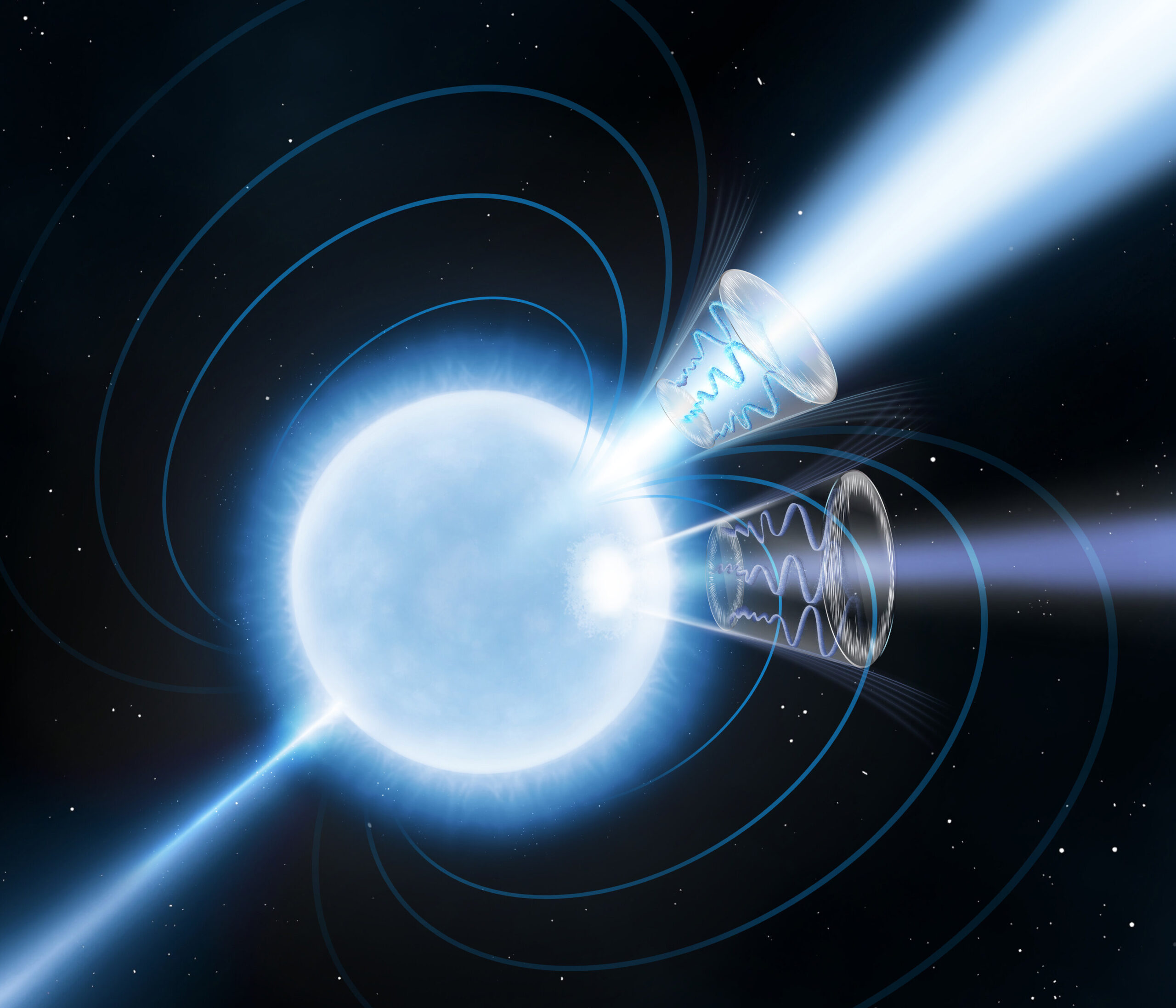
Astronomers studying the intense magnetic field of a magnetar have found what may be the first direct evidence that empty space itself can change how light behaves, an effect known as vacuum birefringence. The observation, made with X-ray and radio telescopes, provides a possible test of a quantum prediction that has remained difficult to detect for nearly 90 years.
The effect was predicted in the 1930s by Werner Heisenberg, one of the founders of quantum mechanics. The idea is that even a vacuum can be influenced by quantum effects involving particles that briefly appear and disappear. In an extremely strong magnetic field, those effects are expected to change how light travels through what otherwise appears to be empty space.
The challenge is that the required magnetic fields are far beyond anything produced on Earth. According to Dr. Marcus Lower of Swinburne University of Technology, detecting vacuum birefringence requires a field more than 100 million times stronger than the strongest fields humans have made.
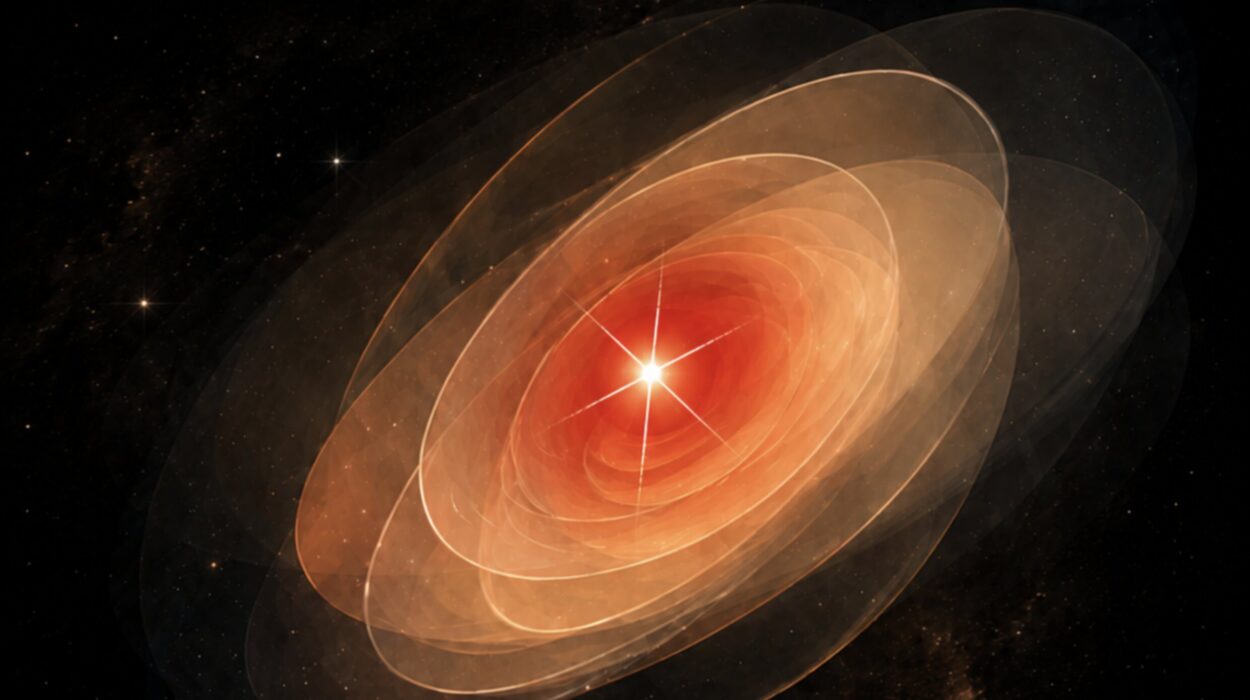
Magnetars provide those conditions. These rare neutron stars have the strongest magnetic fields known in the universe, making them suitable places to search for the effect.
Lower was part of an international team that studied a magnetar called 1E 1547.0–5408, or 1E1547. The team used NASA’s Imaging X-ray Polarimetry Explorer, known as IXPE, along with the NICER X-ray telescope aboard the International Space Station and Murriyang, CSIRO’s Parkes radio telescope.
The magnetar’s orientation made the test possible
The researchers first tracked the polarization of radio waves coming from the magnetar as it rotated. Polarization describes the direction in which the waves oscillate.
Those observations indicated that the magnetar’s magnetic and rotational axes are nearly aligned and that the system is being viewed almost directly along its pole. That particular geometry made 1E1547 especially useful for searching for vacuum birefringence.
The team then looked for signs of the predicted effect in the magnetar’s X-rays.
They found that the X-rays detected by IXPE had extremely high polarization. More importantly, the direction of that polarization was tied to the magnetar’s magnetic field in the same way as the radio-wave polarization.
Together, these observations provide what the researchers describe as two telltale signs of vacuum birefringence around the magnetar.
The evidence is not yet considered final
The observations could represent the first direct detection of vacuum birefringence, but the finding still needs confirmation.
Other processes can occur around magnetars, and the researchers say additional observations and improved computer simulations are needed to distinguish the possible vacuum-birefringence signal from those effects. Lower’s analysis included observations from Murriyang and calculations performed with Swinburne’s Ngarrgu Tindebeek supercomputer.
The researchers expect future data and updated simulations could provide a stronger test of the interpretation. For now, the observation remains a possible detection of the quantum effect first predicted nearly 90 years ago.
The study was published in Nature.