Far from simply pulling matter inward, the regions around supermassive black holes may provide the ingredients for enormous planet-like objects to form, with some growing to hundreds or thousands of times the mass of Earth and potentially reaching the mass needed to become stars.
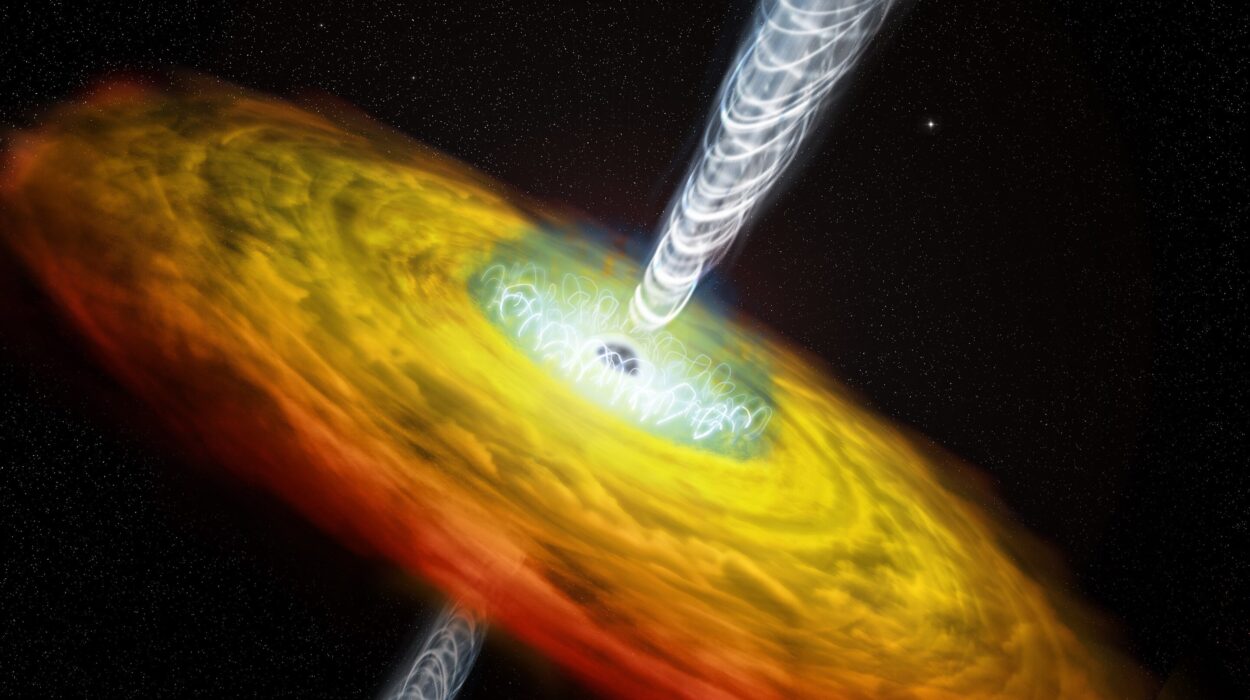
The idea comes from research led by Wladimir Lyra, an associate professor of astronomy at New Mexico State University, and Bhupendra Mishra, currently at Santa Fe Preparatory School. Their work examines the outer regions of the disks of gas and dust surrounding supermassive black holes.
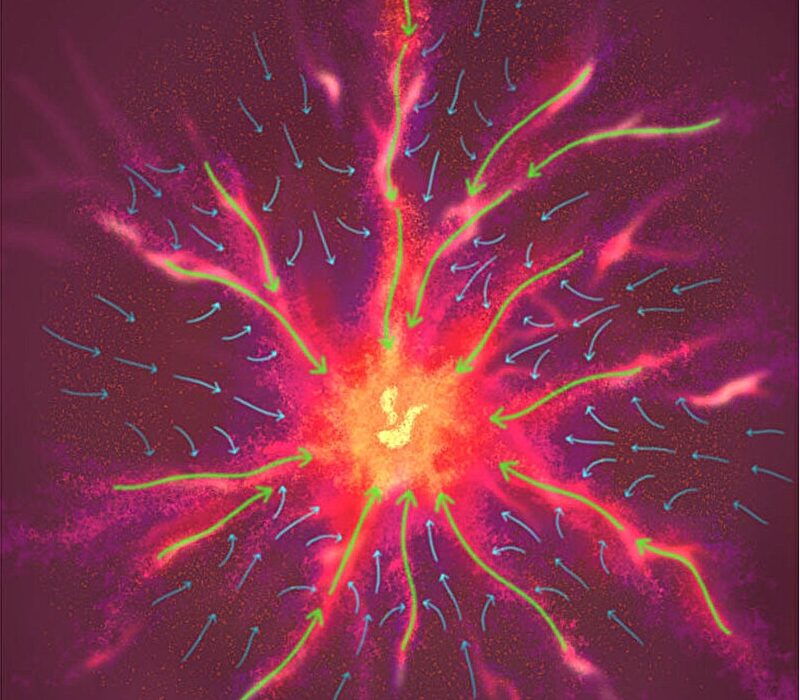
These regions may have conditions similar to the disks around young stars, where planets can form. In the team’s model, dust can clump together into planet-mass objects. Those objects can then move through the disk, change their orbits, collide with one another and grow.
Lyra first began developing the idea in 2010 while he was a postdoctoral fellow working with Barry McKernan, Saavik Ford and Mordecai-Mark Mac Low at the American Museum of Natural History.
The researchers describe this process as the “AGN Channel.” Their hypothesis is that low-mass black holes orbiting within the disk around a supermassive black hole could behave in ways similar to planetary embryos orbiting a star.
“We’re finding objects that are a thousand times the mass of the Earth, but built of pure dust,” Lyra said. “And not only that, but also some of these objects are approaching the mass of the sun.”
The team used computer models to examine conditions in the outer portions of these disks and followed how dust could clump together and how the resulting objects could grow over millions of years.
Some objects could become massive enough to ignite
The simulations produced an unexpected result for the researchers: the objects could become extremely large, and potentially numerous, during the lifetime of an active galactic nucleus.
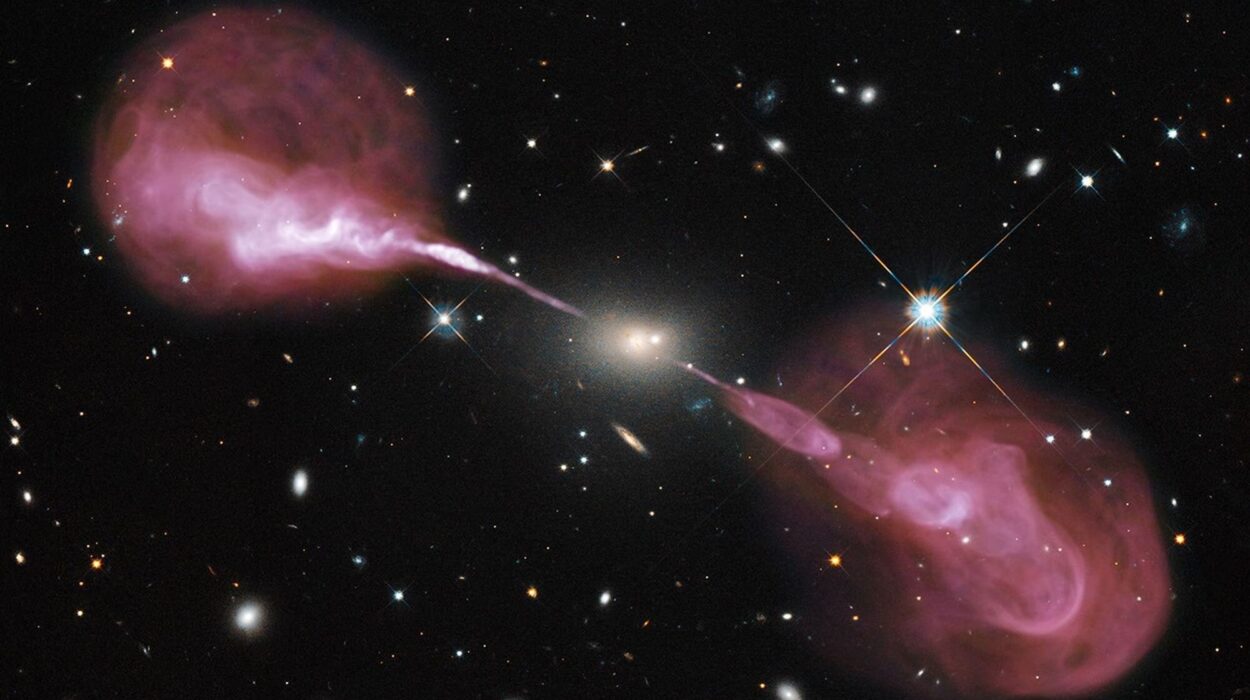
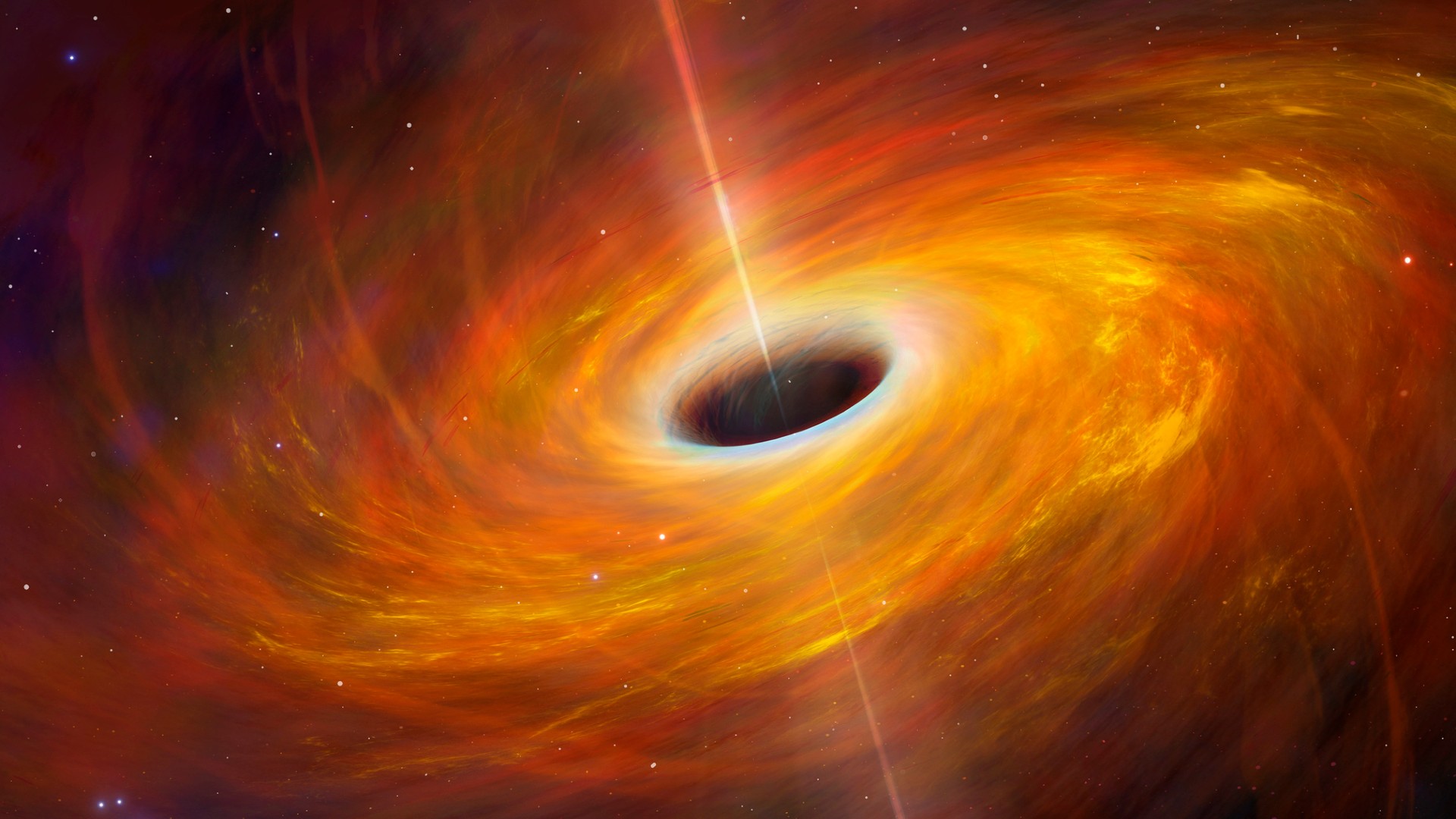
An active galactic nucleus, or AGN, is the compact central region of a galaxy where matter falling toward a supermassive black hole produces immense energy. In the modeled environment, gas and dust become heated and glow brightly.
Some of the planet-like objects produced in the simulations become so massive that they enter a range in which nuclear fusion could ignite. At that point, they could become stars.
That would represent a different formation process from the usual picture described by the researchers. In the conventional process, a large cloud of gas collapses under its own gravity to form a star.
The mechanism proposed by Lyra’s team works in the opposite direction. It begins with smaller solid building blocks. Those objects grow and then accumulate gas, eventually reaching the mass of a star.
“This is a mechanism of forming stars that we discovered for the first time,” Lyra said.
The process could also produce massive black holes
The proposed environment may also provide a route for producing large stars that later collapse into black holes.
According to the researchers, those black holes could eventually collide and produce black holes a few hundred times the mass of the sun. If such black holes moved toward the center of the galaxy, their interactions could produce gravitational waves.
Those waves are ripples in spacetime produced by massive cosmic events. The researchers suggest that some of the signals from these black holes could eventually be detected by LISA, the Laser Interferometer Space Antenna.
LISA is an upcoming space-based observatory planned by the European Space Agency for launch in the mid-2030s. It will use three spacecraft arranged in an equilateral triangle, with laser beams exchanged between them to detect changes caused by gravitational waves.
The researchers’ proposed chain therefore begins with dust in the disk around a supermassive black hole. The dust can form massive planet-like objects, some of which may grow large enough to become stars. Those stars could then produce black holes that may later merge.
Microlensing could provide a test
The team has also proposed a way to look for evidence of these objects.
The method involves gravitational microlensing. When a massive object passes between an observer and a distant light source, its gravity can bend the light and temporarily change the observed brightness of the background source.
For the AGN Channel, the researchers predict that objects orbiting within an AGN disk could produce a distinctive pattern of changing brightness when they pass across the line of sight to the bright AGN.
That predicted light curve could serve as an observable signature of the objects described by the model.
“Einstein thought it would never be observable because the signature is so small, but his theory ignited a whole new field,” Lyra said.
The same general technique is also used to search for exoplanets. The researchers propose that microlensing could likewise test whether massive objects are forming in AGN disks by looking for the specific brightening patterns predicted by their model.
The next simulations will add more complexity
The team is now planning another round of computer modeling. The next simulations are intended to predict electromagnetic counterparts to gravitational-wave events.
The researchers want to build a more complete model that includes a black hole, spiraling gas, magnetic fields and turbulence.
“Our plan is that we create this scenario in the full computer model where we have a black hole and the gas is spiraling and we have magnetic fields with all this turbulence going on in the actual simulation,” Mishra said. “It will be an extremely complex simulation, and that’s our next step.”
The study was published in The Astrophysical Journal.