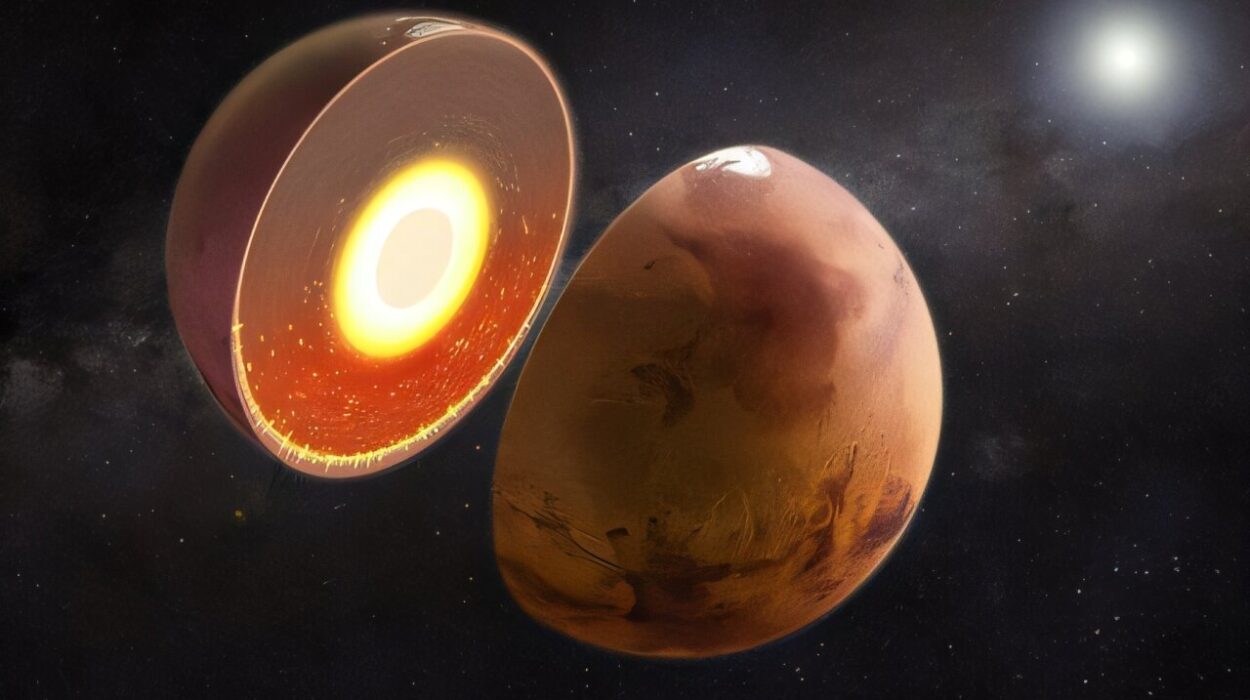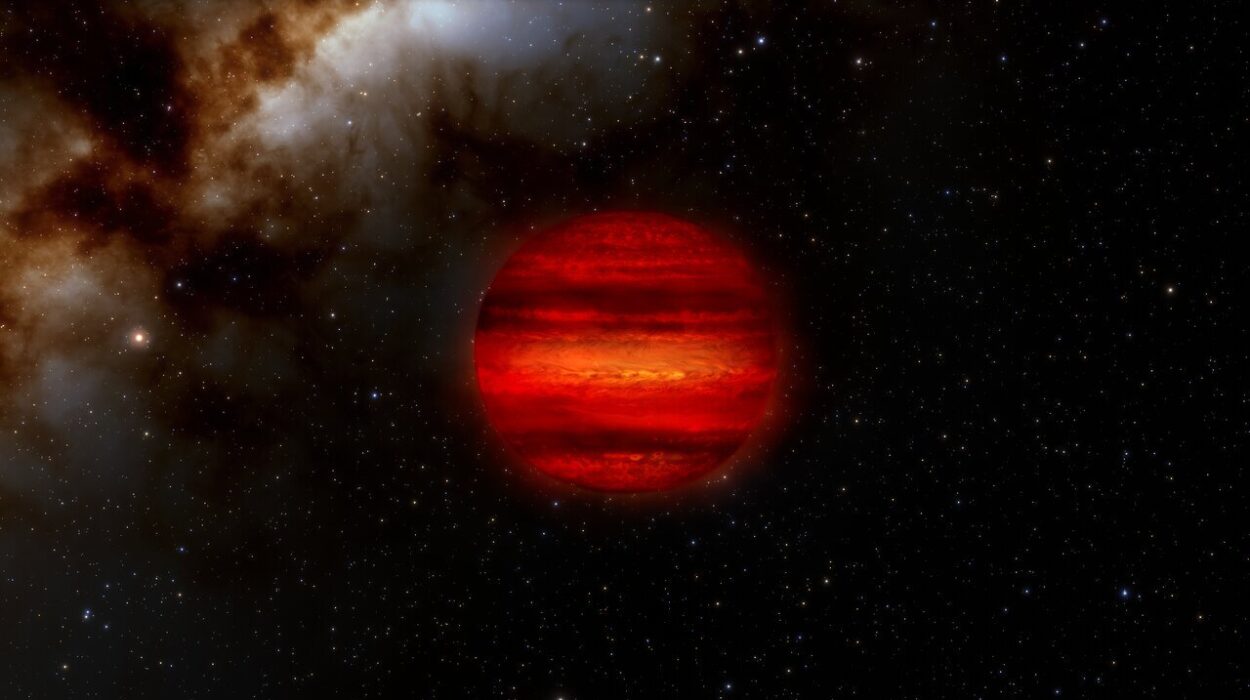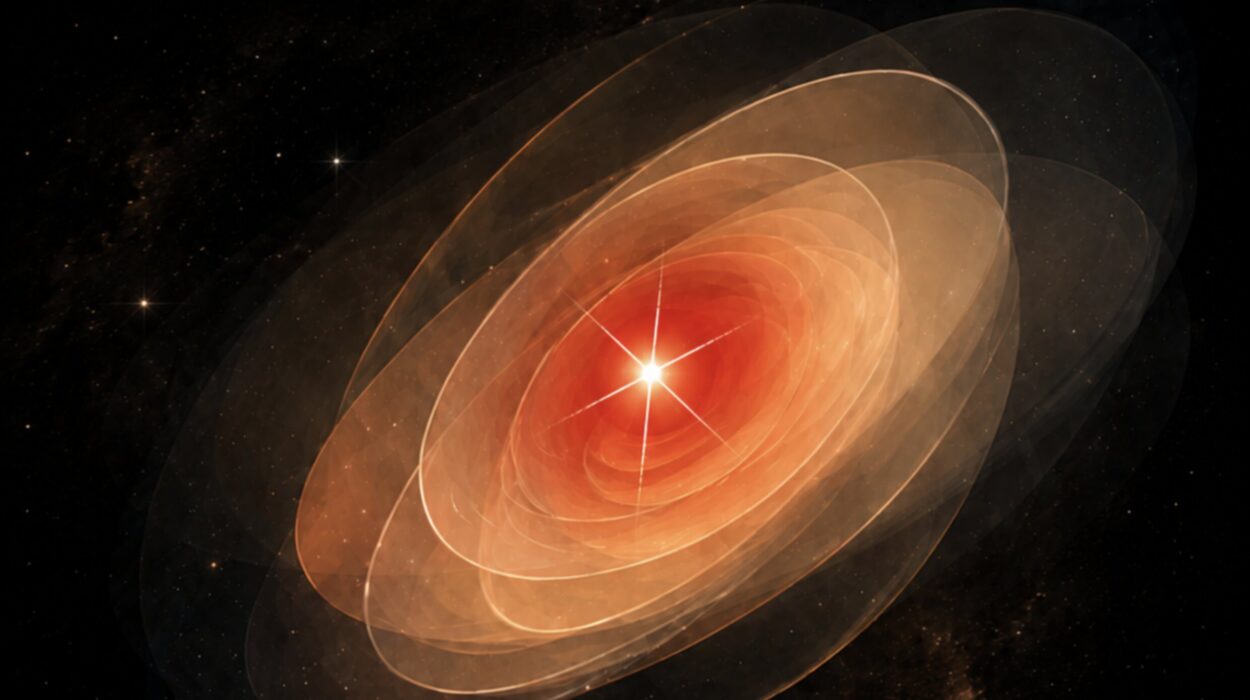
An exoplanet more than 2.5 times the size of Earth appears to be made mostly of dense rock, with a massive core and far less atmosphere than expected for a world of its size. The unusual planet, GJ 523b, is the first exoplanet discovered and cataloged by researchers with the Wisconsin Center for Origins Research, or WiCOR.
GJ 523b was originally selected as a candidate because its estimated size and temperature made it interesting to researchers looking for Hycean worlds. These are theorized exoplanets with large oceans and temperate atmospheres that could potentially support life.
The planet did not turn out to be Hycean.
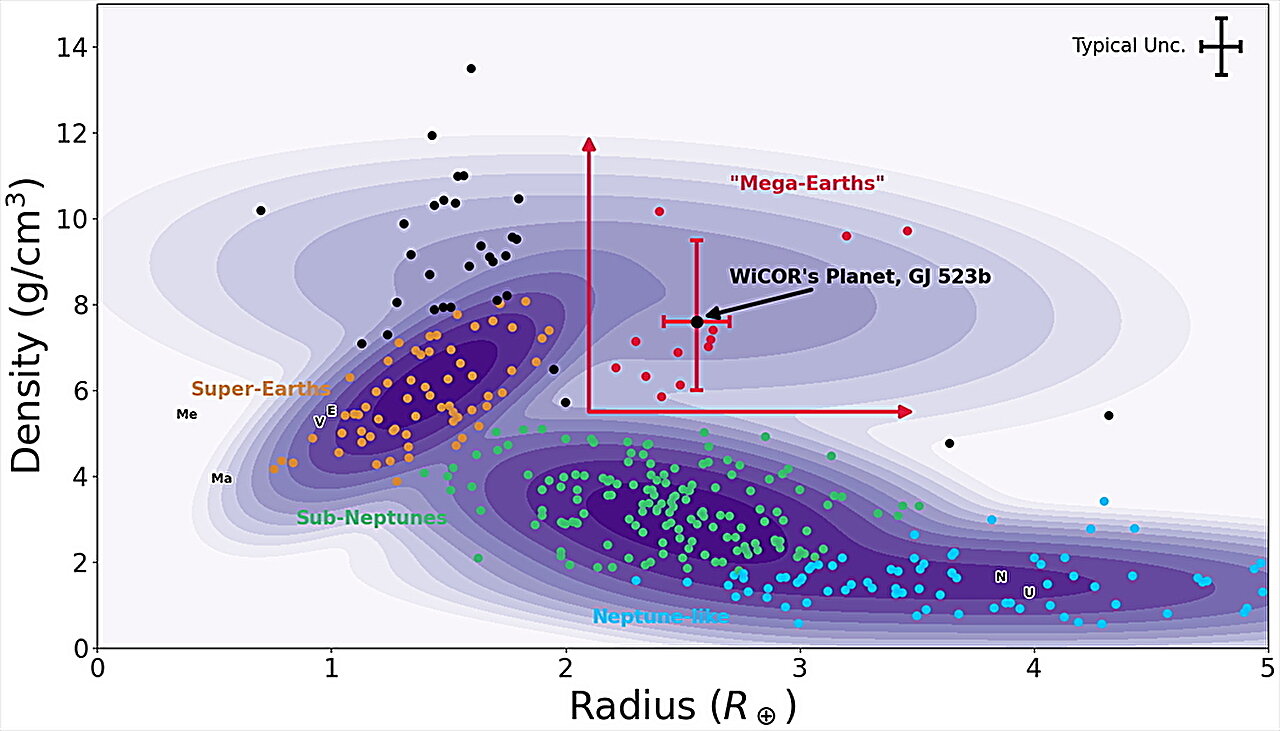
Instead, observations indicate that GJ 523b is mostly dense rock and has a massive core weighing about 23 times as much as Earth. Its core is about 60% the size of Neptune, while the planet itself is more than 2.5 times Earth’s size.
That combination makes GJ 523b an unusual object. Dense planets are known, but they are generally small rocky worlds more similar in size to Earth or Mercury.
“This isn’t what we expected at all,” said Max Kroft, a graduate student in the lab of Assistant Professor of Astronomy Thomas Beatty and lead author of the paper describing the planet.
The paper is currently under review and is available through the preprint server arXiv.
How the planet was found
The search began with data from NASA’s Transiting Exoplanet Survey Satellite, or TESS, which monitors stars for periodic changes in their brightness.
When a planet passes in front of its star, it can block some of the star’s light. That produces a small, repeated dip in the star’s brightness.
A larger planet produces a larger dip, while the timing of those dips provides information about the planet’s orbit. Those measurements can also be used to estimate the planet’s temperature.
TESS has identified more than 8,000 candidate planets, although fewer than one-quarter have been confirmed.
Kroft followed up on the candidate that became GJ 523b using the WIYN telescope in Arizona and a high-resolution spectrograph. The team then combined those observations with data collected by the James Webb Space Telescope to investigate the planet’s density and atmosphere.
The observations produced a planet that did not match what the researchers had initially expected.
Why its lack of atmosphere is puzzling
Planet formation generally involves a rocky and metallic core that can accumulate a gaseous, hydrogen-based atmosphere.
In the solar system, larger planets such as Jupiter and Saturn developed massive atmospheres after reaching roughly 20 times Earth’s size.
GJ 523b presents a different case. It is more than twice Earth’s size, yet the observations indicate that it is dominated by dense rock rather than carrying the kind of massive atmosphere expected for a planet of comparable scale.
“The question is, why didn’t this planet do that, if it’s 20 times the size of Earth?” Kroft said.
The researchers propose several possible explanations in their paper.
One possibility is that the planet once had more atmosphere but lost some of it after orbiting too close to its star. Another is that GJ 523b formed through a collision between two planets, with the intense heat of the impact stripping away much of their atmosphere.
In that scenario, the collision could have left behind a large rocky body with relatively little atmosphere.
“It kind of blows away,” Kroft said. “A planet can’t hold on to its atmosphere if it’s really hot, and so you could be left with this big glob of rock made by these two planets with very little atmosphere.”
What makes it a “Mega-Earth”
The researchers classify GJ 523b as a “Mega-Earth” because of its massive size.
Thomas Beatty said astronomers have used the term for more than a decade, but have not previously had a planet that allowed them to define the category concretely.
GJ 523b may provide that opportunity, but the researchers emphasize that defining what a Mega-Earth actually is requires more than astronomical measurements alone.
Understanding the planet’s composition involves questions about how iron and rock behave under pressures beyond those that can be reached in laboratories on Earth. Atmospheric scientists are also needed to determine how much of what is measured comes from rock and how much may be associated with the atmosphere.
More unusual planets could help
For now, GJ 523b is a sample size of one.
Kroft hopes that researchers will identify additional dense, oversized planets among the thousands of candidates that have already been found. A larger group could make it easier to determine whether GJ 523b represents an isolated case or belongs to a broader population.
“We’re not going to get to 10,000 of these overdense planets,” Kroft said. “But if we can get to 20 or 30, maybe some trends might pop out, where maybe the heaviest ones have shorter orbital periods, or they tend not to have companion planets.”
NASA is scheduled to launch the Nancy Grace Roman Telescope at the end of August, and it is expected to find tens of thousands of potential new planets.
For WiCOR, GJ 523b is the first exoplanet discovered and cataloged by the center. The collaboration brings together researchers from seven UW–Madison departments, including astronomy, biology, chemistry, geoscience, atmospheric and oceanic sciences, physics and bacteriology.
The study was published in arXiv.