Dark matter has never been detected directly, but a narrow gamma-ray signal from several nearby galaxy clusters may offer one of the strongest hints yet that the mysterious substance could be made of WIMPs, a leading candidate for dark matter particles.
Dark matter is thought to account for roughly 85% of all the mass in the universe. Its presence is inferred from effects such as the way galaxies rotate and the gravitational forces that hold galaxy clusters together. But after decades of searches, physicists still have not directly detected the substance itself.
Now, a team led by Yi-Zhong Fan of the Chinese Academy of Sciences has identified a gamma-ray signal that has several features expected from WIMPs, or weakly interacting massive particles. The researchers analyzed more than 15 years of observations from the Fermi Gamma-ray Space Telescope, looking at 13 nearby massive galaxy clusters.
Their result, published in Physical Review Letters, is not being presented as a confirmed dark matter detection. But the researchers argue that the signal is strong enough to deserve further investigation.
The signal stands out because of its narrow energy
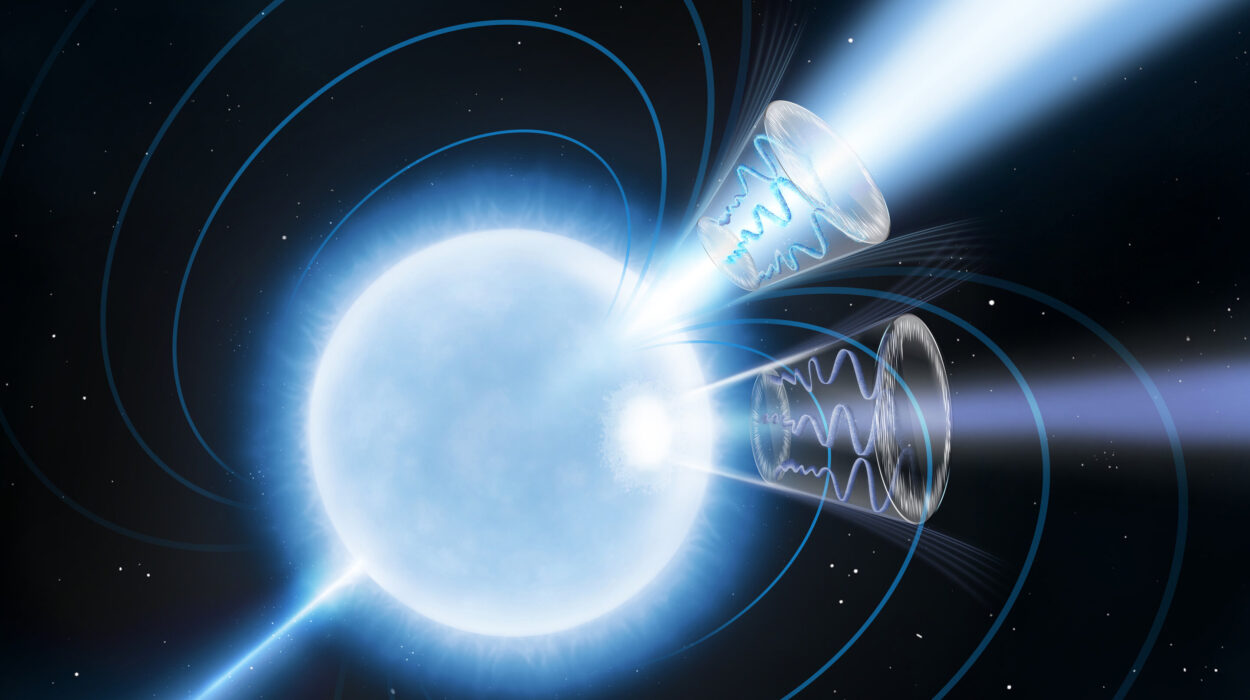
WIMPs are hypothetical particles that are expected to interact only weakly with ordinary matter and light while still producing gravitational effects. One proposed way to find them is to look for particles created when WIMPs annihilate.
Such annihilation could produce gamma rays across a range of energies. That kind of broad signal can be difficult to separate from the many other sources of high-energy radiation in space.
A narrow energy feature would be different. A sharp spike would be harder to explain with known astrophysical processes and could provide a more distinctive signature of dark matter.
That is the feature Fan’s team found.
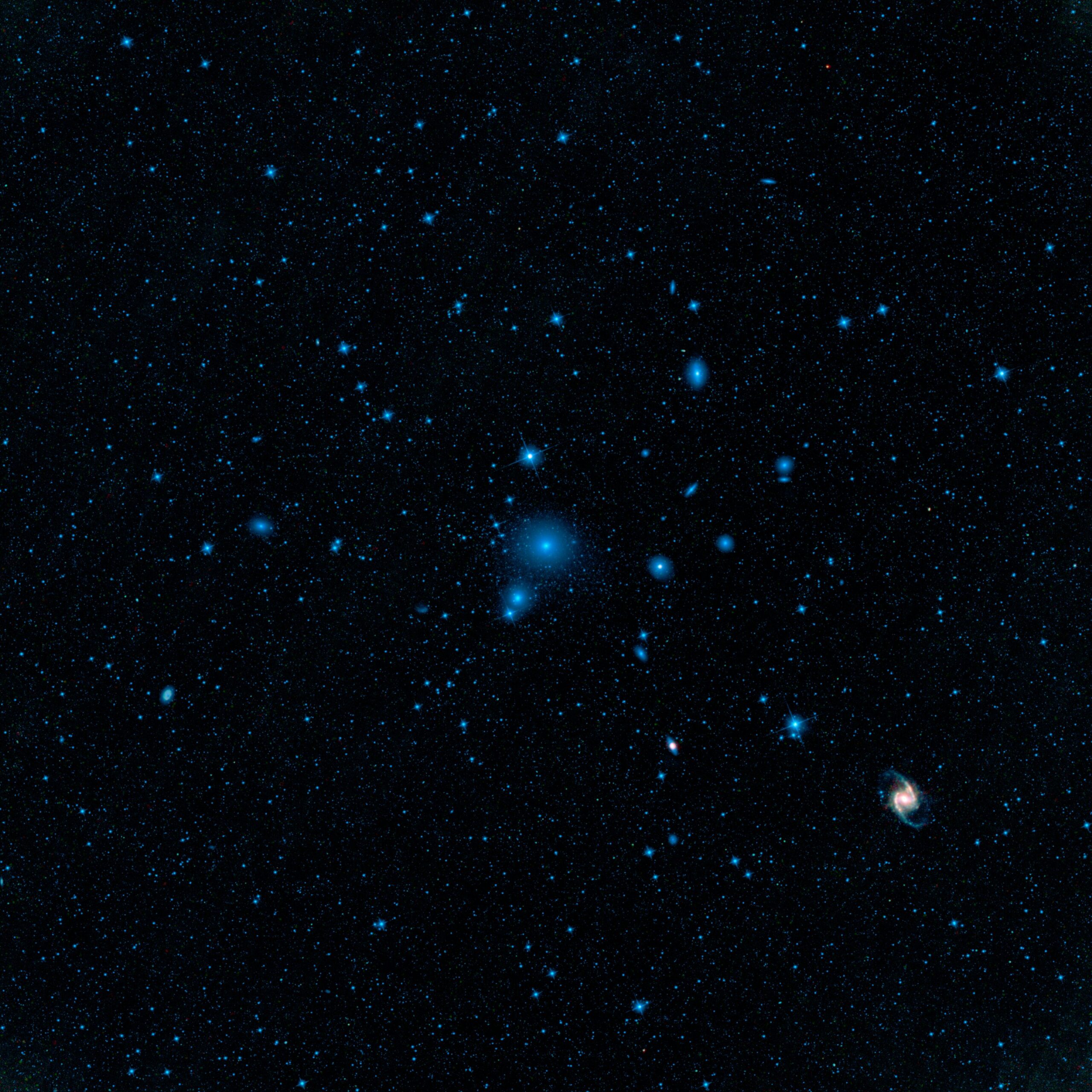
The researchers identified a narrow gamma-ray line at an energy of about 43 billion electron volts. The signal was strongest in three of the clusters they examined: Virgo, Fornax and Ophiuchus. These clusters are expected to contain particularly dense concentrations of dark matter.
According to the researchers’ calculations, known astrophysical processes have difficulty producing such a sharp feature. The energy line is instead consistent with what would be expected from WIMP annihilation.
The researchers checked for a telescope problem
A possible dark matter signal has to survive another challenge: making sure it is not simply an error in the instrument or the analysis.
The researchers therefore examined the center of the Milky Way, where a similar signal had previously been attributed to a telescope-related problem and had been mistaken for dark matter about a decade ago.
They did not find a corresponding glitch there in this analysis. That reduced the likelihood that the cluster signal was caused by the same kind of instrumental problem.
Still, one feature of the new signal kept the researchers from treating it as a confirmed discovery.
The signal changed over time
The strength of the gamma-ray signal did not remain constant throughout the years of observations. It declined around 2016 and later increased again.
Because of that variation, the team did not describe the observation as a confirmed detection of WIMPs. Instead, the researchers considered it a strong hint that needs to be tested with additional observations.
If WIMPs are responsible for the signal, the researchers propose that a future Very Large Area Gamma-ray Space Telescope could provide a way to test the finding. That telescope remains theoretical and was first proposed by Fan’s team.
The study was published in Physical Review Letters.