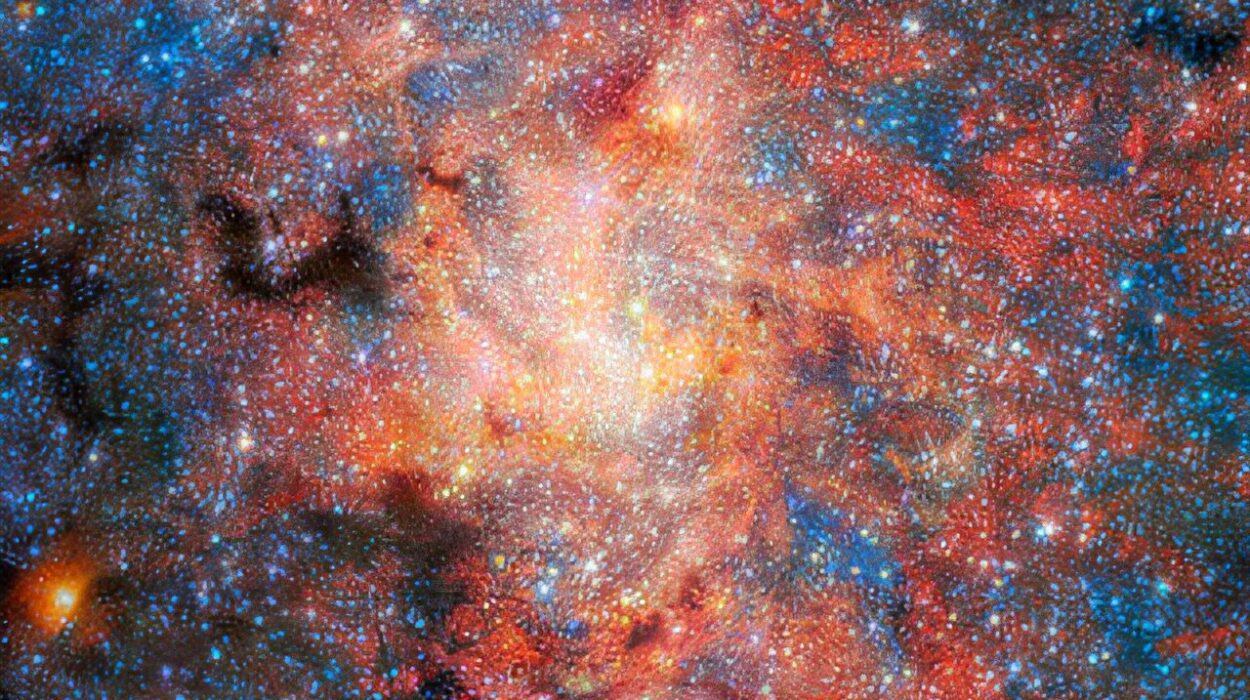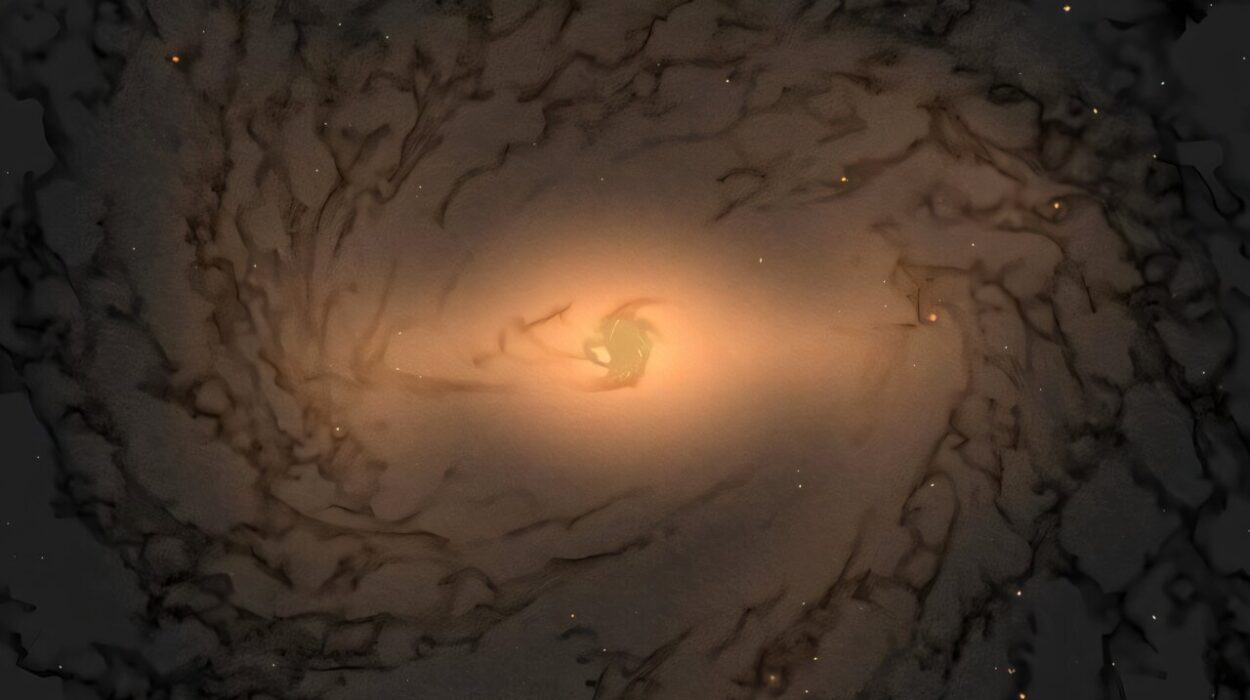
A compact Green Pea galaxy appears to contain two actively feeding supermassive black holes, giving astronomers their first confirmed dual active galactic nucleus in this unusual class of nearby galaxies. X-ray observations and spectroscopy point to two black holes growing inside a galaxy caught in the middle of a merger.
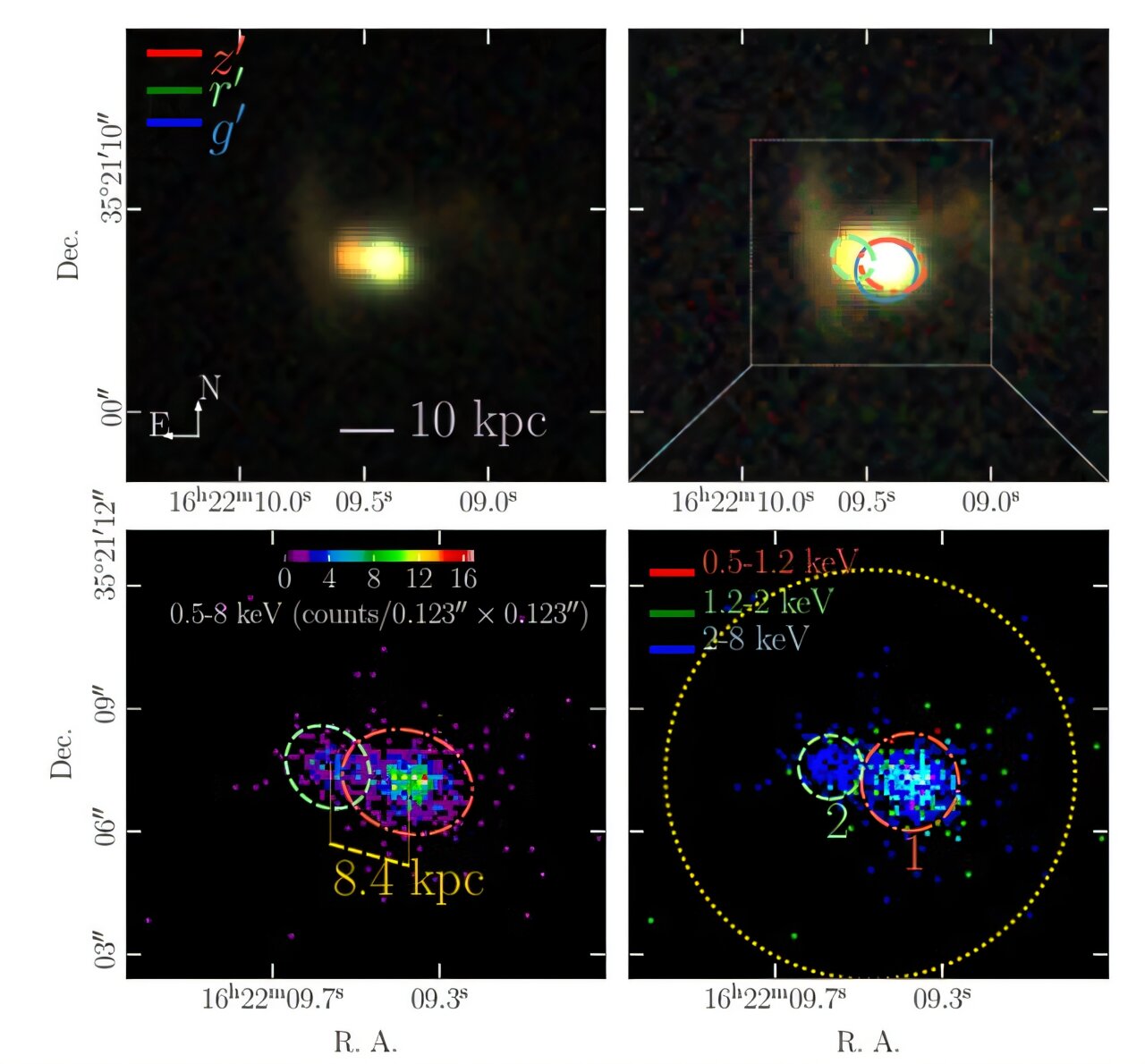
The galaxy, known as J1622+3521, has a messy, irregular structure. Deep optical images revealed signs that it is undergoing a merger and showed two distinct cores within the system.
That raised a key question: were the two cores actually powered by separate actively feeding black holes?
To investigate, Konstantinos Kouroumpatzakis of the Czech Academy of Sciences and his colleagues combined X-ray observations from the Chandra X-ray Observatory with spectroscopic observations from the Keck telescopes.
The evidence from both methods pointed to two active galactic nuclei, or AGNs. These are regions around actively feeding black holes that can produce intense radiation.
The two cores appear to belong to the same system
Keck spectroscopy found strong emission lines associated with actively feeding black holes. The observations also detected rare high-ionization lines that require the intense radiation produced by an AGN.
The researchers measured the redshift of each component and found that their velocities differed by only about 7 kilometers per second. That difference was within the uncertainty of the measurement.
The researchers say the result is consistent with the two cores sharing a common systemic velocity. This supports the interpretation that they are part of an interacting system caught during a merger, before the two black holes have merged.
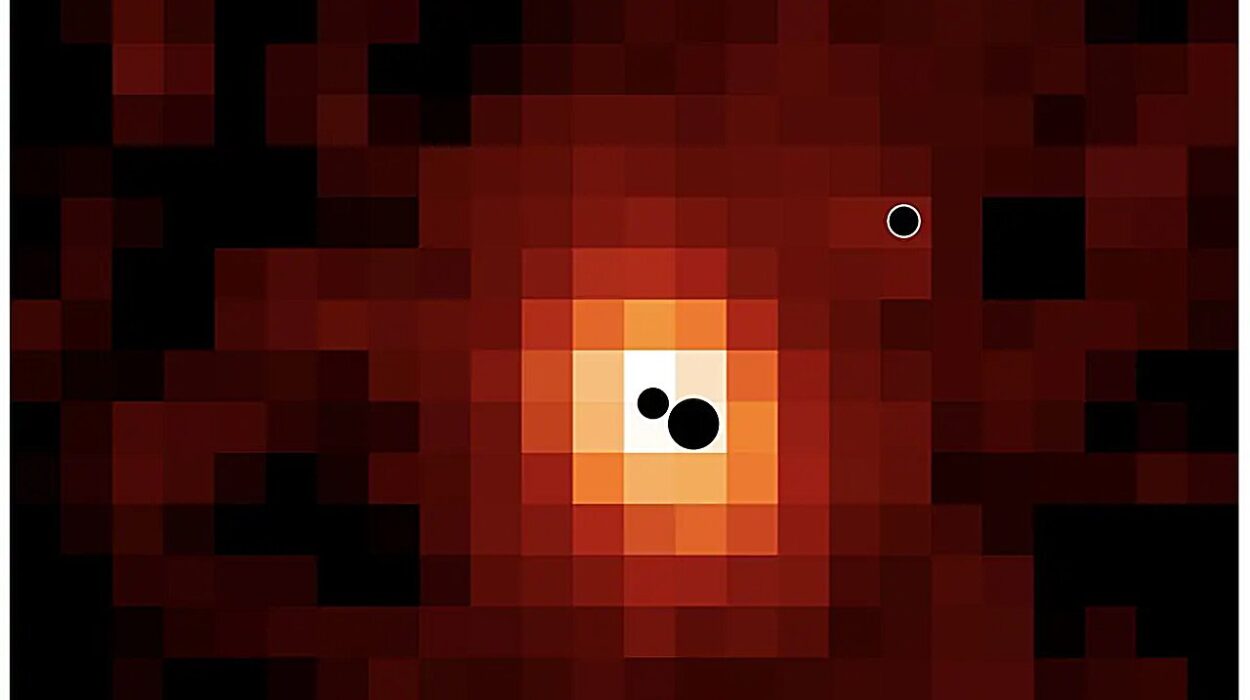
Chandra provided another important piece of evidence. It resolved two distinct X-ray sources at positions that matched the two optical nuclei. The two sources were separated by about 27,000 light-years.
Together, the optical and X-ray observations provided evidence that the two cores are separate active regions rather than a single source appearing divided.
The black holes are similar in mass
The team estimated the masses of the two black holes at about 19.5 million and 20.5 million times the mass of the Sun.
The researchers also used a standard diagnostic designed to distinguish radiation produced by black holes from radiation associated with ordinary star formation. The result placed J1622+3521 in the AGN category.
Another comparison provided additional support. The researchers compared the strength of the high-energy helium II emission line, known as He II, with the galaxy’s X-ray brightness. The resulting values were consistent with what is expected from a genuine AGN system.
The researchers said some of the black holes’ actual emission could still be hidden behind thick gas. Future high-energy X-ray observations could help determine how much emission is being obscured.
Why Green Pea galaxies are useful for this question
Green Pea galaxies are small, metal-poor galaxies with unusually high rates of star formation relative to their stellar mass. They are considered local-universe analogs of rapidly growing galaxies that existed in the early universe.
Astronomers use these galaxies to study how stars and massive black holes formed and evolved during the universe’s early history.
Pairs of actively feeding black holes are particularly useful for studying galaxy evolution and supermassive black hole growth. But despite extensive investigation, no dual AGN had previously been confirmed in a Green Pea galaxy.
The observations of J1622+3521 now provide that confirmation.
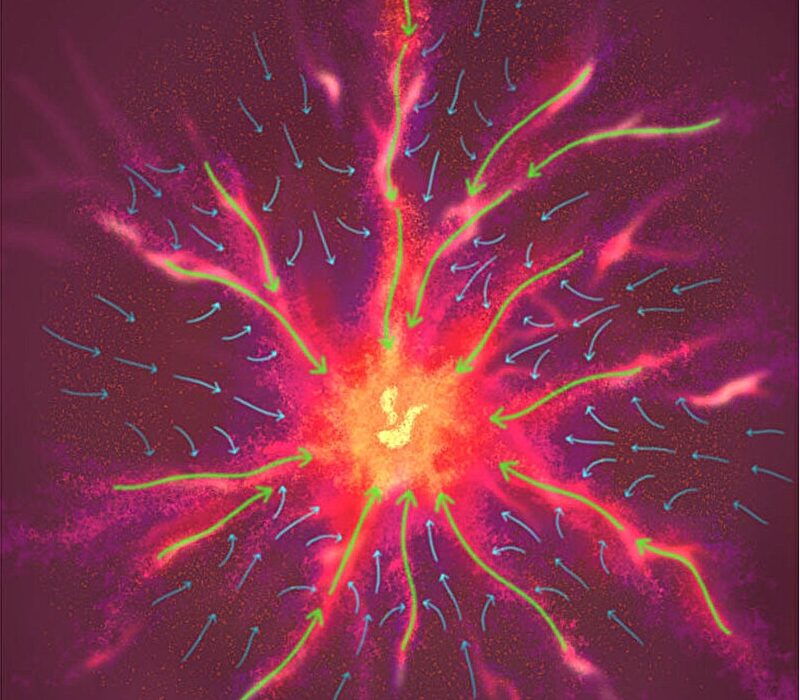
The finding also indicates that galaxy interactions can fuel the simultaneous growth of more than one supermassive black hole in compact, low-mass systems. The researchers suggest that Green Pea galaxies such as J1622+3521 may contain clues to the growth of rapidly accreting supermassive black holes observed at high redshift.
The paper was submitted to the arXiv preprint server on July 20.