On a clear night, the sky transforms into a breathtaking display of countless stars. Yet when the Sun rises, those same stars seem to disappear. They are still there, shining just as brightly as they did during the night, but the overwhelming brightness of daylight hides them from our eyes.
This raises a fascinating question: What happens on other planets? If you stood on Mars, Venus, Mercury, or one of the giant planets, would you be able to see stars during the day? Would the sky look different? Would some worlds allow you to enjoy both the Sun and the stars at the same time?
The answer is more interesting than a simple yes or no. Whether stars are visible during the daytime depends on several factors, including the brightness of the Sun, the thickness of a planet’s atmosphere, how light is scattered, and even where you are standing.
Let’s take a journey across the Solar System to discover what the daytime sky really looks like on other worlds.
Why Can’t We See Stars During the Day on Earth?
To understand other planets, we first need to understand why stars disappear during the day on Earth.
The Sun is incredibly bright. Although many stars are far larger and more powerful than the Sun, they are also unimaginably distant. As a result, they appear much dimmer in our sky.
Earth’s atmosphere is filled with tiny molecules of nitrogen, oxygen, and other gases. When sunlight enters the atmosphere, these molecules scatter shorter wavelengths of light—especially blue light—in every direction. This process is called Rayleigh scattering.
Because blue light is scattered throughout the sky, the entire sky appears bright blue during the day. This scattered sunlight overwhelms the faint light arriving from distant stars, making them invisible to our eyes.
The stars never disappear—they are simply hidden behind the brightness of the daytime sky.
What Determines Whether You Can See Stars?
Several factors decide whether stars are visible during the day on another planet.
The most important factor is the planet’s atmosphere. A thick atmosphere scatters large amounts of sunlight, creating a bright sky that hides stars. A thin atmosphere scatters much less light, producing a darker sky.
The brightness of the local Sun also matters. A planet closer to the Sun receives much more sunlight than one farther away.
Dust, clouds, and haze can brighten the sky even when the atmosphere is thin.
Finally, the sensitivity of your eyes plays a role. Human vision has limits, and a sky that appears dark enough through a camera may still be too bright for the naked eye to reveal many stars.
Mercury: A Nearly Black Daytime Sky
Mercury is the closest planet to the Sun, receiving more than six times as much sunlight as Earth.
At first glance, you might think the sky would be extremely bright.
Surprisingly, it is not.
Mercury has almost no atmosphere. Instead, it possesses an extremely thin exosphere, containing only tiny amounts of atoms such as sodium, potassium, and oxygen. This exosphere is far too thin to scatter sunlight in the way Earth’s atmosphere does.
As a result, the sky on Mercury would appear almost completely black, even during the daytime.
If you stood on Mercury’s surface, you would see an intensely brilliant Sun against a black sky. In theory, many stars would still be present because there is almost no scattered sunlight to hide them.
However, the Sun’s dazzling glare would make it difficult to notice stars located nearby in the sky. Stars farther away from the Sun’s position would be much easier to see.
The experience would resemble photographs taken from the Moon, where astronauts saw a black sky despite standing in full sunlight.
Venus: A Sky That Hides Everything
Venus presents the complete opposite situation.
Its atmosphere is about 90 times denser than Earth’s and is composed mainly of carbon dioxide. Thick clouds of sulfuric acid permanently cover the planet.
Very little sunlight reaches the surface.
The sunlight that does arrive is scattered repeatedly by the dense atmosphere and clouds, producing a bright, hazy environment.
From the surface, the Sun would appear as a diffuse glowing spot rather than a sharply defined disk.
Because the atmosphere scatters light so efficiently, stars would not be visible during the day.
In fact, even at night, seeing stars from the surface of Venus would be extremely difficult because the thick atmosphere and cloud cover block the view of space almost entirely.
Venus is probably the worst planet in the Solar System for observing the stars.
Mars: Could You See Stars During the Day?
Mars has an atmosphere, but it is much thinner than Earth’s.
Its atmospheric pressure is less than one percent of Earth’s at the surface.
A thinner atmosphere means less scattering of sunlight.
However, Mars introduces another important factor: dust.
Fine dust particles are constantly suspended in the Martian atmosphere. These particles scatter sunlight differently from Earth’s atmosphere and often give the daytime sky a butterscotch, tan, or reddish appearance.
Even though the Martian sky is darker than Earth’s, it is usually still bright enough to hide most stars during the day.
During especially clear conditions, the sky may become dark enough that very bright planets or exceptionally bright stars could potentially be easier to detect with sensitive instruments. For the unaided human eye, however, stars would generally remain invisible in daylight.
At night, Mars offers spectacular views of the stars because of its thin atmosphere and the absence of light pollution.
The Moon: A Perfect Example
Although the Moon is not a planet, it provides one of the best examples of how atmospheres affect visibility.
The Moon has essentially no atmosphere.
Astronauts standing on its surface experienced bright sunlight while looking into a completely black sky.
This often surprises people because photographs from the Apollo missions rarely show stars.
The reason is not that stars were absent.
The cameras were adjusted to photograph the brightly illuminated lunar surface. Since stars are much dimmer than the Sun-lit landscape, they were too faint to appear in those photographs.
If your eyes adapted properly while shielding the Sun’s glare, many stars could theoretically be visible in the Moon’s daytime sky.
Jupiter: No Surface to Stand On
Jupiter is a gas giant, meaning it has no solid surface where a person could stand.
If someone could somehow float high within Jupiter’s cloud tops, the view would depend on the surrounding atmosphere.
Jupiter’s atmosphere is enormous, extending thousands of kilometers deep and consisting mainly of hydrogen and helium.
Sunlight scatters through its thick clouds, producing a bright daytime sky.
Stars would almost certainly not be visible during the day from within the upper atmosphere.
If you moved far above the atmosphere into space, however, the sky would become black again, and stars would immediately reappear.
Saturn’s Soft Golden Sky
Saturn is also a gas giant with a thick atmosphere.
Because Saturn is much farther from the Sun than Earth, daylight there is considerably dimmer.
Even so, its atmosphere contains clouds and haze that scatter sunlight.
The daytime sky within Saturn’s atmosphere would still be bright enough to hide most stars from human vision.
The Sun would appear much smaller than it does from Earth, yet it would remain bright enough to dominate the sky.
Uranus and Neptune
Uranus and Neptune orbit much farther from the Sun, where sunlight is significantly weaker.
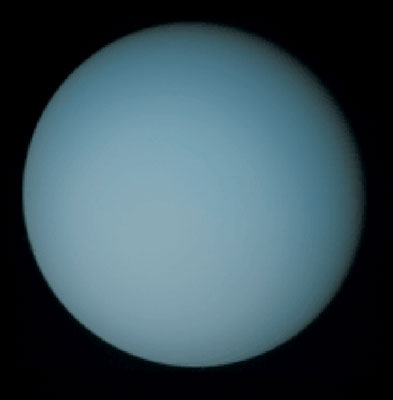
However, both planets possess deep, dense atmospheres composed primarily of hydrogen, helium, and methane.
Methane absorbs red light, giving these planets their beautiful blue-green appearance.
Although daylight is much dimmer than on Earth, the thick atmospheres still scatter enough sunlight to brighten the sky.
As a result, stars would generally remain hidden during the daytime.
Night skies, if they could be observed from suitable atmospheric levels, would likely be spectacular.
What About Pluto?
Pluto is officially classified as a dwarf planet rather than a planet, but it offers another interesting case.
It lies so far from the Sun that daylight there is much weaker than on Earth.
Pluto possesses a very thin atmosphere made mostly of nitrogen, which can freeze onto the surface as it moves farther from the Sun during its orbit.
Because the atmosphere is extremely thin and sunlight is relatively faint, the daytime sky would likely appear much darker than Earth’s.
Some bright stars might become visible during parts of the day under favorable conditions, although detailed observations remain limited.
Why Astronauts in Space See Stars
Astronauts orbiting Earth often report seeing an incredibly black sky.
Without Earth’s atmosphere surrounding them, sunlight is no longer scattered into every direction.
As a result, space remains black even while the Sun shines brightly.
However, astronauts cannot always see stars whenever they want.
When the Sun or the illuminated Earth is in their field of view, the intense brightness reduces their eyes’ ability to detect faint stars.
When those bright objects are blocked and their eyes adapt, thousands of stars become visible.
The same principle applies on airless worlds like Mercury or the Moon.
Can Telescopes See Stars During the Day?
Human eyes have limitations, but telescopes equipped with sensitive detectors can often observe stars even during daylight.
Space telescopes routinely observe stars while orbiting above Earth’s atmosphere.
Ground-based observatories can also detect bright stars during the day under carefully controlled conditions using specialized techniques.
Scientific instruments are far more sensitive than human vision and can filter out much of the unwanted sunlight.
This demonstrates that stars remain present even when our eyes cannot detect them.
How Human Eyes Adapt to Brightness
The human eye is remarkable, but it has limits.
In darkness, our pupils expand and specialized cells in the retina become highly sensitive, allowing us to detect extremely faint starlight.
In bright daylight, the pupils become much smaller, and the retina adjusts to handle intense sunlight.
This adaptation protects our vision but also makes faint stars effectively invisible.
On worlds with black skies but bright sunlight, such as Mercury or the Moon, shielding the Sun from direct view would greatly improve your ability to notice distant stars.
Does the Color of the Sky Matter?
Absolutely.
The color of a planet’s sky depends on how its atmosphere scatters light.
Earth’s sky is blue because shorter wavelengths scatter more efficiently.
Mars often appears reddish or tan because fine dust dominates the scattering.
Venus has a yellowish, cloudy glow due to its dense atmosphere.
A darker sky generally makes stars easier to see, while a brighter sky hides them.
The color itself is less important than the overall brightness created by scattered sunlight.
Could You Ever See the Sun and Stars Together?
The answer is yes—but only under the right conditions.
On worlds with almost no atmosphere, such as Mercury or the Moon, the sky remains black even during daylight. In these environments, the Sun and stars can theoretically be visible at the same time, although the Sun’s intense glare makes nearby stars difficult to notice.
On planets with thick atmospheres, including Earth and Venus, scattered sunlight brightens the sky so much that stars disappear from view during the day.
This simple difference shows how profoundly an atmosphere can shape what we see.
What This Teaches Us About Planetary Atmospheres
The visibility of stars tells scientists a great deal about a planet.
A bright daytime sky usually indicates an atmosphere capable of scattering sunlight.
A black daytime sky suggests little or no atmosphere.
By studying how light behaves on different worlds, researchers learn about atmospheric composition, particle sizes, dust, clouds, weather, and even climate.
Something as simple as looking up at the sky can reveal valuable information about an entire planet.
The Remarkable Diversity of Alien Skies
No two worlds in the Solar System offer exactly the same view of the sky.
On Earth, daylight paints the heavens blue and hides the stars.
On Mars, dust creates a soft reddish sky beneath a smaller Sun.
On Venus, thick clouds veil both the Sun and the stars.
On Mercury, the sky remains black despite the blazing sunlight.
Farther from the Sun, the giant planets display dimmer daylight beneath vast atmospheric layers, while distant Pluto experiences a faint twilight unlike anything on Earth.
These differences remind us that the familiar blue sky above our heads is not a universal feature of planets. It is the result of Earth’s unique atmosphere interacting with sunlight in just the right way.
The next time you look up on a sunny afternoon, remember that the stars have not gone anywhere. They are still shining across the cosmos. Here on Earth, our atmosphere simply hides them from view. But elsewhere in the Solar System, on worlds with little or no atmosphere, the universe can remain visible even in the middle of the day, offering a breathtaking reminder of just how varied and extraordinary planetary skies can be.