The night sky has inspired wonder for as long as humans have existed. Long before telescopes, satellites, and spacecraft, our ancestors looked up at the stars and imagined stories, gods, and mysterious worlds beyond Earth. Today, thanks to centuries of scientific discovery, we know far more about the universe than ever before. Yet the more we learn, the more astonishing the cosmos becomes.
Our universe is not just big—it is unimaginably vast. It is filled with billions of galaxies, each containing billions or even trillions of stars. Invisible matter outweighs everything we can see. Black holes warp space and time. Giant planets rain diamonds. Tiny particles born in the first moments after the Big Bang still travel through space today.
What makes astronomy so fascinating is that nearly every new discovery challenges our intuition. Things that sound like science fiction are often scientific reality.
The following twenty facts are supported by modern astronomy, astrophysics, and planetary science. Some reveal the incredible scale of the cosmos. Others highlight the strange behavior of matter, light, gravity, and time. Together, they offer a glimpse into one of the greatest adventures in human knowledge.
1. The Light You See From Many Stars Is Already Years, Centuries, or Even Millions of Years Old
When you look at the night sky, you are not seeing the universe as it exists right now.
Light travels at approximately 299,792 kilometers (186,282 miles) per second. Although incredibly fast, it still takes time to cross the immense distances of space.
The Sun is about eight light-minutes away, meaning sunlight takes roughly eight minutes to reach Earth. If the Sun suddenly disappeared—which physics tells us cannot happen instantly—the Earth would continue receiving sunlight for about eight minutes.
Many stars visible without a telescope are hundreds or thousands of light-years away. Their light began its journey long before modern civilization existed.
Some galaxies observed by powerful telescopes are so distant that their light has traveled for more than 13 billion years. Looking at them is literally looking into the early universe.
Astronomy is unique among sciences because every observation is also an observation of the past.
2. There Are More Stars Than Grains of Sand on All Earth’s Beaches
The number sounds impossible until you compare the scales involved.
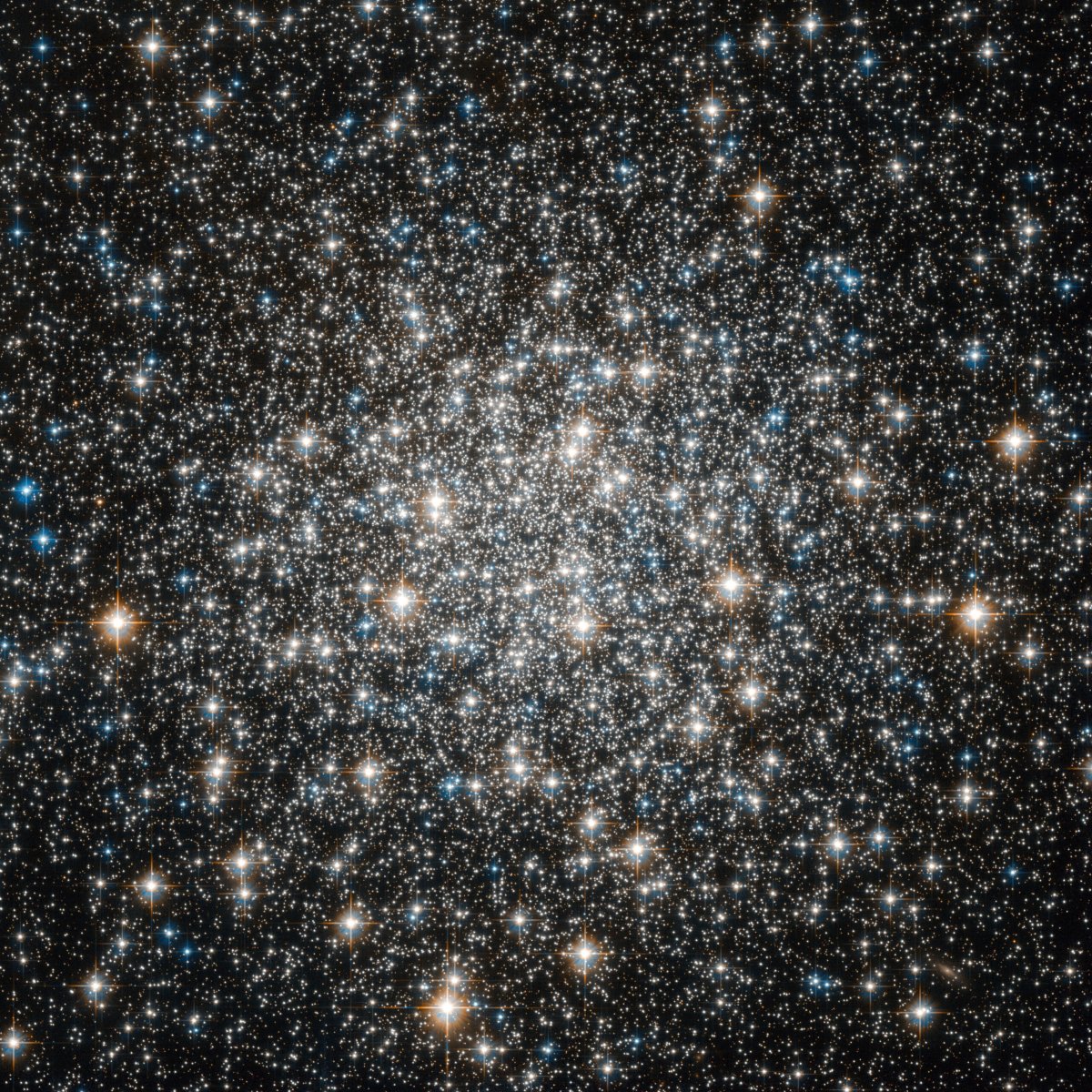
Scientists estimate that the observable universe contains roughly 200 billion trillion stars—or even more, depending on the methods used.
Meanwhile, estimates for the number of grains of sand on Earth’s beaches are vastly smaller.
Even though both numbers are enormous, stars almost certainly outnumber grains of sand.
Every one of those stars could potentially host planets, moons, and perhaps even forms of life we have yet to discover.
3. A Day on Venus Is Longer Than Its Year
Most people assume planets rotate much faster than they orbit their stars.
Venus does the opposite.
Venus rotates extremely slowly, taking about 243 Earth days to complete one rotation.
Yet it completes one orbit around the Sun in only about 225 Earth days.
In other words, a Venusian day lasts longer than a Venusian year.
Even more unusual, Venus rotates in the opposite direction from most planets in the Solar System.
Scientists are still investigating exactly why this happened, although giant impacts and long-term atmospheric interactions are among the leading explanations.
4. Neutron Stars Are Among the Densest Objects in the Universe
When very massive stars exhaust their nuclear fuel, some explode as supernovae.
The remaining core can collapse into an extraordinary object known as a neutron star.
Despite being only about 20 kilometers across, a typical neutron star contains more mass than our Sun.
Its matter becomes compressed to astonishing densities.
A single teaspoon of neutron star material would weigh roughly a billion tons on Earth.
Inside these stars, atoms no longer exist in their ordinary form. Matter behaves under conditions impossible to recreate completely in laboratories.
5. Black Holes Can Slow Time
Black holes are not cosmic vacuum cleaners that suck up everything nearby.
Instead, they are regions where gravity becomes so intense that nothing—not even light—can escape once it crosses the event horizon.
According to Einstein’s theory of general relativity, gravity also affects time itself.
Near an extremely massive object such as a black hole, time passes more slowly relative to distant observers.
This phenomenon, known as gravitational time dilation, has been confirmed through precise experiments involving clocks on Earth and satellites.
Around black holes, the effect becomes dramatically stronger.
If someone could safely observe near a black hole—which is not practically possible under most circumstances—they would experience time differently from observers far away.
6. Jupiter Is So Massive That It Helps Protect Earth
Jupiter is the largest planet in our Solar System.
Its immense gravity influences countless smaller objects.
Many comets and asteroids passing through the Solar System have their paths altered by Jupiter’s gravitational pull.
Some are redirected away from the inner planets.
Others collide with Jupiter instead.
This does not make Jupiter a perfect shield, but many planetary scientists believe it has significantly influenced Earth’s long-term impact history.
In 1994, astronomers directly observed fragments of Comet Shoemaker–Levy 9 crashing into Jupiter, demonstrating its enormous gravitational influence.
7. Saturn Would Float in a Giant Ocean
Saturn is famous for its spectacular ring system.
Less widely known is its surprisingly low average density.
Water has a density of one gram per cubic centimeter.
Saturn’s average density is even lower.
If an impossibly large ocean existed, Saturn would theoretically float.
Of course, no ocean remotely large enough exists, but the comparison illustrates how much of Saturn consists of hydrogen and helium gases.
8. There Are Mountains Taller Than Mount Everest on Other Worlds
Earth’s tallest mountain above sea level is Mount Everest.
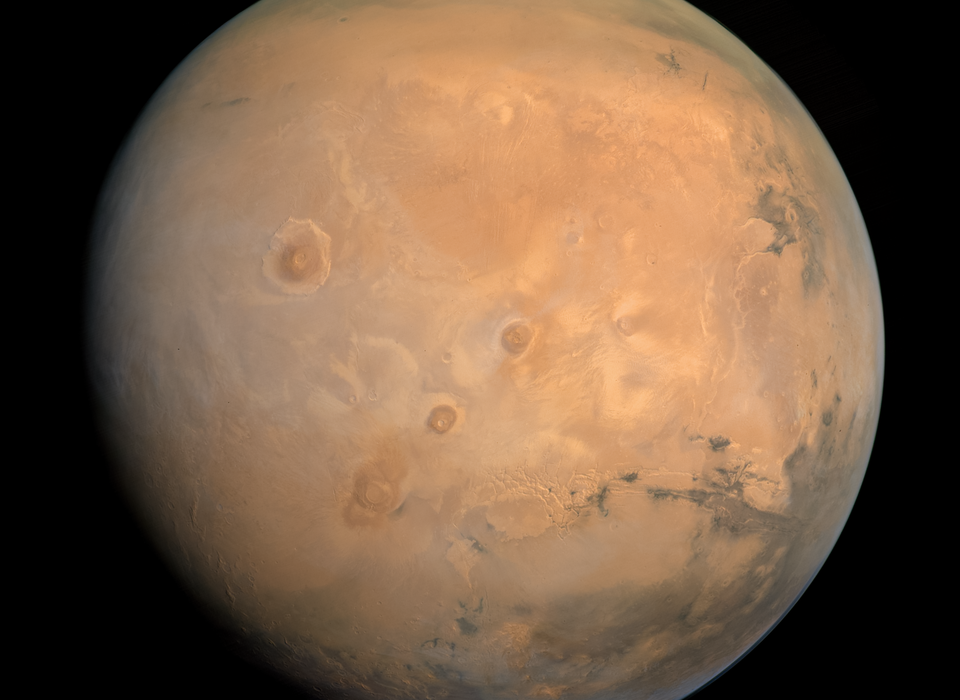
Mars, however, is home to Olympus Mons, the largest known volcano in the Solar System.
Olympus Mons rises approximately 22 kilometers above the surrounding plains—nearly three times the height of Everest above sea level.
Its enormous size became possible because Mars lacks the moving tectonic plates found on Earth.
Instead of drifting across the surface, volcanic activity remained concentrated in one location for millions of years.
9. Space Is Not Completely Silent
Movies often portray explosions echoing through space.
In reality, sound cannot travel through the vacuum between planets because there are too few particles to carry sound waves.
However, space is not perfectly empty.
Gas clouds, plasma, and planetary atmospheres can transmit vibrations.
Scientists also convert radio waves and electromagnetic signals collected by spacecraft into audible sounds, allowing people to “hear” data from planets, the Sun, and distant cosmic events.
These are not sounds traveling through empty space but scientific representations of measurable physical phenomena.
10. The International Space Station Travels Faster Than a Rifle Bullet
The International Space Station circles Earth approximately every 90 minutes.
To remain in orbit, it travels at about 28,000 kilometers per hour (17,500 miles per hour).
At that speed, astronauts witness around sixteen sunrises and sixteen sunsets every day.
Despite this tremendous velocity, everything inside the station appears to float because both the spacecraft and its occupants are continuously falling around Earth together.
11. The Universe Is Expanding
One of the greatest discoveries of modern astronomy is that the universe itself is expanding.
Galaxies are generally moving away from one another because space itself is stretching.
This expansion began with the Big Bang roughly 13.8 billion years ago.
Even more surprisingly, observations indicate that the expansion is accelerating.
Scientists attribute this acceleration to an unknown phenomenon called dark energy, although its true nature remains one of the biggest unsolved problems in cosmology.
12. Most of the Universe Is Invisible
Everything humans can see—stars, planets, galaxies, gas, dust, and people—accounts for only about 5 percent of the universe’s total energy and matter content.
Approximately 27 percent appears to consist of dark matter, an invisible substance detected through its gravitational effects.
About 68 percent is thought to be dark energy.
Scientists know these components exist because of their influence on galaxies and cosmic expansion.
Yet neither has been directly identified in laboratory experiments.
The majority of the universe therefore remains mysterious.
13. Some Exoplanets Experience Extreme Weather Beyond Imagination
Thousands of planets have been discovered orbiting stars beyond our Solar System.
Many possess environments unlike anything on Earth.
Some giant planets have winds exceeding 8,000 kilometers per hour.
Others are so hot that iron may exist as vapor high in their atmospheres before condensing into droplets and falling as molten iron rain.
These extraordinary conditions reveal how diverse planetary systems can be.
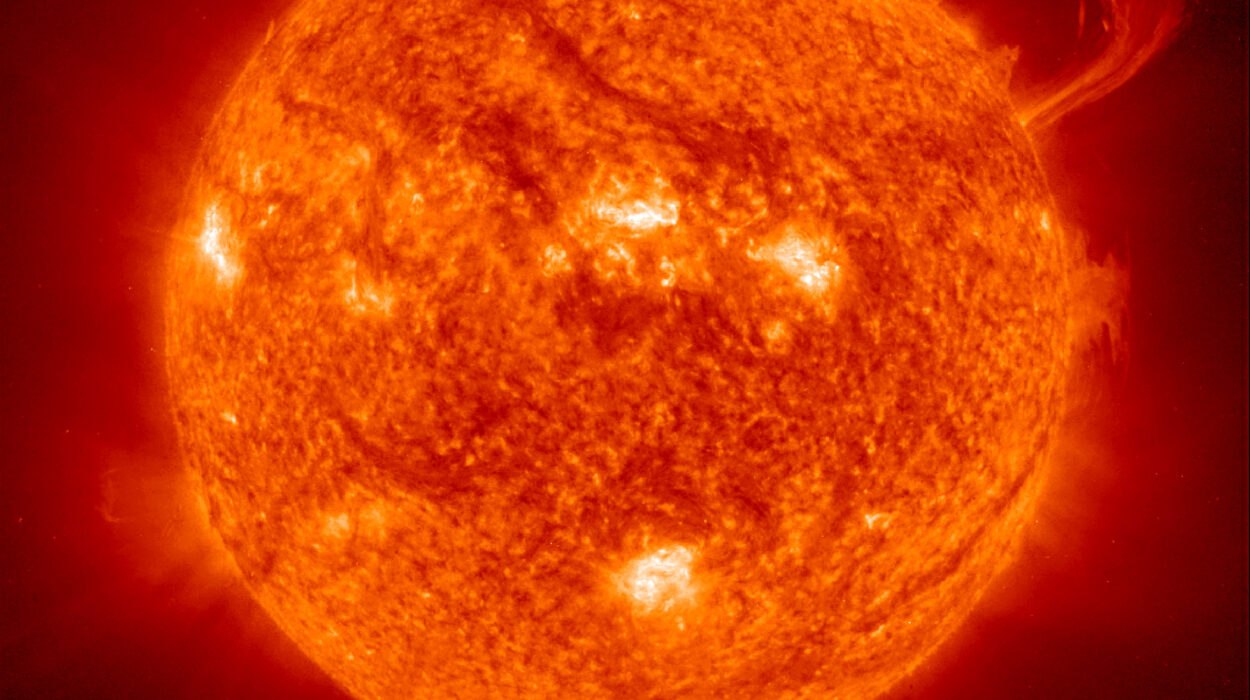
14. The Sun Contains Nearly All the Mass in the Solar System
The Sun dominates our planetary system in almost every way.
It contains approximately 99.8 percent of the Solar System’s total mass.
Everything else—planets, moons, asteroids, comets, dwarf planets, and dust—accounts for only a tiny fraction.
Its gravity holds the Solar System together, controlling the orbits of every major object.
Without the Sun, the planets would simply drift through interstellar space.
15. A Single Solar Flare Can Release More Energy Than Billions of Nuclear Bombs
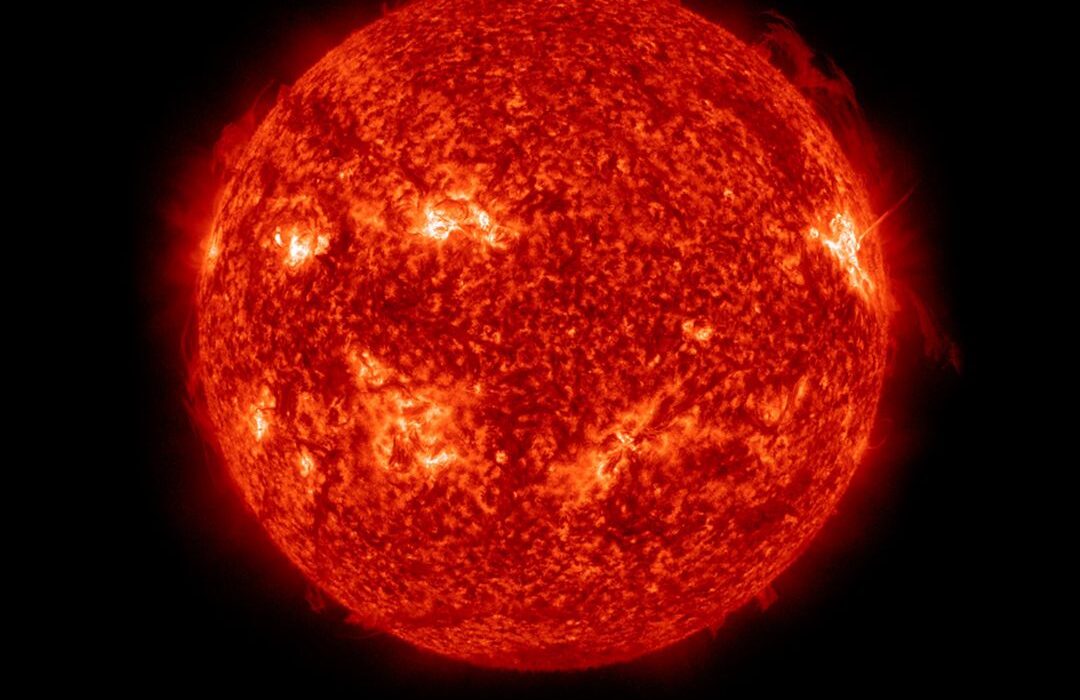
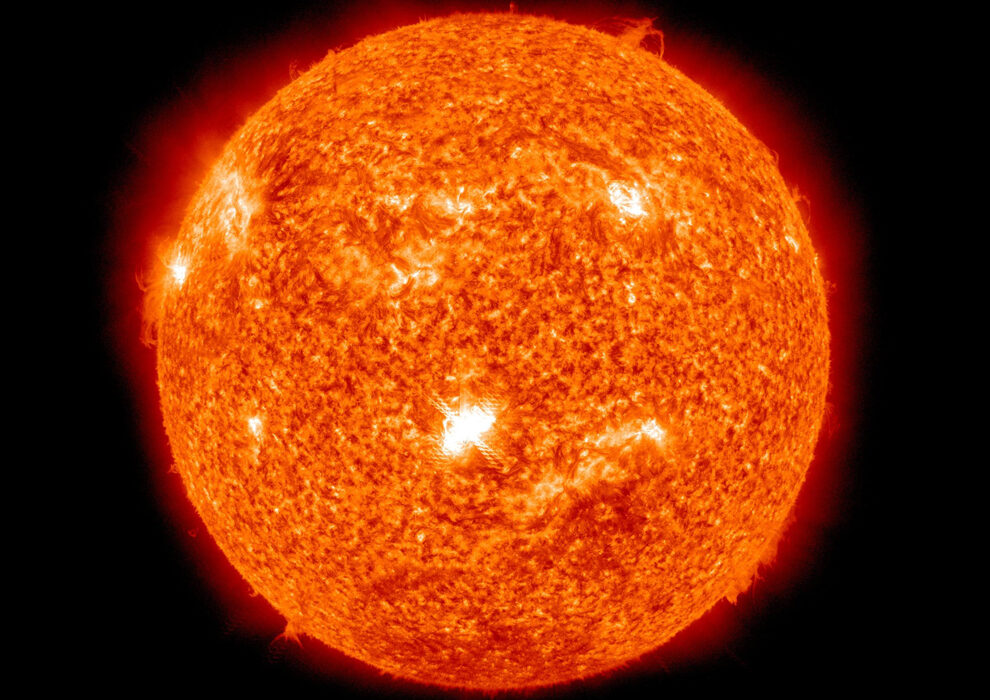
The Sun is far from a quiet ball of glowing gas.
Its magnetic field constantly twists and reconnects, occasionally producing enormous eruptions known as solar flares.
These events release extraordinary amounts of energy across the electromagnetic spectrum.
Some solar flares are accompanied by coronal mass ejections that send billions of tons of charged particles into space.
When directed toward Earth, they can create spectacular auroras while also affecting satellites, radio communications, and electrical power systems.
16. There May Be More Planets Than Stars
Astronomers have now confirmed thousands of exoplanets.
Statistical studies suggest that most stars probably possess planetary systems.
Because many stars host multiple planets, scientists estimate that planets may actually outnumber stars within our galaxy.
If the Milky Way contains hundreds of billions of stars, it could contain hundreds of billions—or even trillions—of planets.
Many of those worlds remain undiscovered.
17. The Milky Way and Andromeda Are Headed Toward Each Other
Our home galaxy, the Milky Way, is moving toward the neighboring Andromeda Galaxy.
The collision is expected to occur in roughly 4.5 billion years.
Fortunately, despite the dramatic name, individual stars are unlikely to collide because the distances between them are enormous.
Instead, gravity will gradually reshape both galaxies over billions of years.
Eventually, they are expected to merge into one much larger galaxy.
18. Astronauts Actually Grow Slightly Taller in Space
The human spine changes in microgravity.
On Earth, gravity continuously compresses the spinal discs.
In orbit, this compression decreases.
As a result, astronauts often become two to five centimeters taller during long-duration missions.
After returning to Earth, gravity gradually restores their normal height.
19. The Coldest Naturally Known Place in the Universe Is Not Deep Space
Many people assume outer space itself is the coldest possible environment.
In reality, some regions inside planetary nebulae become even colder.
One remarkable example is the Boomerang Nebula.
Temperatures there have been measured at about one degree above absolute zero, making it colder than the cosmic microwave background radiation that fills the universe.
Scientists believe this extreme cooling results from rapidly expanding gas.
20. Every Atom in Your Body Was Forged in Ancient Stars
Perhaps the most beautiful fact of all concerns ourselves.
The hydrogen in your body originated shortly after the Big Bang.
The carbon that forms the foundation of life was created inside ancient stars through nuclear fusion.
The oxygen you breathe, the calcium in your bones, the iron in your blood, and many other elements essential to life were forged during the lives and explosive deaths of stars billions of years ago.
When massive stars ended as supernovae, they scattered these elements across space.
Later generations of stars and planets formed from this enriched material.
Earth emerged from one such cloud.
Eventually, life evolved.
Every person, every animal, every tree, every ocean, and every mountain contains atoms that have traveled across the cosmos for billions of years.
In a very real scientific sense, we are made of stardust.
The Universe Is Stranger Than Imagination
These twenty facts reveal only a tiny fraction of what modern astronomy has uncovered. Every year, powerful telescopes, robotic spacecraft, and advanced computer simulations expand humanity’s understanding of the cosmos. New exoplanets are discovered almost weekly. Black holes reveal unexpected behavior. Galaxies from the early universe challenge existing theories. Planetary missions uncover evidence of ancient oceans, active geology, and environments unlike anything previously imagined.
Perhaps the greatest lesson of astronomy is not simply that the universe is vast. It is that reality is often far more astonishing than fiction.
Every star in the sky represents another story waiting to be understood. Every galaxy contains billions of unanswered questions. Every scientific discovery reminds us that our place in the universe is both incredibly small and profoundly meaningful.
The more we explore space, the more we realize that curiosity is one of humanity’s greatest strengths. It has carried us from watching stars with the naked eye to landing robots on distant worlds, detecting planets around other suns, photographing black holes, and observing light that began its journey nearly as long ago as the universe itself.
The night sky has never stopped asking questions.
And humanity has only just begun to answer them.