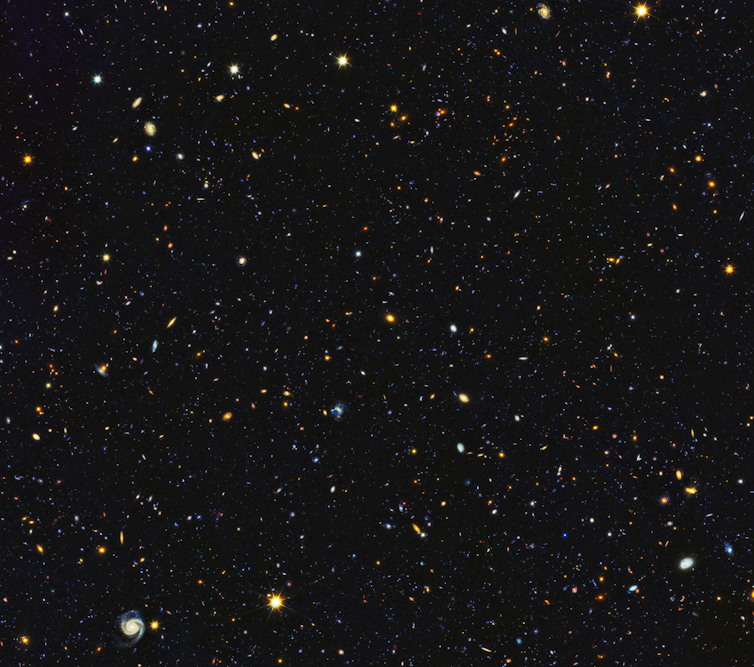
On a clear night, the sky transforms into one of nature’s most breathtaking displays. Thousands of stars sparkle overhead, stretching across the darkness like tiny diamonds scattered across a vast black canvas. Looking up, it’s easy to feel connected to the immense universe beyond our planet.
Yet when morning arrives, those stars seem to vanish completely. The Sun shines brightly in a brilliant blue sky, and the countless stars that filled the night disappear from view. Have they gone somewhere? Do they switch off during the day? Or does the sunlight somehow erase them?
The answer is both fascinating and surprisingly simple. The stars never disappear. They remain in the sky throughout the day, shining just as brightly as they did during the night. The reason we cannot see them has everything to do with Earth’s atmosphere and the overwhelming brightness of our nearest star—the Sun.
Understanding why stars disappear during the day reveals not only how sunlight interacts with our atmosphere but also how our eyes perceive light. It is a wonderful example of how physics explains an everyday mystery.
The Stars Never Leave the Sky
One of the biggest misconceptions about the daytime sky is that stars somehow go away when the Sun rises. In reality, every star visible at night remains in nearly the same position during the day. The Earth rotates, causing different parts of the sky to come into view, but the stars themselves continue shining continuously.
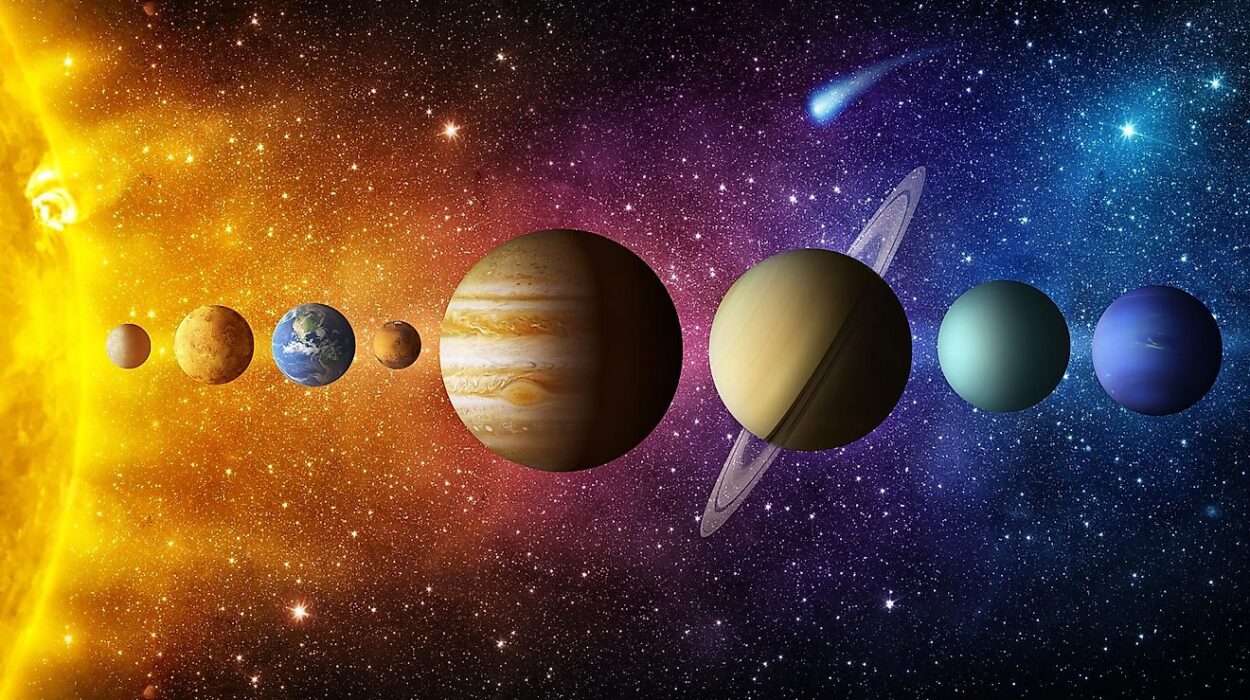
Our own Sun is also a star. It only appears different because it is incredibly close to Earth compared to all the other stars.
The nearest star after the Sun, Proxima Centauri, is about 4.24 light-years away. That is more than 40 trillion kilometers (25 trillion miles). Because the Sun is only about 150 million kilometers (93 million miles) from Earth, it appears enormously brighter than every other star in the sky.
The stars are still above us during daylight—they are simply hidden by the brightness of our atmosphere.
The Sun Is Astonishingly Bright
To understand why stars disappear during the day, it helps to appreciate just how bright the Sun really is.
The Sun produces an enormous amount of energy through nuclear fusion in its core. Every second, it converts about 600 million tons of hydrogen into helium, releasing tremendous amounts of energy in the form of light and heat.
Only a tiny fraction of this energy reaches Earth, yet it is enough to illuminate the entire daytime sky.
Compared with even the brightest stars visible at night, the Sun is extraordinarily bright. Astronomers measure brightness using a scale called apparent magnitude. On this scale, lower numbers indicate brighter objects. The Sun has an apparent magnitude of about −26.7, while Sirius, the brightest star in the night sky, has an apparent magnitude of about −1.46.
This means the Sun appears billions of times brighter than Sirius when viewed from Earth.
With such overwhelming brightness, the Sun dominates the daytime sky.
Why the Sky Looks Blue
If space is black, why doesn’t the daytime sky appear black too?
The answer lies in Earth’s atmosphere.
Our atmosphere is filled with tiny molecules of nitrogen and oxygen, along with dust particles and water vapor. As sunlight enters the atmosphere, it collides with these tiny particles.
Sunlight may appear white, but it actually contains all the colors of the rainbow.
When sunlight encounters the atmosphere, shorter wavelengths of light—especially blue and violet—are scattered much more strongly than longer wavelengths such as red.
This process is known as Rayleigh scattering, named after British physicist Lord Rayleigh, who explained it in the nineteenth century.
Although violet light is scattered even more than blue, our eyes are less sensitive to violet, and some violet light is absorbed by the upper atmosphere. As a result, the scattered light reaching our eyes appears predominantly blue.
That scattered blue light fills the entire sky.
Scattered Sunlight Overpowers the Stars
The stars are incredibly distant, so even though many are much larger and more luminous than the Sun, they appear only as tiny points of light.
During the day, sunlight scattered throughout the atmosphere creates a bright blue background across the sky.
Imagine trying to spot the light from a small flashlight while standing beside a giant stadium floodlight. The flashlight is still on, but the floodlight is so bright that the flashlight becomes almost impossible to notice.
The same thing happens in the sky.
The scattered sunlight is so bright that it overwhelms the faint light arriving from distant stars.
Our eyes simply cannot distinguish the stars against such a bright background.
Our Eyes Have Limits
The human eye is remarkably sensitive, but it has limits.
At night, when the sky is dark, our eyes gradually adapt to low-light conditions. This process, called dark adaptation, allows special light-sensitive cells known as rods to become highly effective at detecting faint objects.
As your eyes adjust over twenty to thirty minutes, you begin seeing stars that were invisible when you first stepped outside.
During the day, however, the bright sunlight activates cone cells, which are responsible for color vision and work best in bright conditions.
Because the entire sky is flooded with light, your eyes cannot detect the much weaker light coming from distant stars.
The stars have not become dimmer.
Instead, the background has become far brighter.
What Happens Above Earth’s Atmosphere?
If Earth’s atmosphere hides the stars, what happens in space?
Astronauts aboard spacecraft and space stations often see stars even while sunlight shines directly on their spacecraft.
In space, there is no atmosphere to scatter sunlight.
Without scattered blue light filling the sky, space remains black even when the Sun is shining.
This is why photographs taken from the Moon show a black sky despite the bright sunlight illuminating the lunar surface.
The Moon has almost no atmosphere, so sunlight travels directly without creating a blue sky.
The result is a striking scene: a brilliantly lit landscape beneath a pitch-black sky.
Can Stars Ever Be Seen During the Day?
Although stars are usually hidden during daylight, there are a few special situations in which they become visible.
One occurs during a total solar eclipse.
When the Moon moves directly between Earth and the Sun, it completely blocks the Sun’s bright disk for a few minutes.
As the sky suddenly darkens, some of the brightest stars and planets become visible.
Observers often describe the experience as both beautiful and surreal because the daytime sky briefly resembles nighttime.
Astronomers can also observe stars during the day using powerful telescopes equipped with specialized instruments that block or filter sunlight.
These instruments greatly reduce the Sun’s glare, allowing faint objects to be detected even in daylight.
Why We Can Sometimes See the Moon During the Day
Many people notice that the Moon is often visible during daylight.
If stars are hidden, why isn’t the Moon?
The answer is size and brightness.
The Moon is much closer to Earth than any star. It reflects sunlight over a large visible surface rather than appearing as a tiny point of light.
Because it occupies a relatively large area in the sky and reflects enough sunlight, it remains bright enough to stand out against the blue daytime sky.
The same is true for Venus on rare occasions.
Venus is the brightest planet in our sky and can sometimes be seen during the day if you know exactly where to look and the viewing conditions are excellent.
Are There Stars Beyond the Blue Sky?
Absolutely.
Every point in the daytime sky is backed by countless stars located far beyond our Solar System.
Even though the blue sky hides them from our eyes, they continue shining continuously.
In fact, many stars visible tonight are already above your head while you read this during the day.
Their light has traveled for years, decades, centuries, or even thousands of years before finally reaching Earth.
The atmosphere simply prevents us from seeing that faint starlight while sunlight dominates the sky.
Why High Mountains Have Darker Skies
If you’ve ever visited a high mountain, you may have noticed that the sky appears a deeper blue than it does at sea level.
This happens because there is less atmosphere above you.
With fewer air molecules available to scatter sunlight, the sky becomes slightly darker.
Astronomical observatories are often built on mountaintops for this reason.
Higher elevations reduce atmospheric scattering, improve image clarity, and make it easier to observe faint celestial objects.
Although stars are still generally invisible during the day, the reduced scattering creates better observing conditions overall.
Air Pollution Can Make the Problem Worse
Dust, smoke, pollution, and tiny particles suspended in the atmosphere scatter additional sunlight.
This extra scattering makes the daytime sky even brighter and reduces visibility.
At night, these same particles contribute to skyglow, making it harder to see faint stars.
Clean, dry air allows darker skies and better stargazing after sunset.
This is one reason why deserts, remote mountains, and rural areas offer some of the world’s best night skies.
The Difference Between Day and Night
The change between day and night is not caused by stars appearing and disappearing.
Instead, it is caused by Earth’s rotation.
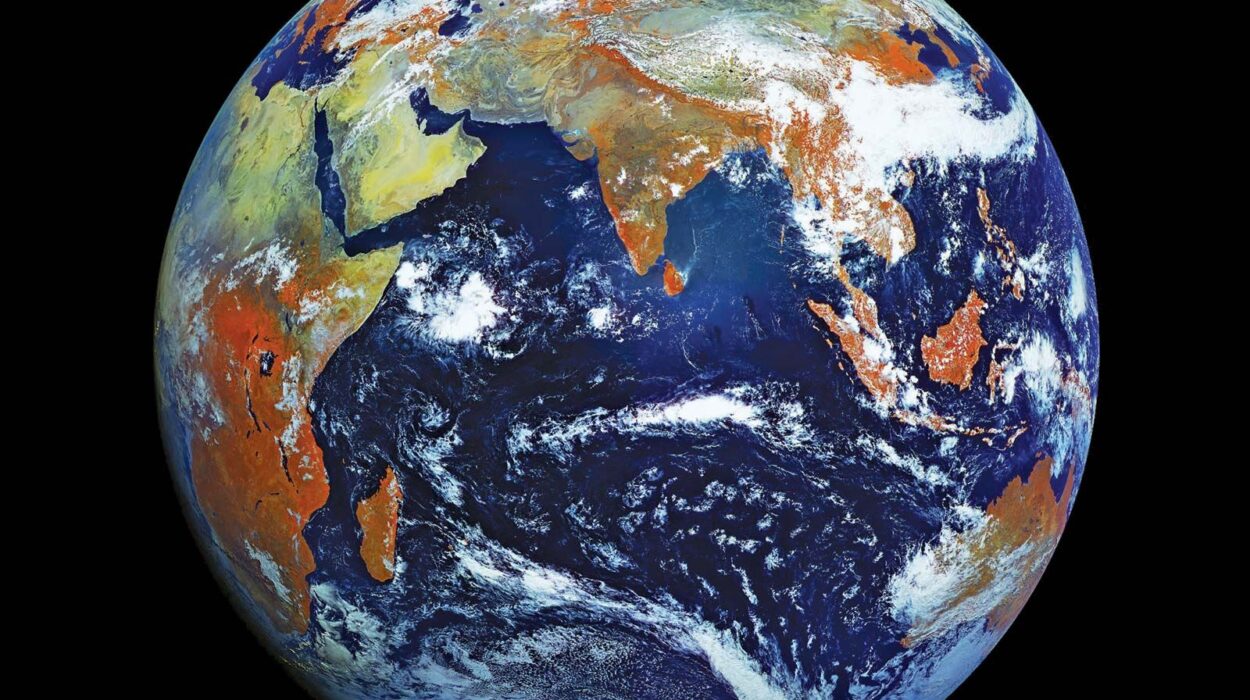
As Earth spins on its axis approximately once every 24 hours, different regions face the Sun at different times.
When your location faces the Sun, it is daytime.
When it turns away from the Sun, the sky becomes dark enough for distant stars to become visible.
The stars are always present.
Only the brightness of the sky changes.
How Astronomers Study Stars in Daylight
Modern astronomy is not limited by daylight.
Many telescopes observe the universe using wavelengths that our eyes cannot see, including radio waves, infrared light, ultraviolet radiation, X-rays, and gamma rays.
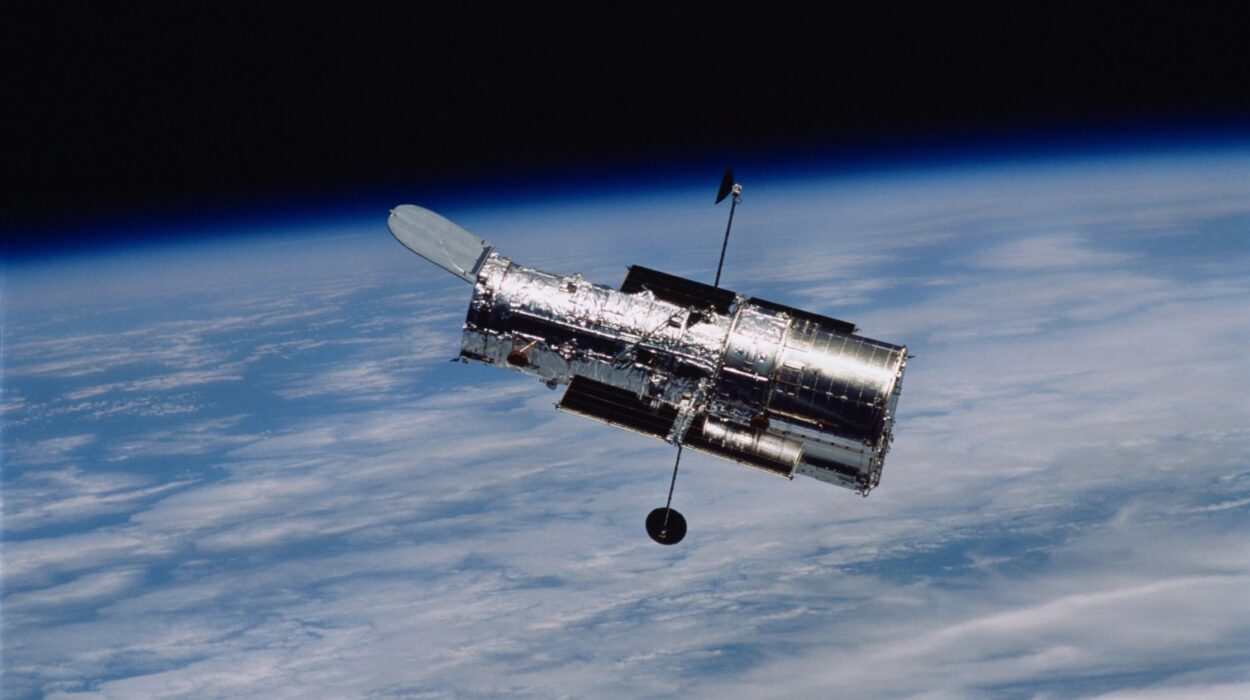
Some telescopes operate in space, above Earth’s atmosphere, where scattered sunlight does not interfere with observations in the same way.
Others use advanced techniques that allow astronomers to observe stars and other celestial objects even while the Sun is above the horizon.
Science has developed remarkable ways to look beyond the limitations of human vision.
A Sky Filled With Invisible Wonders
The daytime sky may appear empty except for the Sun and perhaps a few clouds, but it is far from empty.
Above that brilliant blue lies an entire universe.
Countless stars, distant galaxies, glowing nebulae, and mysterious black holes continue their cosmic dance while we go about our daily lives.
The blue sky simply acts like a bright curtain, hiding these distant wonders from view until night falls.
When darkness finally arrives, that curtain slowly lifts.
One by one, the stars emerge, reminding us that they were never truly gone.
The Hidden Universe Above Us
The reason we cannot see stars during the day is not because they disappear, but because the Sun’s intense light is scattered throughout Earth’s atmosphere. This scattered light creates the bright blue sky that overwhelms the faint light arriving from distant stars. Our eyes, adapted to the brightness of daytime, cannot detect those tiny points of light against such a luminous background.
Yet the stars remain exactly where they have always been, shining across the vastness of space without pause. Every sunrise hides them from view, and every sunset reveals them once again. It is a beautiful reminder that nature often conceals its greatest wonders not because they are absent, but because something even brighter temporarily captures our attention.