Imagine standing on another world. You look up, expecting to see the familiar blue sky of Earth, soft white clouds drifting overhead, and perhaps a glowing Sun. Instead, you find yourself beneath a sky unlike anything you’ve ever experienced. On one planet, the sky glows butterscotch during the day. On another, thick orange clouds completely hide the surface below. Somewhere else, the Sun appears much smaller than it does on Earth, while in another place, giant rings stretch across the heavens like an endless cosmic bridge.
The sky is one of the first things we notice wherever we are, yet it changes dramatically from planet to planet. Every world in our Solar System has its own atmosphere, weather, sunlight, and unique chemistry. These differences create skies with extraordinary colors, breathtaking landscapes, and fascinating natural phenomena.
Although humans have only walked beneath Earth’s sky, robotic spacecraft, orbiters, landers, and telescopes have allowed scientists to understand what the skies of other planets would look like. Using images, atmospheric measurements, and the laws of physics, researchers can reconstruct these alien horizons with remarkable accuracy.
The result is a Solar System far more colorful, mysterious, and beautiful than many people imagine.
Why Does Every Planet Have a Different Sky?
The appearance of a planet’s sky depends on several factors working together.
The atmosphere plays the biggest role. Different gases scatter sunlight in different ways, changing the color we see overhead. Tiny particles such as dust, ice crystals, or clouds also affect how light travels through the atmosphere.
Distance from the Sun matters as well. A planet closer to the Sun receives brighter sunlight, while one farther away experiences a dimmer sky.
The thickness of the atmosphere also changes everything. A dense atmosphere can produce colorful sunsets, thick cloud layers, or hazy skies. A planet with almost no atmosphere, however, has a sky that remains black even during the daytime.
These physical processes explain why every world paints a different picture above its horizon.
Earth’s Familiar Blue Sky
Earth’s sky feels ordinary because it is all we have ever known, yet it is actually quite special.
Our atmosphere is made mostly of nitrogen and oxygen. As sunlight enters the atmosphere, tiny gas molecules scatter shorter wavelengths of light more efficiently than longer wavelengths. Blue light is scattered much more strongly than red light, causing the daytime sky to appear blue in every direction.
At sunrise and sunset, sunlight travels through much more atmosphere before reaching our eyes. Much of the blue light has already scattered away, allowing reds, oranges, and pinks to dominate the sky.
Earth also has water vapor, clouds, rainbows, lightning, and auroras, making its sky one of the most dynamic in the Solar System.
It serves as the perfect reference point for imagining skies elsewhere.
Mercury: A Black Sky Under the Bright Sun
Standing on Mercury would be an unforgettable experience.
Despite being the closest planet to the Sun, Mercury has almost no true atmosphere. Instead, it possesses an extremely thin layer of atoms called an exosphere, far too sparse to scatter sunlight the way Earth’s atmosphere does.
As a result, the sky would appear completely black, even during the middle of the day.
The Sun, however, would look spectacular. Since Mercury orbits much closer to the Sun than Earth does, the Sun would appear more than twice as wide in the sky and several times brighter.
Without clouds or atmospheric haze, stars would remain visible even while sunlight flooded the rocky landscape.
The contrast between the brilliant Sun and the dark sky would create an almost surreal view.
Venus: A World Hidden Beneath Thick Clouds
Venus is often called Earth’s twin because it is similar in size, but its sky could not be more different.
The planet is surrounded by an incredibly thick atmosphere made mostly of carbon dioxide. Above the surface float dense clouds composed primarily of sulfuric acid droplets.
If you stood on Venus, you would never see the Sun directly.
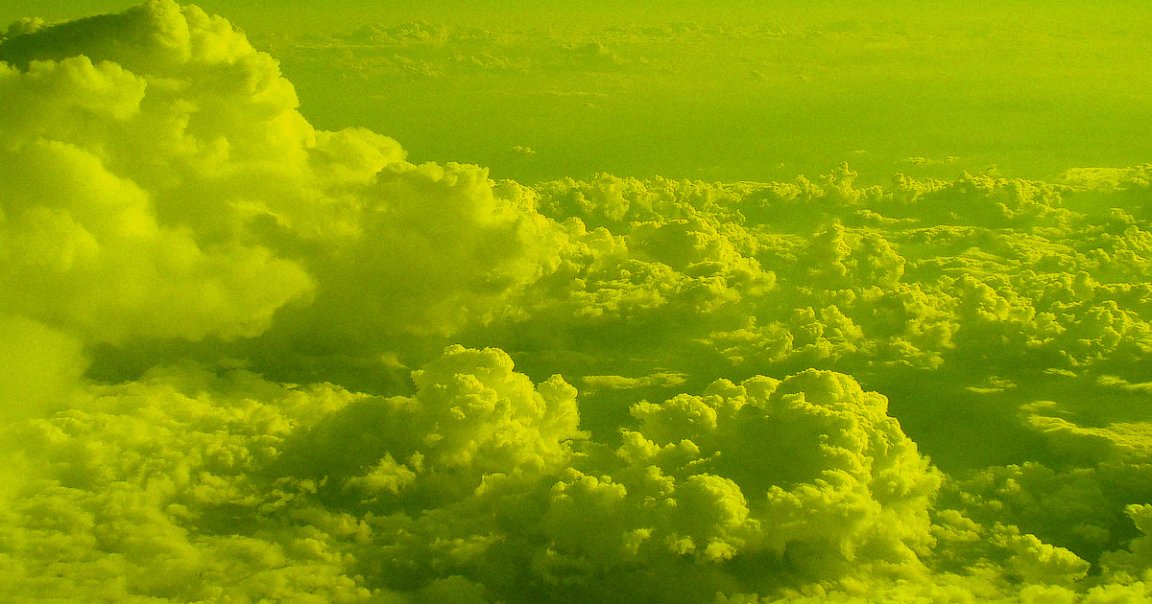
The clouds are so thick that only a small fraction of sunlight reaches the ground. The daylight would resemble a heavily overcast afternoon on Earth, but with a yellowish-orange glow.
Scientists believe the sky near the surface would appear shades of yellow, amber, or orange because sunlight is scattered and absorbed by the thick atmosphere before reaching the ground.
The landscape itself would look dim despite Venus receiving more sunlight than Earth above its clouds.
Standing on Venus would feel like being trapped beneath an endless blanket of glowing clouds.
Mars: A Butterscotch Sky with Blue Sunsets
Mars offers one of the most fascinating skies in the Solar System.
Its atmosphere is much thinner than Earth’s and consists mostly of carbon dioxide. Fine particles of reddish dust are constantly suspended in the air, even when no dust storm is occurring.
These dust particles scatter sunlight differently than Earth’s atmosphere.
During the day, the Martian sky usually appears butterscotch, tan, or light reddish-brown rather than blue.
Yet Mars has one surprising feature that still amazes scientists.
At sunset, the colors reverse.
Instead of glowing red as they do on Earth, Martian sunsets often appear blue near the Sun. Fine dust particles scatter red light away while allowing more blue light to remain visible close to the setting Sun.
Photographs taken by NASA’s Mars rovers have confirmed this unusual phenomenon, giving us stunning images unlike any sunset on Earth.
During global dust storms, the sky becomes even darker and hazier, sometimes hiding the Sun almost completely.
Jupiter: No Surface Beneath the Clouds
Many people wonder what Jupiter’s sky would look like.
The truth is more complicated because Jupiter has no solid surface.
It is a giant planet made mostly of hydrogen and helium, with enormous layers of clouds stretching deep into its atmosphere.
If a spacecraft could somehow float within Jupiter’s upper cloud layers, the sky would likely appear filled with enormous swirling cloud bands in shades of white, cream, orange, and brown.
Powerful storms would dominate the atmosphere, including the famous Great Red Spot, a gigantic storm larger than Earth.
Lightning on Jupiter is far more powerful than most lightning on Earth.
The clouds would constantly shift, swirl, and change, creating an ever-moving sky unlike anything humans have experienced.
However, descending deeper into Jupiter would eventually expose a spacecraft to crushing pressure and rising temperatures long before reaching any hypothetical deeper layers.
Saturn: A Golden World Beneath Gentle Light
Like Jupiter, Saturn lacks a solid surface.
Its atmosphere consists primarily of hydrogen and helium with layers of ammonia clouds and other compounds.
Within Saturn’s upper atmosphere, the sky would likely appear pale golden, creamy, or slightly yellow due to atmospheric haze.
Because Saturn lies much farther from the Sun, daylight would be much dimmer than on Earth.
The Sun would appear only about one percent as bright as it does from Earth, although it would still provide enough light to illuminate the clouds.
Perhaps the most breathtaking sight would not be the sky itself but Saturn’s magnificent rings.
Depending on where someone floated within Saturn’s atmosphere, enormous sections of the rings could arch across the heavens, creating one of the most spectacular vistas imaginable.
Uranus: A Calm Blue-Green Sky
Uranus is often called an ice giant because it contains large amounts of water, ammonia, and methane deep inside.
Methane gas in the upper atmosphere absorbs red wavelengths of sunlight while reflecting blue and green light.
This gives Uranus its beautiful blue-green appearance when viewed from space.
Within its atmosphere, the sky would likely appear soft cyan or pale turquoise.
Sunlight at Uranus is dramatically weaker than on Earth because the planet orbits about nineteen times farther from the Sun.
The Sun itself would look like an extremely bright star rather than the large glowing disk familiar on Earth.
Despite the dimmer light, daytime would still be bright enough to see the surrounding atmosphere.
Neptune: Deep Blue at the Edge of the Solar System
Neptune lies even farther from the Sun than Uranus.
Its atmosphere also contains methane, contributing to its rich blue appearance.
Standing within Neptune’s upper atmosphere—if such a thing were possible—the sky would likely appear deeper blue than Uranus because of differences in atmospheric composition and cloud structure.
The Sun would look surprisingly tiny.
Although sunlight reaching Neptune is about 900 times weaker than sunlight reaching Earth, it would still resemble a very bright star, illuminating the planet’s cloud tops.
Neptune is also home to some of the fastest winds known in the Solar System, reaching speeds faster than the speed of sound under certain atmospheric conditions.
Its sky would rarely appear calm.
Pluto: A Tiny Sun in a Dark Sky
Although Pluto is now classified as a dwarf planet, its sky is among the most fascinating.
Pluto has an extremely thin atmosphere composed mainly of nitrogen, with smaller amounts of methane and carbon monoxide.
As Pluto moves farther from the Sun during its long orbit, much of this atmosphere freezes onto the surface.
When the atmosphere is present, sunlight passing through haze layers creates a beautiful blue tint around the horizon, as observed by NASA’s New Horizons spacecraft.
The rest of the sky would appear mostly black because the atmosphere is far too thin to scatter much sunlight.
The Sun would shine as an exceptionally bright point of light, much smaller than it appears from Earth.
Despite the vast distance, daylight on Pluto would still be brighter than a full Moon on Earth.
What About the Moon?
Earth’s Moon provides another dramatic example.
Because the Moon has almost no atmosphere, astronauts during the Apollo missions saw a completely black sky, even while standing in brilliant sunlight.
Stars were generally not visible in photographs because the bright lunar surface required short camera exposures, but the sky itself remained permanently black during daytime.
Looking upward from the Moon, Earth would dominate the heavens.
It would appear nearly four times wider than the Moon appears from Earth and would show changing phases just as the Moon does for us.
Clouds, oceans, and continents would slowly rotate into view over time.
For future lunar explorers, Earth will likely become the most beautiful object in the sky.
Could Alien Skies Have Colors We’ve Never Seen?
Within our Solar System, every atmosphere is made from familiar gases and particles, so the colors remain within the range humans can naturally perceive.
However, planets around other stars may possess atmospheres very different from anything found nearby.
Some exoplanets may have skies colored by exotic chemical compounds, metallic clouds, volcanic particles, or entirely different atmospheric compositions.
Scientists use powerful telescopes to analyze starlight passing through these distant atmospheres. By studying how certain wavelengths are absorbed, researchers can identify gases such as water vapor, methane, carbon dioxide, sodium, or hydrogen.
Although we cannot yet stand beneath these distant skies, physics allows scientists to make informed predictions about what they might look like.
Future telescopes may reveal even more surprising atmospheric colors.
The Role of Light in Shaping Every Sky
The same sunlight reaches every planet, yet each world transforms it differently.
Some atmospheres scatter blue light.
Others scatter red light.
Some filter sunlight through dense clouds.
Others barely interact with light at all.
Tiny dust particles, cloud droplets, gas molecules, ice crystals, and atmospheric pressure all work together to paint the sky overhead.
These processes follow the same physical laws throughout the universe.
Even the most alien-looking sky is created by the familiar behavior of light interacting with matter.
How Spacecraft Help Us See Alien Skies
Everything scientists know about planetary skies comes from decades of exploration.
Orbiters photograph planets from above.
Landers analyze atmospheric chemistry from the surface.
Rovers capture panoramic images under changing weather conditions.
Spectrometers measure how different wavelengths of light pass through planetary atmospheres.
Together, these observations allow researchers to reconstruct remarkably accurate views of skies across the Solar System.
Each mission adds another piece to our understanding of these distant worlds.
Looking Up Across the Solar System
Every planet tells its own story through its sky. Earth’s bright blue heavens reflect an atmosphere rich in nitrogen and oxygen. Mercury offers a black sky beneath a blazing Sun. Venus hides its surface beneath thick golden clouds. Mars glows beneath dusty butterscotch skies with striking blue sunsets. The giant planets surround themselves with endless clouds, powerful storms, and dim sunlight, while Pluto and the Moon remind us that a nearly airless world can have a daytime sky as dark as night.
Together, these skies reveal one of the most beautiful lessons in planetary science: the universe follows the same physical laws everywhere, yet those laws create astonishing diversity. A change in atmospheric composition, pressure, dust, clouds, or distance from the Sun is enough to transform the appearance of an entire world.
As robotic explorers continue to visit new planets and future missions venture farther into the Solar System, humanity will keep discovering new horizons. Although we may never stand beneath every alien sky ourselves, science allows us to imagine them with increasing accuracy. Each one is a reminder that our blue sky, familiar as it seems, is only one of countless possible skies in a vast and extraordinary universe.